Creative Basement Kitchen Ideas to Maximize Your Cooking Space

Are you exploring the idea of installing a kitchen in your basement but feeling uncertain about the feasibility or where to begin? Whether you want cooking amenities for a rental suite, an in-law apartment, or just the added convenience of a secondary kitchen near your entertainment zone, a basement kitchen can be a transformative solution.
Basement kitchens answer the needs of multigenerational families, short-term rental hosts, households with older children, or anyone seeking a self-sufficient lower-level living area—eliminating the need for frequent trips upstairs when preparing snacks or meals.
Though these kitchens come with added complexities — such as installing plumbing, ensuring proper ventilation, controlling basement moisture, and meeting building regulations — the payoff is substantial: enhanced functionality and increased property value when done right.
Options vary widely, from modest kitchenettes equipped with compact refrigerators and microwaves costing between $3,000 and $8,000, to fully equipped kitchens featuring top-tier appliances and bespoke cabinetry running from $15,000 up to $50,000 or more.
Whether your goal is to create an income-generating rental space or simply provide a convenient basement refreshment area, these 23 innovative basement kitchen ideas highlight how smart design can overcome typical underground constraints to deliver cooking spaces that passengers and families will truly appreciate.
1. Essential Kitchenettes for Streamlined Refreshing
For a functional yet minimal setup, compact refrigerators, microwaves, coffee machines, and small sinks provide basic refreshment options without requiring a full kitchen. Complement these with open shelving or simple cabinetry to hold dishes, snack options, and drinks. This budget-friendly solution ($3,000-$8,000) is ideal for creating entertainment hubs where guests can quickly access refreshments without the need for extensive meal prep. Explore mini refrigerators that perfectly fit basement kitchenette spaces.
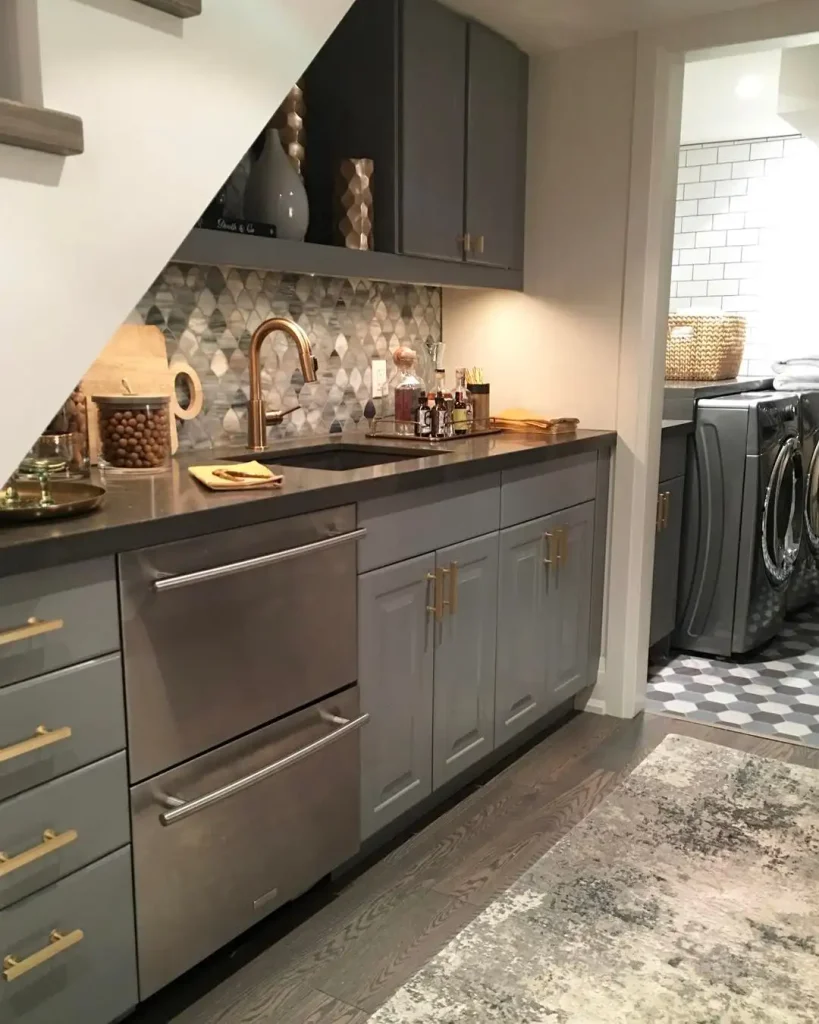
2. Elegant Beverage and Entertainment Bars
Elevate your basement’s social spaces with sophisticated wet bar setups featuring specialty beverage coolers, ice makers, sinks, and stylish cabinet designs. Glass-front cabinets showcase your finest glassware, while under-cabinet LED lighting creates a warm ambiance ideal for dinner parties or casual gatherings. Durable countertops facilitate drink prep and serving. For further inspiration, check out contemporary beverage refrigerators perfect for basement bars.
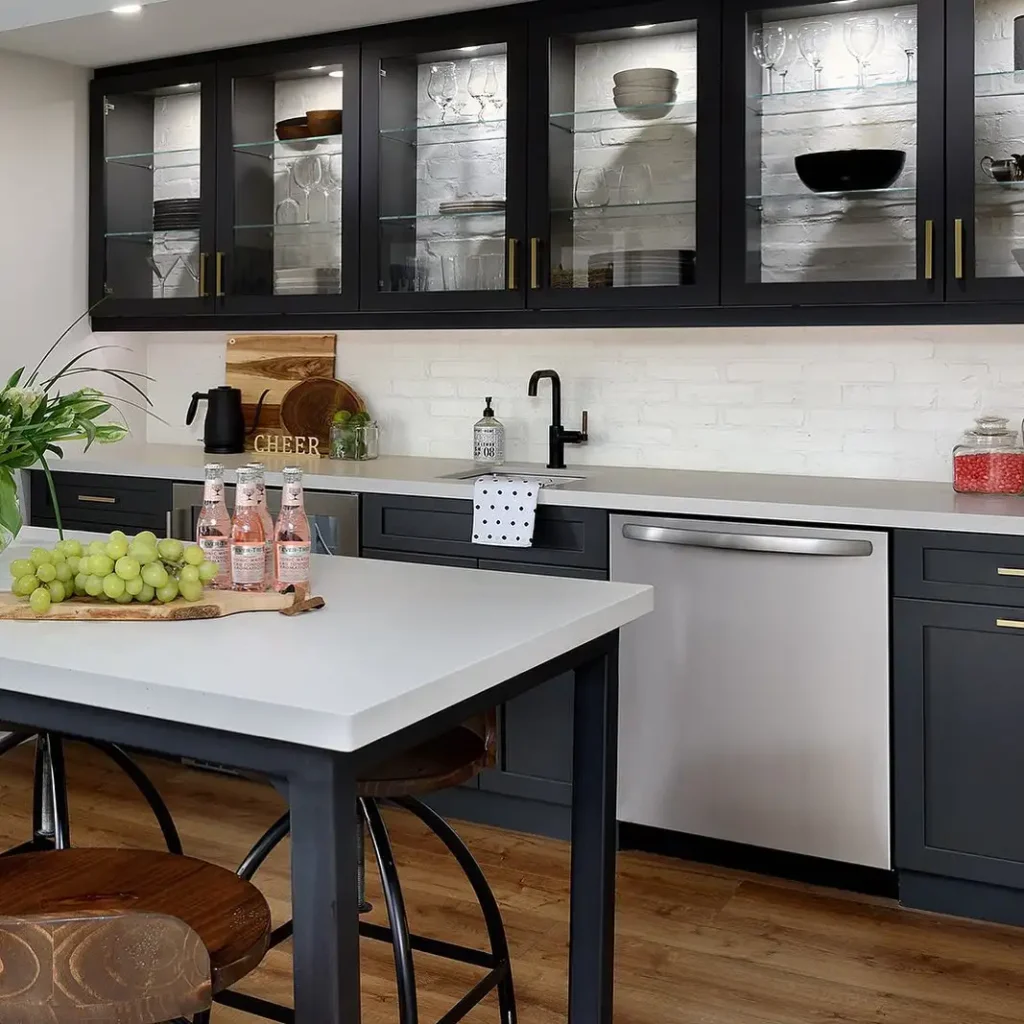
3. Fully Functioning Apartments in the Basement
Design complete kitchens with full-size stoves, refrigerators, dishwashers, and ample cabinet storage to support independent living situations like rental units or basement apartments. These kitchens typically cost between $15,000 and $35,000 and are built to rival those on the main floors in functionality and comfort. Browse apartment-sized appliances to optimize installation in smaller spaces.
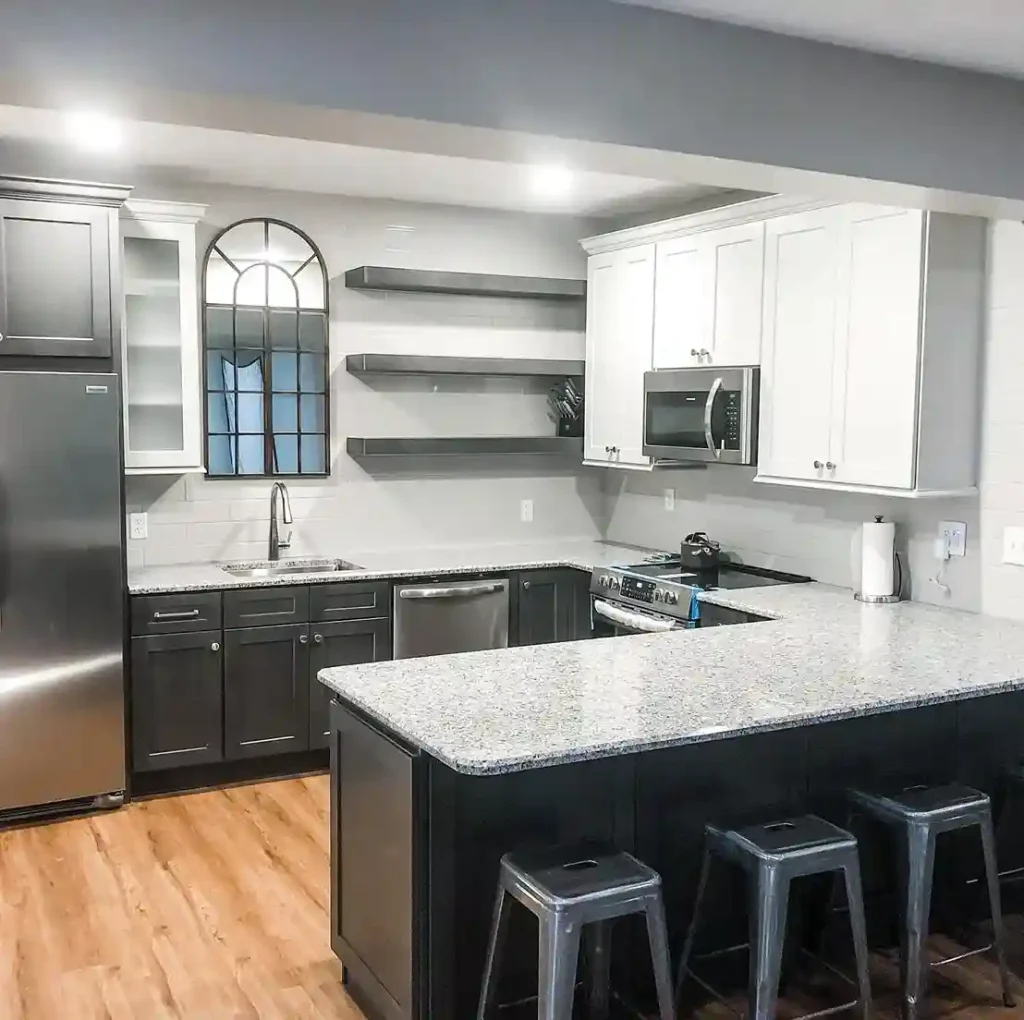
4. Accessible Kitchens for In-Law Suites
Craft welcoming and safe kitchens for elderly family members or adult dependents by integrating user-friendly features such as lever faucets, pull-out shelves, slip-resistant flooring, and well-lit interiors. Safety enhancements like anti-scald faucets ensure independent and confident cooking, facilitating harmonious multigenerational living.
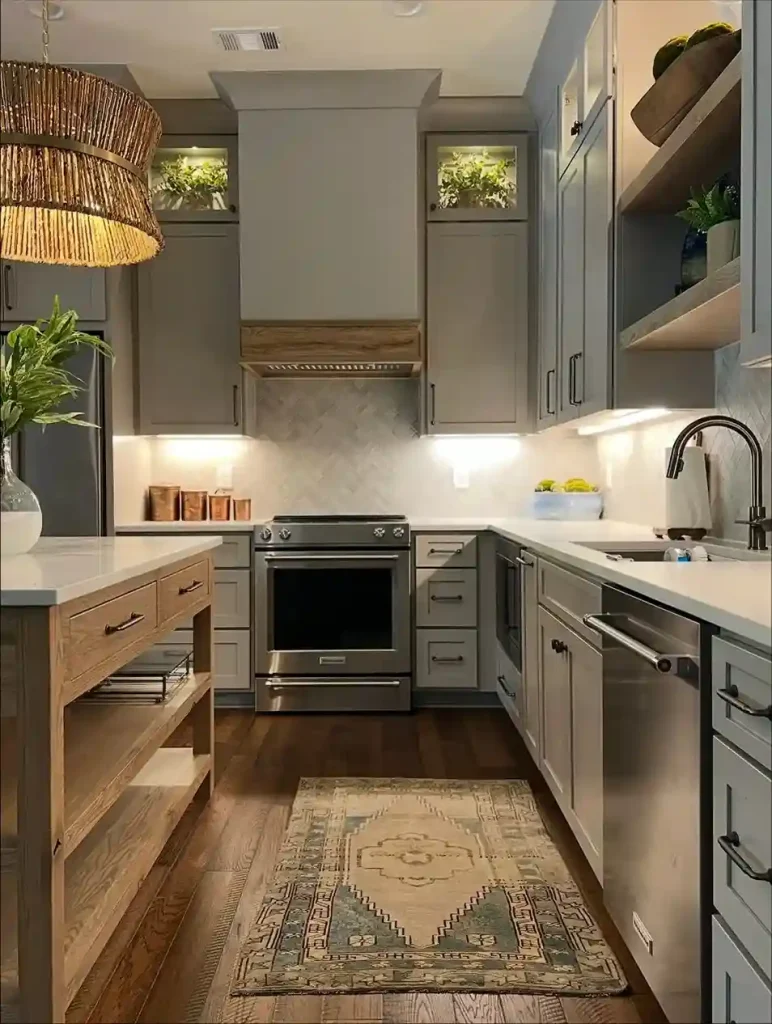
5. Open-Plan Kitchen & Lounge Combinations
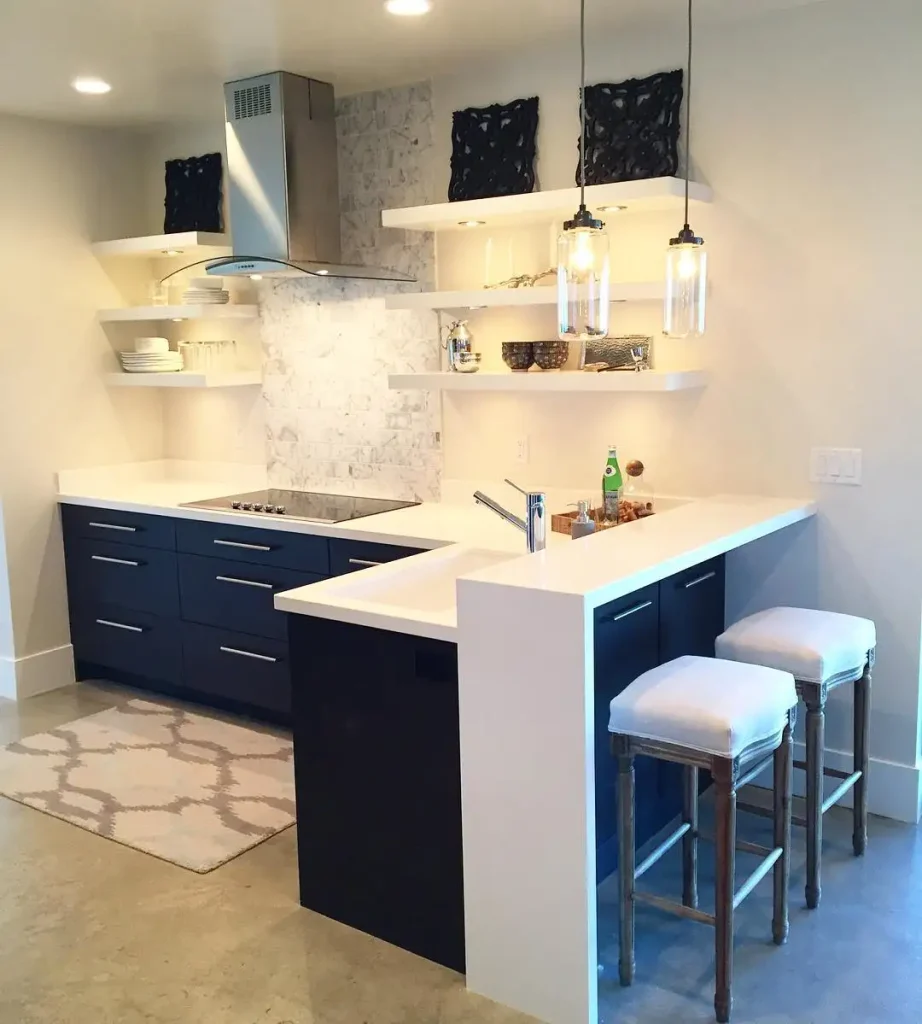
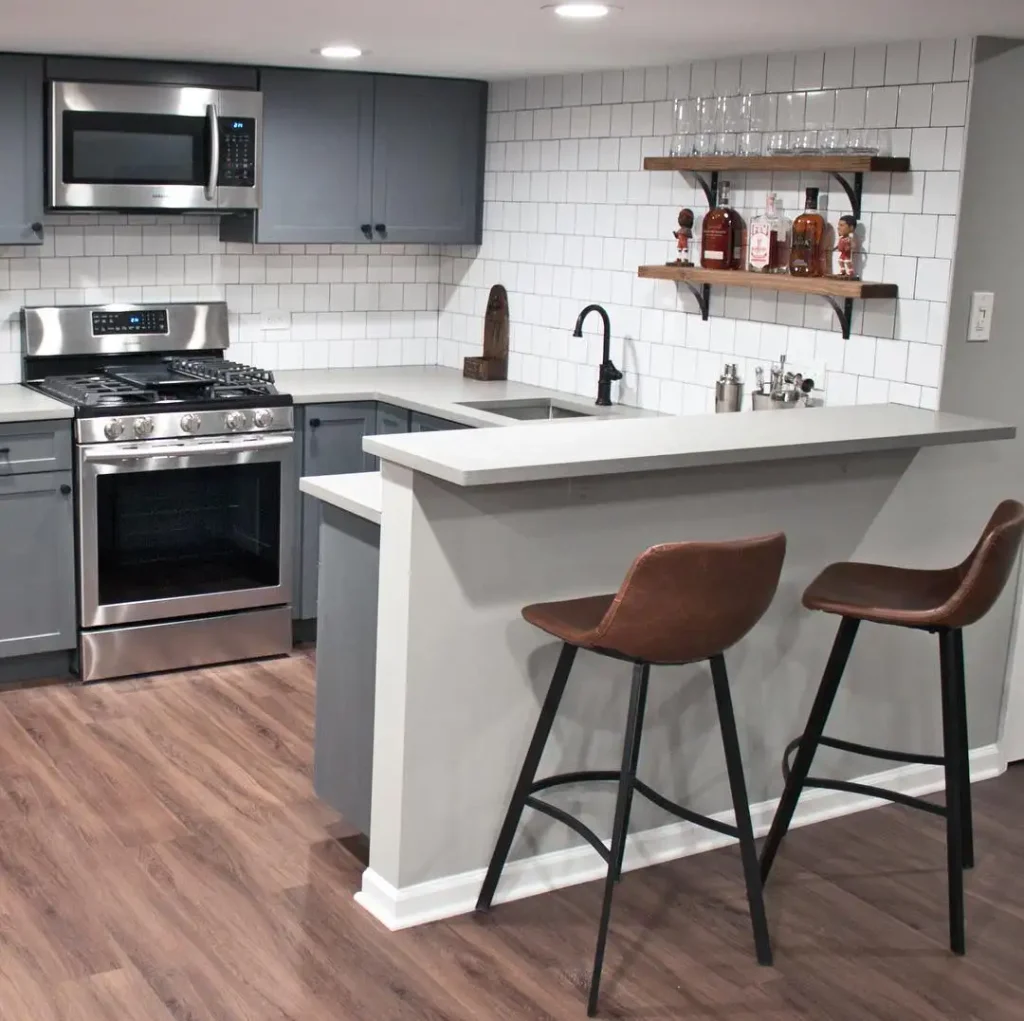
Seamlessly blend cooking with lounging by integrating your kitchen into adjacent living areas via kitchen islands, breakfast bars, or peninsula counters. These designs maximize compact basement footprints and encourage interaction between hosts and guests during meal prep. Consider bar seating to facilitate conversation and make basement spaces more inviting. For more ideas, check out bar stools selections perfect for basement settings.
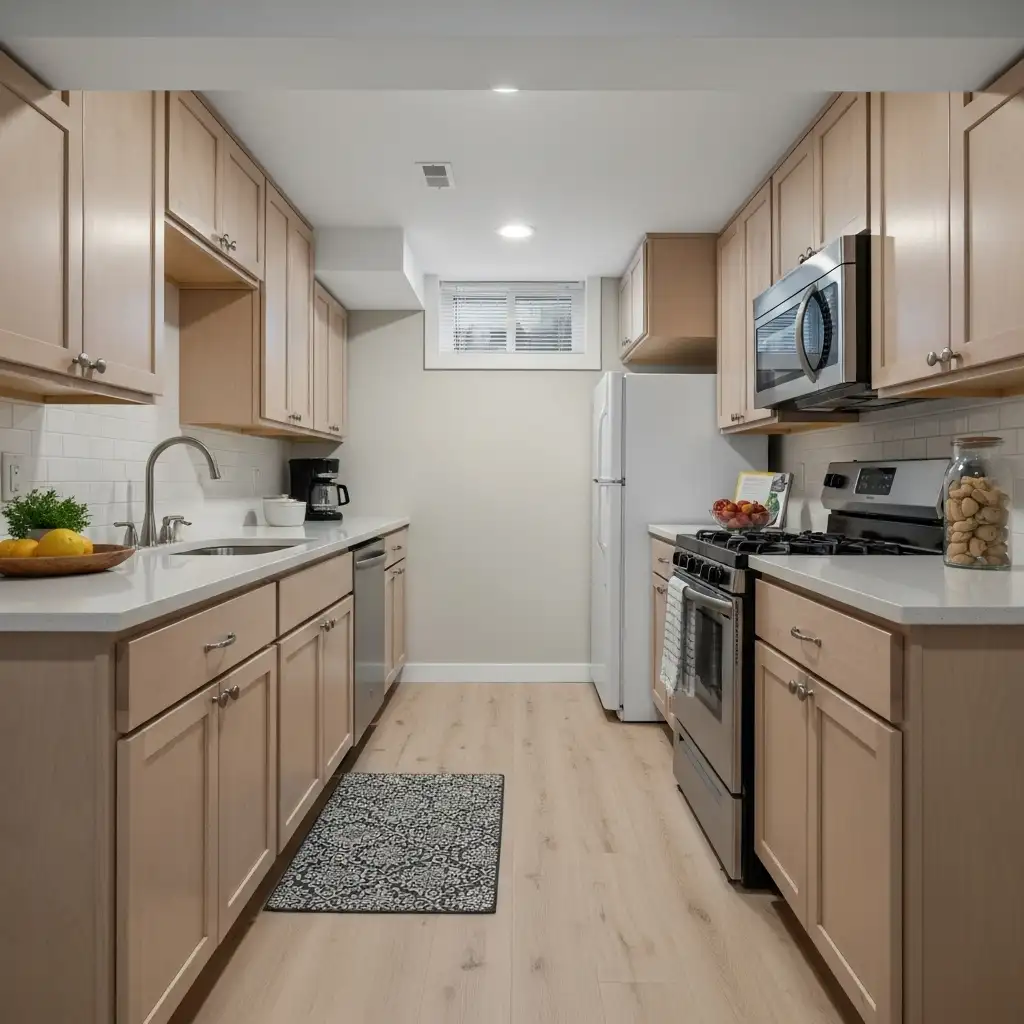
6. Efficient Galley Layouts for Narrow Spaces
Optimize tight basements with galley-style kitchens, placing appliances and counter space on opposite walls to maximize workflow and storage. Overhead cabinets on both sides provide ample storage without cluttering the walkway, ensuring the kitchen remains functional yet comfortable even in limited dimensions.
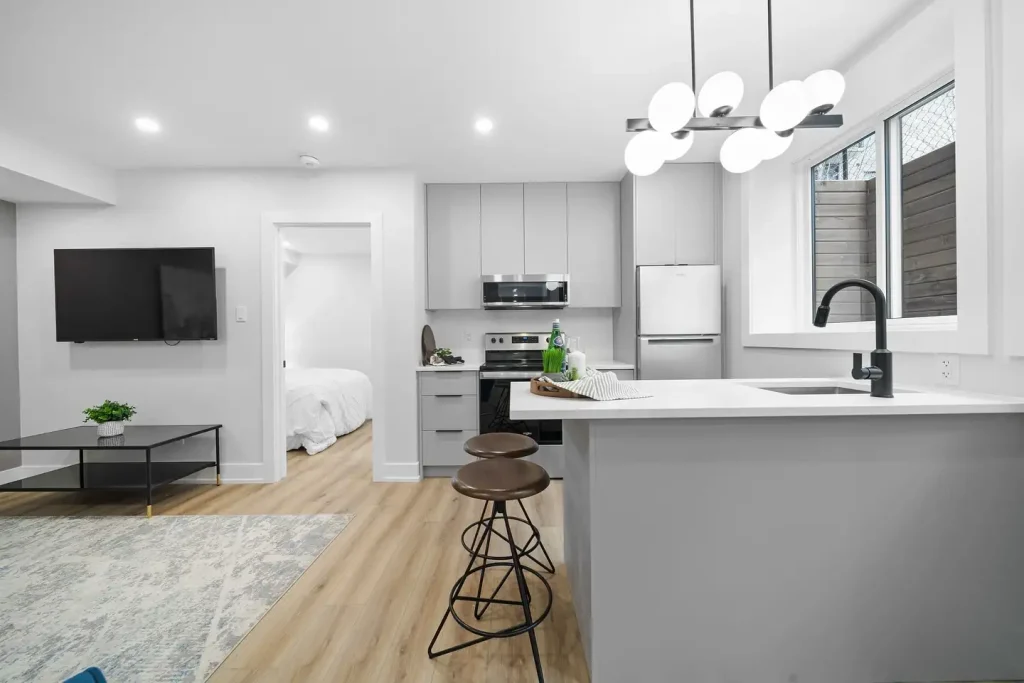
7. Sleek Minimalist Basement Kitchens
Adopt a modern, minimalist approach with clean-lined cabinetry, concealed appliances, push-to-open doors, and neutral color tones to foster a spacious, uncluttered feel. This aesthetic suits smaller basement spaces by visually expanding the room and conveying a deliberate, elegant vibe.
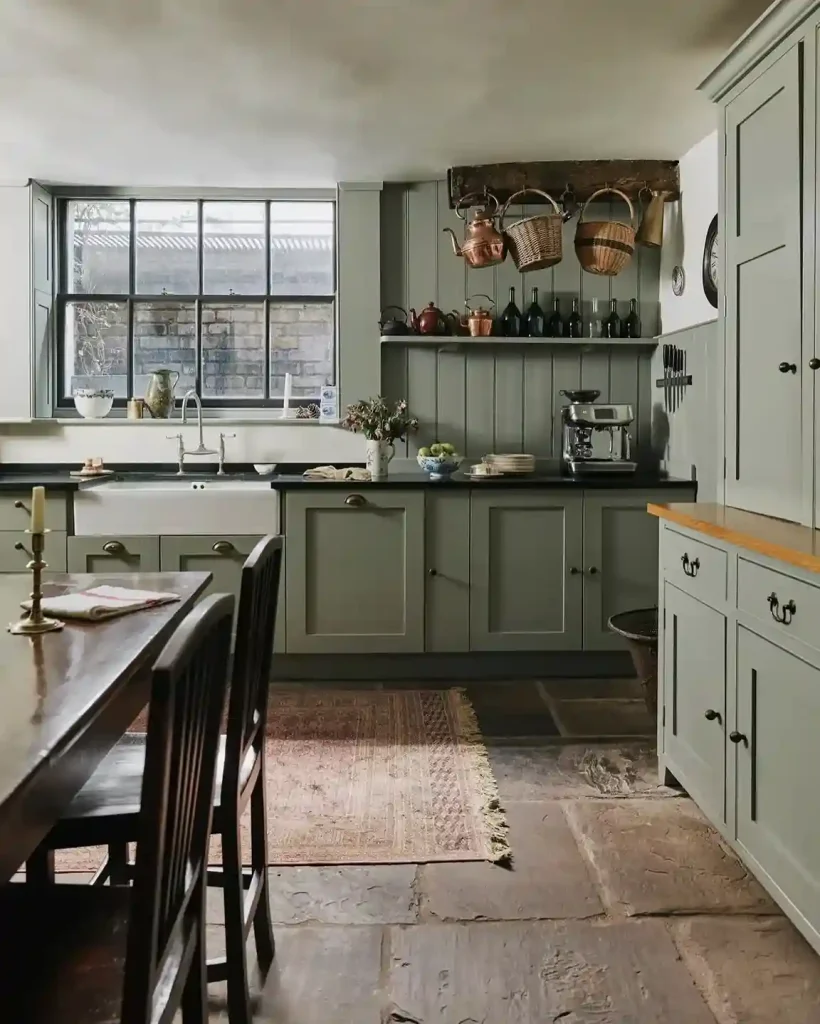
8. Warmth and Charm with Farmhouse Flair
Bring inviting character to your basement with farmhouse-inspired kitchens showcasing open shelving, apron-front sinks, distressed finishes, and classic subway tile backsplashes. Elements like reclaimed wood accents and shiplap walls contribute to the cozy, lived-in feeling perfect for casual spaces. For inspiration in farmhouse decor, browse farmhouse kitchen accessories.
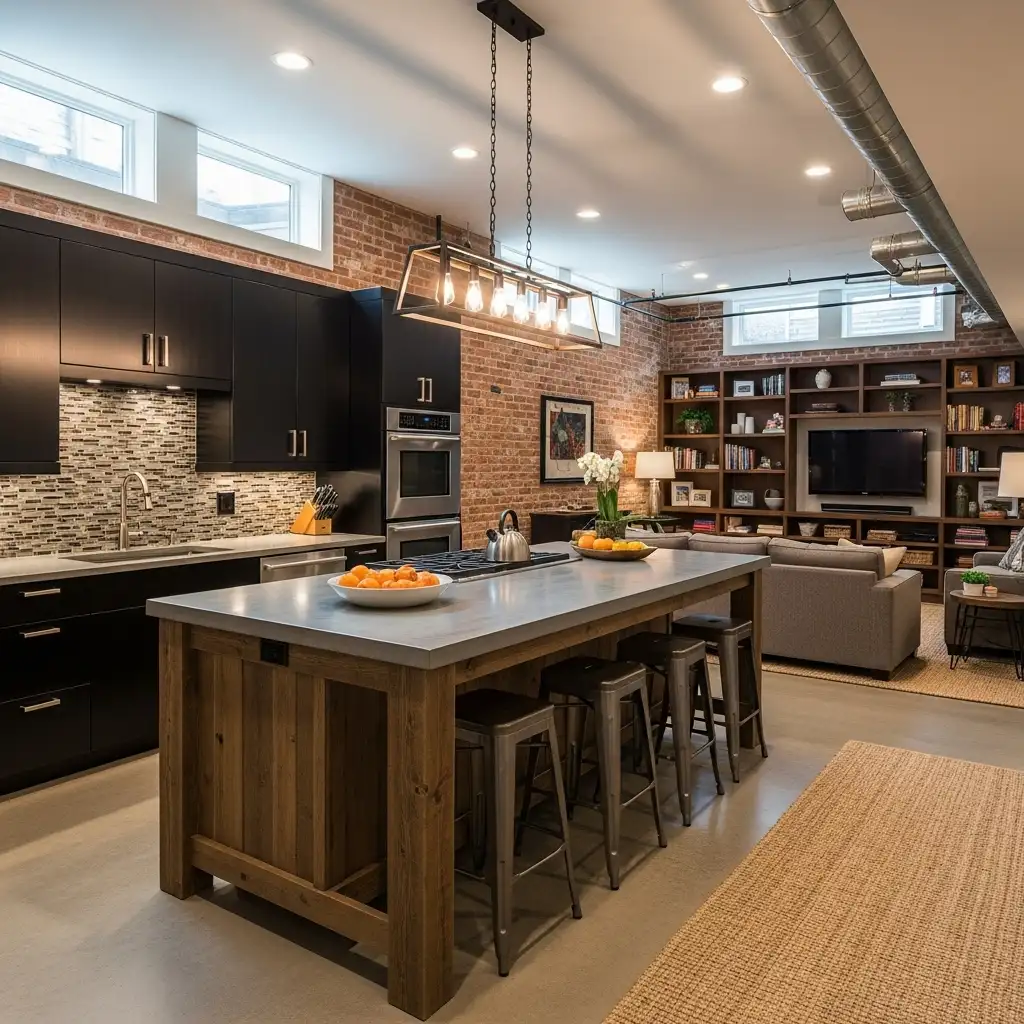
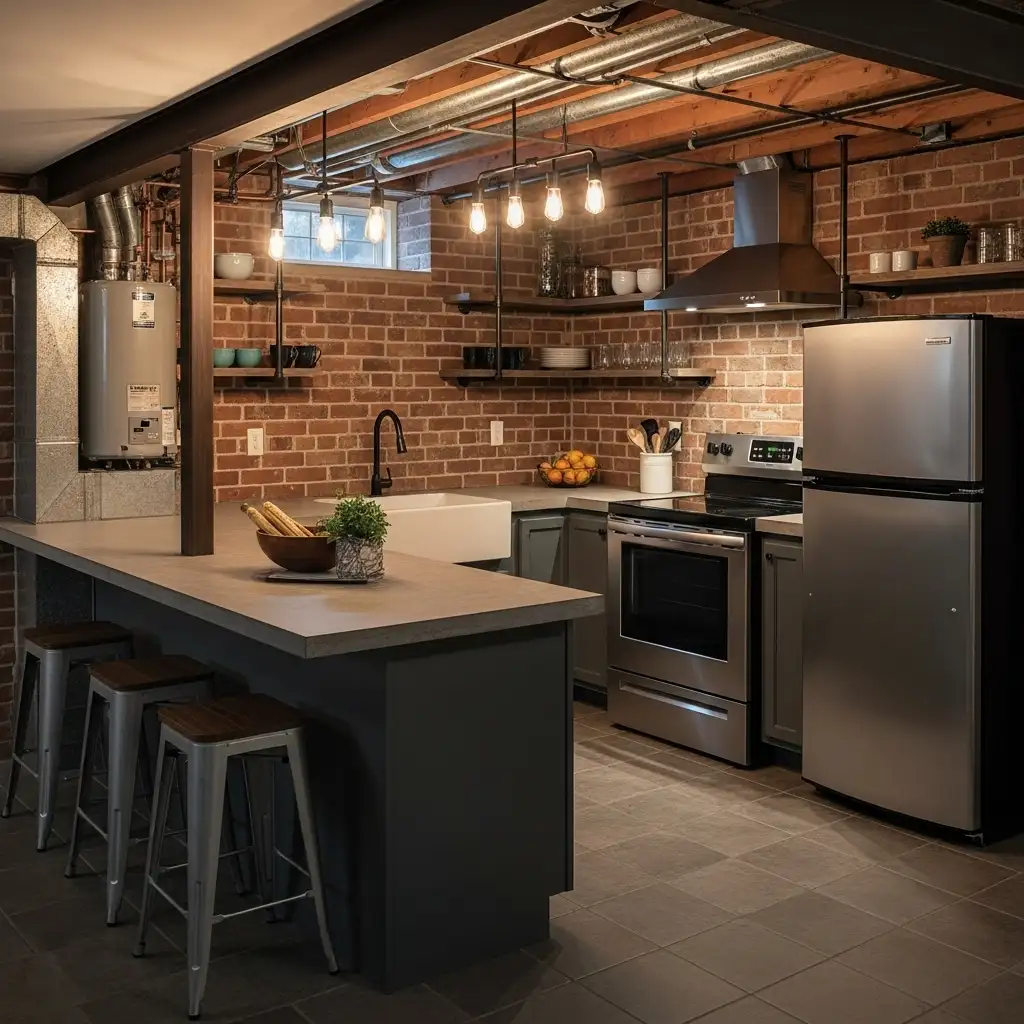
9. Industrial Loft Influenced Kitchens
Celebrate the basement’s raw appeal with industrial designs that expose brickwork, concrete counters, metal shelving, and visible pipes. Incorporate Edison bulb lighting and stainless steel appliances to deepen the urban loft aesthetic without hiding the mechanical features. This approach can save on construction costs by minimizing drywall and finishing requirements.
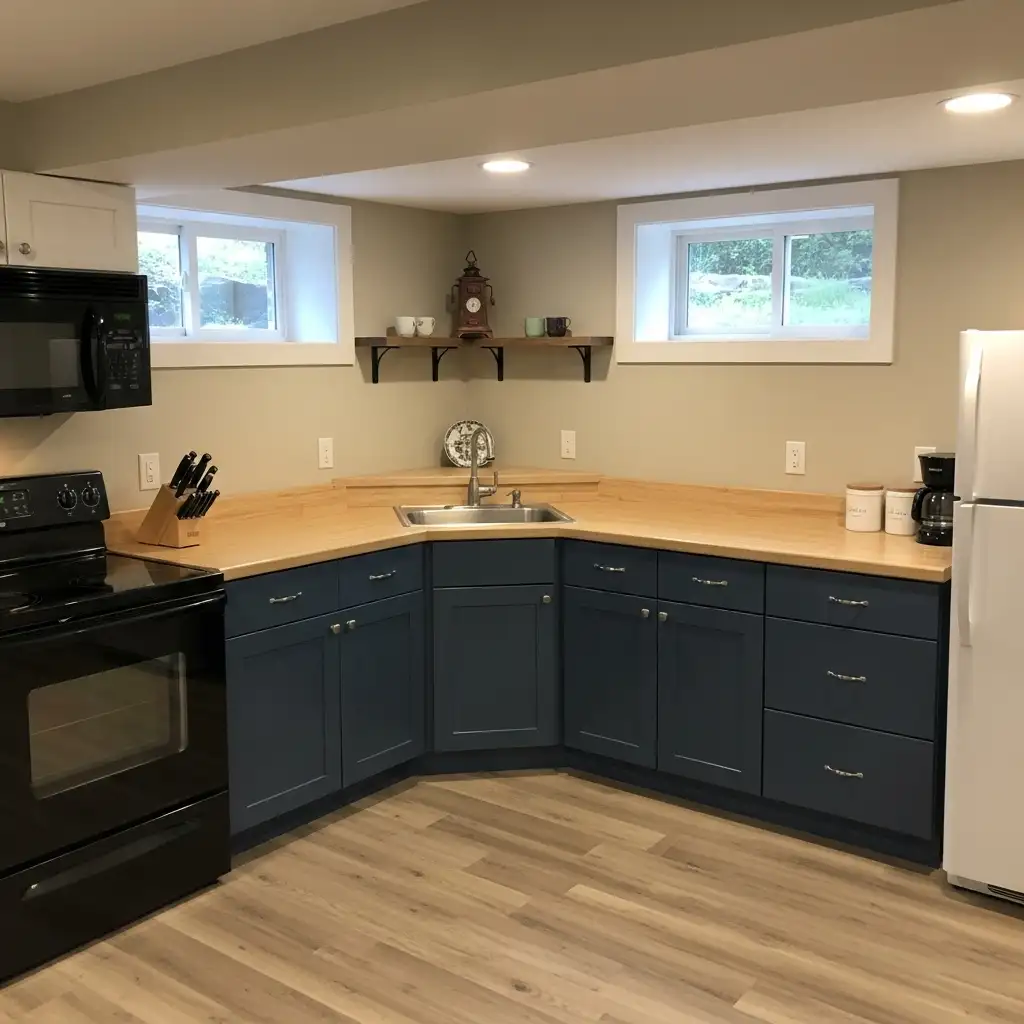
10. Smart Use of Corner Spaces
Transform hard-to-utilize basement corners with L-shaped kitchens that free up floor space for dining or relaxation zones. Whenever possible, position sinks near windows to maximize daylight and ventilation. Corner layouts facilitate multifunctional basements where kitchen, living, and entertainment areas must coexist gracefully. Discover effective corner solutions in our corner cabinet options.
Key Technical & Safety Aspects for Basement Kitchens
Installing Plumbing Efficiently
The most significant and costly feature of basement kitchens is plumbing installation, which ranges roughly from $3,000 to $8,000 depending on proximity to current water and sewage lines. Locate the kitchen near plumbing-heavy areas like bathrooms or utility rooms to save on expensive pipe runs. In cases where basement floors are below the main sewer line, sewage ejector pumps costing between $800 and $2,000 might be necessary to prevent waste backflow.
Ventilation System Essentials
To comply with building codes, a proper ventilation system that vents cooking fumes and grease outside via ductwork is mandatory. Expect installation costs between $500 and $2,000 depending on complexity. Ventilation prevents buildup of moisture and odors that can damage basement finishes and degrade indoor air quality in enclosed spaces.
Upgrading Electrical Infrastructure
Kitchens require robust electrical capacity, including dedicated 20-amp circuits for refrigerators and microwaves, additional circuits for dishwashers, and GFCI outlets near wet areas. Check your electrical panel for capacity to avoid costly upgrades. Allocating $1,500 to $4,000 for electrical work is common to meet modern appliance demands safely and code-compliantly.
Moisture Mitigation Strategies
Basements have inherent moisture challenges, so waterproofing, proper insulation, and dehumidification are vital. Use moisture-resistant flooring such as luxury vinyl or ceramic tile, and avoid installing wood cabinetry directly on exterior walls prone to dampness. Maintain indoor humidity between 30% and 50% with dehumidifiers to inhibit mold and preserve kitchen longevity.
Financial Overview: Budgeting Your Basement Kitchen
Budget Kitchenettes: $3,000–$8,000
Basic configurations focus on mini-fridges, microwaves, coffee makers, small sinks, and open shelving to create efficient refreshment stations. Ideal for social spaces or teen hangouts requiring simple beverage and snack access with minimal cooking needs.
Mid-Tier Full Kitchens: $15,000–$30,000
This range includes full-size appliances, semi-custom cabinets, durable stone countertops, backsplash tiling, and professionally installed plumbing and electrical systems. Perfect for in-law apartments or rented basement units offering independent meal prep capabilities.
Premium Kitchen Installations: $30,000 and Above
High-end projects feature top-of-the-line appliances, bespoke cabinetry, luxury surfaces such as granite or quartz, designer lighting, quality flooring, and meticulously crafted finishes. These kitchens suit upscale rental properties, primary residences, or discerning homeowners seeking impeccable form and function.
Complying with Codes and Legal Requirements
Rental Compliance and Licensing
Basement kitchens included in rental units trigger specific code obligations, such as separate utility meters, proper emergency egress, minimum ceiling heights, and potential permits or licenses. Study local regulations meticulously before project commencement to avoid fines or complications.
Permits and Official Inspections
Regardless of use, most regions mandate permits for basement kitchens involving plumbing, electrical, or gas. Permit fees typically range from $500 to $1,500. Skipping permits risks fines, issues during home sales, insurance claims denials, and forced removal of non-compliant work.
Safety Equipment Mandates
Smoke alarms, carbon monoxide detectors, GFCI outlets near sinks, adequate illumination, and accessible fire extinguishers are essential for occupant safety and insurance validity. These modest investments serve to safeguard residents and protect property from preventable hazards.
Design Recommendations for Optimal Outcomes
Enhancing Natural Lighting
Whenever possible, locate basement kitchens adjacent to existing windows or consider enlarging window wells within code limits to invite daylight. Utilize reflective finishes and layered artificial lighting to make the space feel open and welcoming despite the below-grade setting.
Scaling Fixtures and Appliances Appropriately
Select cabinetry and appliances proportionate to your basement’s size. Oversized appliances can overwhelm confined space, while overly small options may feel out of place in larger settings. Compact or apartment-sized equipment works well for small kitchens, and standard sizes suit more spacious basements.
Function Takes Priority Over Form
Plan kitchen layouts focusing first on efficient workflow — adequate prep areas, logical appliance placement, and sufficient storage — before fine-tuning aesthetics. Beautiful but impractical kitchens lead to frustration; prioritize usability to maximize satisfaction.
Coordinate Design With Whole Basement Style
Match kitchen decor to the overall basement style to create cohesive, harmonious spaces. For example, contemporary kitchens blend with modern basements, and rustic or farmhouse kitchens shine in cozy recreation rooms. Coordinated design elevates the entire basement’s professional appeal.
Common Questions About Basement Kitchens
What is the average cost to build a basement kitchen?
Costs typically range from $3,000 to $8,000 for basic setups, $15,000 to $30,000 for fully equipped kitchens, and $30,000 or more for luxury installations. The budget depends on appliance quality, cabinetry, countertops, and the existing plumbing or electrical infrastructure’s proximity, with closer access significantly lowering costs.
Is a permit necessary for basement kitchen construction?
Yes. Permits are generally required for plumbing, electrical, and gas installations associated with basement kitchens to ensure safety and code compliance. Avoid unauthorized work to prevent legal issues and maintain home resale value.
Can a basement accommodate a full kitchen?
Absolutely. With careful planning addressing ventilation, plumbing, moisture control, and electrical capacity, full kitchens function effectively in basement settings. These spaces suit rental units, in-law suites, or secondary kitchens for convenience.
Do basement kitchens enhance home value?
Yes, basement kitchens generally add upwards of $10,000 to $30,000 in value depending on quality and local demand. Fully-equipped basement apartments attract buyers seeking rental income or multigenerational accommodations, while even modest kitchenettes improve overall basement usefulness and marketability.
Final Thoughts: Unlock Your Basement’s Potential
Integrating a kitchen in your basement offers practical solutions for modern households—supporting multigenerational living, generating rental income, or simply adding a convenient cooking area close to entertainment zones.
The diverse ideas outlined here cater to all budgets and style preferences, whether you desire a small beverage station or a full kitchen rivaling the main floors.
Careful planning involving assessment of plumbing access, budgeting, intended use clarity, and code compliance ensures that the result is a functional, safe, and valuable addition.
Start by reviewing your basement’s layout and infrastructure, consulting local regulations, and choosing designs that suit your lifestyle and home’s architecture.
For more inspiration, explore our guides on basement living rooms, kitchen remodeling, compact apartment kitchens, and overall home interior design to create a harmonious, multi-functional basement that elevates your entire home.
As an Amazon Associate I earn from qualifying purchases.