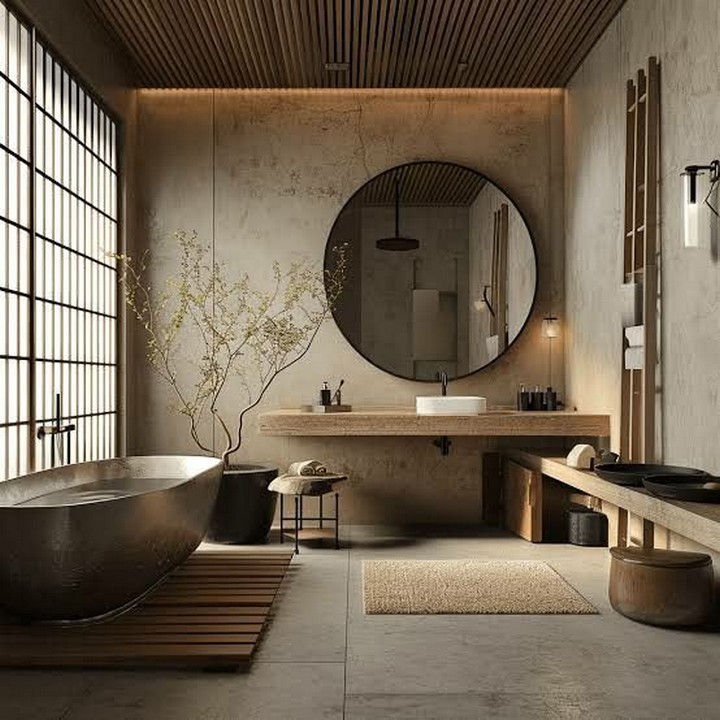
Stunning Japanese Bathroom Design Ideas: Where Tradition Meets Modern Serenity

Japanese bathroom design uniquely blends practicality with serene beauty, creating spaces that serve as retreats for both cleansing the body and renewing the mind. Unlike typical Western bathrooms focused mainly on utility, Japanese bathrooms are thoughtfully crafted sanctuaries emphasizing ritual and relaxation.
Rooted in centuries of tradition, cultural values, and spiritual practices, this design philosophy marries ancient wisdom with modern sensibilities. The result is a timeless aesthetic offering homeowners a blueprint to transform ordinary bathrooms into tranquil, restorative sanctuaries.
This detailed guide explores 28 distinguished features of Japanese bathroom design, ranging from architectural arrangements and material selections to cultural symbolism and technological advancements. Each element contributes to a holistic bathing experience that redefines the bathroom’s role from purely functional to profoundly meaningful.
Foundational Traditions: Essential Practices in Japanese Bathing
1. Delineation Between Washing and Soaking
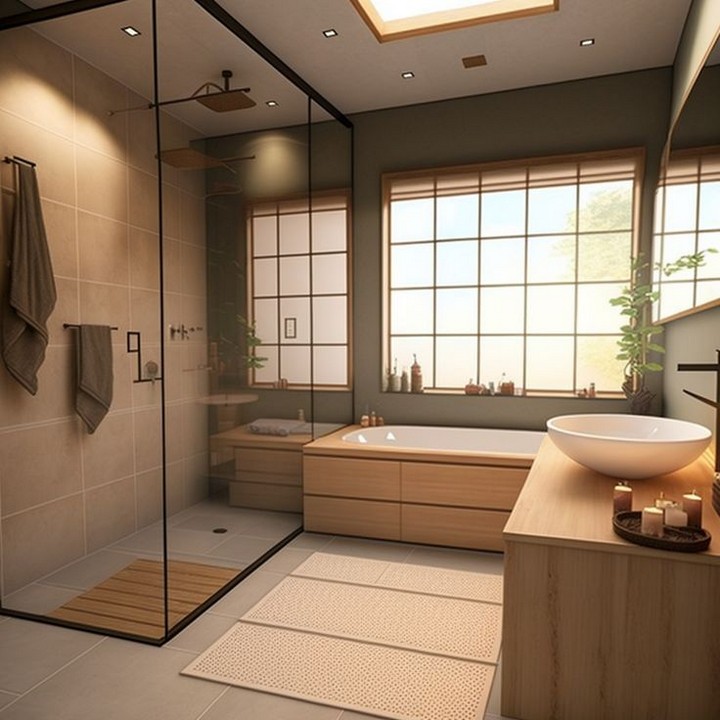
Central to Japanese bathing is the strict separation of cleansing the body from soaking in warm water. Unlike many Western bathrooms where washing occurs within the bathtub, Japanese culture enforces a deliberate practice of washing outside the tub to keep the soaking water pure for relaxation.
Traditionally, bathers sit on small stools in a designated washing area, fully cleansing before entering the deep soaking tub (ofuro). Contemporary designs maintain this principle with adjacent shower spaces or washing zones separated by subtle partitions, level differences, or glass screens, enhancing mindfulness and hygiene even in compact layouts.
2. The Ofuro: Deep, Compact Soaking Baths
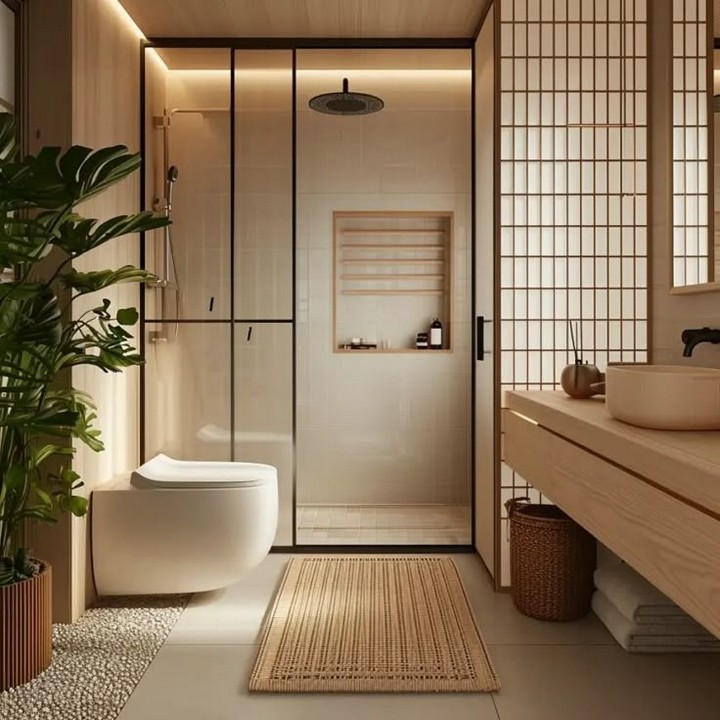
The iconic ofuro tub deviates from Western design by prioritizing vertical immersion over horizontal length. These tubs allow the bather to sit upright, enveloped by water up to the shoulders while the knees bend comfortably.
Traditionally crafted from fragrant hinoki cypress—valued for its natural antimicrobial properties and soothing aroma—modern options include durable materials like acrylic, composite stones, and cast concrete that respect the tub’s traditional proportions while enhancing insulation and maintenance ease.
Its compact footprint adapts well to smaller bathrooms, making the ofuro a luxurious yet pragmatic focal point symbolizing relaxation and introspection.
3. Wet Room Design: Embracing the Mizuya Concept
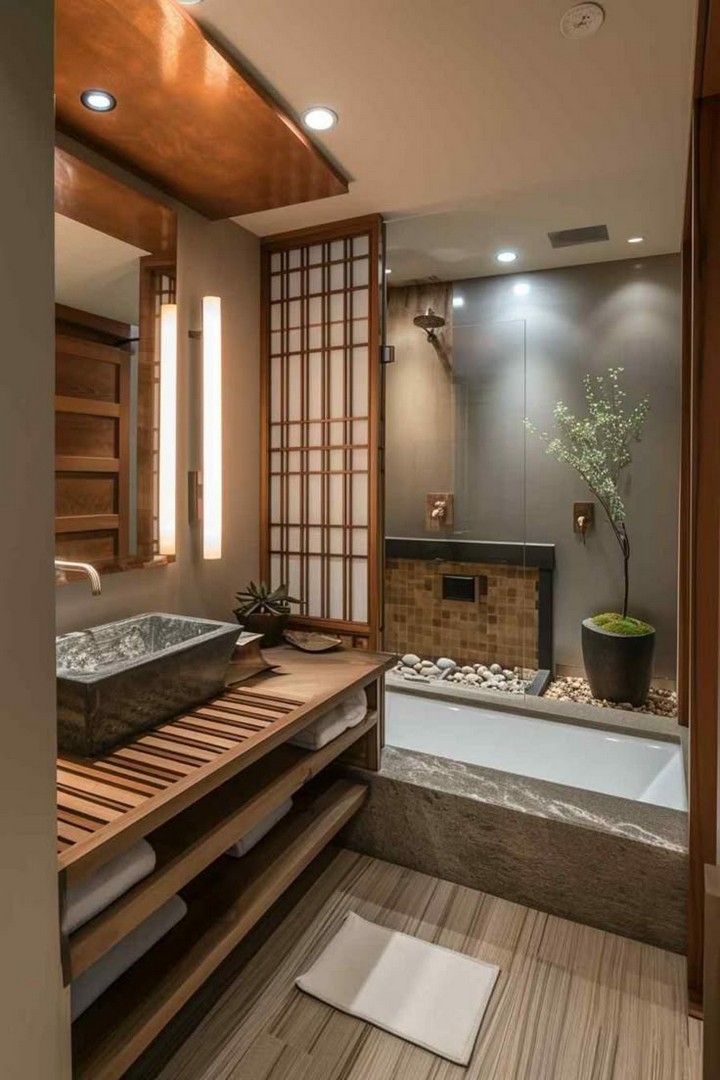
Rather than compartmentalizing bathing spaces with shower curtains or glass enclosures, traditional Japanese bathrooms adopt the wet room (mizuya) concept where the entire area is waterproof and designed for water exposure.
Modern designs incorporate floor drains, gentle floor gradients for drainage, and fully sealed surfaces across walls and floors, simplifying maintenance and allowing more flexible spatial configurations. This open, fluid layout combats the claustrophobia common in tight Western bathrooms.
4. Wooden Washing Stools and Pouring Bowls
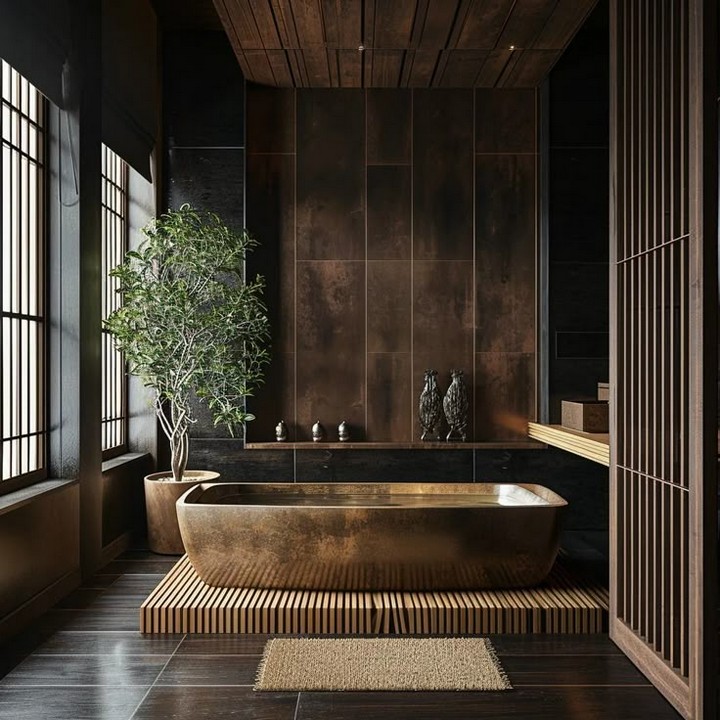
The act of washing in a Japanese bathroom involves sitting on low wooden stools and using handheld wooden bowls (oke) to rinse the body with water. These simple implements transform washing into a deliberate ritual, fostering mindfulness and calm.
Contemporary spaces often integrate these pieces both for their functionality and their visual connection to tradition, with materials like water-resistant hinoki or cedar wood, bamboo composites, or natural stones offering longevity and aesthetic appeal.
5. The Furo: Structured Bathing Zones
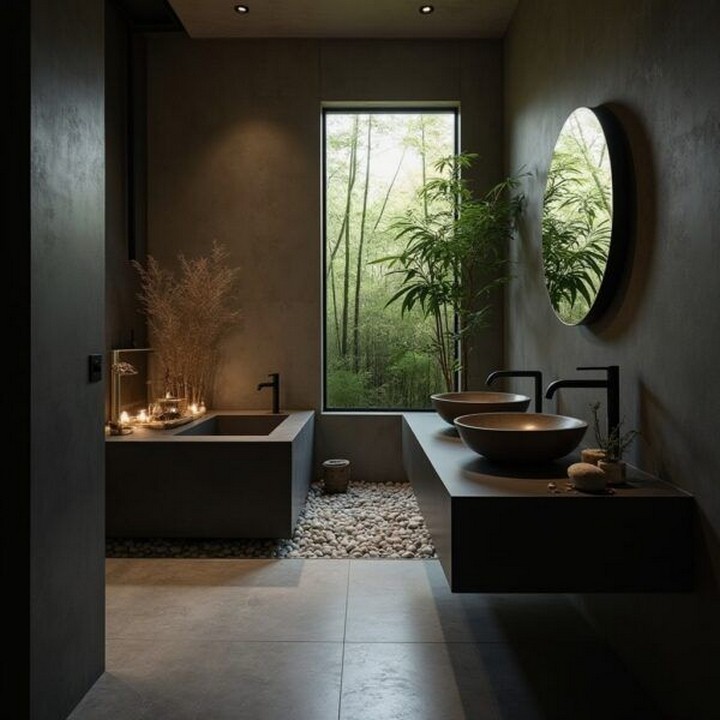
Japanese home layouts traditionally divide bathrooms into distinct areas: the changing space (datsuijo), washing zone (araiba), and bathing area (furo). This sequential arrangement supports a mindful progression from everyday life into a contemplative state.
Modern bathrooms might suggest these transitions through subtle architectural cues—such as slight elevation shifts, varied flooring materials, or partial walls—rather than full separations, preserving visual openness while guiding the bathing journey.
Harmonizing Aesthetics: Sensory and Visual Principles
6. Emphasis on Organic Materials
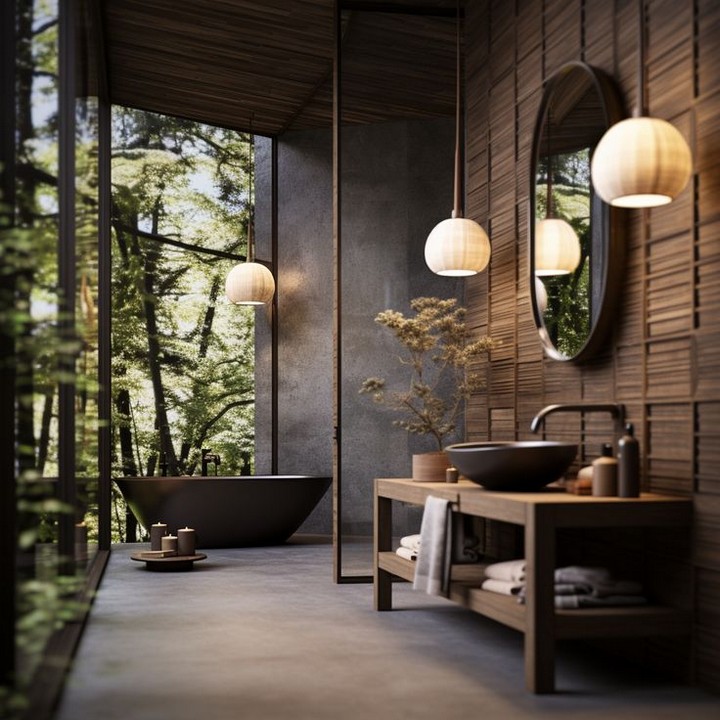
Japanese bathrooms prioritize natural resources that stimulate multiple senses: the sight of raw textures, the touch of smooth or grainy surfaces, the scent of fresh wood, and the subtle acoustic ambiance. Typical materials include untreated wood, natural stone, bamboo, and clay elements maintained in their authentic states.
Today’s designs may combine hinoki wood flooring or tub surrounds with stone-clad walls, clay or textured porcelain tiles, and accents of bamboo or woven fibers—often minimally finished to preserve their innate character and subtle patinas over time.
7. Neutral Tones with Purposeful Contrast
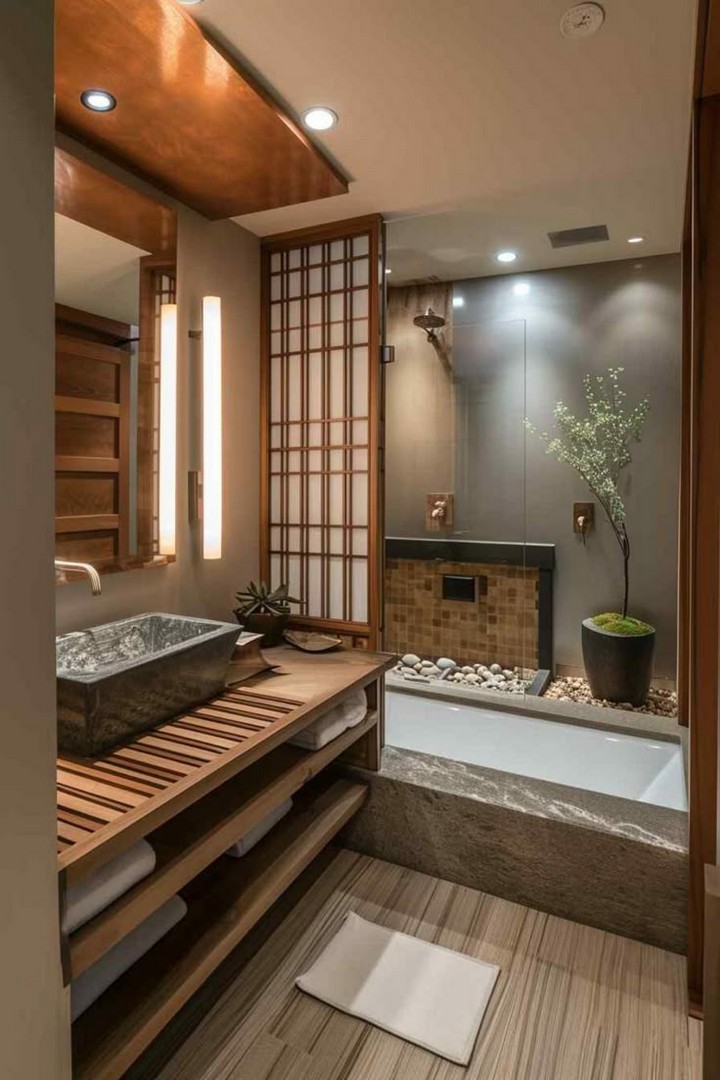
Color schemes lean toward subtle shades inspired by nature—soft whites, warm creams, muted grays, and varied wood hues dominate, with occasional dark accents to provide definition. This restrained palette cultivates an atmosphere of calm and spaciousness, even within limited square footage.
Selective pops of color, analogous to delicate green bamboo shoots or serene blue water motifs, add intentional vibrancy without disrupting the overall peaceful ambiance.
8. Sleek Linear Drainage Systems
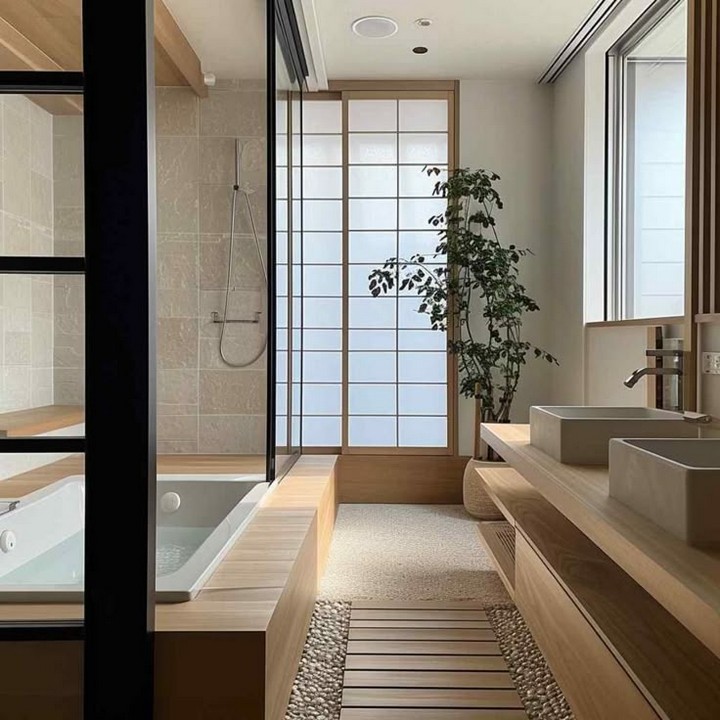
Floor drainage in Japanese bathrooms often utilizes refined linear drains instead of central drain holes. These drains run subtly along edges or thresholds, allowing continuous, unbroken flooring and contributing to the bathroom’s seamless appearance.
Besides aesthetic benefits, this system enhances safety by promoting optimal water flow and reduces visual clutter, accommodating materials like wood slats or flat stone surfaces with ease.
9. Embracing Fukinsei: Asymmetry in Harmony
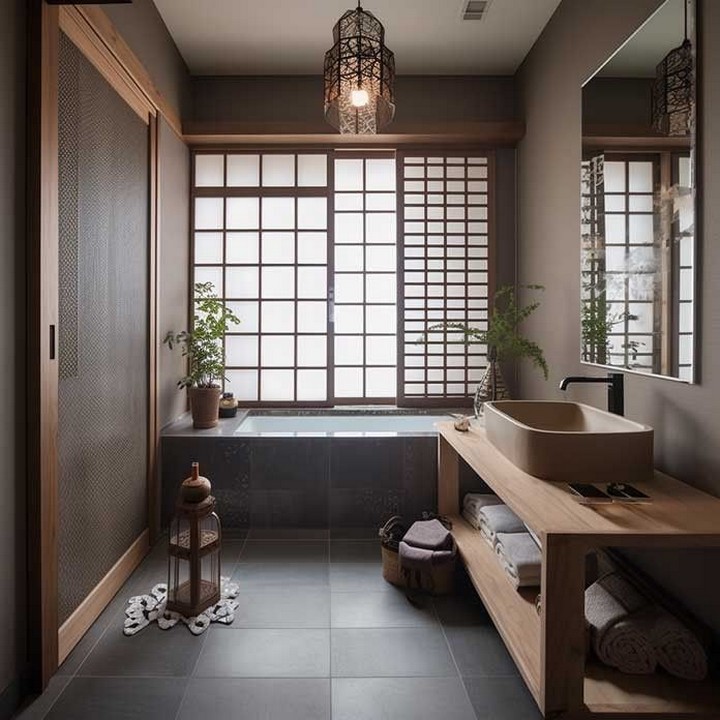
Japanese design disdains strict symmetry, favoring asymmetrical balance, or fukinsei, which imparts dynamic equilibrium and depth. This manifests in offsets of fixtures, varied shelving sizes, or singular statement objects placed to anchor the space without uniformity.
Such a principle is especially useful in adapting to architectural irregularities or maximizing small spaces while maintaining aesthetic cohesion.
10. Streamlined Fixtures and Fittings
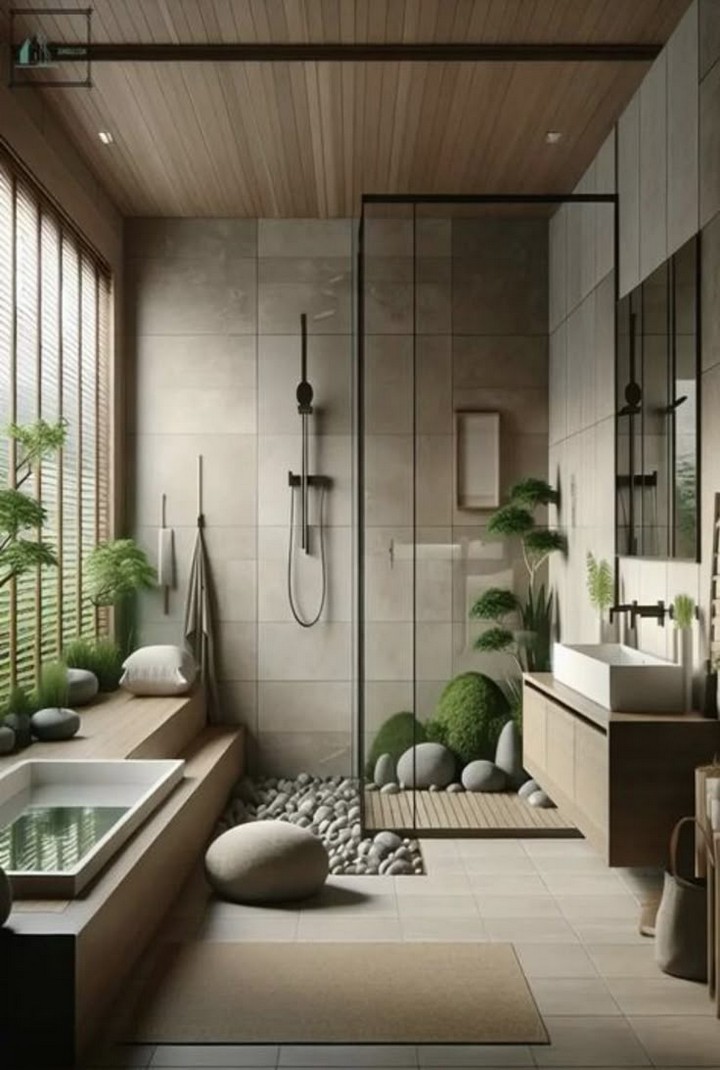
Fixtures in Japanese bathrooms are designed for utility and understated beauty, avoiding ornate or overly decorative styles. Wall-mounted faucets, integrated sinks, hidden shower controls, and minimalistic hardware dominate.
Typically finished in natural metals that age gracefully, they lend timelessness and avoid disrupting the room’s quiet simplicity.
11. Textural Diversity for Visual Depth
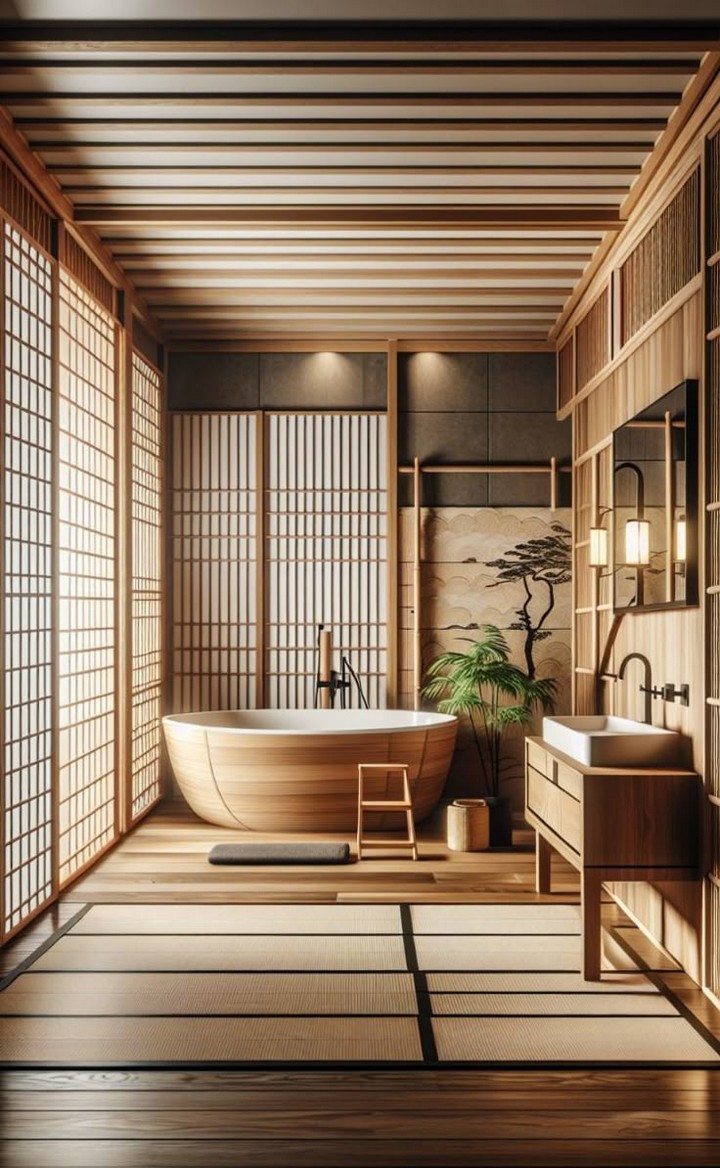
Despite minimalist tendencies, Japanese bathrooms avoid visual flatness by layering textures—contrasting polished stone with rough timber, woven accents, or varied tile finishes. These tactile contrasts enrich the sensory atmosphere without relying on bold colors or busy patterns.
This is especially effective in compact bathrooms where texture introduces warmth and interest without overcrowding.
12. Light Diffusion Inspired by Shoji Screens
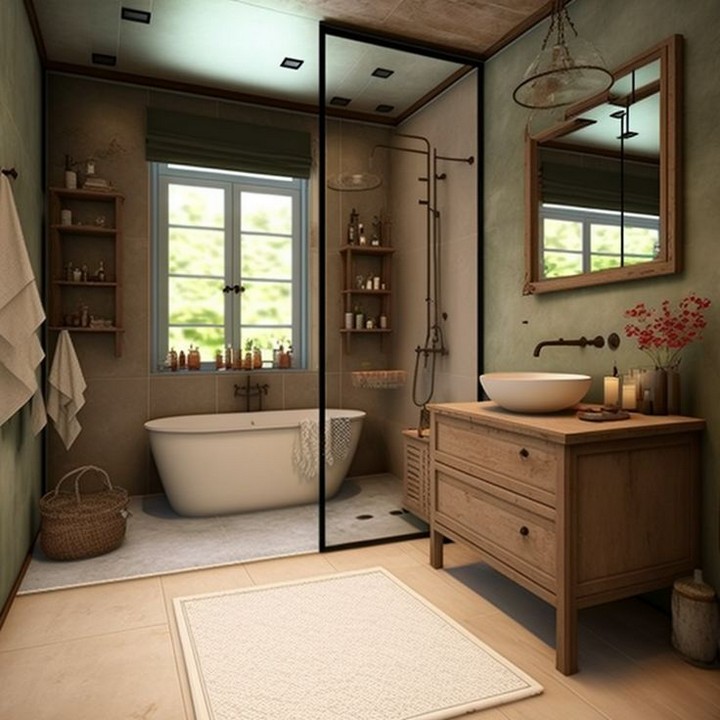
Borrowing from traditional shoji screens—translucent paper panels framed in wood—modern Japanese bathrooms use frosted glass, resin panels, or delicate window films to achieve soft, diffused light. These solutions preserve privacy while bathing the space in gentle, natural illumination.
This filtered lighting fosters calm and reduces harsh contrasts, enriching the bathing atmosphere throughout daylight hours.
Intentional Architecture: Shaping Experience Through Space
13. Engawa-Style Transitional Areas
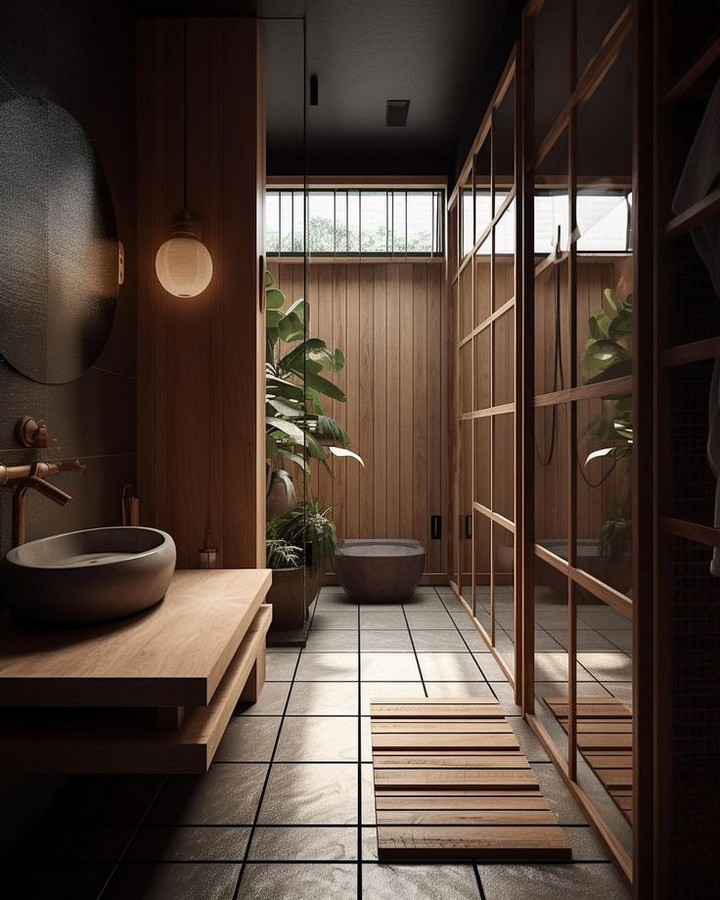
Inspired by the engawa—the covered, semi-outdoor corridors bridging indoors and outdoors—Japanese bathrooms often incorporate buffer zones between bathing spaces and the rest of the home. These may be narrow anterooms for changing or seating, or subtle shifts in materials that signal entry into a contemplative environment.
Even limited spaces can apply this by varying floor textures or introducing slight level changes, mentally preparing users for the bathing ritual ahead.
14. Shakkei: Incorporating “Borrowed Scenery”
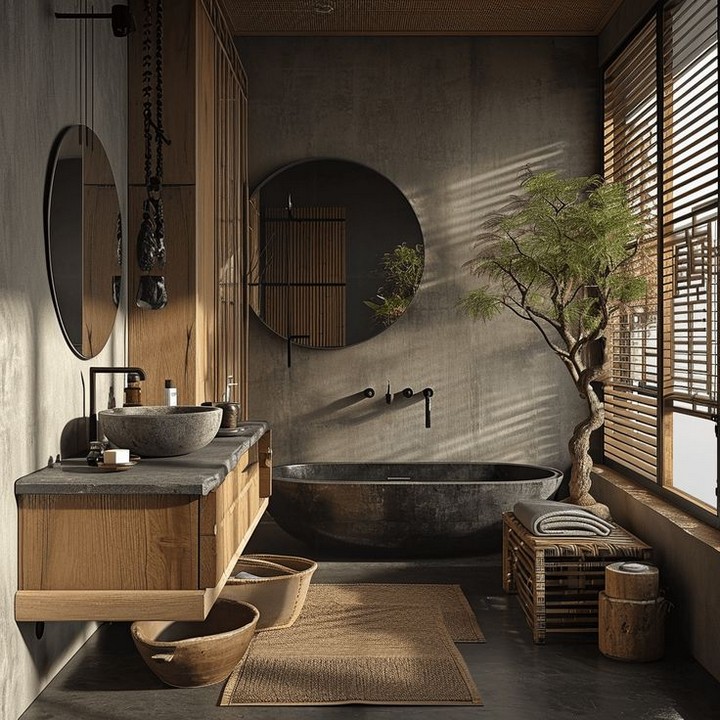
The gardening principle of shakkei, meaning “borrowed scenery,” encourages framing views of outdoor nature from within interior spaces. Japanese bathrooms often feature windows, glass walls, or reflective surfaces positioned to connect bathers visually with gardens, trees, or natural light.
When direct outdoor views are unavailable, interior courtyards, green walls, or strategically placed plants provide similarly calming natural elements to extend the sense of openness and tranquility.
15. Decorative Niches Modeled on Tokonoma
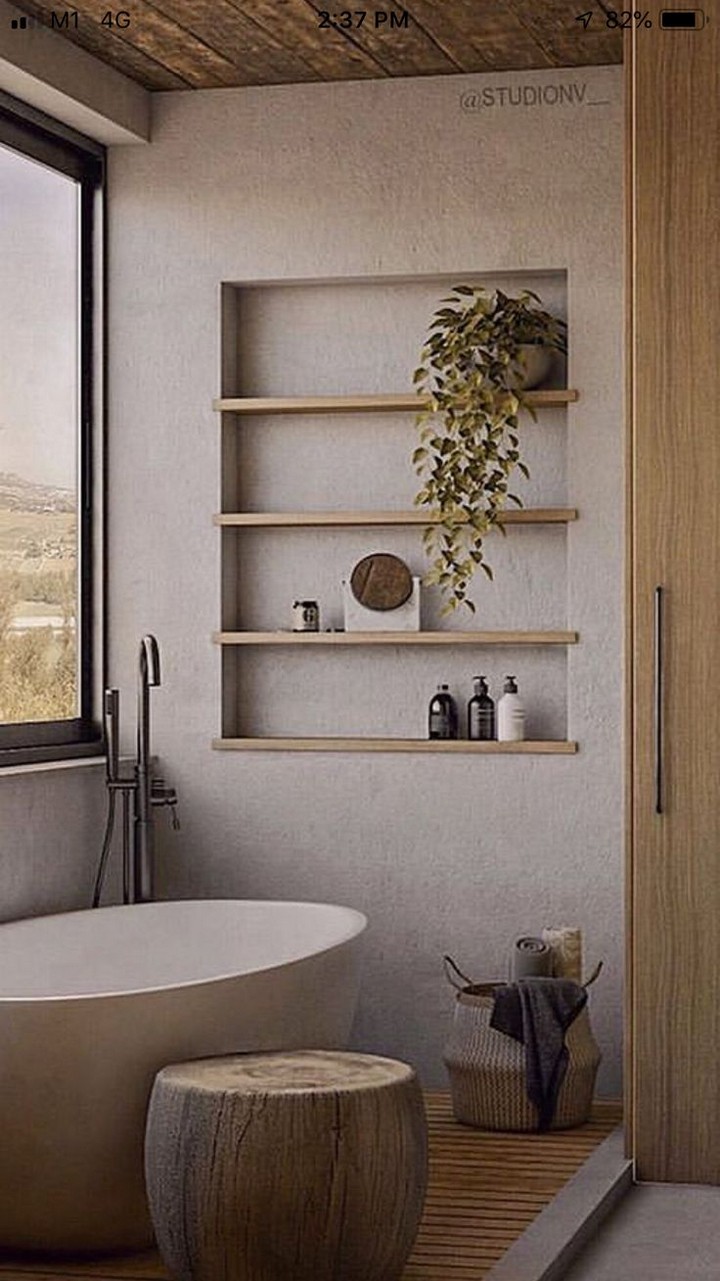
Echoing the tokonoma alcoves used in Japanese homes for displaying art or seasonal flowers, bathrooms often include built-in niches with varying sizes that blend storage and decoration. These asymmetrical niches can hold items like folded towels beside a lone river stone or a freshly cut flower, merging utility with a subtle aesthetic narrative.
This approach encourages curation and mindfulness over accumulation, reinforcing the room’s contemplative nature.
16. Spatial Zoning Through Level Shifts
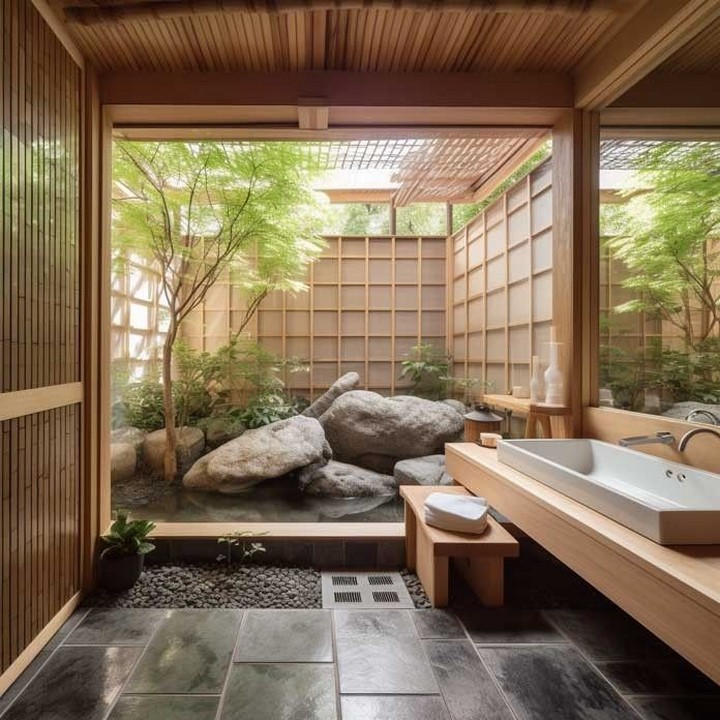
Instead of full partitions, Japanese bathrooms often use slight elevation changes—steps a few centimeters high or gentle slopes—to demarcate functional areas such as washing, soaking, and dressing. This subtle spatial definition preserves openness and fluid movement while providing psychological cues to shift focus.
This design accommodates inclusive bathroom layouts while enhancing the ritualistic flow of bathing.
17. Use of Skylights and Soft Natural Illumination
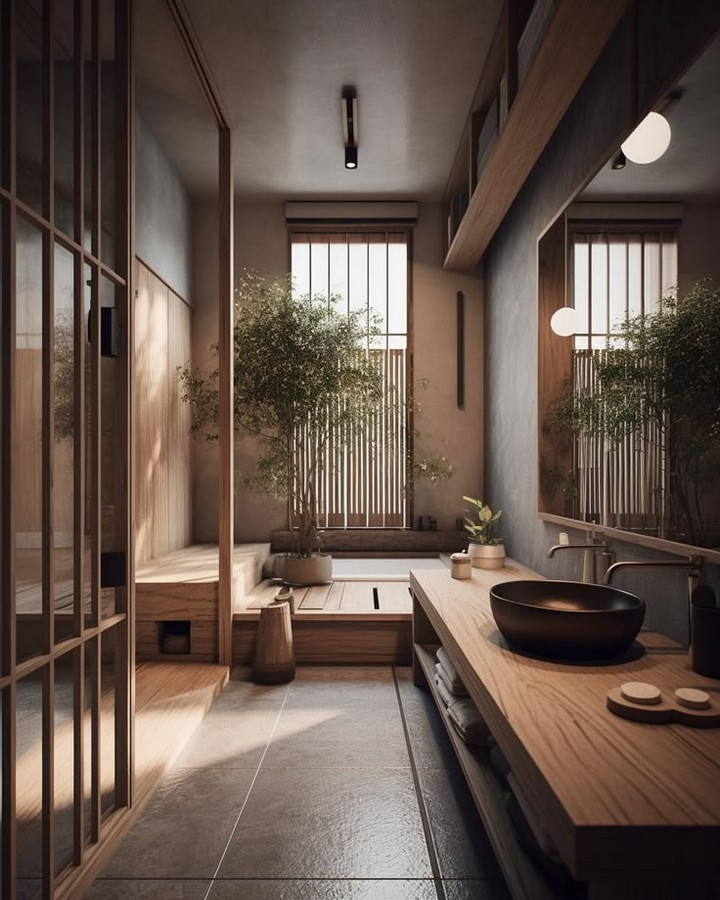
Natural light plays a pivotal role, with skylights, clerestory windows, or light shafts channeling indirect sunlight. This lighting produces gentle, ambient illumination that changes dynamically throughout the day, enhancing moods and linking the interior environment with natural cycles.
Artificial lighting in these spaces often mimics this softness, avoiding harsh brightness and reinforcing the serene atmosphere.
Materials: Tradition Meets Contemporary Innovation
18. Hinoki Cypress and Its Modern Substitutes
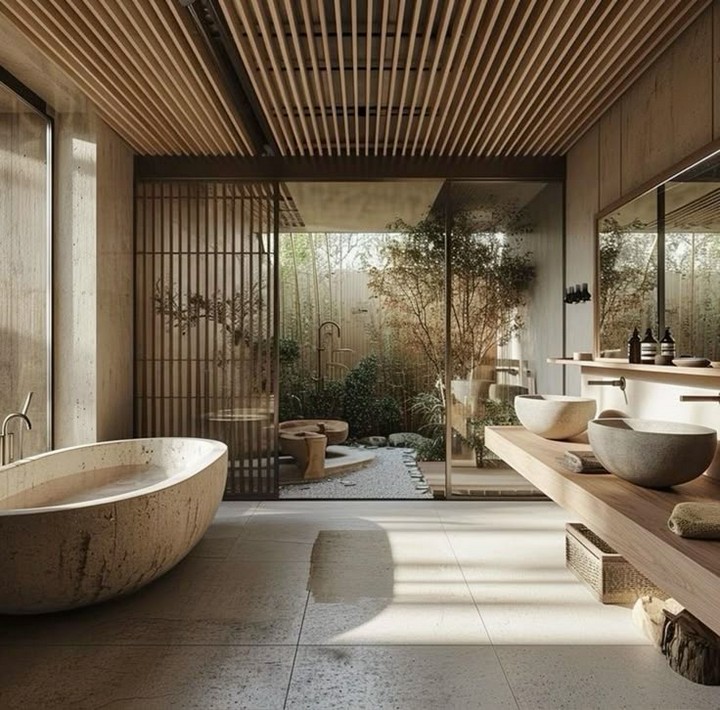
Hinoki, a fragrant and naturally water-resistant cypress, has traditionally been a favorite for Japanese baths. Today, due to practical considerations like cost and upkeep, alternatives such as cedar, teak, or engineered wood-like porcelain tiles replicate its visual appeal and beneficial qualities.
These materials balance aesthetic authenticity with durability and environmental sustainability, allowing for spaces that honor tradition while meeting modern demands.
19. Artistic Uses of Washi Paper
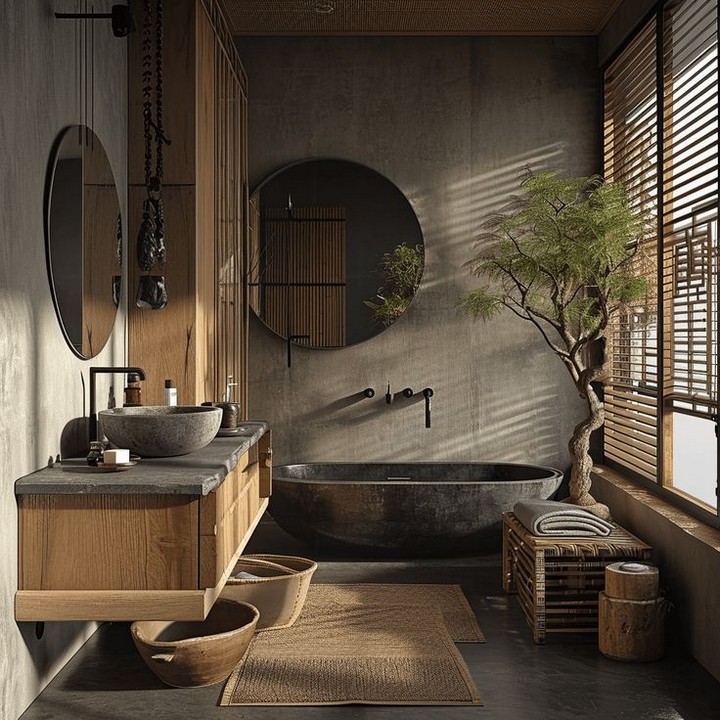
While traditional washi paper is unsuitable for moisture-prone spaces, its unique translucency and texture inspire modern bathroom elements: translucent resin panels with embedded fibers evoke washi’s feel, waterproof laminated papers enrich lighting fixtures, and resilient wall coverings mimic its nuanced surface.
These details add warmth and depth, softening the ambient hard surfaces common in wet rooms.
20. Incorporating Smooth River Stones
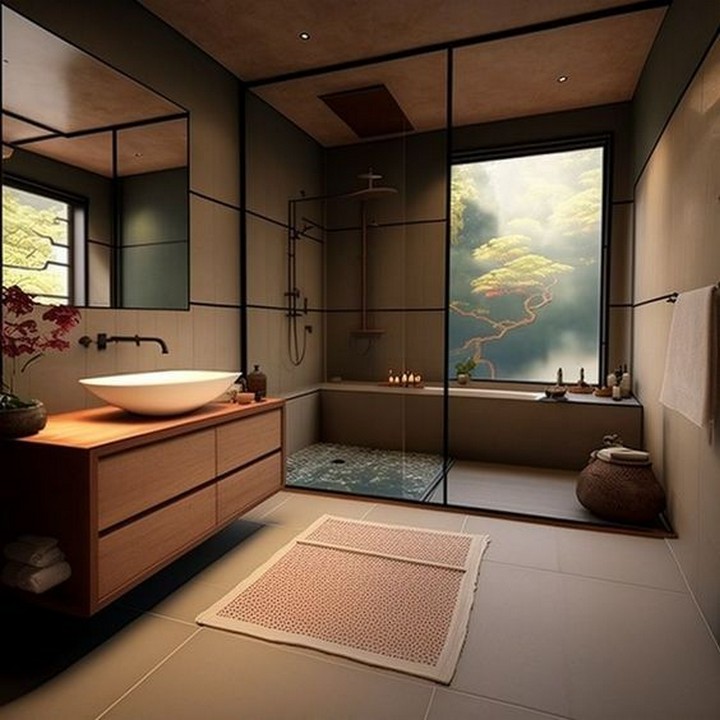
Polished river stones, shaped over decades by flowing water, are traditional in washing areas for foot massage and aesthetics. Contemporary interpretations include pebble mosaic inserts for flooring, concrete surfaces embedded with stones, and tile patterns inspired by river rock contours.
Each unique stone introduces natural variation, enhancing texture and slip resistance while forging a palpable connection to the natural world.
21. Innovative Bamboo Utilization
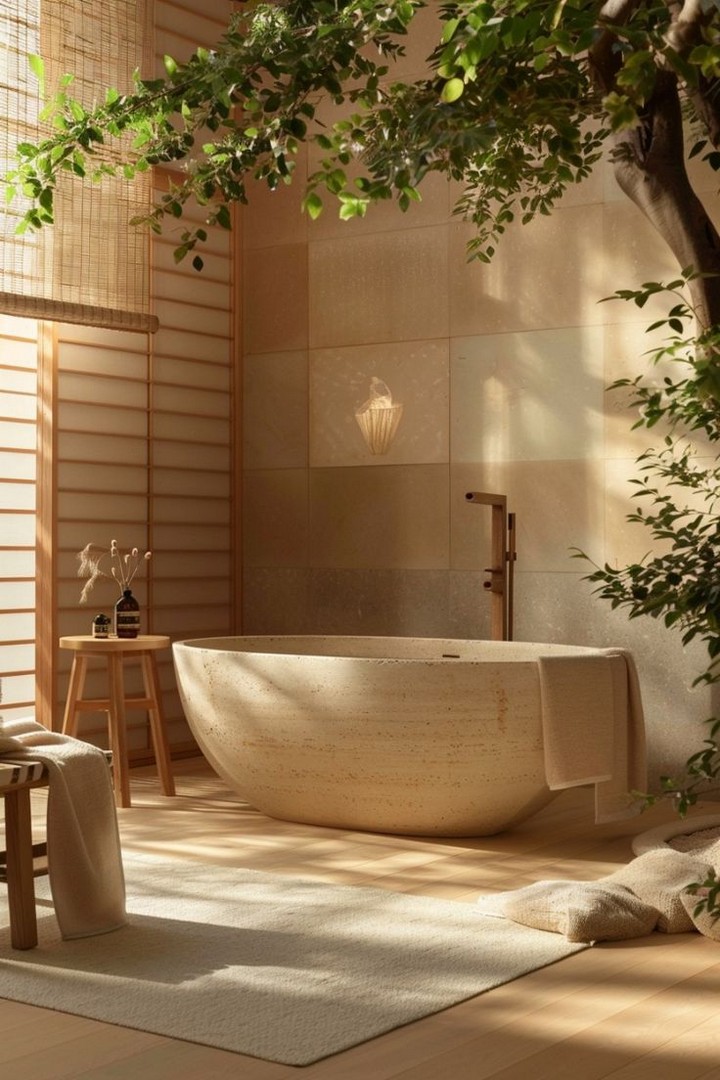
Bamboo’s rapid growth, strength, and cultural resonance have inspired diverse modern bathroom applications beyond traditional stools and buckets. These include engineered bamboo flooring resistant to moisture, bamboo composite countertops, and charcoal-infused bamboo panels adept at moisture absorption and deodorization.
This blend of heritage and innovation supports sustainability while enriching aesthetic authenticity.
22. Clay and Tadelakt Plaster Finishes
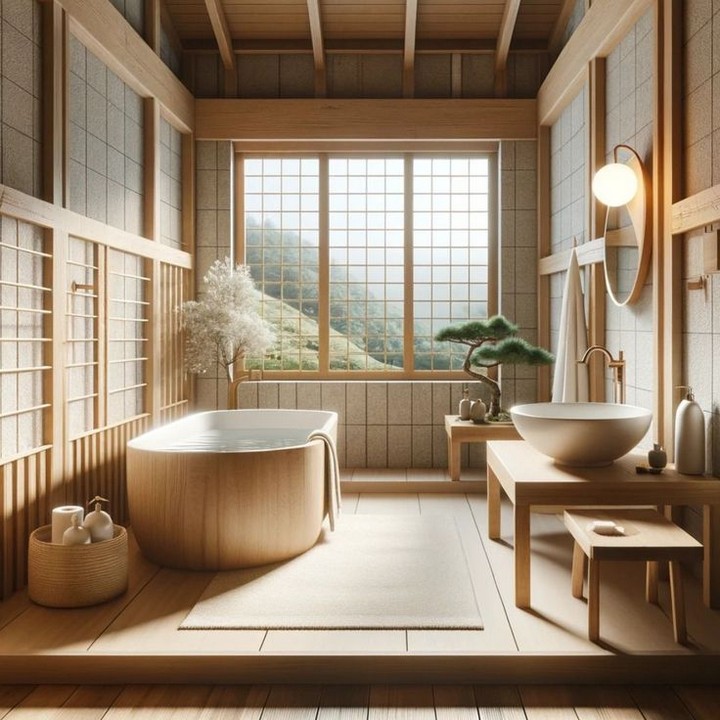
Traditional Japanese walls use clay plasters reinforced with organic fibers, resulting in textured, breathable surfaces. Contemporary bathrooms honor this by applying materials like tadelakt lime plaster—a waterproof, polished finish originating from Morocco—and refined clay formulations designed for humid conditions.
These finishes respond elegantly to changes in light while providing practical advantages in humidity control, mold resistance, and acoustic dampening.
Technological Advancement Integrated with Classic Elegance
23. Cutting-Edge Toilets with Streamlined Form
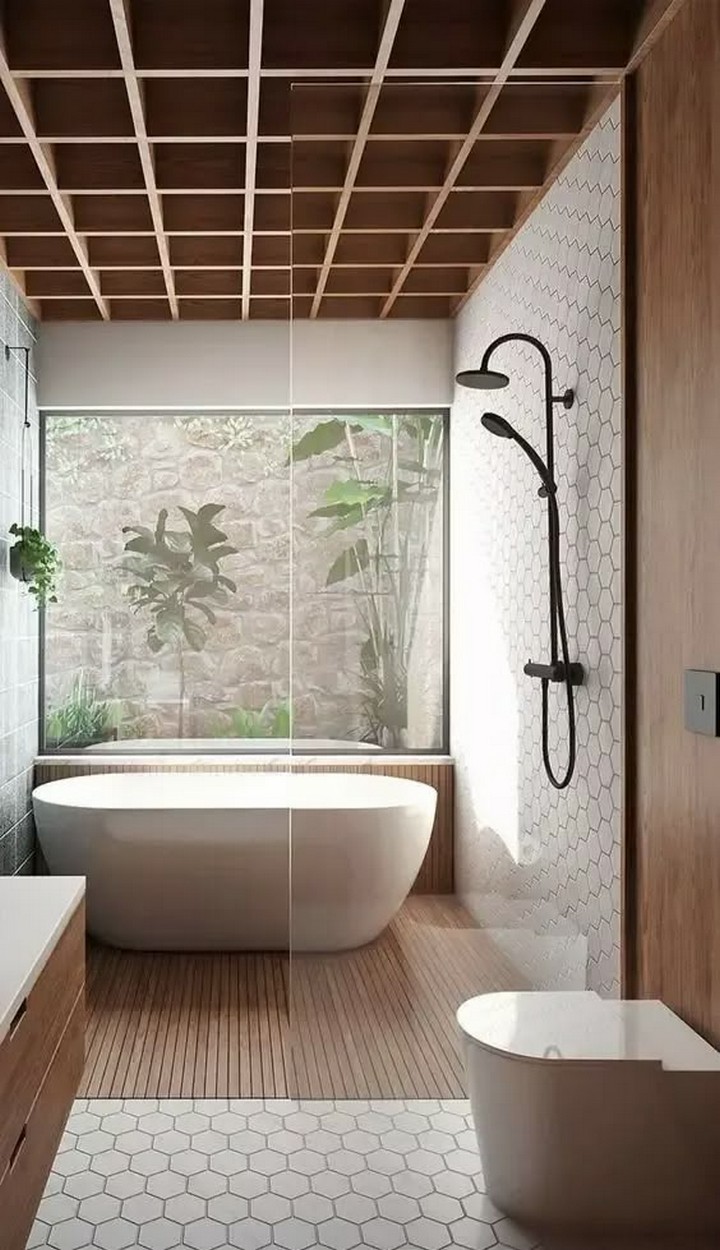
Japan leads globally in smart toilet technology, balancing multiple high-tech functions—heated seats, automated lids, bidet options—with elegant, minimalist designs. These toilets keep technology discreet, avoiding visual clutter while enhancing comfort.
Hidden controls and subtle interfaces maintain the room’s tranquil look, demonstrating that technological sophistication can harmonize with understated aesthetics.
24. Precision Water Temperature Management
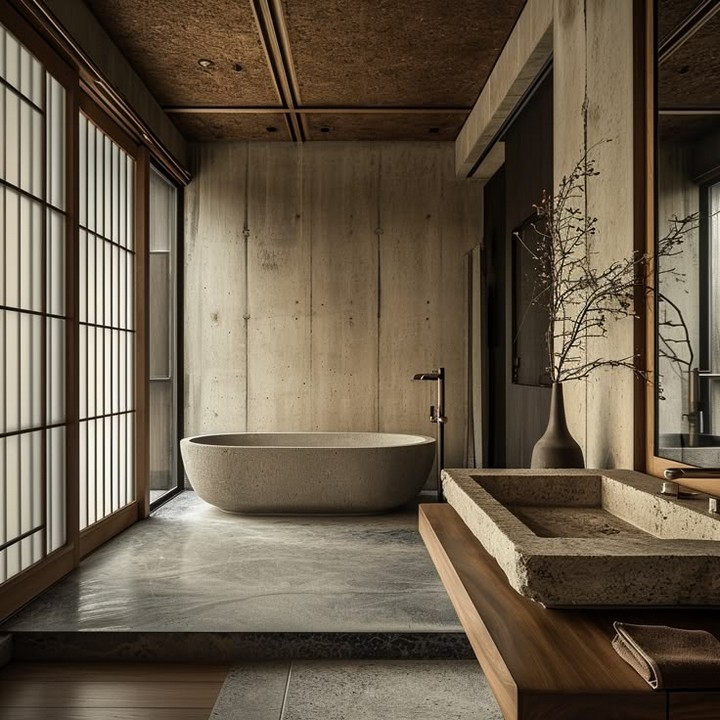
Japanese bathing tradition emphasizes maintaining optimal water temperatures for relaxation and health. Modern bathrooms incorporate advanced temperature regulation technologies—digital thermostats, circulating systems, and programmable timers—that keep the bath at ideal warmth without frequent manual adjustments.
These features are typically controlled via discreet panels or smartphone apps, preserving aesthetic continuity while elevating user convenience.
25. Integrated Climate and Ventilation Systems
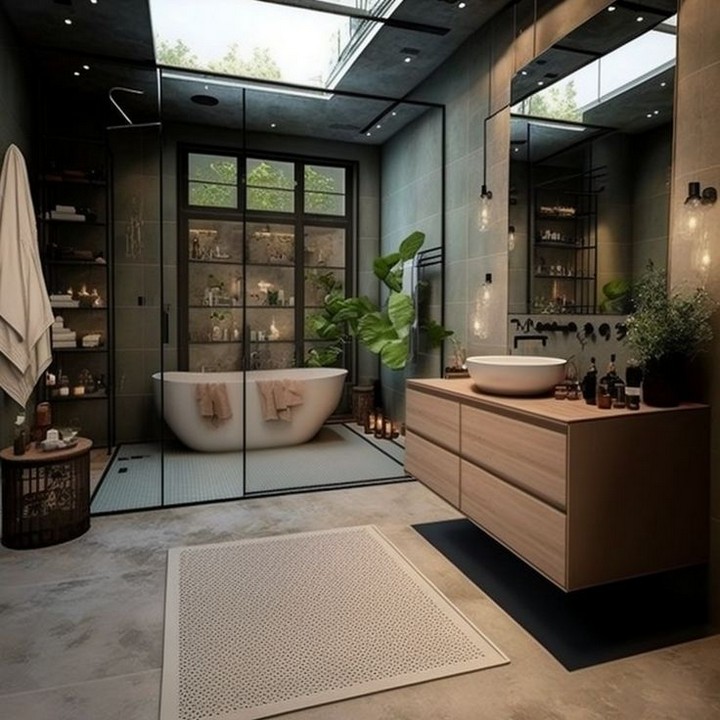
Effective humidity control is crucial in bathrooms. Japanese designs often feature quiet, concealed ventilation systems—such as architectural-channel extraction or responsive climate control—that prevent moisture buildup without intrusive noise or bulky equipment.
This aligns with the Japanese ideal of working harmoniously with natural airflow, offering comfort without technological imposition.
26. Touch-Free Fixtures with Traditional Inspiration
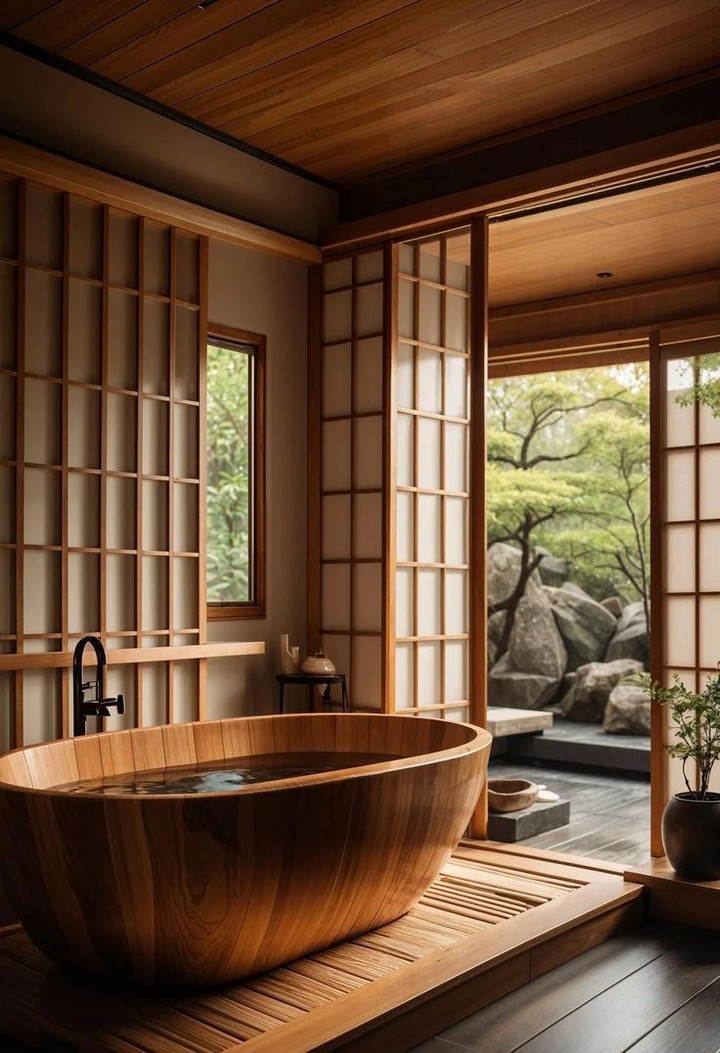
The cultural reverence for hygiene is evident in touchless faucets and controls that reduce surface contact. However, unlike stark Western designs, these fixtures echo traditional Japanese forms—such as bamboo-inspired spouts or discreet wall panels.
Automatically controlled tubs or hands-free lighting combine convenience with elegance, creating spaces that feel modern yet rooted in heritage.
Philosophy in Design: Depth Beyond Aesthetics
27. Appreciating Ma: The Power of Emptiness
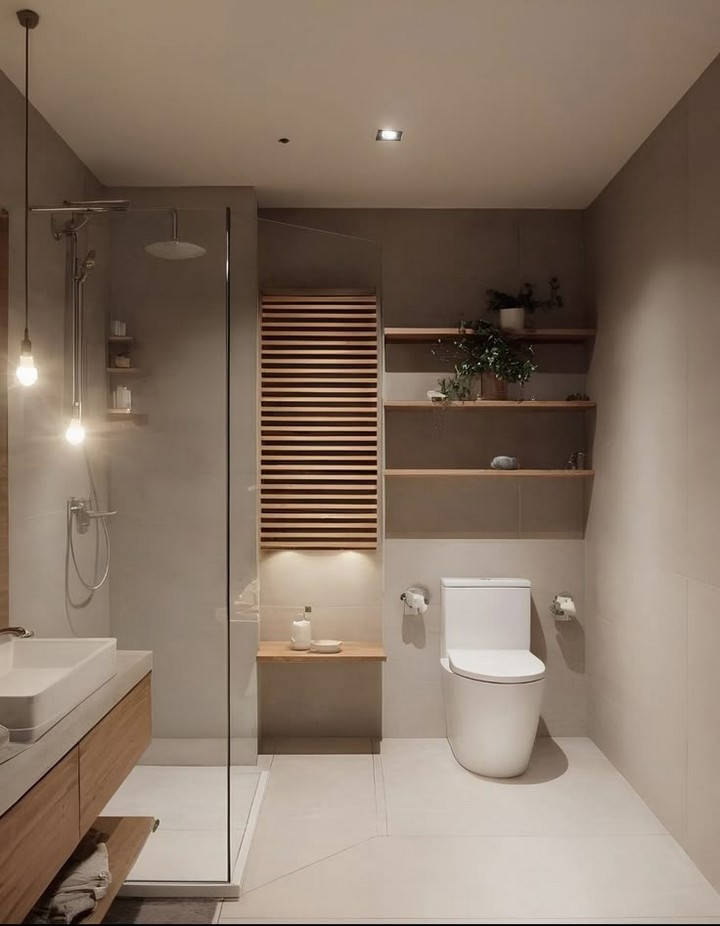
Ma, the concept of valued negative space, embraces openness as a vital design element rather than a lack. Japanese bathrooms embody this by intentionally spacing fixtures and allowing surfaces to remain uncluttered, highlighting materials and light interplay.
This intentional restraint encourages a paced, contemplative experience and counters the Western inclination to maximize every inch with storage or features.
28. Wabi-Sabi: The Elegance of Imperfection
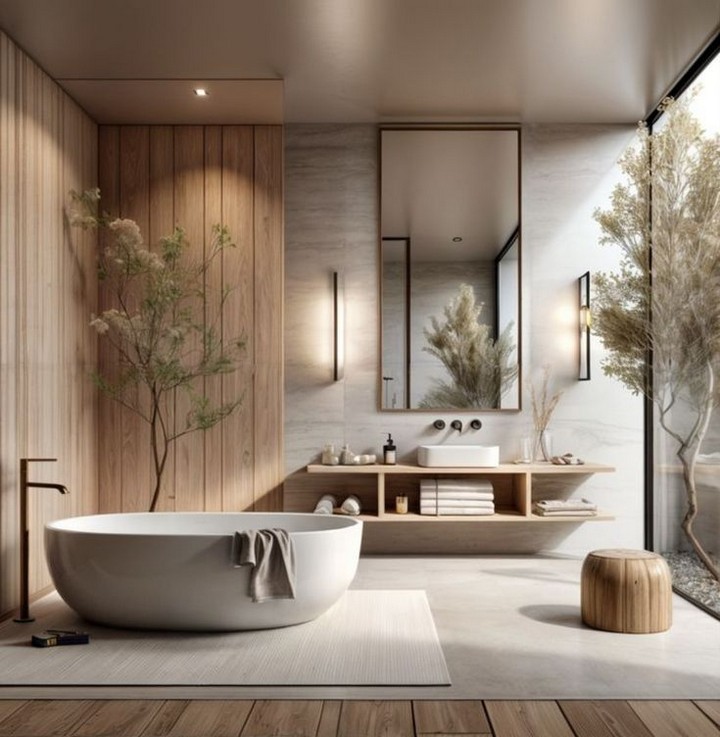
Embracing natural impermanence and imperfect beauty, the wabi-sabi aesthetic celebrates materials that bear marks of time and use. Copper fixtures develop patinas, stone veining stands out in variance, and wooden surfaces gracefully age, all contributing to a bathroom’s character and depth.
This acceptance of transience invites relaxation from perfectionism and a mindful appreciation of evolving beauty.
Enduring Elegance: The Timeless Appeal of Japanese Bathroom Design
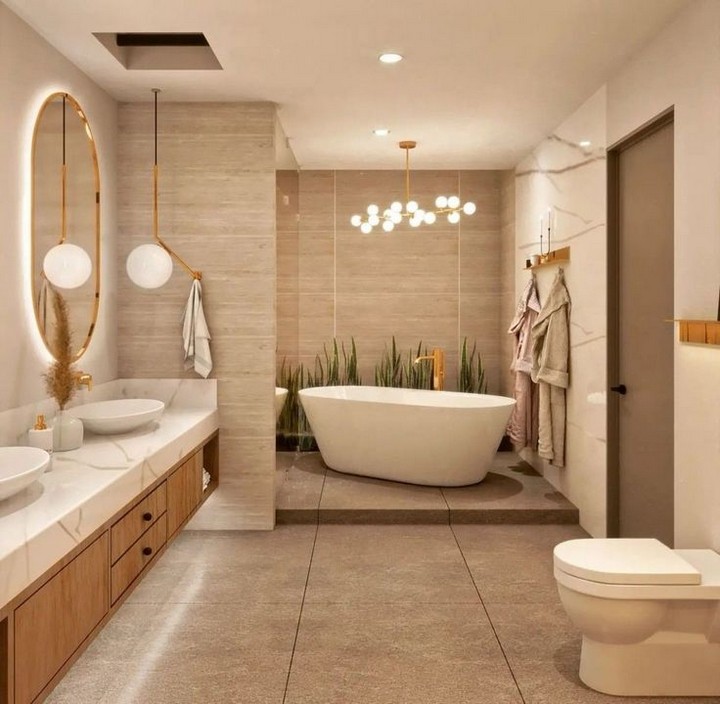
Japanese bathroom design transcends mere visual trends, offering a paradigm focused on experience, ritual, and harmony. These 28 features, adaptable across various budgets, spaces, and tastes, enable anyone to infuse their bathrooms with intentional beauty and functionality.
As wellness and mindfulness continue gaining importance in home environments, the enduring wisdom embedded in Japanese design principles shines as an inspiring, practical guide to crafting spaces that nurture both the body and the soul.
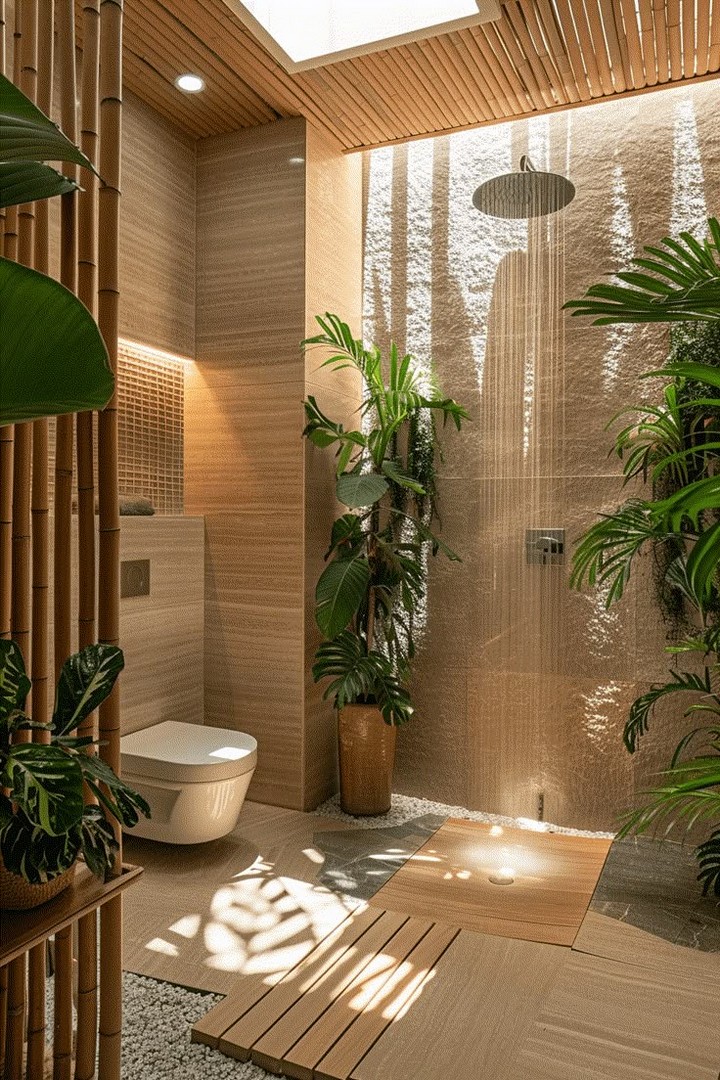
Have you incorporated Japanese design elements into your bathroom? Which principles resonate most deeply with your lifestyle and vision? We invite you to share how embracing these ideas has transformed your daily rituals, either in the comments or by tagging us on social media!
Explore premium Japanese bathroom fixtures, elegant hinoki wood bathroom products, and innovative bamboo bathroom accessories today to begin your own transformation.
As an Amazon Associate I earn from qualifying purchases.