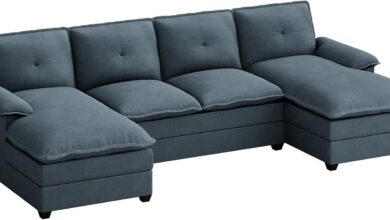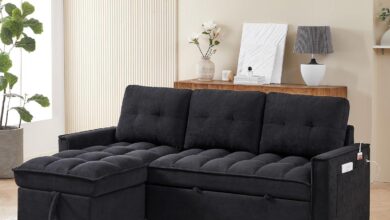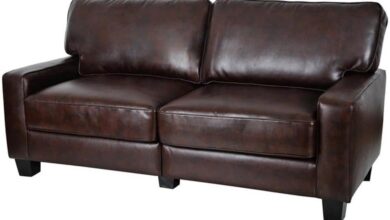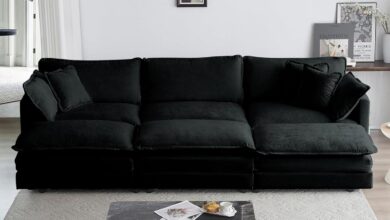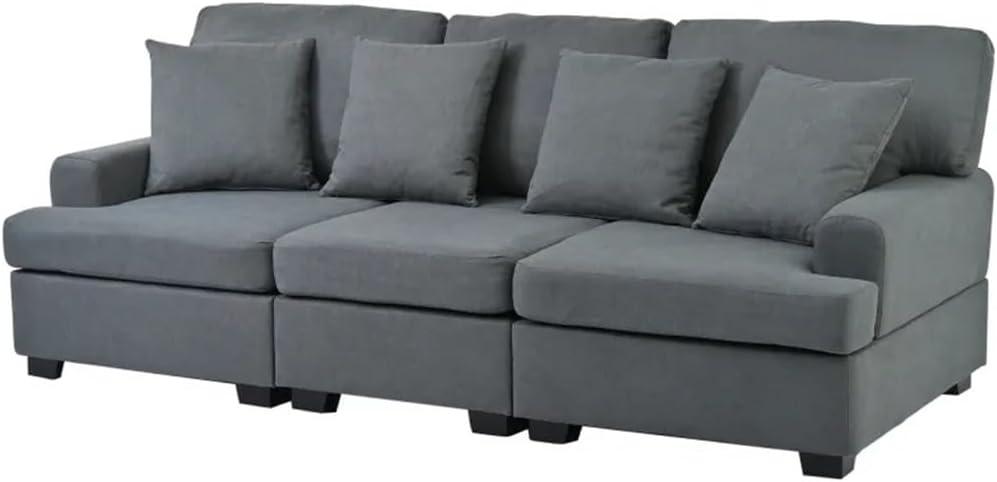
3 Seat Sofa with Removable Back (D): a spot for your movies

A quick sweep of your hand across teh cover picks up a linen-like tooth—soft but with a little texture where the cushions have already given in. The three-seat silhouette reads practical rather than precious: a low back, removable cushions that tuck and unzip, and four toss pillows that break the line into more approachable pieces. From across the room the rubber-wood legs and laminated frame lend a steady visual weight without looking bulky. Sit and the pocket-sprung seats answer with a measured give; the foam and filling shape returns slowly under your palm. The Sofa Italsian 3-Seat Sofa with Removable Back and Cushions and 4 Comfortable Pillows (D) settles into the space like something that’s already been lived on—modest, tactile, and immediately familiar.
At a glance what this three seat sofa brings into your room
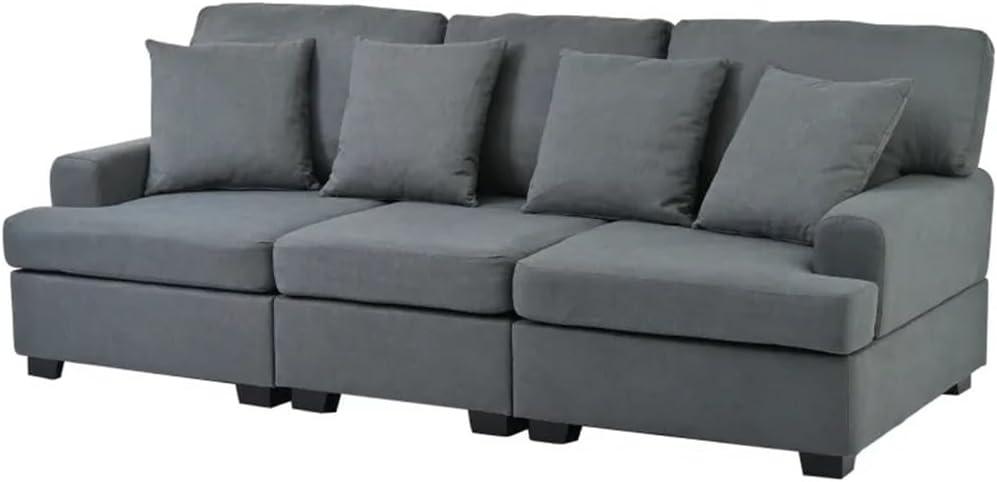
From across the room it reads as a grounded, three-seat presence that quietly defines a gathering spot. The back and seat cushions break the silhouette into broad planes, while the four loose pillows add small, movable accents that soften the lines. Natural creases form where hands and bodies meet the fabric; light and shadow pick out the weave and any gentle dimples in the cushions. the short rise of the legs leaves a visible floor gap that reduces visual heaviness, so the piece never feels like a solid block against a wall.
In everyday use the sofa’s personality shows up in small, repeatable ways: cushions slump a little after long stretches of sitting and then slowly regain shape when left untouched; pillows are nudged from corner to corner and often end up stacked or tucked behind heads; seams and fabric gathers are smoothed out between conversations.When the back pads are removed the frame becomes more exposed and the room takes on a slightly cleaner, more open look for however long you keep them off. Morning light shifts the tone of the upholstery across the day, and routine gestures — settling in, leaning an arm over the side, propping a pillow behind your lower back — are what give the sofa its lived-in cadence.
| What you notice first | How it behaves daily |
|---|---|
| Defined three-seat span and loose pillows | Pillows move frequently; cushions show soft creasing where people sit |
| Low-to-mid visual profile with leg clearance | Appears lighter in the room; leaves space underfoot that catches rugs and throws |
| Textured surface and broad cushion planes | Fabric tones shift with light; cushions settle into gentle dips after use |
How the silhouette, seam work, and fabric tone read together in ordinary light
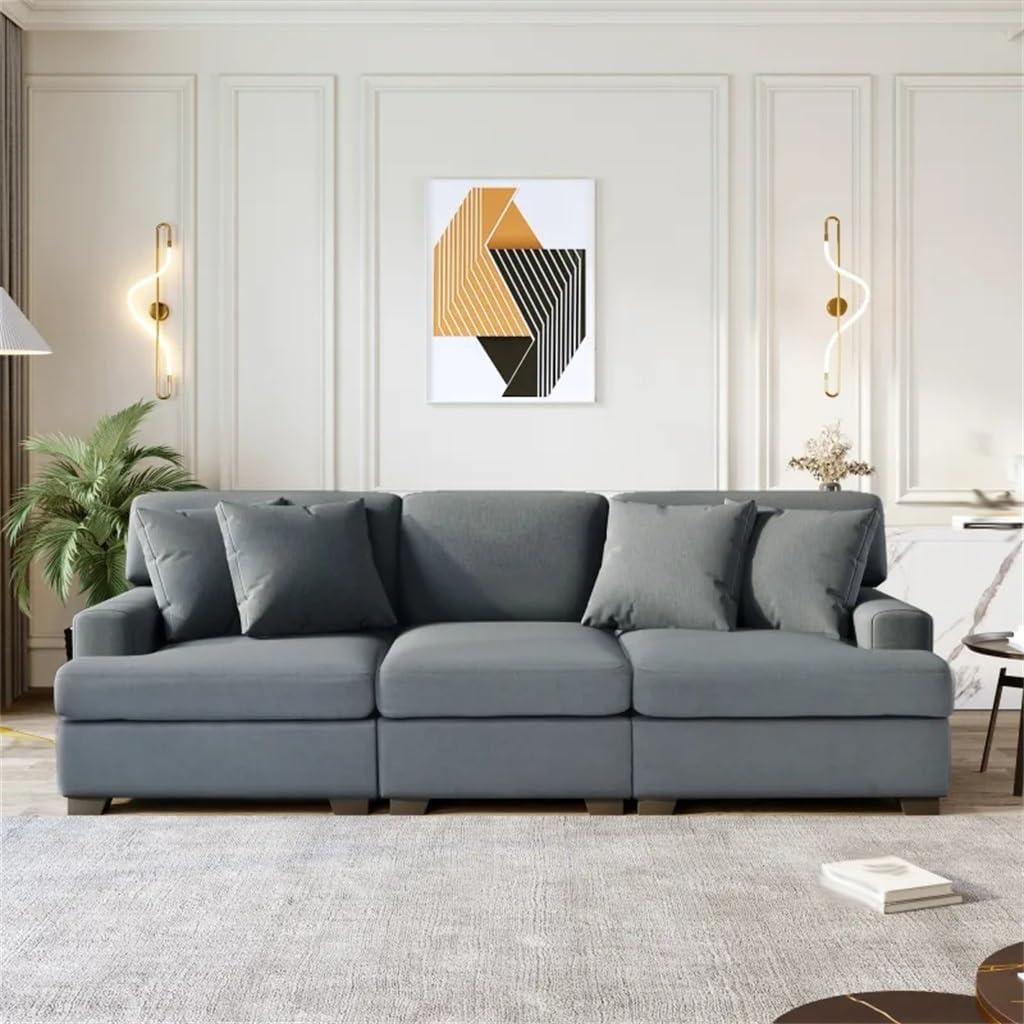
In ordinary daylight the overall shape reads as a composed, slightly softened block: from a few paces away the back and arms register as a continuous horizontal plane, while the seat plane sits as a distinct band beneath. Up close, you notice how the cushions settle into that outline — after someone has been sitting, edges slump a little and the profile rounds at the corners. When you straighten or fluff the cushions,the silhouette tightens back toward its original lines,though not perfectly; small creases and contour shifts remain where bodies compress the padding.
The seam work punctuates that silhouette.Seams trace shallow ribbons across the surface, catching thin bands of shadow in even light and helping your eye read seat divisions and cushion joins. As you shift or smooth the covers, seams can pull or relax, creating tiny puckers at stress points — most frequently enough where the back meets the seat or at the arm intersections. These momentary changes alter the perceived crispness of the form more than they change its basic geometry.
The fabric tone interacts with both silhouette and seams. In diffuse daylight the cloth appears steady and muted, with subtle tonal variation where the weave catches the light; when you brush your hand along the surface the tone lightens slightly along the nap and darkens where compression has flattened fibers. Those light-and-dark shifts emphasize the seam lines and the hollows of the cushions, so areas of frequent contact — the seat centers and arm tops — read a touch different in color and sheen than less-used planes. Taken together, silhouette, seams, and tone create a living, changing image that responds to use and small adjustments rather than holding a single static look.
| Feature | At rest (even daylight) | After use (seated/adjusted) |
|---|---|---|
| Silhouette | Clean horizontal planes with softly rounded corners | Edges soften; profile shows gentle dips where cushions compress |
| Seam work | Thin, shadowed lines that define panels | Lines may pull or pucker slightly at joins, highlighting wear points |
| Fabric tone | Even, muted surface with faint weave variation | Lightens or darkens with brushing and compression, accentuating contours |
How the removable back and cushions are engineered and how you handle them
The removable back cushions sit against the frame with a short fabric flap and a hidden attachment at the base; from close up you can see a zipper running along one seam and a pair of fabric loops tucked into a channel where small Velcro tabs or anchors hold the cushion in place.The seat cushions are shaped to nest into the frame and usually rely on friction or a low-profile hook strip along the underside to keep them from sliding forward when you sit. When you lift a back cushion away you’ll feel the inner fill shift and the cover give a little—nothing rigid—and the zipper tends to be easiest to work from the top corner rather than trying to tug from the middle of the seam.
In everyday handling you unzip or unclip starting at a corner and slide the cover off; the inner padding can sag a bit as you work, so you often tuck and smooth the corners back into place before zipping up again. Putting cushions back is mostly a matter of easing the back cushion into its channel and pressing the base against the Velcro or anchors until it snaps into position; seat cushions usually require a short shimmy to settle the underside against the frame. Small habits emerge: you smooth the front seam with your palm after reseating, pat the back cushion to redistribute filling, and give the seat a quick push to reseat it after someone gets up—these motions tend to keep the cushions aligned without much fuss.
| Action | What you do |
|---|---|
| Remove back cushion | Unzip or unclip at a corner, pull the cushion forward out of its channel, support the fill as it releases |
| Remove seat cushion | Lift from front edge, tilt up to clear frame, slide off any hook strip or anchor |
| Reattach cushions | Reposition into channel, press base against anchors or Velcro, smooth seams and pat to redistribute filling |
What the seat depth, foam layers, and the four pillows feel like when you sit down
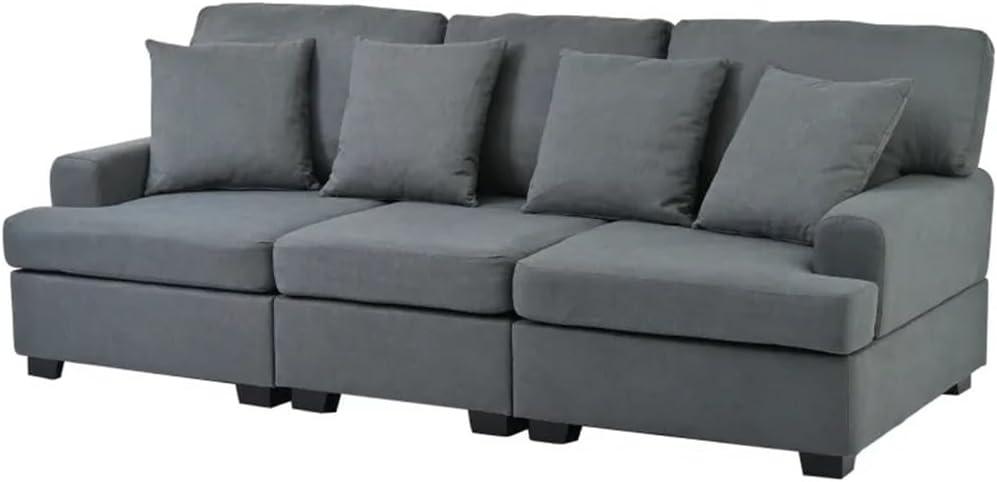
When you lower yourself onto the cushions you first notice how far back the seat takes you: ther’s room for your thighs to settle without feeling perched on the edge, and that extra depth encourages you to scoot back a bit so your spine meets the back cushions. The front edge yields under your knees with a gentle give; it isn’t a hard rim that cuts off circulation, but it does ask you to shift weight slightly if you want to sit more upright. As you move, the fabric and seams smooth out under your palms and the occasional small readjustment of the seat cushions feels almost automatic.
Underneath that initial sink is a layered response that becomes obvious within the first few seconds. The top layer compresses easily,offering a soft welcome,and then a firmer layer coupled with the support beneath pushes back,so the seat doesn’t collapse completely. That combination produces a mild rebound—when you stand and sit again the cushion springs back, though the pillows and top surface require a quick pat to regain their loft after heavier use.
| Layer | How it feels as you sit |
|---|---|
| Top surface | Immediate, plush give that cushions points of contact |
| Core and support below | Progressive firmness that re-centers your weight and returns a slight bounce |
The four loose pillows compress noticeably when you lean into them and then slowly settle back; they’re easy to squish with your forearm and tend to migrate when you shift positions. You find yourself tucking one behind the small of your back, flattening another to rest your head, or piling a couple to create a higher back support. In ordinary use they fluff back unevenly and need a routine nudge to stay in the spot you placed them, which is one of those small, repeated motions that becomes part of sitting here.
How this sofa matches your expectations and where you might run into limitations
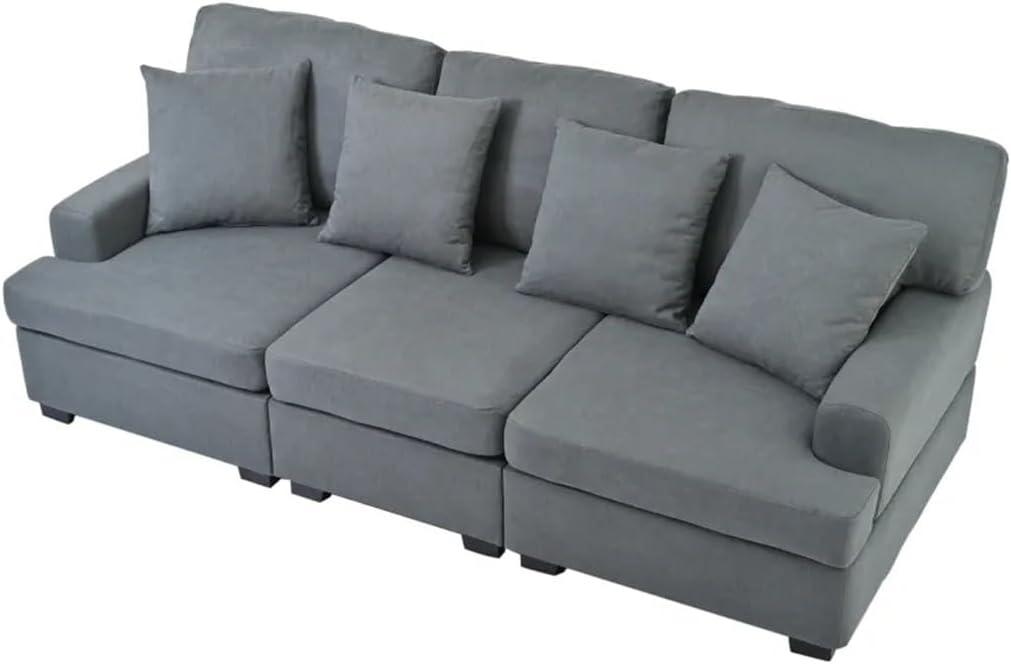
Observed in everyday use, the seating often aligns with initial expectations of comfort: the cushions give a noticeable, slightly springy rebound when sat upon and then settle into a softer profile over the course of an evening. The removable back pieces and loose cushions change the sofa’s feel as they are shifted—when pushed back they create a deeper, cocooning seat; when removed they expose firmer edges and require modest reshaping afterward. The four loose pillows contribute intermittent plumpness, though their fill tends to migrate with repeated leaning and will usually need occasional patting to restore loft. Small habitual actions—smoothing the fabric after rising,nudging a misaligned seam,or tucking a cushion back into place—become part of the typical interaction with the piece.
Certain limitations show up in normal rhythms of use. The removable elements can develop minor gaps or slip if not periodically repositioned, and seams or creases may become more visible where people habitually sit.Over time, seat impressions form in places of frequent use; the bounce that’s noticeable at first can soften and feel less defined after prolonged sessions. Assembly alignment can influence how flush the components sit together, and tight lounging positions tend to accelerate cushion displacement.These are common patterns rather than abrupt failures, and they tend to emerge gradually with daily use.
| Expectation | Observed in Use |
|---|---|
| Immediate comfort and spring | Springy at first, then settles into a softer, molded seat |
| Removable backs and cushions for flexibility | Allow rearrangement but require periodic readjustment to stay aligned |
| Pillows retain loft | Pillows flatten slightly over time and need occasional fluffing |
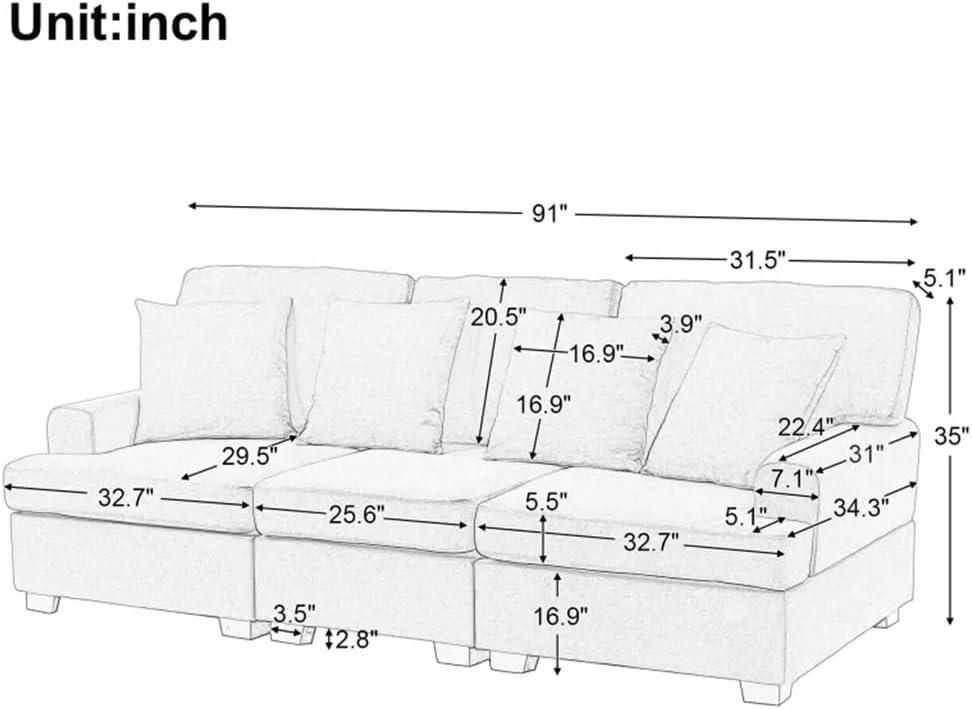
view full specifications and available options
Care details and practical handling for the covers,cushions,and everyday wear
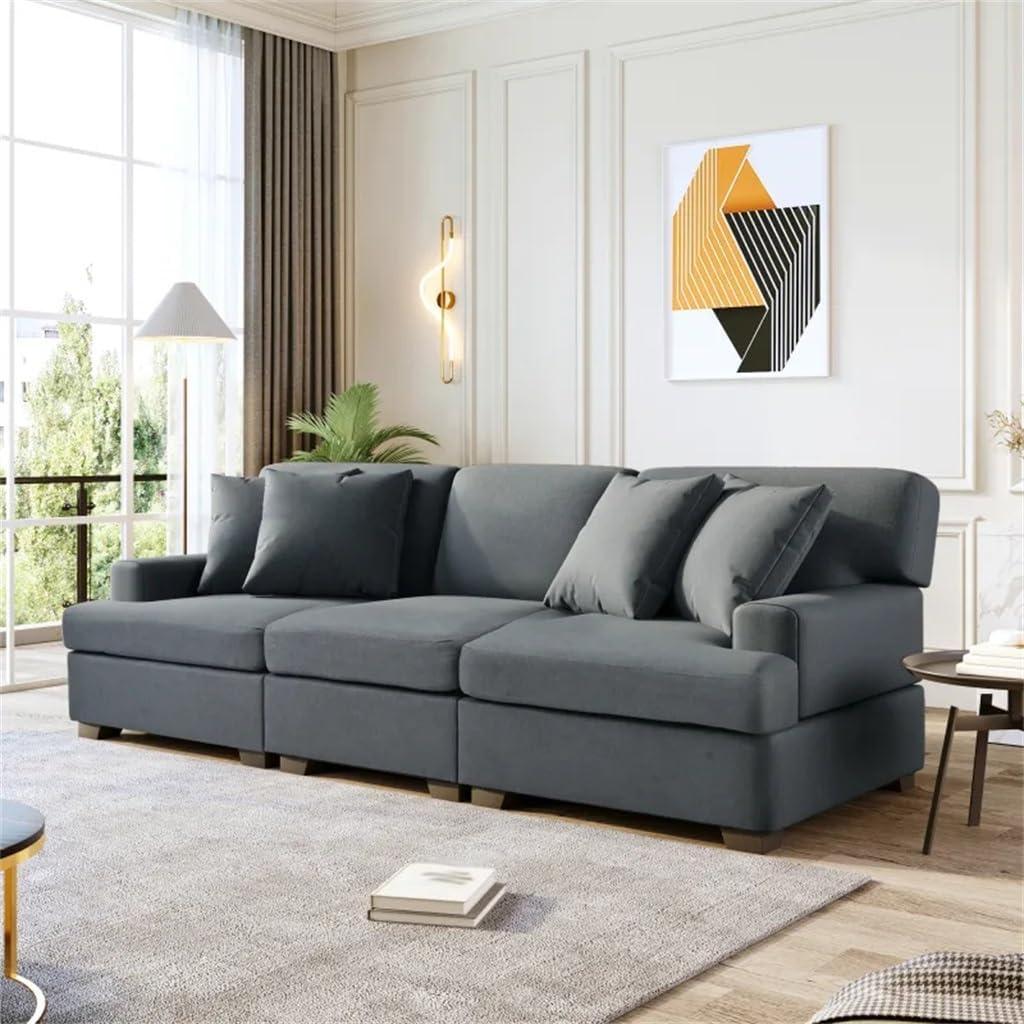
The removable covers unzip and lift away with little resistance, so when you take a cushion off you’ll immediately notice the inner core sitting a bit looser than before. Once exposed, the foam-and-spring pack inside can shift and crease; you’ll often find yourself easing the filling back into shape with your hands and smoothing the fabric over the corners. The back cushions slide out fully, which makes handling simpler but also invites the small, unconscious habit of readjusting them after every use.
Daily wear shows up as soft creasing where people sit and faint surface fuzzing on high-contact areas. You will likely plump and rotate the loose pillows a few times a week to keep their loft even, and you’ll tuck covers back into seams to reduce visible wrinkling. crumbs and pet hair gather in seams, and routine passes with an upholstery brush or vacuum attachment remove most of it without disturbing cushion placement. When spills happen,many people blot with a clean cloth immediately; at the same time,repeated smoothing or aggressive rubbing can cause temporary puckering along seams that you then restretch with your hands.
| Routine task | Typical handling / outcome |
|---|---|
| Quick touch-up | Smoothing fabric, plumping pillows — a short, visible recovery after sitting |
| Vacuuming | Removes surface debris from seams; cushions retain shape but loose fibers may lift |
| Removing covers | Zippers open fully; inner cores tend to compress and need reshaping before reinserting |
| Rotating/turning cushions | Distributes wear more evenly; you’ll notice slight differences in loft over time |
How the set Settles Into the Room
You notice, after a few weeks, the 3 Seat Sofa with Removable back and Cushions and 4 Comfortable Pillows(D) taking on the soft edges of everyday life, cushions compressing where people always sit and the removable back easing into a familiar slouch. In daily routines it becomes a place for small things — a folded throw, a paperback bookmarked mid-chapter, the way someone settles in to read — and its comfort shifts from neat to lived-in as the room is used. The surface accumulates faint impressions and the occasional scuff, each mark folded into regular household rhythms rather than singled out, so that evenings and mornings begin to feel a little more patterned around it. Over time it blends into the room and stays.
As an Amazon Associate I earn from qualifying purchases.