 goodworksfurniture Decoration and home design ideas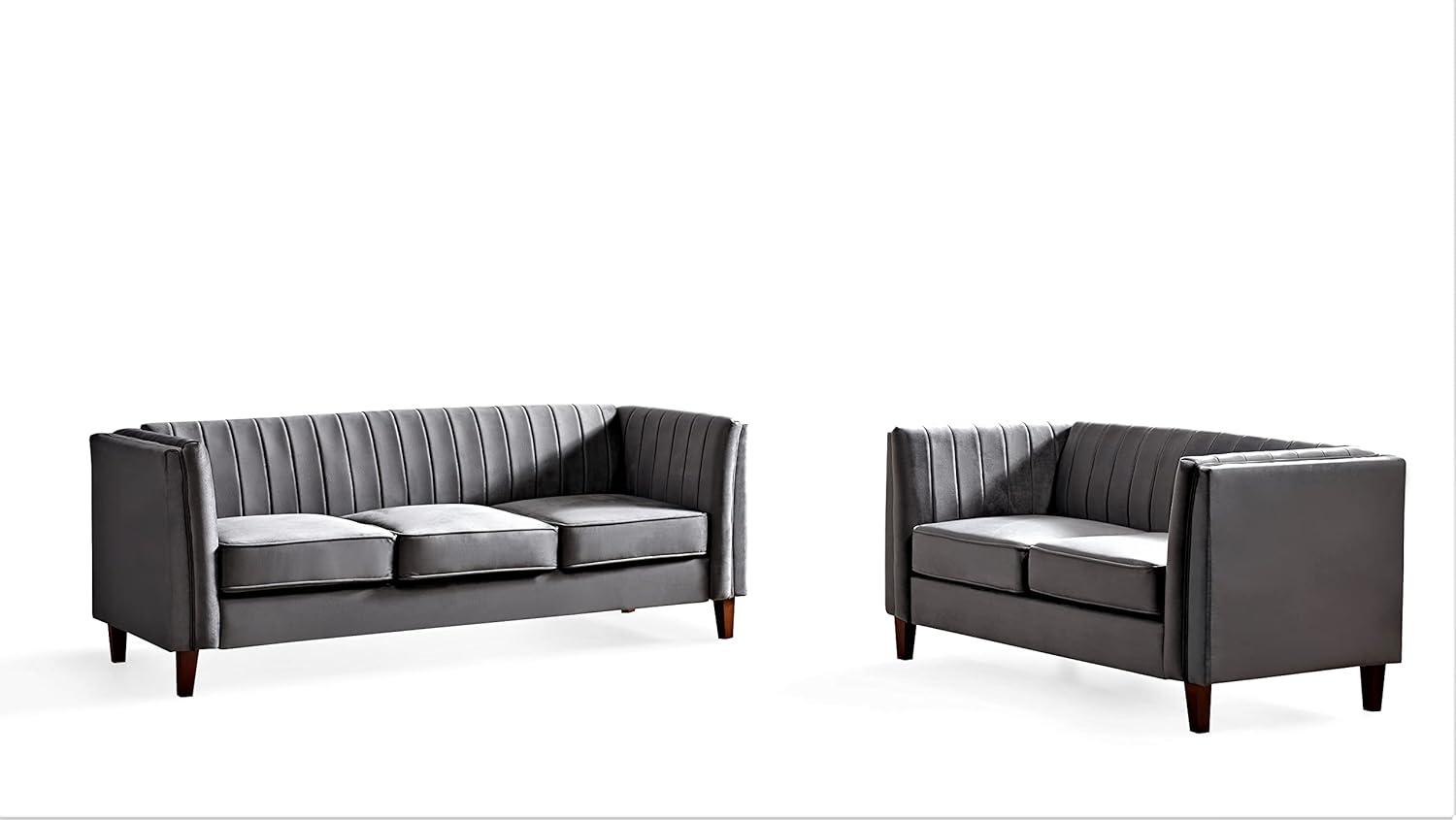
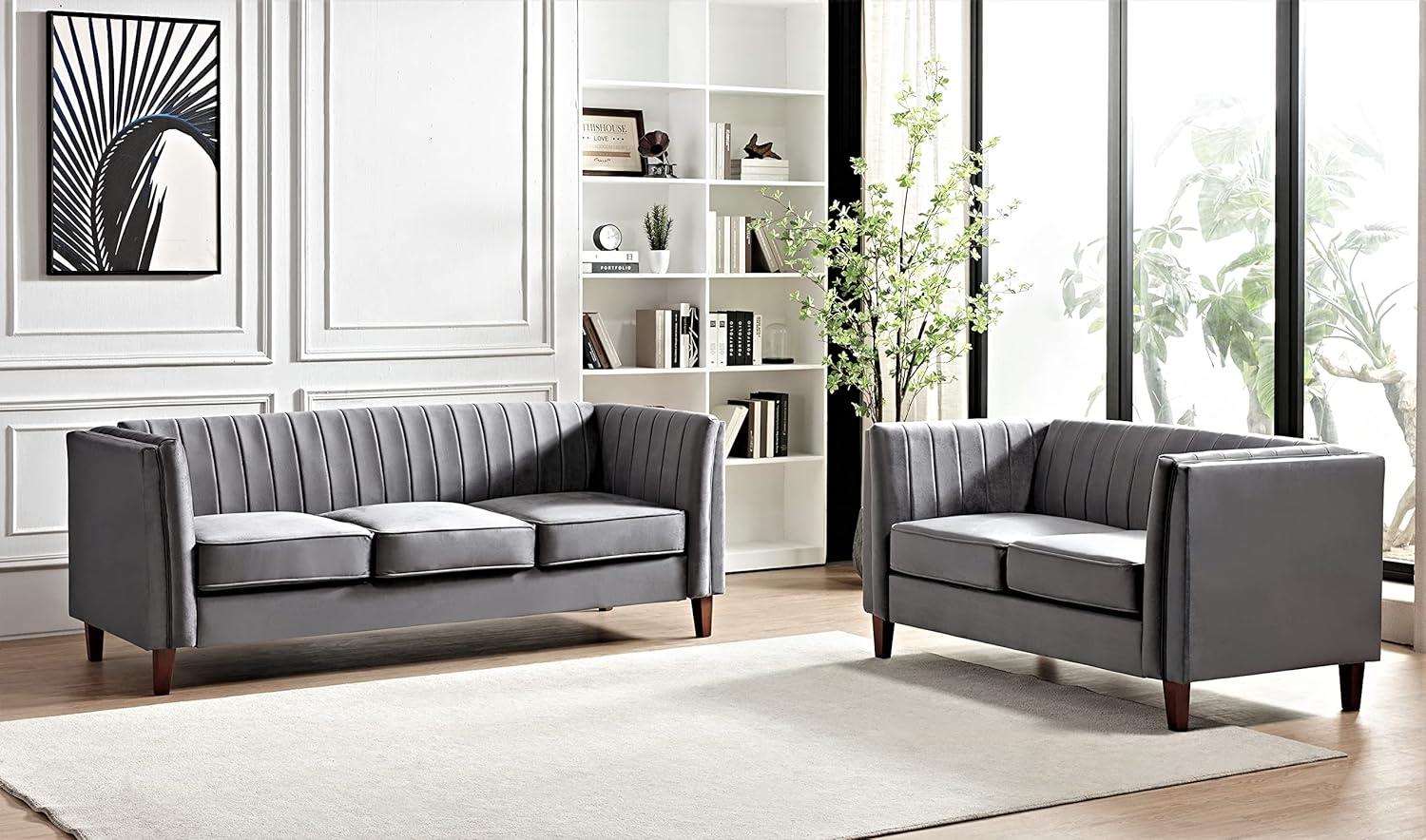
At first glance Container Furniture Direct’s Loveeat gray velvet sofa and loveseat read like a quietly glamorous pair—low-slung and broad-shouldered, their channel-tufted backs catching afternoon light in soft stripes. You run your hand along the short velvet nap and feel the cushions give: firm, springy resistance from dense foam rather than a sink-that-never-returns flop.The slim solid-wood legs lift the pieces just enough to let the rug pattern breathe, and in your living room the set settles into a calm, sculpted presence that feels measured more by visual weight and proportion than by flash.
A first look at your modern grey velvet two piece sofa and loveseat set
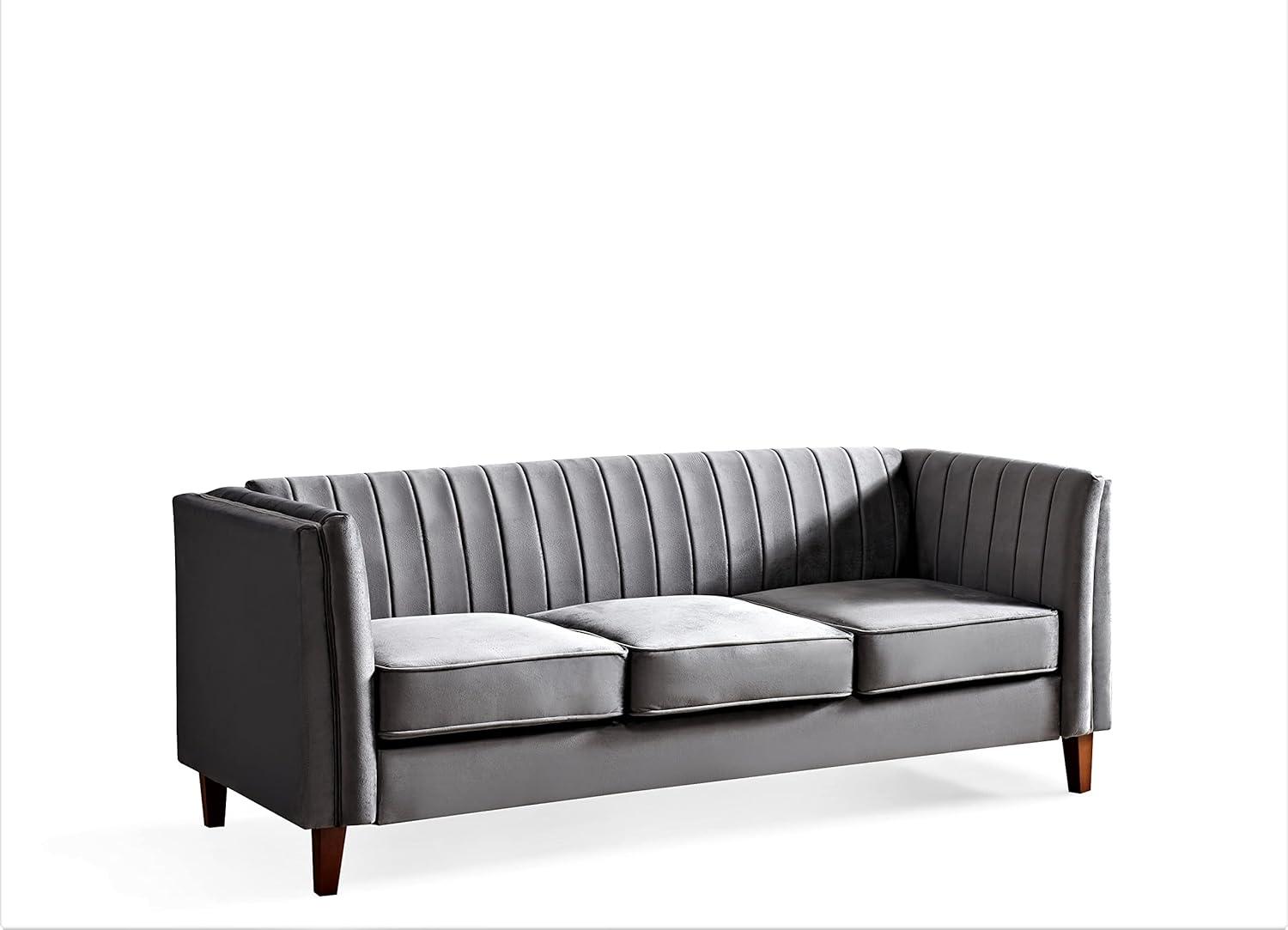
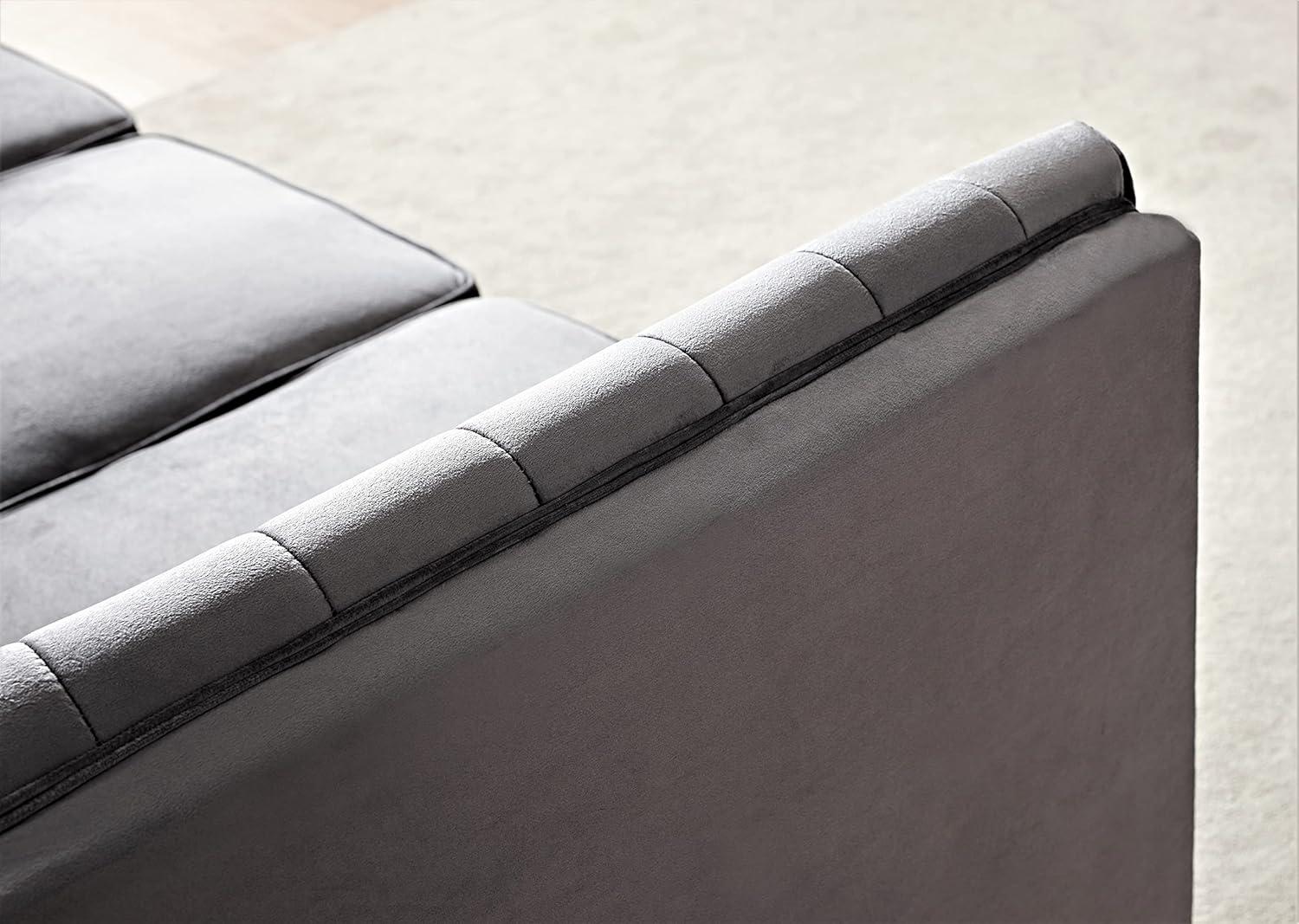
When you first step into the room, the set reads as a composed centerpiece rather than a scattered pair of seats. The grey tone shifts with the light, appearing deeper in shadow and subtly luminous where sunlight or lamps hit the upholstery; from a few paces away the channeling along the back and arms creates a steady vertical rhythm that organizes the eye. The frame lifts off the floor just enough to reveal a sliver of floor beneath, which changes how much visual weight the pieces assert—together they anchor a conversation area without closing it off. Up close, the seat surfaces look neatly tailored: seams and joins are visible but not fussy, and the cushions sit with a slightly rounded front edge that invites sitting and settling in rather than perching.
In everyday use that first impression evolves in small, familiar ways. The set adapts to a corner arrangement or a more central placement without losing that linear presence; you’ll notice light brushing across the fabric differently depending on how you angle the lamps or shift the sofa a few inches. Small habits show quickly—a throw draped over one arm, a book left between cushions, or the way people naturally adjust a seat after standing—and those little marks of use underline the pieces’ role in the room.
- Visual texture: fabric catches light and softens hard lines.
- Line and rhythm: channeling creates a repeating vertical flow.
- Spatial presence: raised frame and paired layout define a seating zone.
How it reads in the room: presence, proportions, and the velvet finish
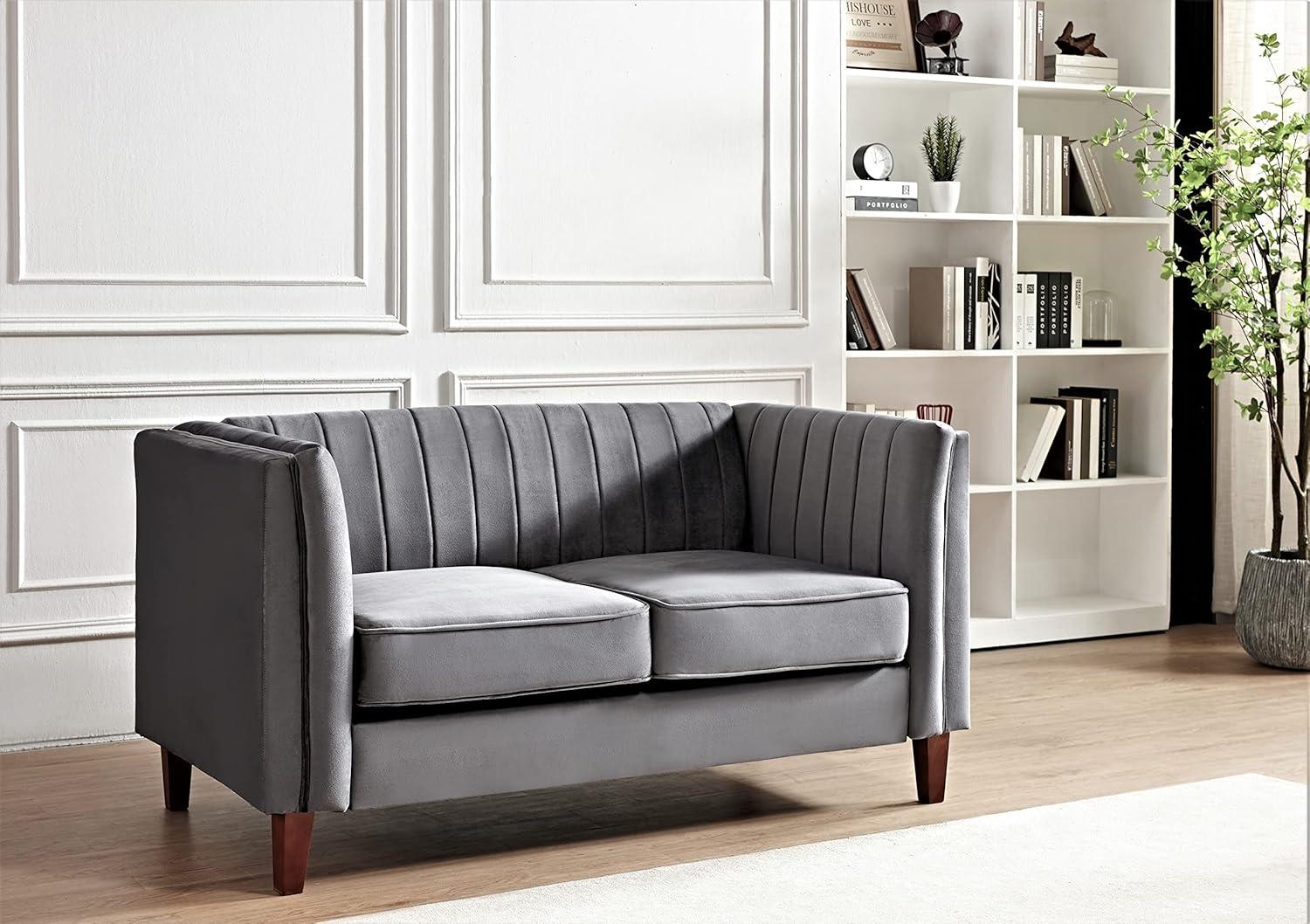
Seen in the room, the set acts less like furniture and more like a stage prop for how the rest of the space performs. The low, linear lines and channeling give the grouping a distinct silhouette that anchors sightlines—whether it’s placed facing a focal wall or floated into a conversation cluster, the form tends to read as a horizontal plane punctuated by soft vertical rhythm. From a few steps away the grey tone reads as a neutral backdrop, but up close the velvet finish introduces subtle shifts: the pile catches light differently across cushions, seams and the backrest, so surfaces that looked uniform from the doorway reveal a play of highlights and deeper shadows as you move around. Small, everyday adjustments—tucking a throw, turning a cushion—change those reflections quickly, so the set rarely appears static.
the material and angles translate into very specific in-room behaviors you can observe: how sunlight or a lamp accentuates the nap, where traffic creases appear, and where lint or pet hair is most visible. A simple table highlights typical visual shifts under common lighting conditions, followed by a few compact notes that describe what you might actually see during regular use.
| Lighting condition | Perceived effect |
|---|---|
| Direct daylight | Clear sheen with contrasting streaks along the pile |
| Soft ambient light | Muted, velvety depth that blurs edges slightly |
| Spot or task lamps | Pronounced highlights on channeling and cushion edges |
- Texture cues: the pile both invites touch and reveals movement—footprints and arm rests show differently over time.
- scale impressions: the low profile reads larger when paired with minimal coffee tables, and more composed when surrounded by visual clutter.
- Finish behaviour: the velvet tends to show directional sheen and localized flattening where use concentrates.
What you can see under the upholstery: high density foam, removable cushions, and solid wood legs
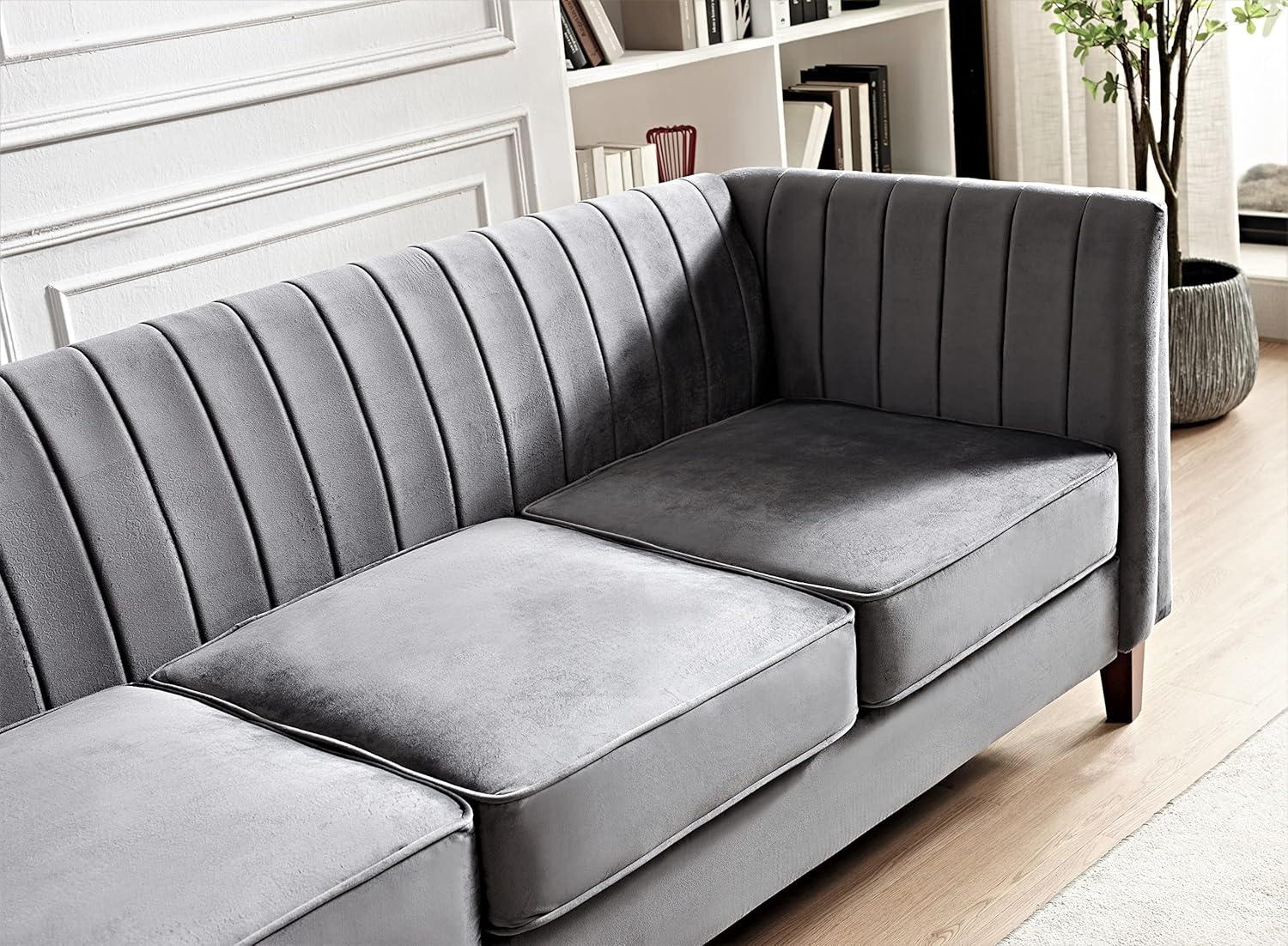
When you lift a seat cushion or part the fabric at the seam, the construction becomes clear: blocks of high-density foam sit directly beneath the upholstery, usually with a thinner, softer layer on top. The foam’s edges are fairly crisp where it’s been cut and glued into channels, and you can sometimes see the quilting or ticking that keeps the foam from shifting inside the cover. If you press it with your hand or briefly sit and rise,the foam’s rebound and the way it holds shape are instantly apparent; small adhesive lines or stitch anchors might potentially be visible where the foam meets the frame. Along the cushion hems you’ll often find zippers or hidden velcro strips that let the cushion covers be pulled away from the foam — the covers themselves are usually finished with piping and a cloth lining that’s tucked into the seat cavity.
Underneath the skirt and around the base the solid wood legs and frame members reveal how the piece stands. Legs are attached with bolts or threaded inserts and you can often see the screw heads or metal plates that lock them to corner blocks,while cross rails and glued blocks reinforce the joint areas.The wood finish, any protective pads or felt glued to the foot, and small gaps where the upholstery meets the leg are all visible when you crouch down to look; these details also show where dust gathers or where you might reach to tighten a fastener. Below is a brief table that summarizes the visible elements and the typical details you’ll notice.
| Element | What you can see |
|---|---|
| High-density foam | Layering, cut edges, rebound behavior, and any quilting/ticking around the foam |
| removable cushions | Zippers or velcro, internal cover seams, piping and how the cover fits over the foam |
| Solid wood legs | Bolt plates or threaded inserts, wood grain/finish, pads or felt on the feet, and frame junctions |
How it feels when you sit: cushion give, back support, and everyday comfort
When you first sit down the top layer gives a gentle, immediate sink before a firmer layer beneath becomes noticeable; there’s a soft initial cushion that then spreads your weight rather than letting you plunge in. If you perch on the front edge you’ll feel enough resistance to push off comfortably without sliding forward, and when you ease back the seat compresses beneath your hips in a way that encourages small shifts — reaching for the remote, crossing a leg, or scooting over to share space happen without a lot of readjusting. The surface isn’t stiff, but it isn’t floppy either, and that in-between quality shows in the little, unconscious adjustments you make after sitting for a few minutes.
- Initial give: a quick, noticeable softening under your thighs followed by firmer support.
- Edge support: enough pushback to stand up without needing to rock forward dramatically.
- Recovery: cushions rebound fairly quickly when you stand, with only minor settling after longer use.
Leaning into the backrest delivers a gradual cradle rather than a hard stop; your lower back meets resistance that holds position but allows you to recline slightly, and the upper back and shoulders find a softer plane that’s pleasant for reading or TV. Over the course of an hour the seat tends to develop a subtle, centered impression where you’ve been sitting, which most people will counter by shifting or flattening the cushions now and then — small, habitual movements that feel natural. There is a mild trade-off: the comfort that welcomes a nap can mean slightly less targeted lumbar firmness unless you sit more upright or adjust the cushion arrangement,and on busy days you may notice the need to fluff or reposition cushions more often to restore that first-sit alignment.
| Situation | How it feels |
|---|---|
| Short sit (10–20 min) | Immediate softness with clear support beneath — you sit in, but not sink through. |
| Long sit (1+ hour) | Seat forms a slight indentation around your usual spot; comfort remains steady with occasional need to adjust. |
| Getting up / frequent use | Good rebound and edge firmness that make standing and shifting easy; minor settling after repeated use. |
How the set measures up to your space and expectations
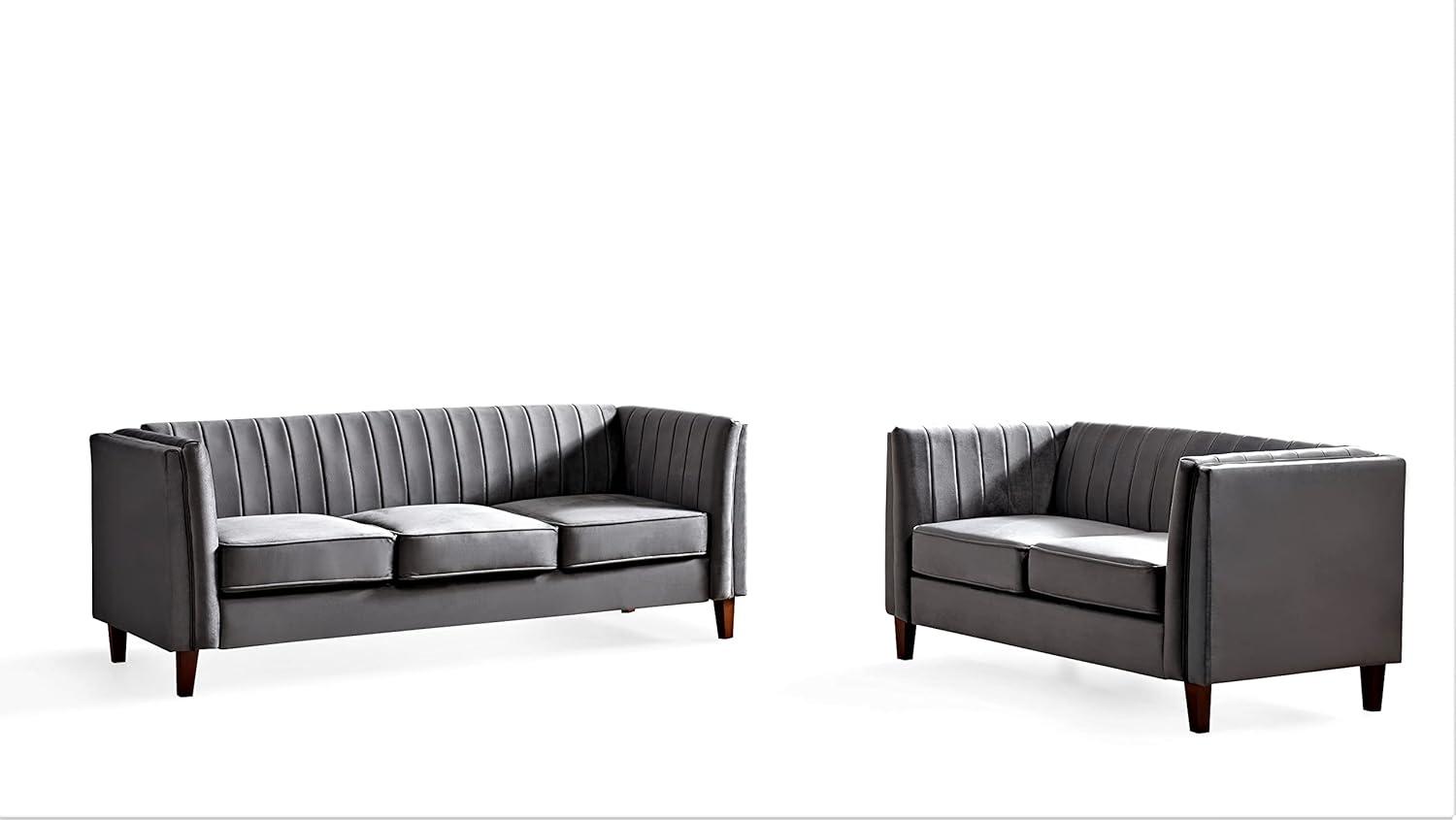
The set tends to act as a clear visual anchor in a room, defining a seating zone more than blending into background furniture. In many layouts it delineates conversation space—placing it mid-room will create a focused cluster around a coffee table, while tucking the pieces against a wall opens up circulation at the expense of that anchored feel. Because the two pieces separate, occasional reconfiguration or moving through narrower doorways becomes more practical, though the combined footprint still requires a bit of planning for walkways and other large items. There is a noticeable trade-off between presence and openness: the upholstery’s sheen and form draw the eye, which helps establish a style point but can make adjacent furnishings feel secondary unless they’re rearranged slightly.
Everyday interaction with the set reveals small, habitual adjustments that shape how it fits into daily life.In busier rooms it tends to need periodic fluffing of cushions and minor repositioning of accent furniture to maintain cozy traffic lanes; in quieter spaces it frequently enough becomes the room’s focal point and will dictate where lighting and accessories go. Below are concise observations to clarify typical spatial behavior:
- Circulation — requires clear paths of movement on at least two sides in most layouts.
- sightlines — establishes a central view axis, so TVs or fireplaces may need slight relocation or angling.
- Versatility — two-piece format eases moving and reorientation but does not eliminate the need for planning around its visual weight.
| Room scenario | typical spatial behavior |
|---|---|
| Open-plan living | Creates a natural divider between seating and dining zones; often used to anchor rugs and lighting. |
| TV-focused lounge | Becomes the primary viewing platform; orientation tends to favor shorter sightline adjustments. |
| Smaller rooms | Commands visual attention and may necessitate removing or downsizing secondary pieces to preserve flow. |
View full specifications and available configurations on the product listing
Sizing, placement, and upkeep: fitting the pieces into your living room and keeping the fabric looking fresh
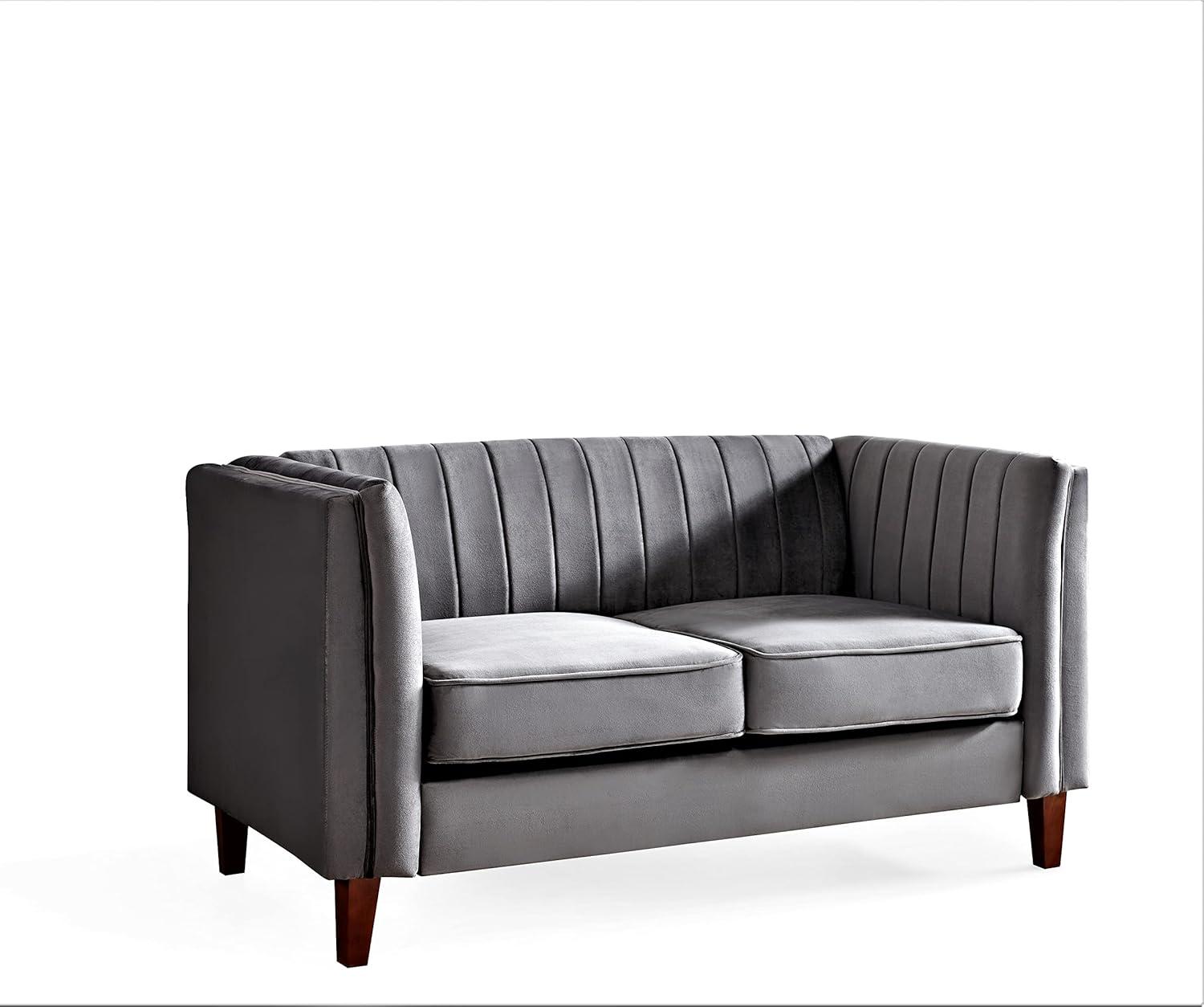
Planning placement often starts with sightlines and circulation rather than exact measurements: allow comfortable passages around the seating cluster and keep sight to the room’s focal point unobstructed. Leave space for small side surfaces and lamp stands so the set doesn’t sit flush against every wall; when pushed into a corner the pieces tend to trap dust and require occasional nudging forward for cleaning. Because the cushions are removable,moving a single section for access is easier than with fixed upholstery,and the ability to take off cushions also makes light spot-cleaning and brushing the fabric nap less cumbersome. In practise, getting the tufting and channeling to sit consistently sometimes takes minor adjustments after everyday use, and legs that screw on and off will change how easily a piece can be maneuvered through doorways or up stairs.
Routine upkeep follows a few simple, recurring actions and a handful of seasonal checks. Vacuuming with a soft brush attachment and a gentle pass over the surface keeps dust and pet hair at bay, while using a soft-bristled brush along the pile helps restore the velvet’s sheen after use; spills are usually blotted rather than rubbed to avoid working moisture deeper into the fabric. Cushions can be rotated periodically to even out seat impressions, and hardware on the legs benefits from a quick tightening every few months. Below is a brief,descriptive maintenance schedule commonly adopted in lived spaces:
- daily/as needed: Light brushing or spot blotting after spills.
- Weekly: Vacuum with upholstery tool; fluff removable cushions.
- Seasonal: Check and tighten leg fastenings; move pieces slightly to clean under and behind.
| Interval | Typical task | reason |
|---|---|---|
| Weekly | Vacuum and brush nap | Removes surface dust and lifts pile |
| Quarterly | Rotate cushions; inspect legs | Evens wear and prevents wobble |
| 12–24 months | Professional upholstery cleaning | Deep refresh and fabric-safe treatment |
Full listing information and complete specifications are available at this product page.
How the Set Settles Into the Room
Over time the Modern Luxury Velvet Couches set eases into daily life, taking on the small traces of how the space is used rather than holding its new shape. you notice cushions forming familiar hollows and the fabric softening where hands and feet meet it, small changes that fold the pieces into regular household rhythms. In everyday presence it quietly hosts conversations, naps, and the casual pile of a weekend, its comfort behaving more like a habit than a highlight. It stays, a familiar, settled part of the room.
As an Amazon Associate I earn from qualifying purchases.