 goodworksfurniture Decoration and home design ideas
Sunlight finds teh beige and teases out the tiny loops of the teddy fabric; when you lay a hand on the cushion it gives and slowly springs back, like settling into a coat you already own. The piece—Antetek’s Teddy sofa set—reads oversized at first glance, low and wide, its deep seats inviting you to fold yoru legs under and sink rather than sit upright. From across the room it has a visual weight that anchors the space, yet the slim legs and subtle metal trim keep the overall presence surprisingly light. Small details register quickly: the texture under your palm, the low back that encourages leaning, and how the set reshapes the way the room feels the moment it’s there.
Your first look in the room: unboxing, scale, and the Antetek Teddy pair’s immediate presence
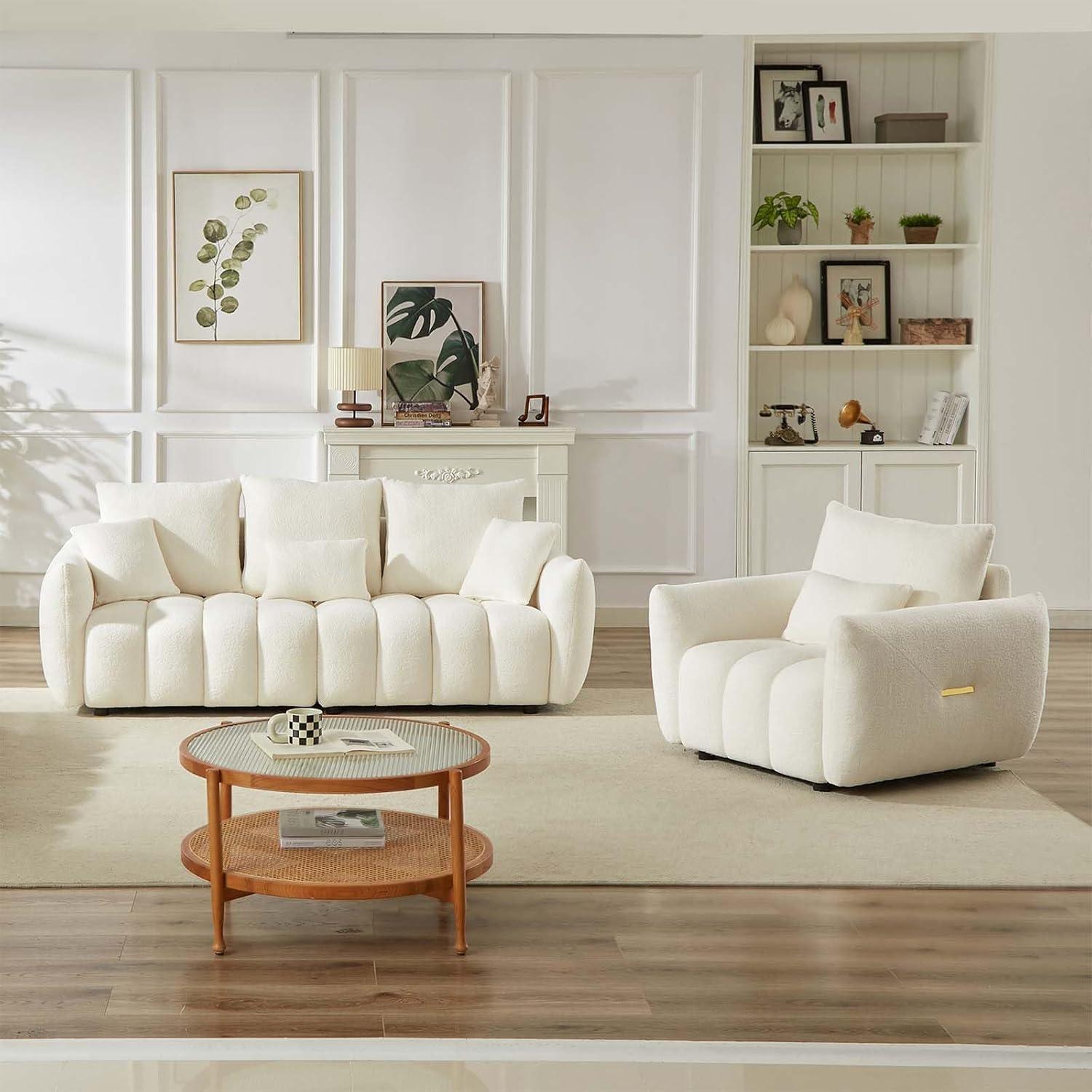
When the shipments arrive you’ll notice they’re more substantial than a casual online purchase — two well-packed cartons that feel weighty when you lift them. Inside,parts are wrapped in plastic and foam; a brief rustle of packing material gives way to the soft,textured surface as you peel back the covers. The teddy boucle is visible immediately and the fabric’s nap catches the light, so the colour and texture change depending on the angle you view it from. You’ll probably give the cushions a quick pat and a shake; the seat and back compress and then spring back enough to suggest some initial settling will happen over the first day.What’s in the boxes:
| Item | Included |
|---|---|
| Three-seater piece | Present |
| Single-seat chair | present |
| Pillows and loose cushions | Present |
| Legs and hardware packet | Present |
| Assembly instructions and protective packaging | Present |
Placing the pair into your room reveals their scale more clearly than any photo — they read as a low, rounded block of seating that spreads horizontally rather than rising vertically. You’ll find yourself shifting a coffee table a couple of inches and nudging a rug to get sightlines right; the pieces don’t vanish into the background but rather anchor whatever arrangement they sit in. From a short distance the silhouettes smooth hard corners in the room; up close the plush surface invites you to sink a hand into the boucle and settle in for a moment. A few small, habitual adjustments follow: you rearrange the pillows, step back to check how the seating aligns with the TV or window, and sometimes slide the chair a touch toward the light — all ordinary ways the set announces its presence without needing much else to be noticed.
What you can touch and see: boucle texture, frame build, seams, and the cushion stuffing
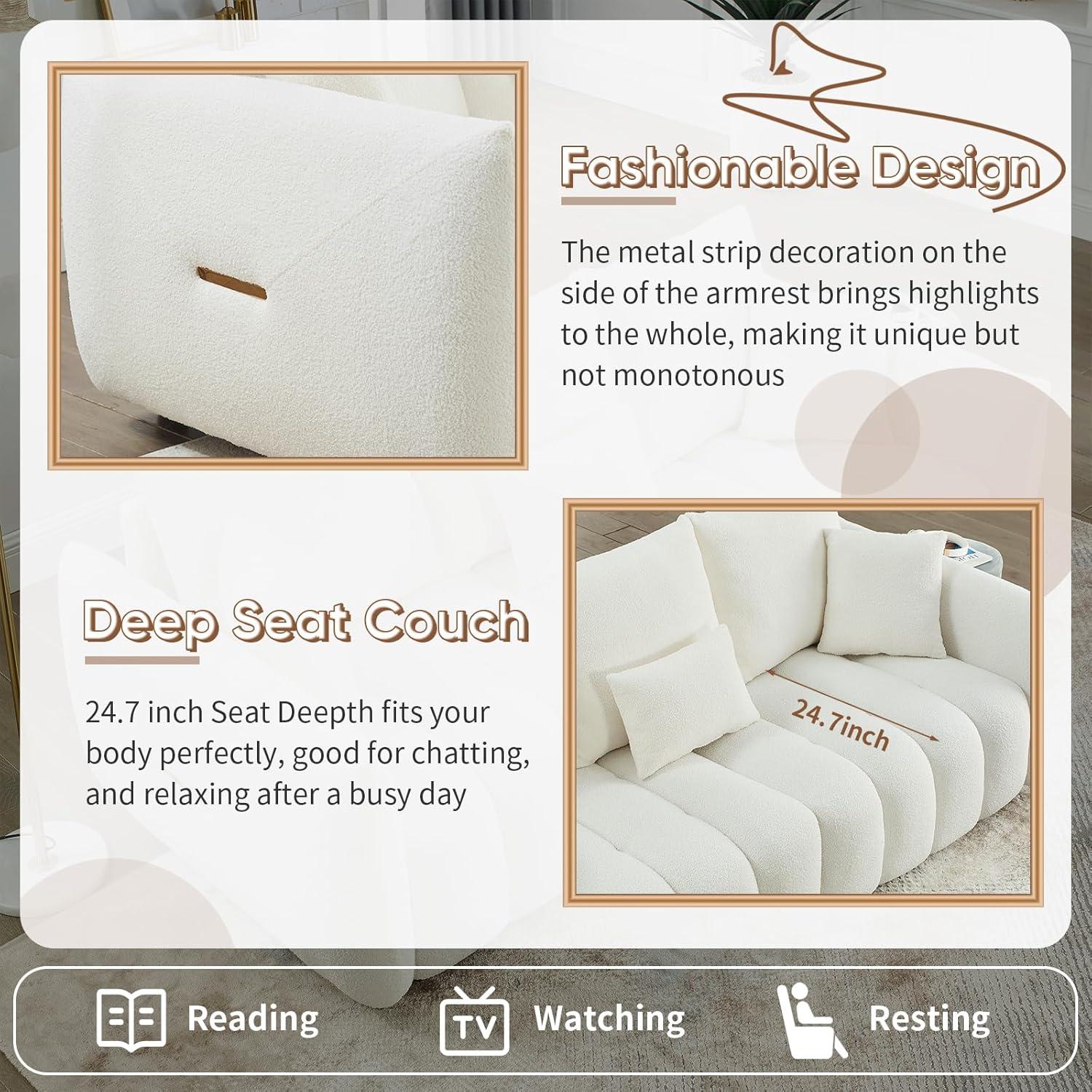
Up close, the boucle surface reads as a tightly looped, nubby textile that gives when your hand travels across it and then settles back into place; the loops catch light differently depending on the angle, so you’ll sometimes see a subtle shift in tone as you move around the piece.Where panels meet, the stitching is generally low-profile — seams are stitched close to the edge rather than flaring outward — though at curved transitions (arms to back, such as) you can spot a slight tension in the fabric that produces minimal puckering. A few practical details are visible in normal use: the nap of the fabric,the topstitch lines along cushion edges,and any exposed panel joins; those are easy to find with a fingertip or a quick visual sweep,and they reveal how the upholstery is laid out across the frame.
From beneath and around the base you can get a sense of the frame build: joints and leg sockets sit where load-bearing pieces meet, and you may notice faint seams in the outer shell where coverings wrap the structure. Sit down and press into the cushions and the inner fill responds with a measured give and a fairly quick rebound; creasing patterns form across faces and then smooth out, showing a consistent, well-packed core rather than loose shifting fill. Below is a short,descriptive table of what those close inspections tend to reveal.
- Bouclé surface: textured loops, variable sheen, soft drag when stroked.
- Seam details: narrow, tucked seams with occasional puckering at tight curves.
- Cushion behavior: compresses evenly, returns shape with visible crease lines that dissipate.
| element | What you’ll notice up close |
|---|---|
| Bouclé texture | Looped surface that traps light differently across its face; a soft, slightly springy hand. |
| Seams and stitching | Low-profile topstitching; tighter fabric at rounded joints with small, occasional puckers. |
| Frame junctions | Visible where panels meet or legs insert; socket lines and joins can be seen from below. |
| Cushion stuffing | Dense, responsive fill that compresses evenly and regains shape with faint crease marks. |
Where you sit and how you settle in: seat depth, back support, and the physical feel under you
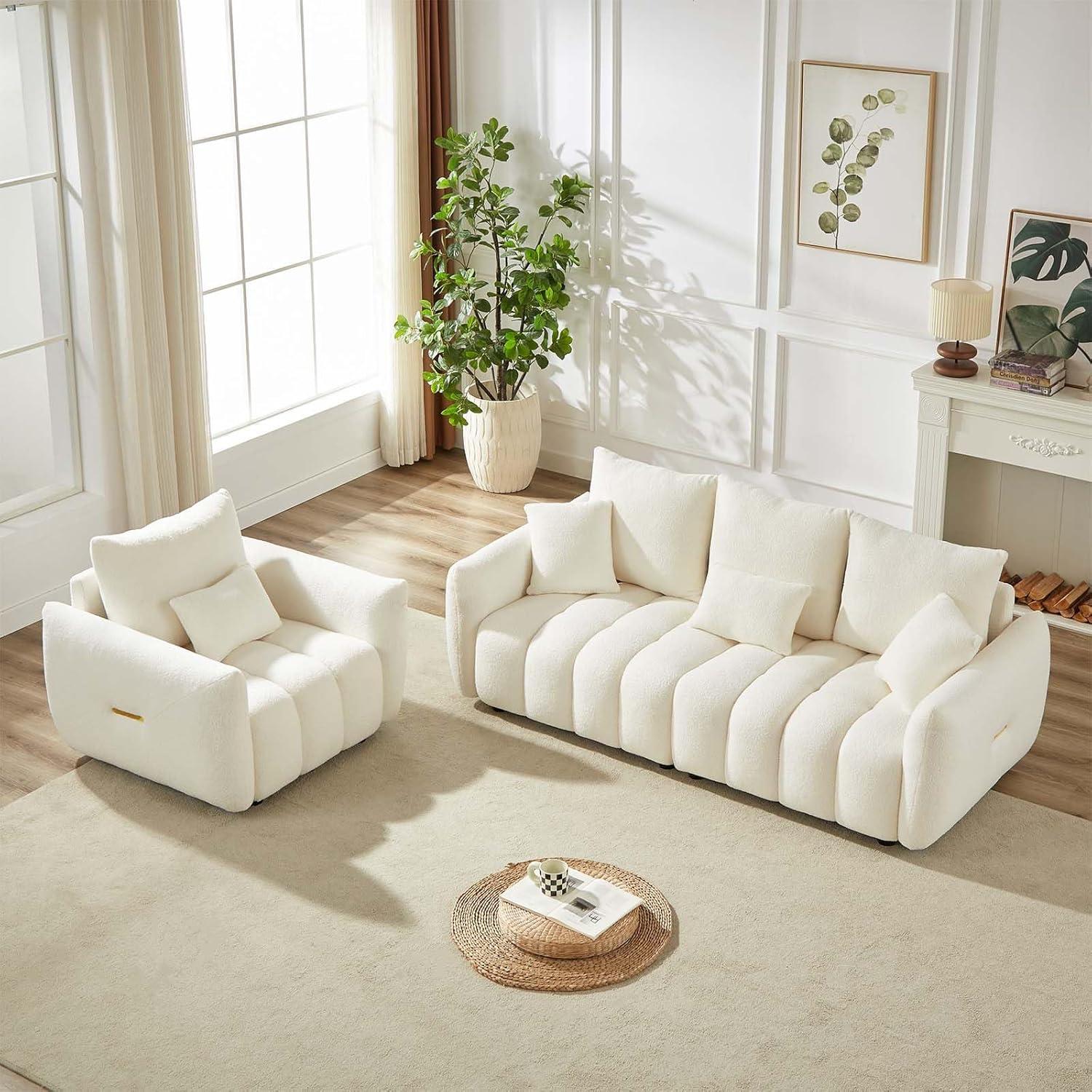
You tend to settle into this couch by sliding back and letting the generous seat take most of your weight. The depth invites a more reclined posture: sitting all the way back puts your hips behind your knees and encourages you to curl a leg up or extend your feet forward. As you do that, you notice a few distinct tactile impressions: an immediately soft surface that cushions the hips, a gentle give under the thighs, and a firmer base that prevents complete sinking. Small, habitual shifts happen—one or two scoots forward if you want to sit upright for conversation, or a lazy stretch back when you’re reading—so the seat depth changes how you position your legs and how often you readjust without thinking about it.
The backrest meets you around mid-back rather than cradling the neck, so your lower ribs and lumbar region register most of the support. At rest, the back surface has enough contour that you feel held across the shoulder blades, but there’s a slight gap near the small of your back unless you add a pillow or move forward on the cushion. The overall under-you sensation is a layered response: initial plushness followed by a firmer resistance that keeps you from bottoming out. Below is a short snapshot of how different seat zones feel in use:
| Seat zone | In-use sensation |
|---|---|
| Front edge | Soft, rounded—thighs rest comfortably but feet may touch floor at a slight angle |
| center | Noticeably cushioned with a slow give that supports settling without collapsing |
| Backrest | Mid-back contact and gentle contour; upper neck support is limited unless you move forward |
Living with it day to day in your spaces: cleaning steps, moving the pieces, and how the set behaves in a bedroom, office, or apartment

Daily upkeep is straightforward but benefits from a small routine. Light maintenance typically involves a quick pass with an upholstery attachment to remove dust and crumbs, and a lint roller for hair and pilling that can collect in the fabric nap; spot treatment with a damp cloth and mild detergent followed by gentle blotting often handles most spills without soaking the cushion core. For revive-and-shape moments,occasional brushing of the surface restores the boucle-like texture and brief,even pressure on the seat cushions smooths out impressions left after longer use. In manny homes, a protective measure such as felt pads under the legs or a thin rug under the front edge prevents scuffs on hard floors and catches stray debris before it migrates across the room. The list below summarizes typical steps seen in everyday care:
- Daily/quick: vacuum or lint-roll, spot-blot spills
- Weekly: brush nap, straighten cushions
- Monthly: check and re-seat loose cushions, inspect legs and pads
- Occasional: professional cleaning or deep steam if heavy soiling occurs
| Task | Approx. time | Tools needed |
|---|---|---|
| Vacuum / lint roll | 5–10 minutes | Upholstery attachment, lint roller |
| Spot clean | 5–15 minutes | Microfiber cloth, mild detergent |
| Brush nap / fluff cushions | 5–10 minutes | Soft-bristled brush |
Moving the pieces and living with them in different rooms reveals practical patterns. The larger section tends to be bulky once assembled, so many households plan for two people and some careful angling through doorways and stairwells; the chair is easier to reposition solo but still occupies visual and floor space that affects traffic flow. In a bedroom it often functions as a lounging niche or reading spot—its deep seat can feel immersive for resting but may not align with typical bedside seating heights, which changes how people use it for short tasks like putting on shoes. In an office it softens the room and invites informal conversation, though its low, enveloping profile sometimes conflicts with desk-centric work that requires upright posture. In apartments the presence of an oversized sofa can both anchor a living area and require rearranging other furniture to maintain clear pathways; on hard floors, the plastic legs may mark surfaces without pads, while on carpet the piece sits more quietly. These everyday behaviors tend to emerge gradually: cushions settle back with light daily attention, the surface collects fine lint that responds to routine brushing, and occasional small adjustments—sliding a footstool into place, swapping a rug, or rotating a pillow—become part of the room’s ordinary rhythms. View full listing details and specifications on the product page
How the Antetek teddy matches your expectations and the practical limits you may encounter
In everyday use the pieces generally deliver the tactile and visual cues that are often expected from a teddy-style, deep-seat set: the surface feels soft to the touch and invites sinking in, while the seat depth promotes a relaxed, reclining posture rather than an upright sitting position. setup tends to be straightforward and quick, so the initial experience is mostly about placement and styling rather than a long build process. Practical notes that commonly appear in use include:
- Setup experience: rapid assembly with only minor adjustments needed to align cushions and legs
- Daily comfort: immediate plushness that can feel firmer or softer over weeks depending on use
- Visual presence: a substantial footprint that changes how seating is arranged and how other furniture is positioned
These observations are based on typical living-room rhythms—sitting for reading, reclining for TV, occasional shifting of cushions—and tend to reflect the product’s intended balance of softness and structure rather than any single definitive performance metric.
There are practical limits that tend to surface over time or in specific situations. The fabric can attract lint and show marks more readily in high-traffic or pet-friendly homes, and the deep seat that makes lounging comfortable can also reduce ease of rising or working upright. The construction holds up for normal use, but weight distribution and repeated heavy use may change cushion feel, and plastic legs can scuff delicate flooring without pads. Moving the set through tight doorways or arranging it in very small rooms sometimes reveals that the large visual scale is as much a constraint as a design choice. A quick reference of common trade-offs is shown below for clarity:
| Feature | Typical practical note |
|---|---|
| Deep seat | Excellent for lounging; less support for upright tasks |
| Teddy boucle fabric | Soft appearance; can attract lint and requires occasional maintenance |
| Quick assembly | Fast setup but requires space to orient and position pieces |
See full specifications and variant details on the product listing
How it occupies your room and influences your styling: sightlines, footprint, and placement notes
When you bring this set into a room it becomes a horizontal anchor more than a vertical statement: the low-ish profile keeps the eye traveling across the space instead of up, so it can visually widen a narrow room while also creating a noticeable block in an open plan. Placed against a long wall it emphasizes the wall’s length and tends to draw attention toward whatever sits opposite — a media unit, a console, or a gallery wall — and if you float the set it reads as a room-divider, subtly suggesting a living zone without the visual heaviness of a partition.As the piece has clear physical presence, you’ll find yourself nudging side tables, lamps, or a rug into slightly new positions to preserve clear walkways; small, habitual adjustments (angling the sofa a few degrees, pulling it a few inches off the wall) are common and usually change how light and sightlines behave through the day.
Placement notes to keep in mind frequently enough come down to circulation and compositional balance.
- Against a wall — tidy silhouette, keeps pathways open but can compress a small seating conversation if opposite furniture is also large.
- Floating — defines a zone and lets light flow around the back, though it requires space behind for access and can interrupt a long sightline to a window or focal point.
- Corner or angled — softens corners and creates a more intimate corner conversation area; it may obscure low console tops or wall-mounted elements from some viewpoints.
| Placement | Sightline / Styling effect |
|---|---|
| Centered in an open plan | Acts as an anchor, breaking a large floor into distinct zones |
| Back to a window | Can partially screen lower views and change how daylight fills the seating area |
| Close to passage | Requires a clear buffer so the sofa’s footprint doesn’t bottleneck movement |

How the Set Settles Into the Room
There’s a quietness to how the Antetek Teddy Sofa Set for Living Room, Modern Deep Seat Sofa Chair and Oversized 3-Seater Cloud Boucle Couch for Bedroom, Office, Apartment, Furniture Set, Beige (2 Piece) eases into daily life, not by arriving grandly but by softening around ordinary movement over time. In daily routines it becomes a place for mornings with a book, short sits between tasks, and evenings that stretch out; the seating loosens along familiar pressure points and the surface shows the small, slow signs of being lived on. As the room is used, throws gather in corners, cushions settle where people favor, and the set takes on the quiet cadence of regular household rhythms. It stays, part of the room.
As an Amazon Associate I earn from qualifying purchases.