 goodworksfurniture Decoration and home design ideas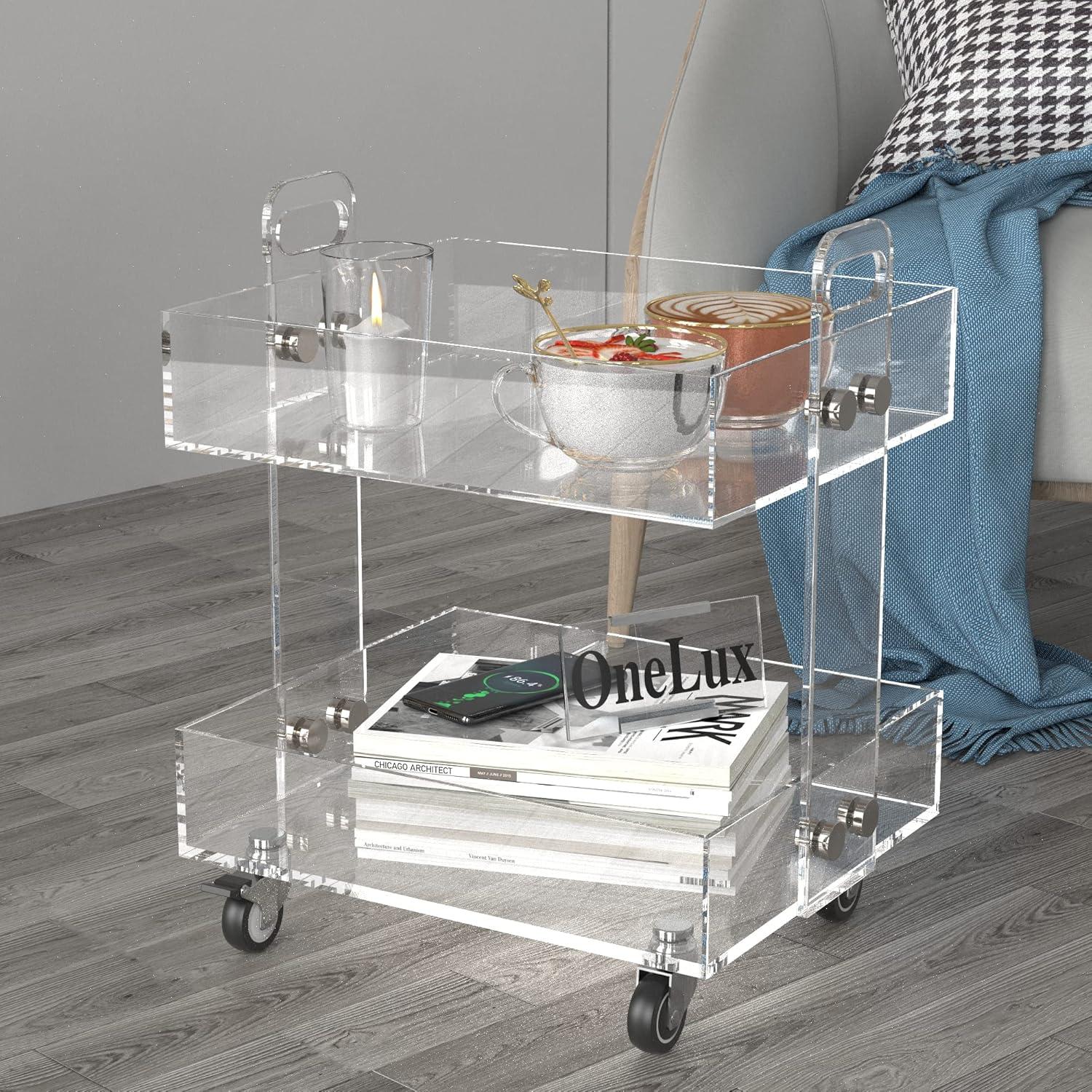
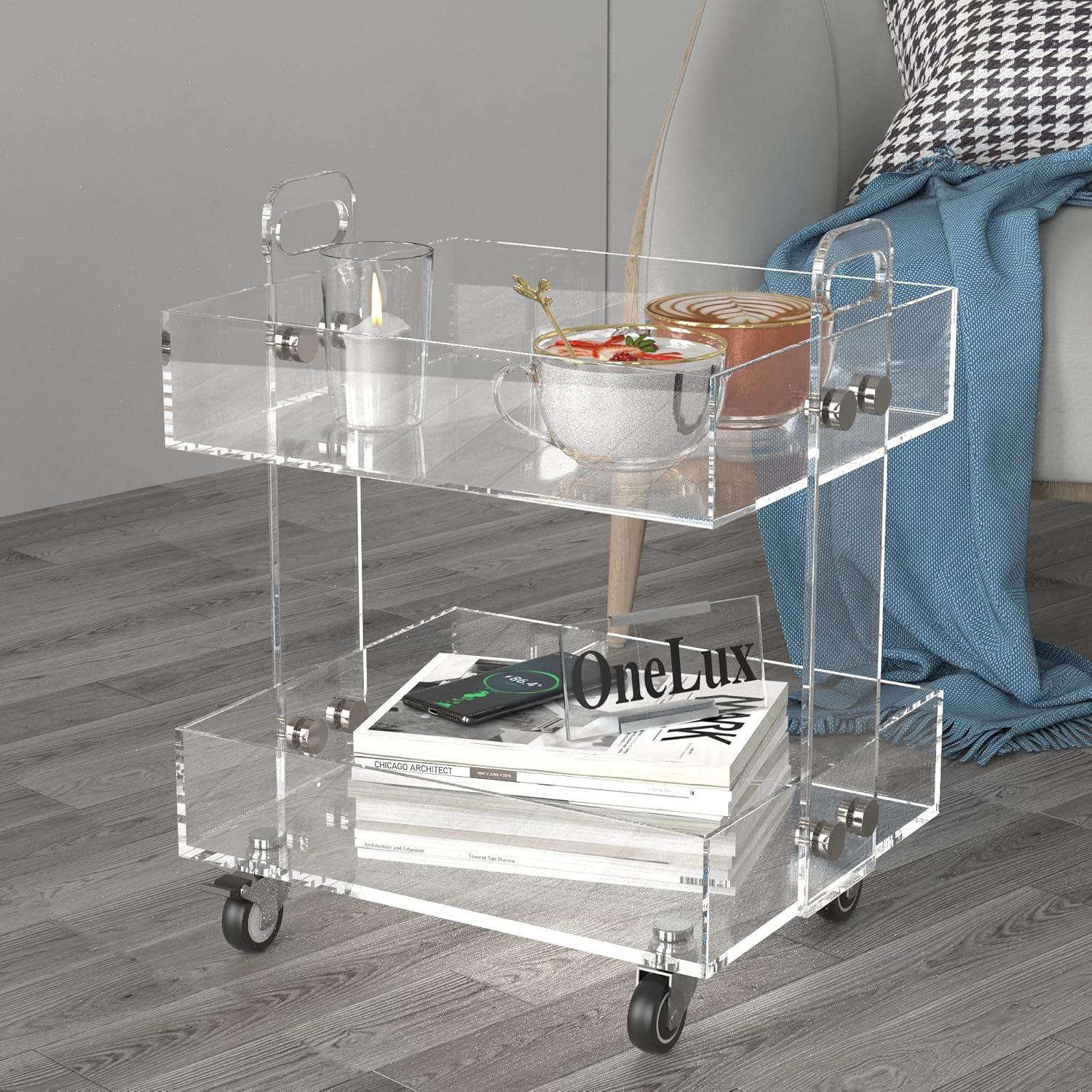
Light skims the acrylic and, from across the room, you almost read the piece as a shimmer rather than furniture.You wheel the ONELUX (Flat Packed) Original Acrylic Side Table — or simply the ONELUX acrylic side table — up to the sofa and immediately notice its visual lightness: transparent planes reduce visual weight while the beveled edges catch and scatter highlights. Up close you find the surface cool and glassy under your fingers, and the tiny casters make nudging it a small, effortless movement. It doesn’t demand attention; it quietly reflects the room’s textures and settles into the space with an understated presence.
A first look at what you receive when your ONELUX flat packed acrylic side table arrives
when your flat-packed box arrives it feels relatively light for its size. You’ll notice the faint print on the outer carton — the letters “KD Packed” and a small line that mentions “easy assembling.” Open it and the first thing that meets your hands is a layer of thin foam and cardboard, then the clear acrylic panels wrapped in protective film. The film shows fingerprints and tiny dust specks right away; peeling it back reveals glossy, transparent faces and the slightly softened edges where the panels were stacked for packing. Small hardware bags sit in a corner, and the casters are wrapped individually in plastic so they don’t rattle against the acrylic as you lift parts out.
What you’ll typically find inside
| Clear acrylic panels | Usually 2–3 pieces, each with protective film and corner protection |
| Wheels/casters | 4 pieces, wrapped; some models have threaded stems, some have push-fit pins |
| Small hardware bag | Screws, spacers, and an allen key taped to the instruction sheet |
| Instruction sheet | Folded paper with assembly steps and a brief list of general uses |
As you lay the parts out, the acrylic tends to catch the light and shows hairline handling marks more than deep scratches — those usually appear only if the film has been removed. The hardware bag can feel light and uncluttered; the Allen key is often the only tool included. The instruction sheet calls out basics such as assembly and use cases (small rolling tray cart, bedside table or night stand) and repeats the “easy assembling” note from the box. Always follow assembly instructions carefully. Keep fingers away from pinch points during assembly. Do not overload the table, as it has a maximum weight proposal of 16 pounds. Ensure stability by placing the table on a flat, even surface. Always supervise children when the table is in use.
How the clear acrylic and caster wheels read in your room at a glance
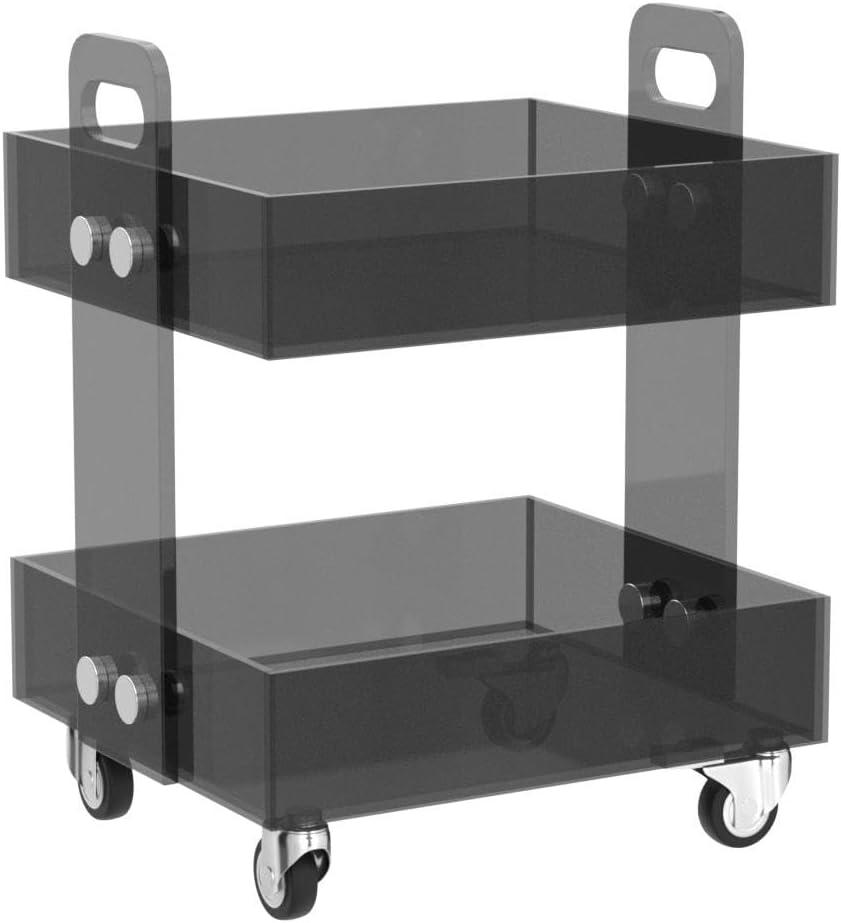
At a swift glance the table tends to read as visually light — the clear acrylic lets whatever sits behind or beneath it carry part of the composition, so it often looks like an interruption rather than an anchor. In bright light the edges pick up highlights and create thin, luminous lines; in softer light those same edges soften and the surface almost vanishes into surrounding colors. Because the top and legs transmit what’s behind them, objects placed on or under the table become part of a single plane, and you’ll notice your eye moving through the piece instead of stopping at it.
The caster wheels add a different cue: even when still they signal mobility. From across the room they break the silhouette into a small moving-potential — the low, round shapes can catch floor reflections or cast tiny shadows that give the whole piece a subtler base than a solid leg would. Up close you can see how they sit against the floor (sometimes the casters read darker or warmer depending on flooring and scuffs), and when you nudge the table the motion underlines that suggested utility. In most rooms the combination of openness and small wheels produces a background-friendly presence that shifts noticeably with light, angle, and the small routines of use.
What the acrylic feels like to your touch and how the edges relate to your hand
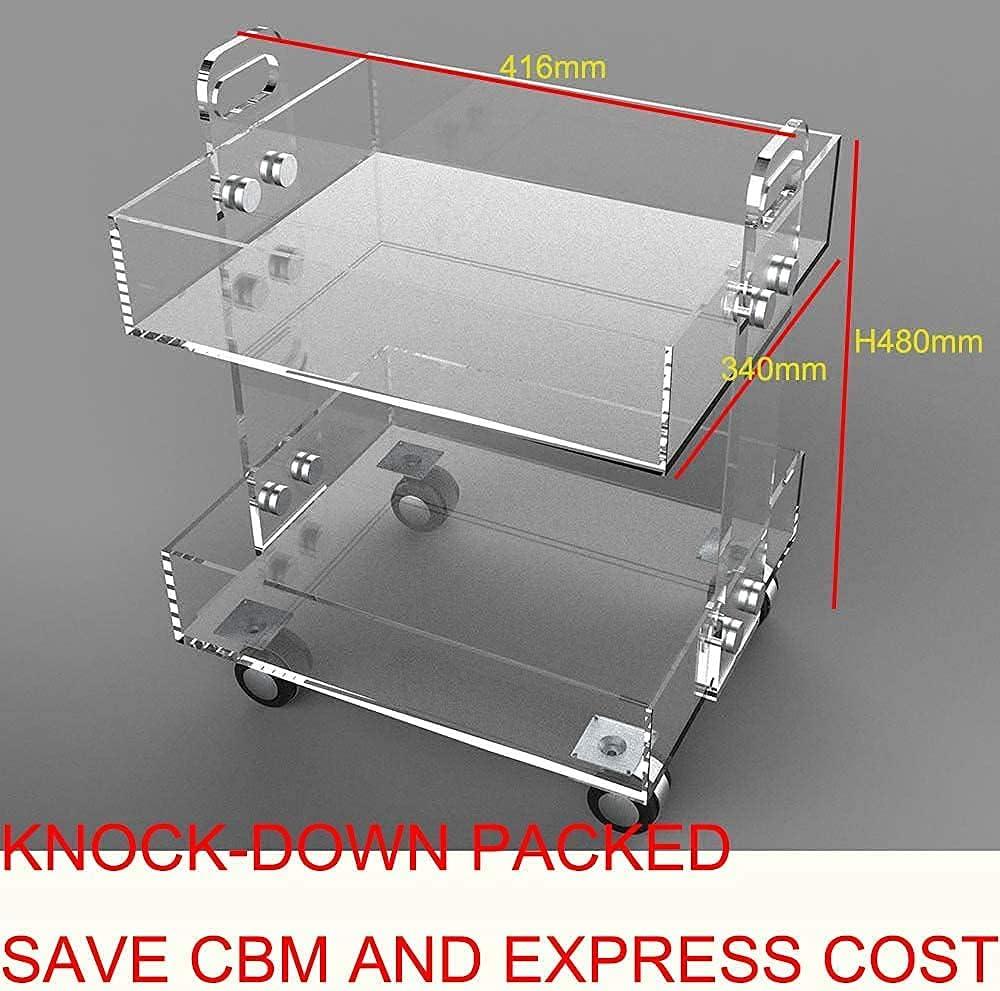
When you run your fingertips across the surface, it feels cool and very smooth — more like a polished sheet of plastic than fabric. Your hand glides with little resistance; small smudges and fingerprints become obvious, so you’ll find yourself wiping a patch once in a while without thinking. Under a firm press the panel stays mostly rigid, though you can sometimes sense a slight give in the middle if you press enough, and that subtle flex changes how the palm settles against the top.
The edges register differently from the flat faces. As you trace along them you notice a short, polished bevel that rounds the contact just enough to stop it from feeling razor-sharp; the corners are more defined, so the web between your thumb and index finger can pick up the angle. When you lift or steady the table your grip tends to move to the flat face first and then down to the edge, fingers finding the rim to stabilize the piece. On occasion you’ll smooth the edge with your thumb while reaching for somthing, a small, automatic motion that highlights how the edge shapes the way your hand moves around the table.
| Area | Tactile impression |
|---|---|
| Top surface | Cool, slick, highly smooth; shows fingerprints |
| Edge | Polished bevel, comfortably rounded but perceptible |
| Corner | More defined angle; noticeable when grasping or bracing |
Where the piece sits in your bedroom and living room and how it aligns with your bed or sofa
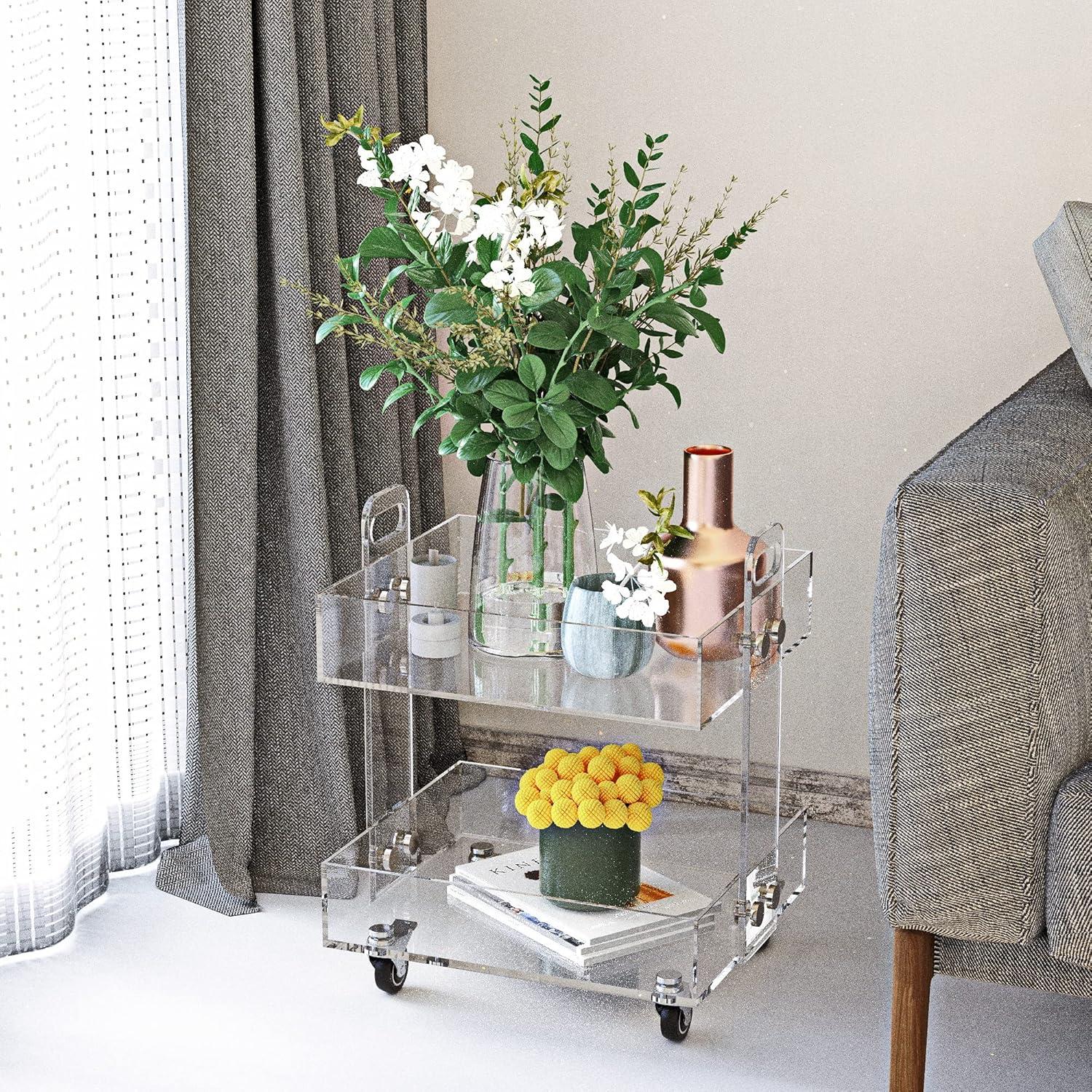
In the bedroom you most often wheel the table up so its long edge runs parallel to the mattress. It usually sits close enough that you can reach a phone or a book without leaning over, and in many setups the top surface ends up roughly even with the sleeping surface—sometimes a fraction above or below depending on how you position the frame and whether you tuck blankets out of the way. You’ll find yourself nudging it forward after getting into bed, or angling it slightly toward the nightstand lamp so the clear surface catches less glare; small adjustments feel habitual, not intentional.
When it’s in the living room the piece tends to live beside the sofa rather than centered in front of it. You’ll roll it alongside the arm or let it sit just in front of the cushion, where it becomes a reachable surface for a cup or the remote. It can sit flush with the sofa arm on a flat floor, or appear to “float” a touch below or above the arm if cushions are plumped differently; on rugs or uneven floors you’ll notice it creep a little when you lean on it, so occasional repositioning is a normal part of using it there.
| Room | Typical spot | How it aligns with bed or sofa |
|---|---|---|
| Bedroom | Alongside the mattress, near the headboard | Often level with the mattress top or a hair above/below, adjusted by small forward/back movements |
| Living room | Beside the sofa arm or just in front of the cushion | Can sit flush with the arm or a little lower/higher depending on cushion height and floor surface |
How the table performs in your daily life and where practical limits show up for you
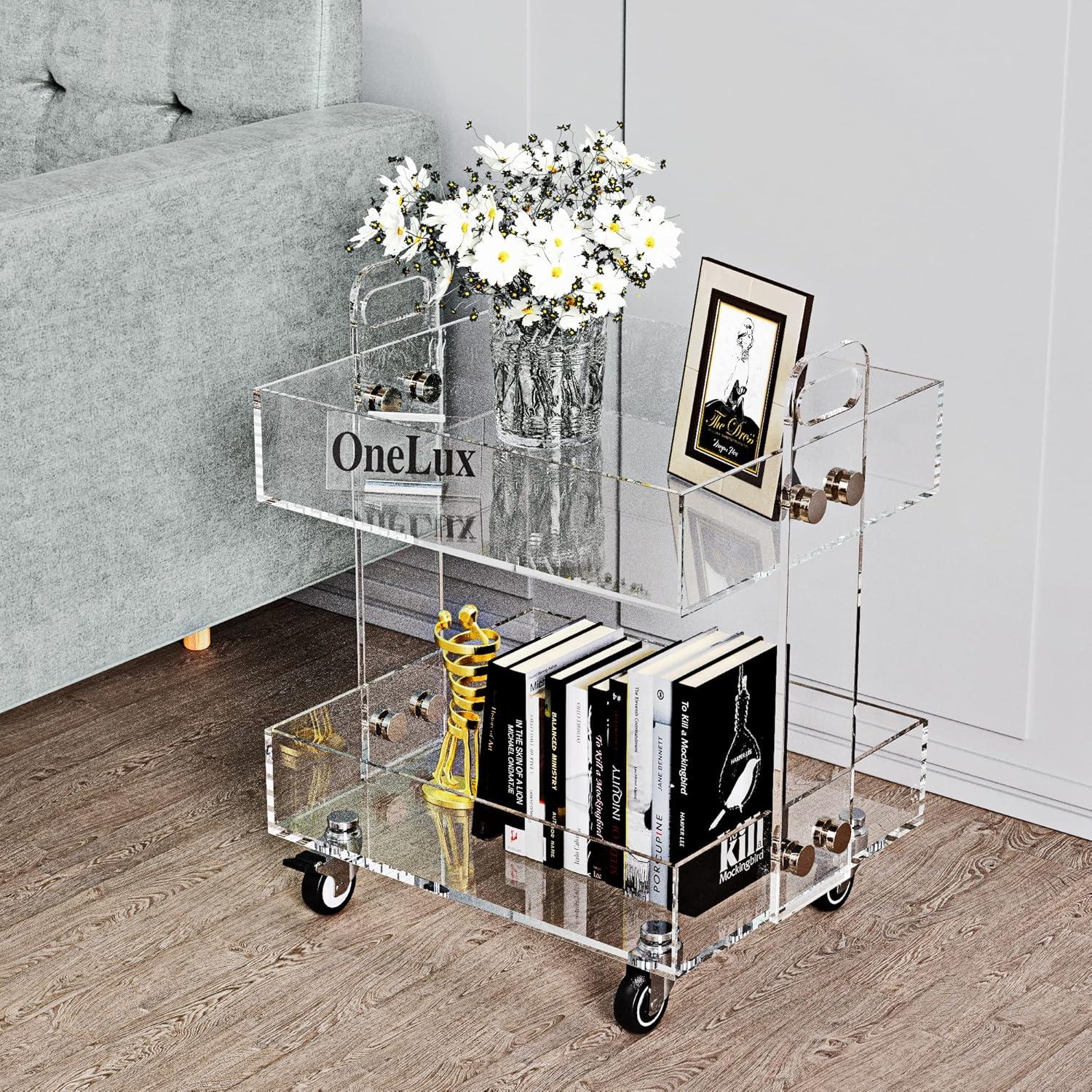
In everyday use the table tends to feel visibly light and easy to reposition; nudging it with a knee or giving it a quick push moves it across hard floors with little effort, while thicker rugs introduce more resistance and make the casters less willing to glide. The clear surfaces show fingerprints, dust, and the occasional hairline scuff more than an opaque finish does, so it often gets a quick wipe between uses. When items are placed on the top—lamp, phone charger, a paperback—the tray reads as tidy because objects remain visible through the acrylic; the lack of visual bulk makes bedside clutter more conspicuous rather than hidden.
| Common action | Observed behavior |
|---|---|
| Moving the table across hardwood | Rolls smoothly; small course corrections are easy |
| setting down a drink on a coaster | Stable most of the time, though heavier or shifting items can make the surface feel less secure |
| Using as temporary storage for books or devices | Holds small stacks without visible bending; multiple heavy items can bring the limits into view |
Small habits develop around it: the table is often nudged closer to reach a phone, smoothed after sliding a magazine, or turned slightly so light falls differently on the surface. Caster movement means it can drift if bumped, and its transparency makes scratches and adhesive residue stand out more over time. In most cases these behaviors are part of routine upkeep rather than sudden failures, and the day-to-day performance reads as practical for light, mobile use while revealing its load and surface-sensitivity when pushed into heavier or rougher tasks.
View full specifications and options
How you unpack,assemble and stow the flat packed unit in your space
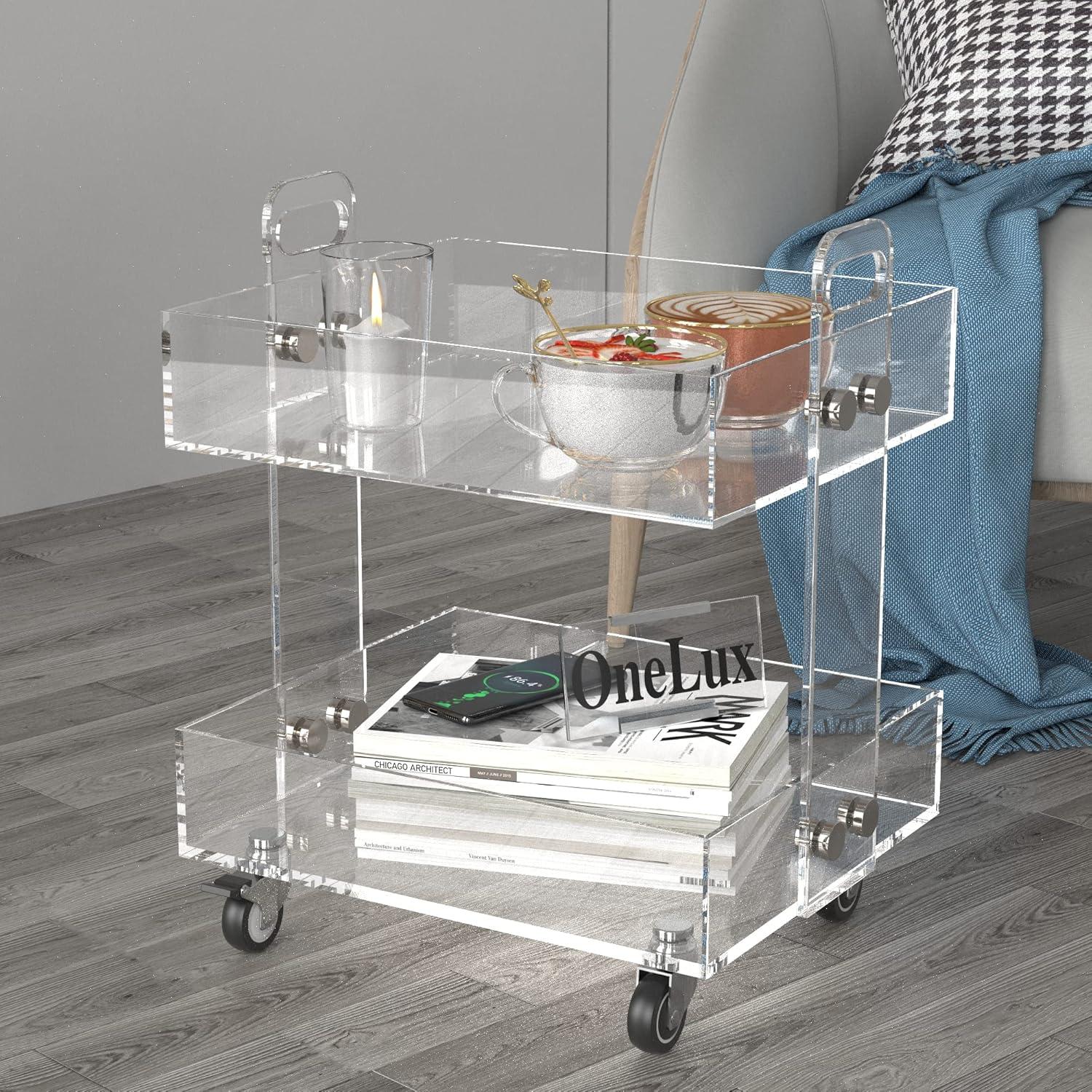
Clear a patch of floor before you open the box — carpet, a folded blanket or a sheet of cardboard will protect the acrylic while you sort parts. Cut the tape and lift out the instruction leaflet and the small bags of fixings first; you’ll find the larger panels and the wheels beneath. Lay each acrylic panel down with its protective film facing up, and keep screws and tiny parts in one container so they don’t roll away. While you handle the panels you’ll notice the film tends to cling in places; most people peel it off after the final connections are made to avoid trapping dust under the film.
Assembly is a matter of lining up edges, dropping the wheels or trays into their sockets and fastening the supplied hardware. Start the fasteners by hand so holes line up,then use the provided tool to snug them — you may find yourself nudging a panel a fraction to one side as the last screw threads in. Keep fingers away from obvious pinch points when panels come together; it can feel awkward as the last piece snaps in, and a gentle tap often seats the joints. The unit rolls on its wheels once assembled, so you’ll usually test stability by nudging it on a flat floor. Always follow assembly instructions carefully. Keep fingers away from pinch points during assembly. Do not overload the table, as it has a maximum weight recommendation of 16 pounds. Ensure stability by placing the table on a flat, even surface. Always supervise children when the table is in use.
If you plan to stow the unit rather than leave it assembled, the flat-packed pieces are thin enough to slide upright into a closet or stand on end behind a cupboard; laid flat, the pack will usually fit under a low bed or sofa. Left assembled,the small footprint and castors make it easy to roll into a tight corner or alongside a bed.The table’s two common storage postures tend to suit different rhythms of use — kept assembled for frequent access,or stored flat when you need the floor clear.
| Storage posture | What to expect |
|---|---|
| Flat-packed | Slides under low furniture or stands upright in a closet; takes less floor clearance |
| Assembled | Can be rolled into place on its wheels; occupies finished floor space and is immediately usable |
How It Lives in the Space
Over time you notice how it settles into the room’s patterns — clear planes catching fingerprints and the small nicks that come with ordinary use.The ONELUX (Flat Packed) original Acrylic Side table,Clear Table with Wheels,Acrylic Bedside Tables/Night Stand – 41×34×48H CM takes on different roles in daily routines, holding a lamp some nights, a stack of books the next, quietly reflecting light as the room is used. Its comfort is about placement and reach more than plushness, and its surface keeps the faint marks of regular household rhythms. It stays.
As an Amazon Associate I earn from qualifying purchases.