How to Transform Low-Ceiling Basements with a Painted Ceiling

For many homeowners, basements represent an incredible chance to expand living areas—whether as a dedicated home theater, a play area for kids, a fitness zone, or a peaceful workspace. Yet, one frequent challenge that can frustrate DIY renovators is the typically low and visually cluttered ceiling.
Traditional fixes like suspended drop ceilings consume valuable vertical space, while installing drywall is often costly and irreversible. So, what’s a cost-effective, visually appealing solution that enhances the room’s feel? Painting the entire overhead structure in a consistent, dark hue.
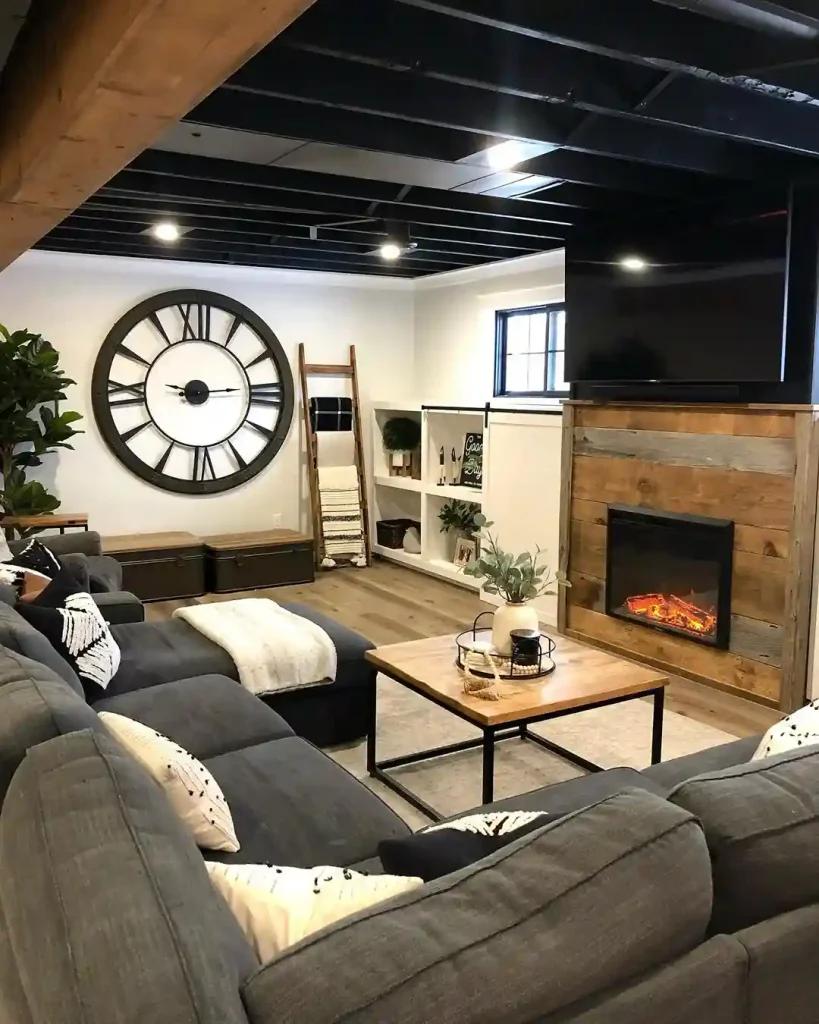
This method isn’t just a superficial tweak—it’s a smart design tactic that can shift your basement’s atmosphere from cramped and functional to stylish, welcoming, and contemporary. This article delves into why this works, how to execute it properly, and the remarkable transformations it can deliver.
Understanding the Impact of Painting Low Basement Ceilings
Before wielding your paintbrush, it’s essential to grasp the visual psychology behind dark painted ceilings. Our brains process spatial information based on color contrasts and defined boundaries, which can be manipulated to our benefit.
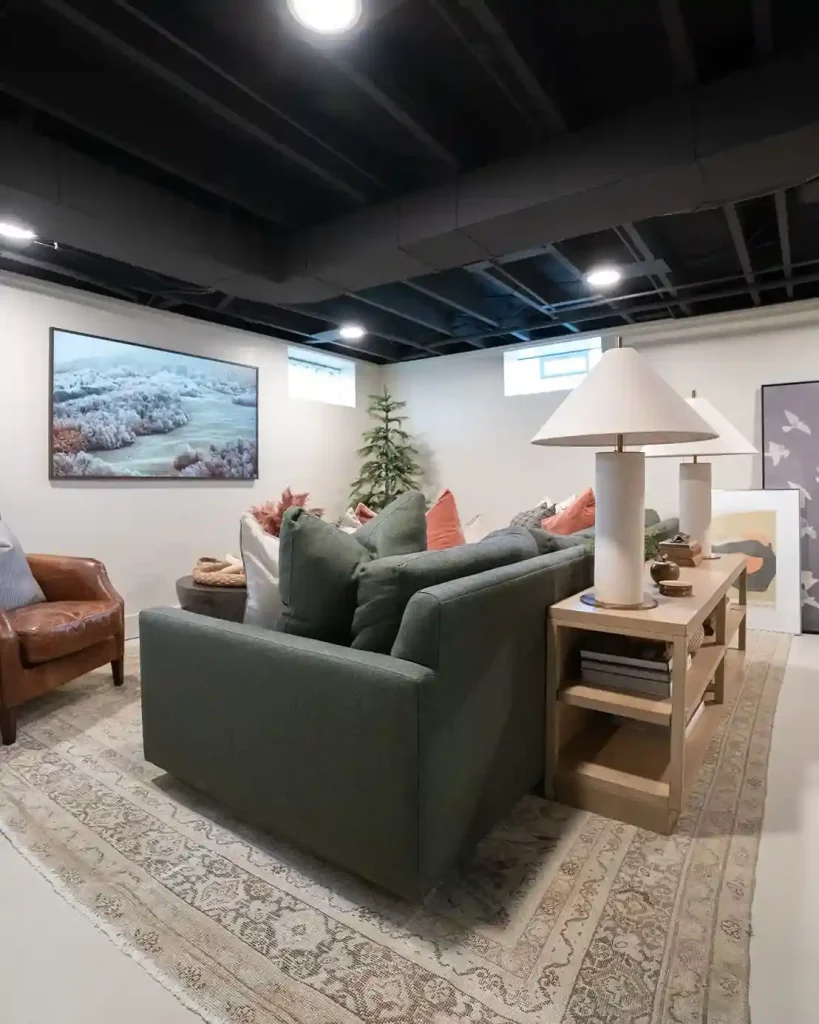
- The Illusion of Receding Boundaries: Normally, light or white ceilings catch the eye and emphasize a room’s vertical constraints, especially in low-clearance spaces. Painting ducts, pipes, and structural elements uniformly in a dark, matte shade—commonly deep black or charcoal gray—tricks the eye into “disappearing” the ceiling plane, making it seem farther away and thus increasing the perceived height. Think of it as the interior design version of wearing solid dark colors to create a slimming effect.
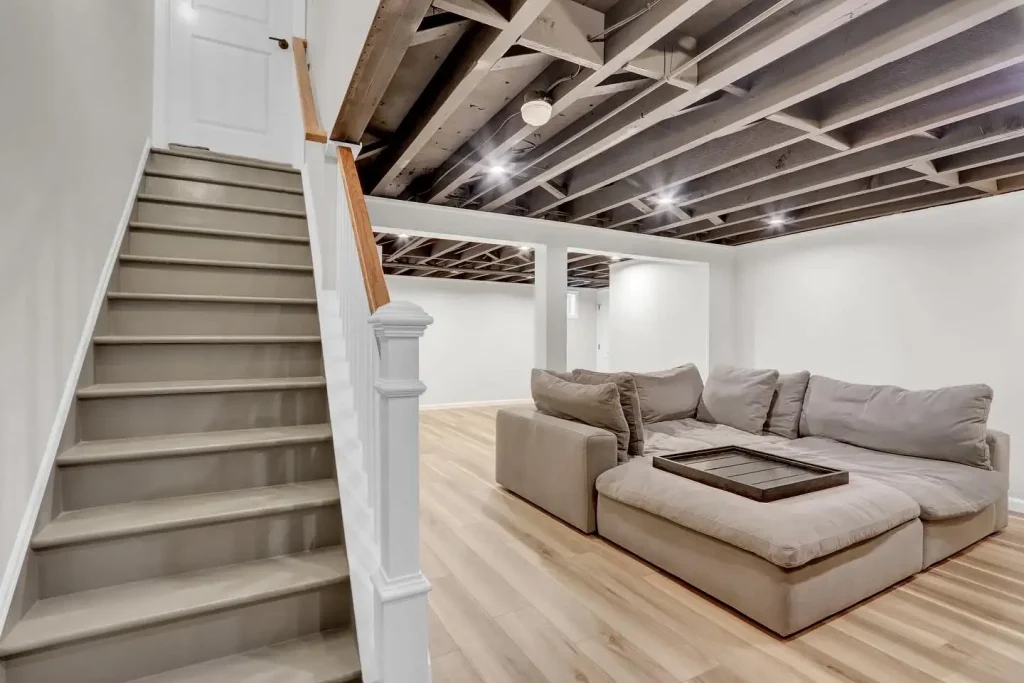
- Highlighting Industrial Elements as Features: Rather than concealing exposed pipes and wiring, this method embraces those raw, utilitarian elements by unifying them under a single dark color. This converts what might have been perceived as “messy” or unfinished into an aesthetically intentional feature. The resulting vibe is reminiscent of urban lofts, marrying function with sophistication. For inspiration on this style, consider exploring ideas about exposed basement ceilings.
- Cost-Effectiveness and Functional Convenience: Painting far outperforms alternative ceiling treatments in affordability and ease. Unlike a drop ceiling or fully drywalled overhead, painting requires fewer materials and labor. It also keeps mechanical systems visible and accessible, which is invaluable for future maintenance and upgrades.
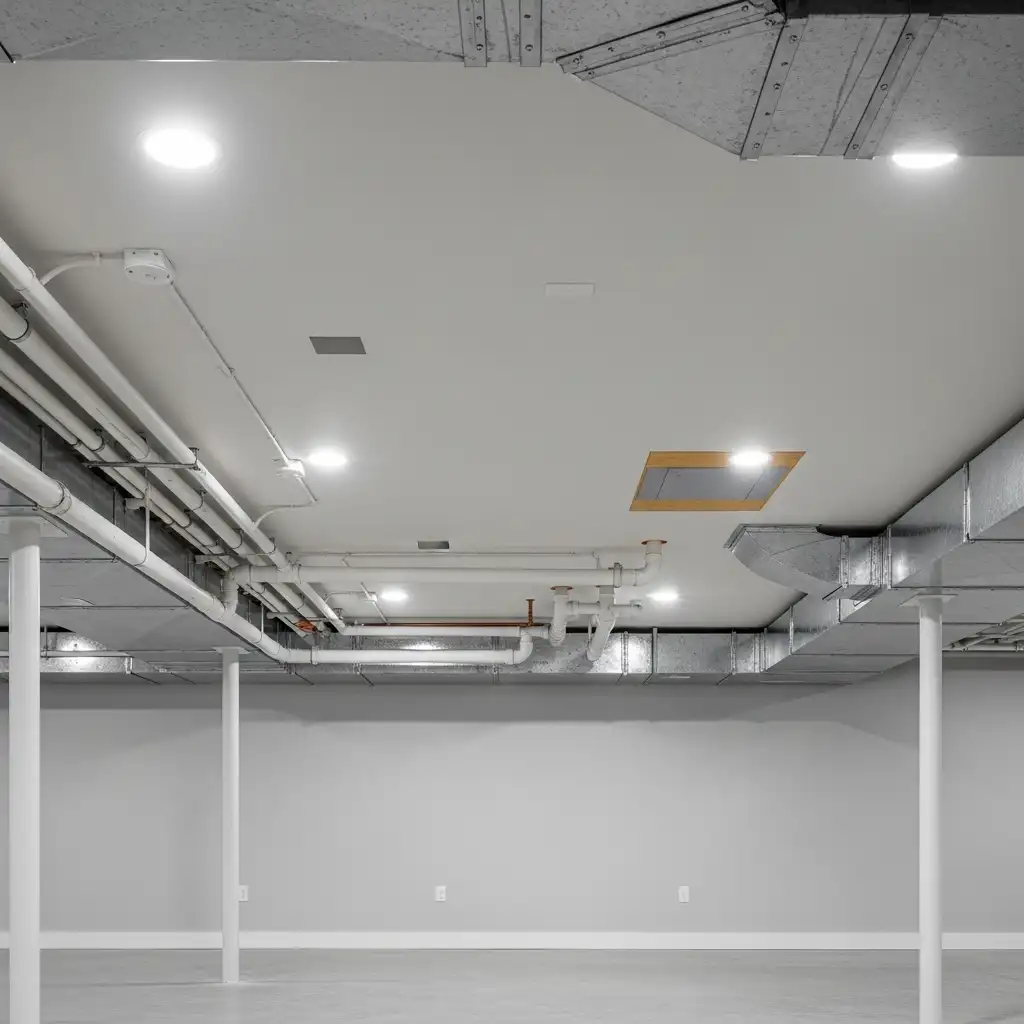
Finding Your Ideal Shade: Beyond Basic Black
While matte black remains a leading choice due to its ability to create the ceiling “fade” effect, alternative deep tones can offer equally stunning results depending on your space’s ambiance and lighting.
- Classic Matte Black: Offers maximum opacity and depth, making the ceiling visually disappear. It provides dramatic contrast that can amplify wall colors and textures—perfect for cozy media rooms or stylish gaming dens.
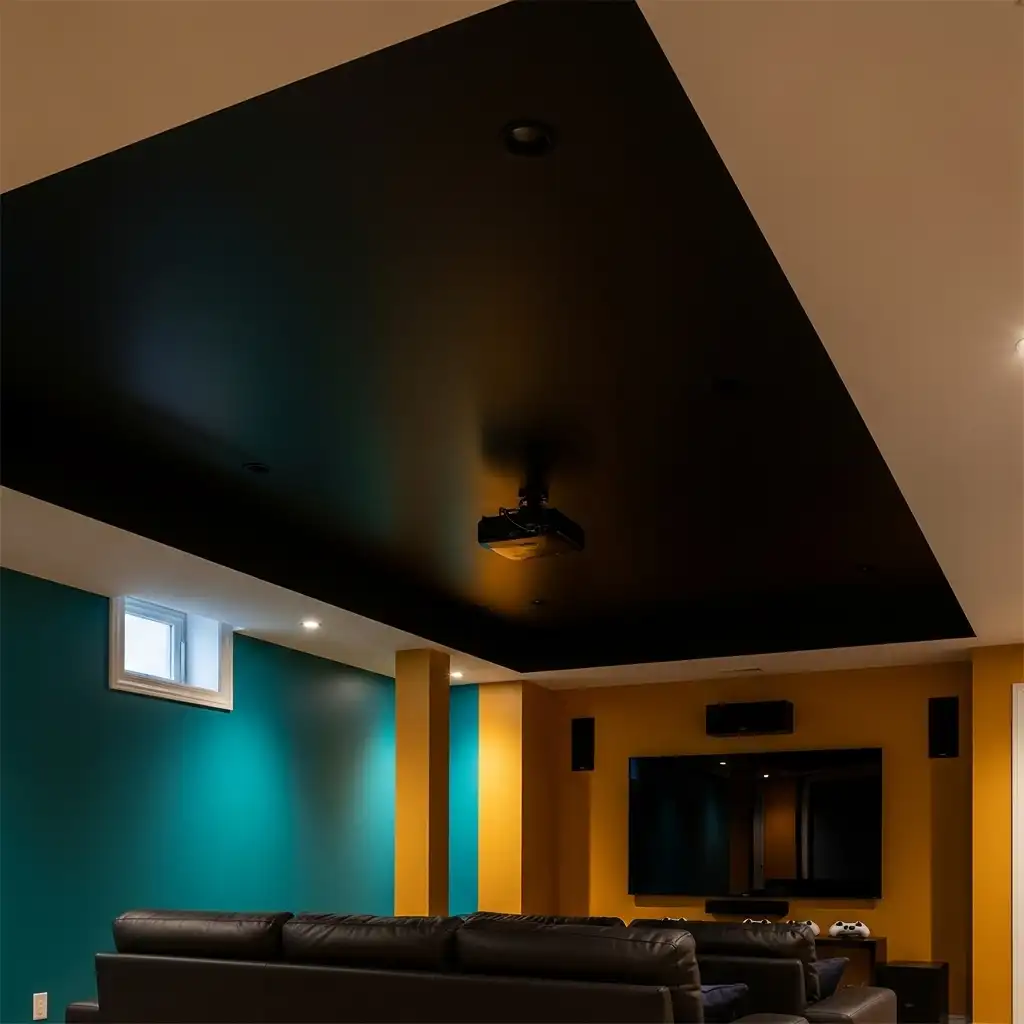
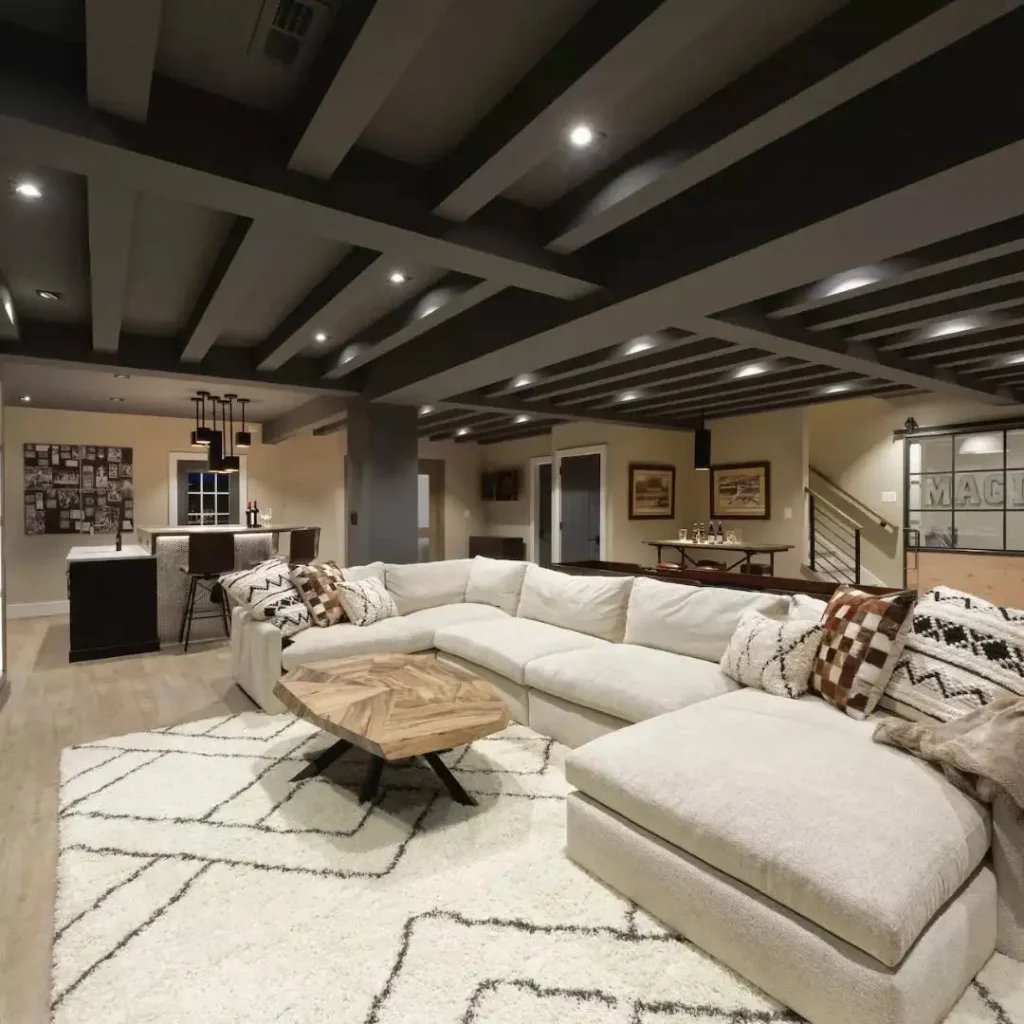
- Soft Charcoal Gray: If black feels too intense, charcoal gray is a subtler alternative. It still recedes beautifully without being overpowering, lending a slightly warmer tone.
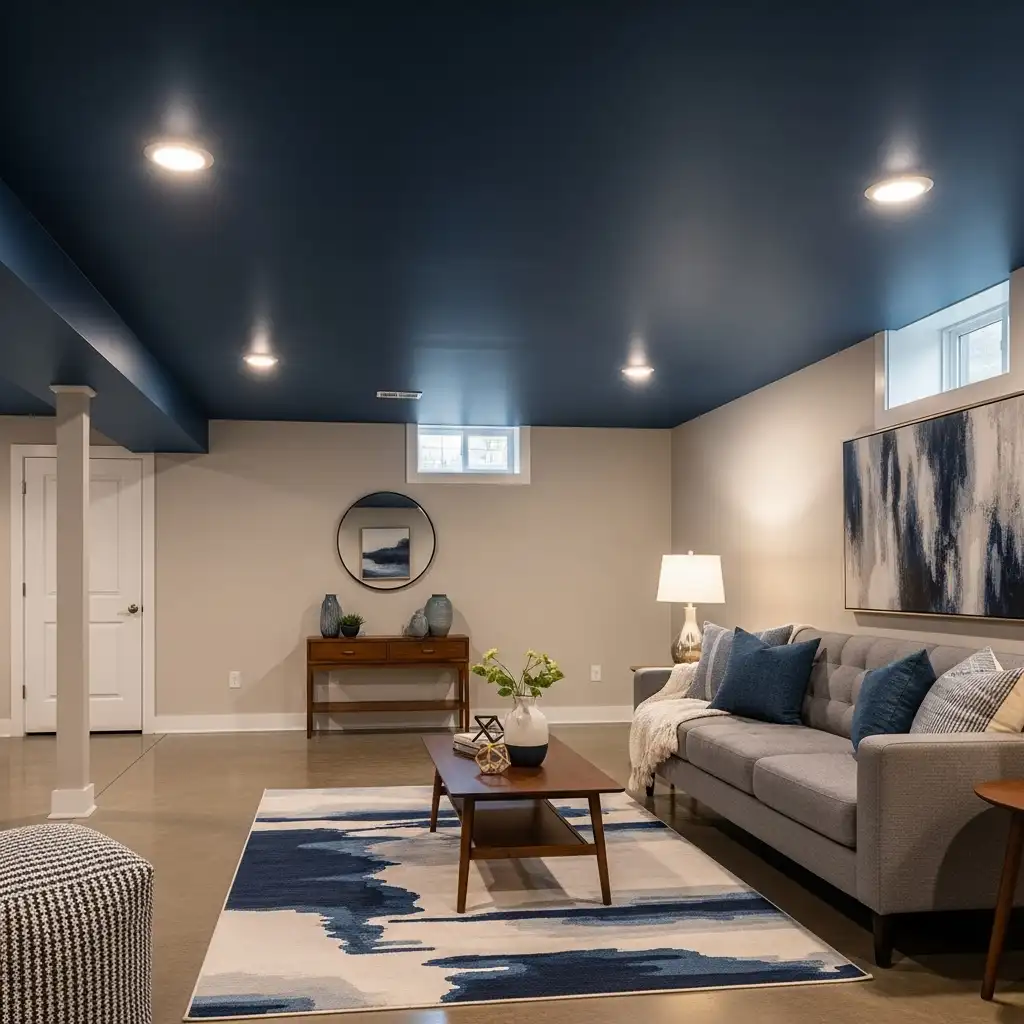
- Rich Navy Blue: For those seeking a hint of color while maintaining the illusion of height, a deep navy shade offers elegance and uniqueness. This tone works well in living spaces and even bedroom ceilings, blending classic and modern flair.
- Deep Walnut Brown: Complementing warm flooring or wood furniture, this shade lends a rustic yet refined lodge-like enveloping effect, branching out from industrial minimalism.
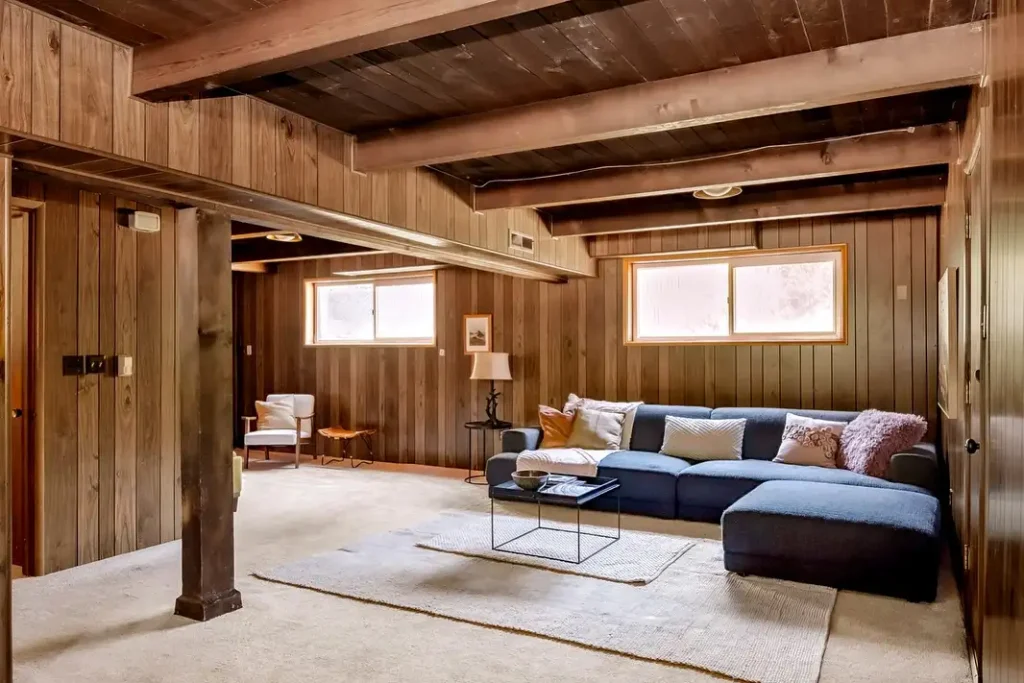
Key Tip: The paint must be matte or flat finish. Any gloss or satin level reflectivity will bounce light off every pipe or wire, negating the desired camouflaging effect.
How to Successfully Paint Your Basement Ceiling: Complete Guide
Painting a ceiling, especially an exposed one, requires thorough preparation and patience more than advanced technique. Allocate a weekend for optimal results.
Essential Supplies:
- Plastic sheeting or painter’s drop cloths to protect your floor and walls
- Professional painter’s tape for sharp edges
- A sturdy ladder or scaffolding for safe ceiling access
- Personal protective equipment: respirator mask, safety goggles, and a head cover
- Stiff brush to clear dust and cobwebs
- Degreasing cleaner such as trisodium phosphate (TSP) or equivalent
- High-quality stain-blocking primer, ideally oil- or shellac-based for metal and rust prevention
- Airless paint sprayer (highly advised) or a long-nap roller with an extension pole
- Flat or matte interior paint in your preferred dark tone
Step 1: Clear and Protect
Remove all items and furniture from your basement to avoid damage and give yourself room to work. Protect floors and walls with plastic sheeting, securing edges with tape.
Step 2: Clean and Prep Surfaces
Ceiling joists and mechanicals can collect dirt and grime that interfere with paint adhesion. Use a stiff brush to remove loose dust and cobwebs, then wash everything thoroughly with a degreaser. Allow surfaces to fully dry before moving forward.
Step 3: Apply Primer
The primer is vital for a lasting, uniform finish. It seals diverse materials like metal pipes and wood and blocks stains from rust. Carefully coat every visible overhead surface with your chosen stain-blocking primer, using a sprayer or roller for even coverage.
Step 4: Paint Application
Once the primer dries, proceed in painting with your flat or matte topcoat.
- Sprayer Use: An airless paint sprayer expedites coverage and ensures a smooth, brushmark-free finish across complex surfaces.
- Roller Method: Use a roller with a thick nap (¾” to 1”) to deposit sufficient paint on uneven surfaces, complemented by a brush for cutting into corners.
- Multiple Coats: Apply two thin coats instead of one heavy layer to avoid drips and achieve rich, even coloring. Wait for the first coat to dry fully before the second.
Step 5: Reveal and Enjoy
After the final coat becomes touch-dry, remove all protective coverings and reassemble light fixtures and furniture. Step back and admire your refreshed basement ambiance.
Optimizing Lighting with a Dark Ceiling
Dark ceilings absorb light, necessitating a thoughtful lighting plan to maintain a welcoming vibe at eye level.
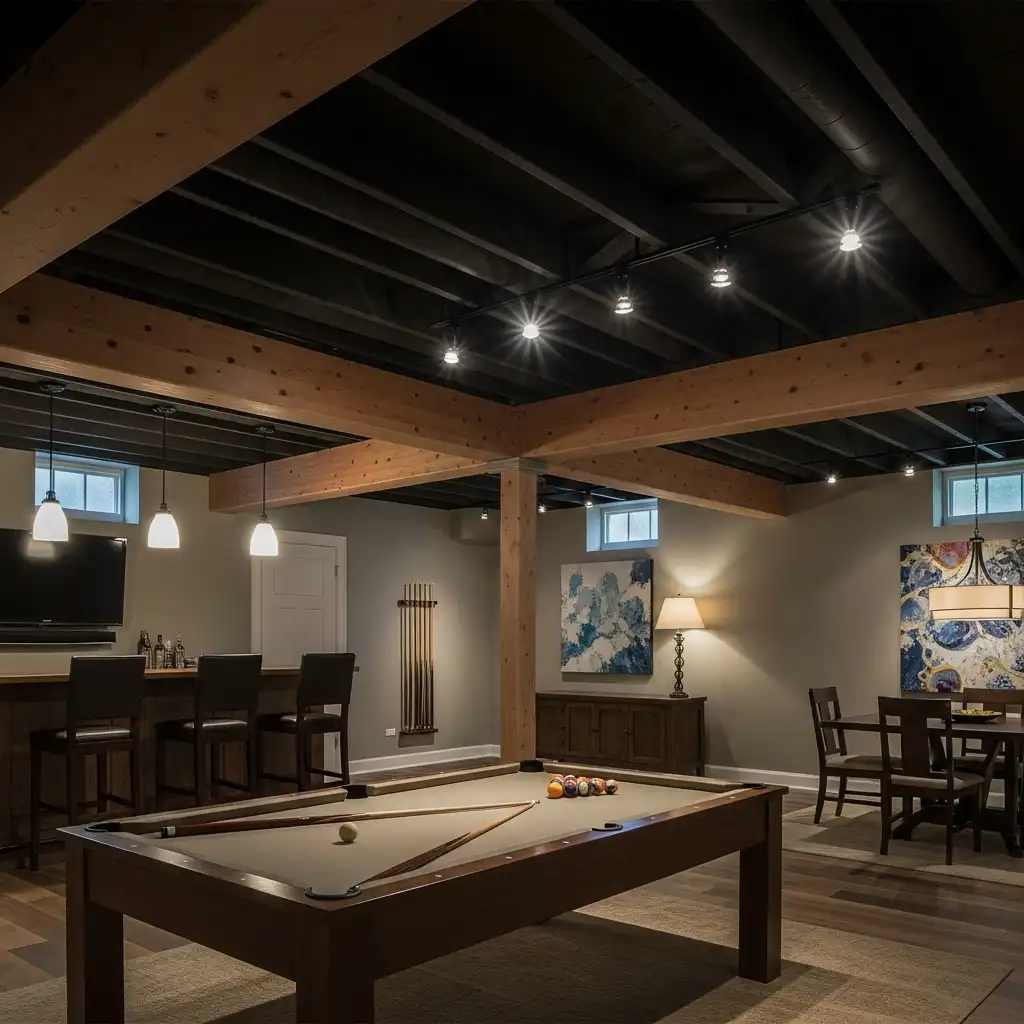
- Recessed Lighting: Installed between joists, they provide clean, downward illumination without drawing focus to the ceiling.
- Track Fixtures: Offer adaptable directional lighting, accentuating key areas like reading corners or game tables.
- Pendants: Use deliberately over focal points such as bars or dining spaces to create cozy light pools.
- Floor & Table Lamps: Ground-level lamps add essential ambient light and warmth, counterbalancing overhead darkness. Discover more ideas through our basement ceiling ideas resources.
Complementary Design Themes for Painted Basement Ceilings
This versatile ceiling treatment blends well with a variety of styles:
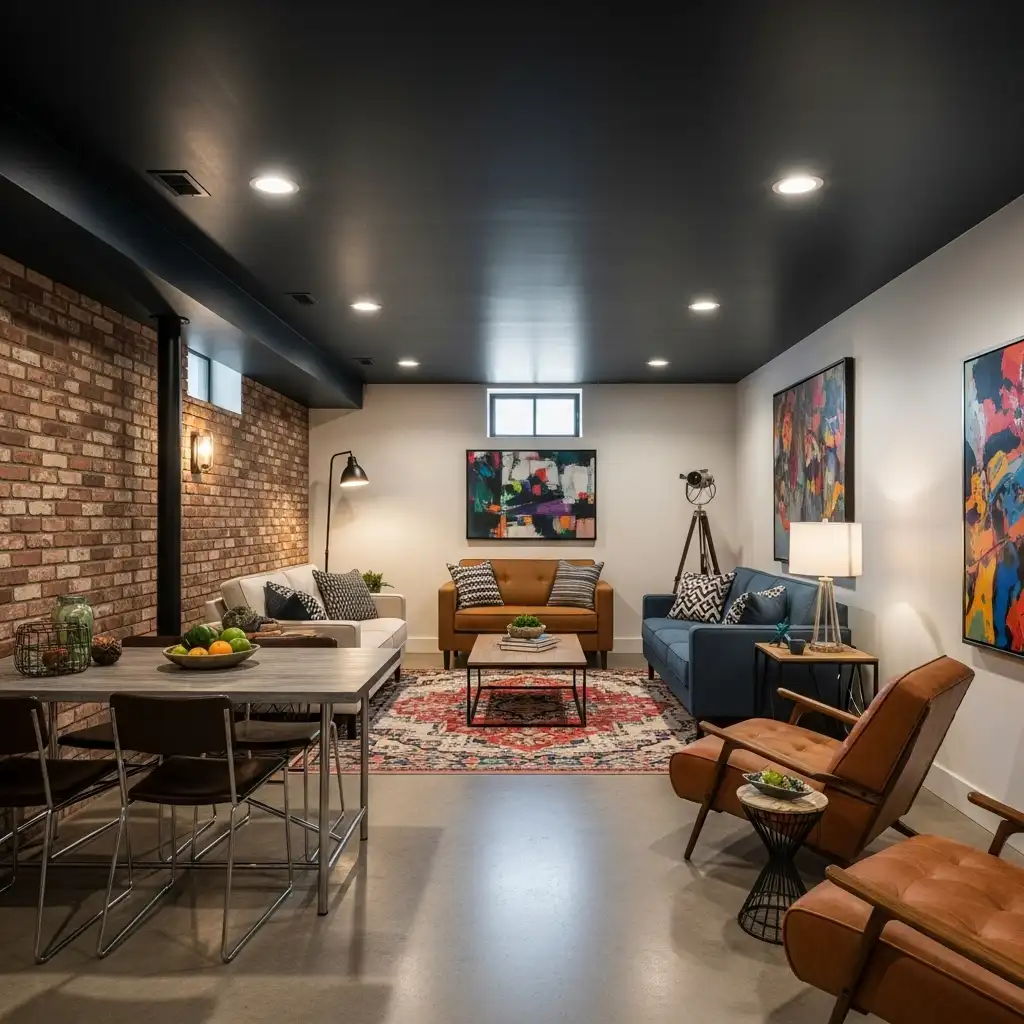
- Industrial Chic: Combine with raw materials like exposed concrete, brick facades or faux brick panels, and metal furnishings for an edgy, loft-inspired vibe.
- Contemporary Minimalism: Pair with sleek, understated furniture, neutral wall palettes, and purposeful accent lighting for a clean, sophisticated look.
- Eclectic Spaces: Use the dark ceiling as a neutral “canvas” that emphasizes bold art, colorful textiles, and unique decor elements.
- Home Entertainment Rooms: Create an inviting, intimate atmosphere ideal for man caves or media rooms, where the enclosed effect works to your benefit.
Final Thoughts: Maximizing Value in Every Inch
Transforming your low basement ceiling with paint is more than a cosmetic improvement—it’s a strategic design move that amplifies both the perception and functionality of your space. Affordable, practical, and visually striking, this approach leverages color psychology and design ingenuity to overcome spatial limitations. By carefully selecting shades, preparing thoroughly, and layering effective lighting, you can convert what seemed like a drawback into your basement’s standout feature. Instead of battling low ceilings, welcome their latent potential with creative flair just overhead.
Common Queries Answered
1. Could a dark ceiling make my basement feel more confined and dim?
This concern is understandable but counterintuitive to the effect achieved. Light ceilings emphasize the boundary, highlighting low clearance and creating a confined feel. Dark matte ceilings visually retreat, dissolving that boundary and fostering the illusion of increased volume. When combined with well-planned wall sconces and floor lamps, the space remains bright and inviting at occupant level.
2. What paint finish is recommended for basement ceilings?
Finish choice is crucial. Only flat or matte paints achieve the desired absorption of light and conceal surface imperfections. Any sheen like satin or semi-gloss reflects light and defeats this purpose. Use a robust interior paint formula but prioritize a high-quality, stain-blocking primer, especially one oil- or shellac-based to tackle rust and ensure adhesion.
3. Is this project suitable to DIY or better left to professionals?
Confident homeowners experienced in painting can tackle this project effectively. The main obstacles are the physical demands of overhead painting and the preparation rigor. Renting or investing in an airless sprayer enhances ease and finish quality. However, if your basement has a complex network of utilities limiting access or you are uneasy with ladder work, a professional’s expertise will ensure superior results and safety.
As an Amazon Associate I earn from qualifying purchases.