Ultimate Guide to Transforming Your Basement into Valuable Living Space

Is your basement just a dusty, dark storage spot while your main living areas feel cramped? Imagine turning that overlooked lower level into a vibrant, functional space that expands your home’s footprint and enhances your day-to-day living—without the hassle of costly additions or securing extensive permits.
Transforming your basement through remodeling is one of the most cost-effective ways to boost your home’s usability and value. By upgrading neglected underground areas, you can add significant square footage, improve comfort, and create versatile spaces tailored to your needs.
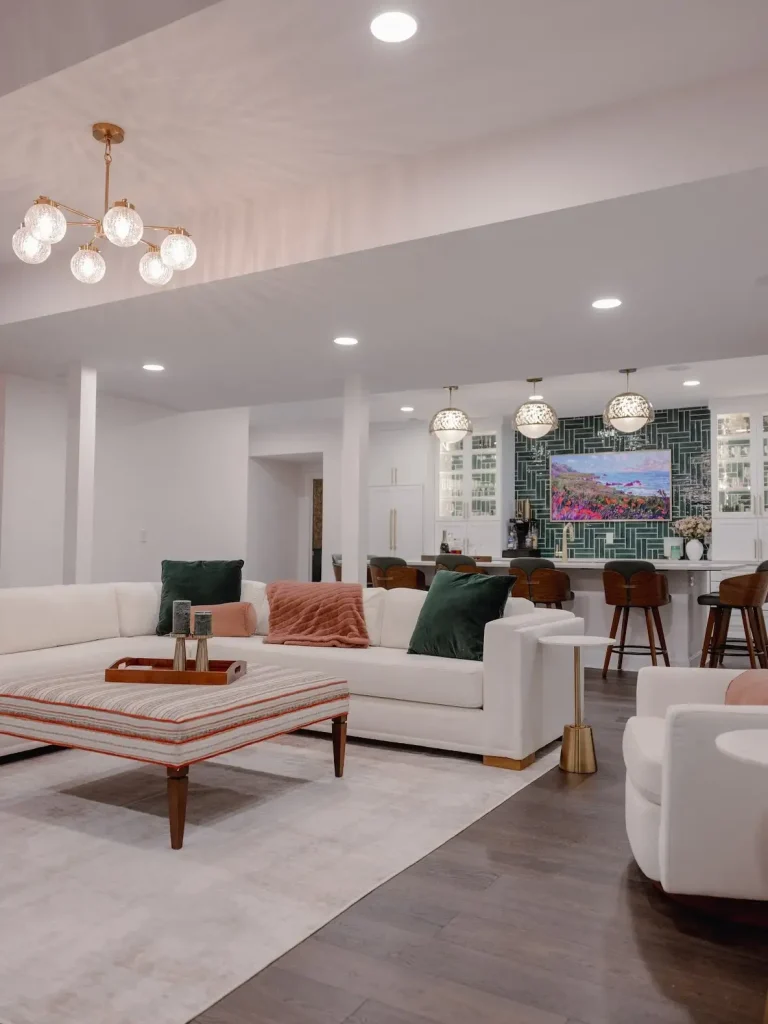
Whether you require extra bedrooms for a growing household, a quiet home office to support remote work, lively entertainment areas for socializing, a fitness room to skip gym fees, or an independent rental unit for extra income, a finished basement can serve myriad purposes.
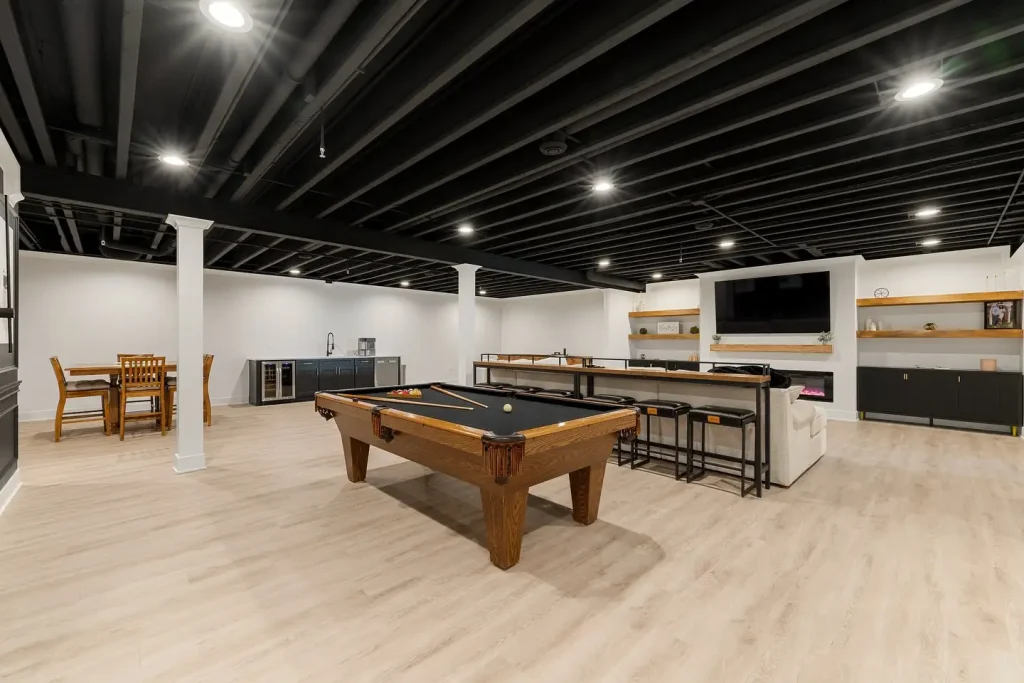
Typically, basement remodeling costs range from $20,000 to $50,000, yet these improvements can elevate your home’s market price by $50,000 to $80,000 or more. Regardless of whether your basement spans 400 or 1,500 square feet, thoughtful design can brighten formerly gloomy, underused spaces and transform them into your family’s new favorite areas.
Initiating Your Basement Renovation
Evaluate Your Basement’s Current State
Start with a thorough inspection of your basement’s condition. Identify any existing challenges such as moisture seepage, foundation imperfections, or insufficient ceiling height. Addressing these structural and environmental concerns upfront safeguards your investment.
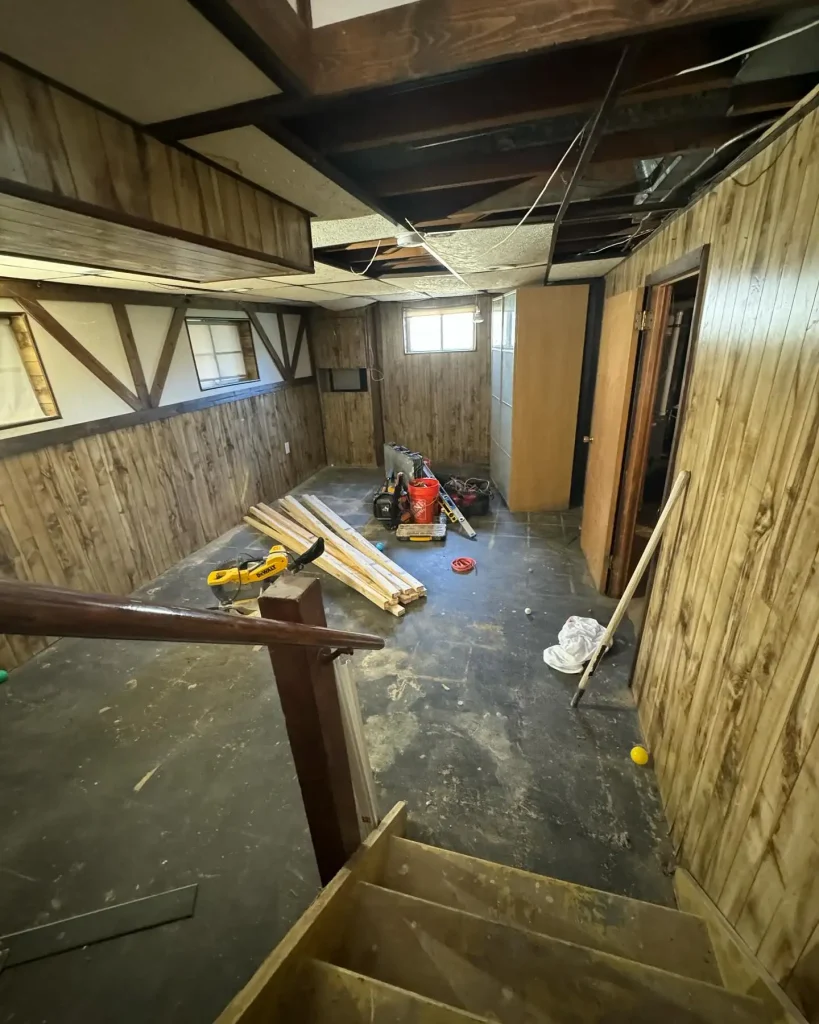
Most building codes mandate a minimum 7-foot ceiling height for living spaces, with 8 feet or more offering a more open and inviting atmosphere. Preventative waterproofing is crucial: inspect floor drains, foundation walls, and basement window wells carefully to detect water intrusion. Interior waterproofing strategies, such as installing vapor barriers and effective drainage, can save costly repairs later. As an added design enhancement, you might experiment with installing decorative wood ceilings to add warmth and texture.
Set a Realistic Budget and Define Priorities
Ascertain a budget grounded in your remodeling goals and basement size, understanding that expenses typically range from $25 to $100 per square foot, depending on the finish level and complexity involved. For instance, a simple 500 sq ft recreational room might cost between $12,500 and $25,000, while a fully equipped 1,000 sq ft apartment-like basement could enter the $50,000 to $100,000 range.
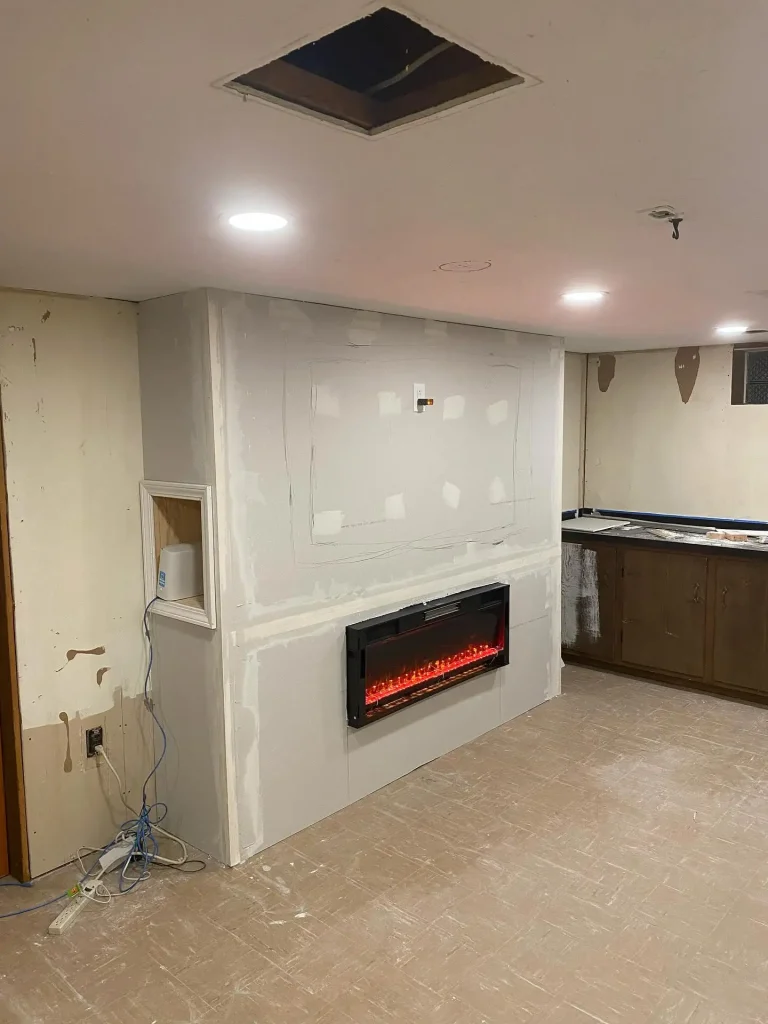
Separate your “need” list from “want” features, strategically planning phased improvements if finances demand spreading costs over time. Prioritize critical infrastructure elements like safe egress, electrical upgrades, and moisture management before investing in aesthetic touches.
Understand Codes and Obtain Necessary Permits
Investigate local regulations governing basement renovations, particularly when creating bedrooms that require emergency egress windows. Most extensive basement projects involving plumbing, electrical, or structural changes will mandate permits, usually costing between $500 and $2,000 depending on local fees and the project scale.
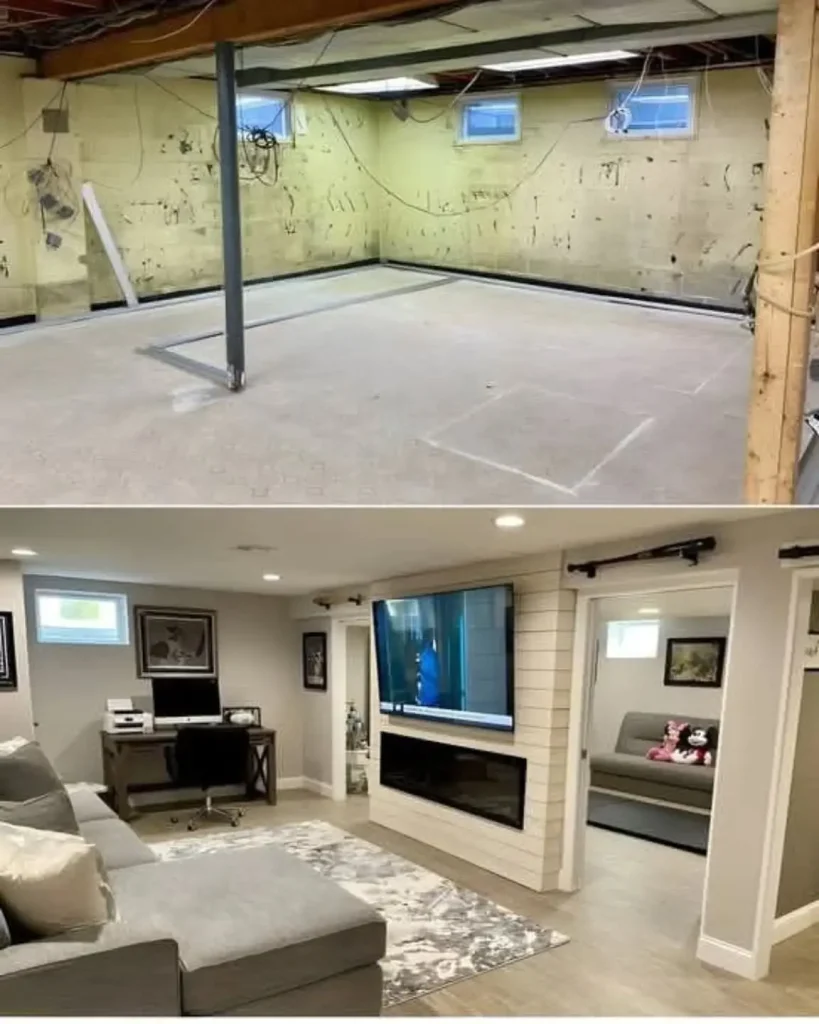
Engage licensed specialists for trades requiring compliance expertise to avoid potential setbacks during resale or insurance claims. If performing parts of the work yourself, familiarize yourself thoroughly with building codes. For added visual interest behind entertainment centers, using decorative wood panels can dramatically change a basement’s vibe.
Clarify Your Basement’s Purpose
Define how the newly finished space will serve your household before finalizing layout or material choices. A media room demands different acoustics and lighting than a guest suite, while apartments need independent access and amenities.
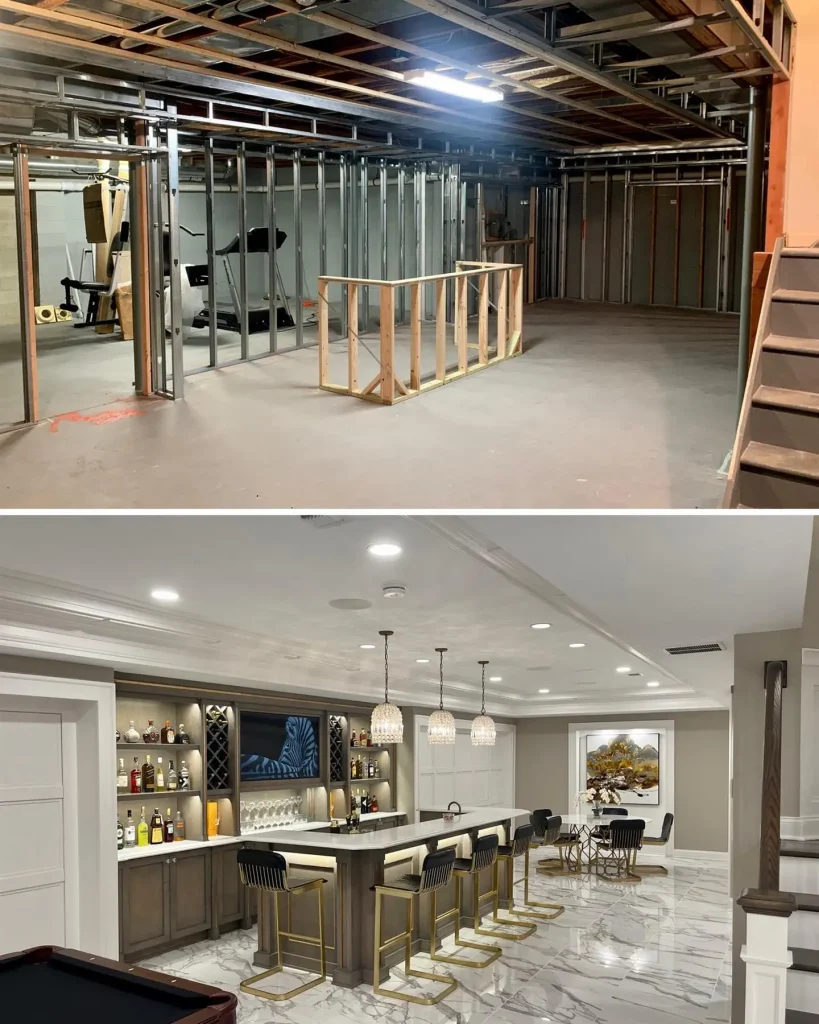
Your intended use informs every decision, from room partitioning and finish materials to HVAC needs and budget considerations. Be pragmatic—designing a full wine cellar might be alluring, but ensure it aligns with your lifestyle and usage frequency.
Key Components of a Successful Basement Upgrade
Effective Moisture Management
Moisture control is paramount in basement finishing. Implementing waterproofing measures such as vapor barriers, wall sealants, sump pumps, and quality dehumidifiers ensures the space remains dry and healthy.
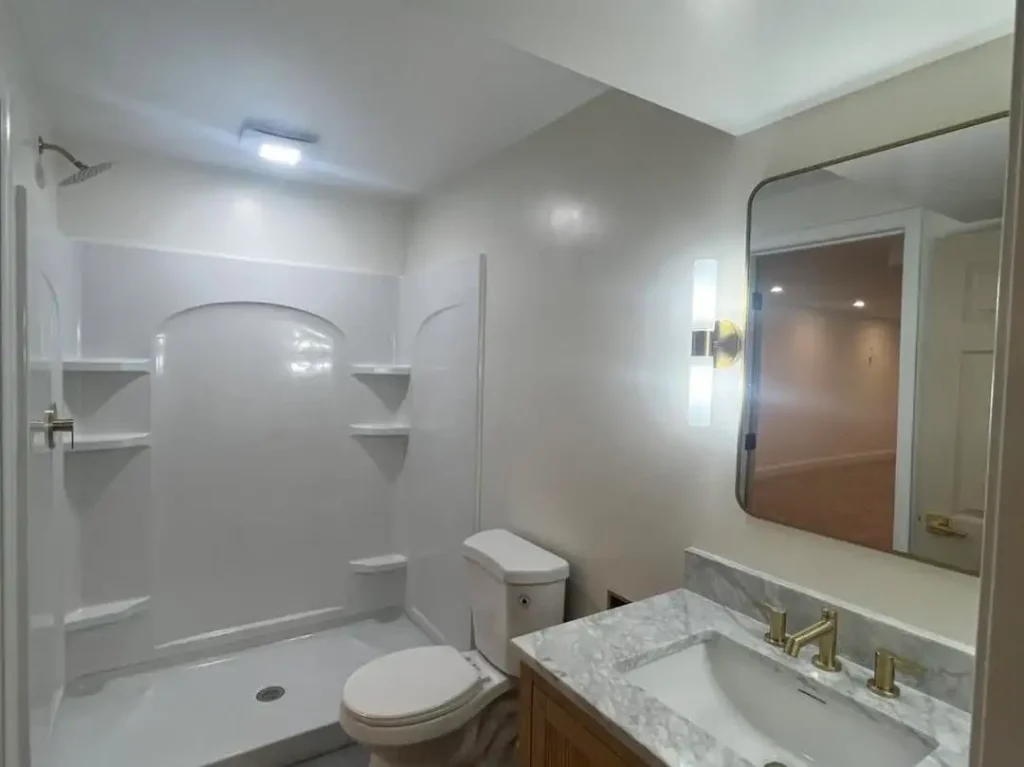
On the exterior, proper drainage is essential—install foundation waterproof membranes, ensure soil slopes away from your home, and maintain gutters to direct water effectively. A budget of $3,000 to $10,000 is typical for comprehensive waterproofing tailored to the basement’s condition.
Insulating and Regulating Basement Climate
Insulating your basement properly keeps it comfortable year-round. Rigid foam boards applied directly to foundation walls provide moisture resistance, while framed walls with traditional insulation help regulate interior temperatures.
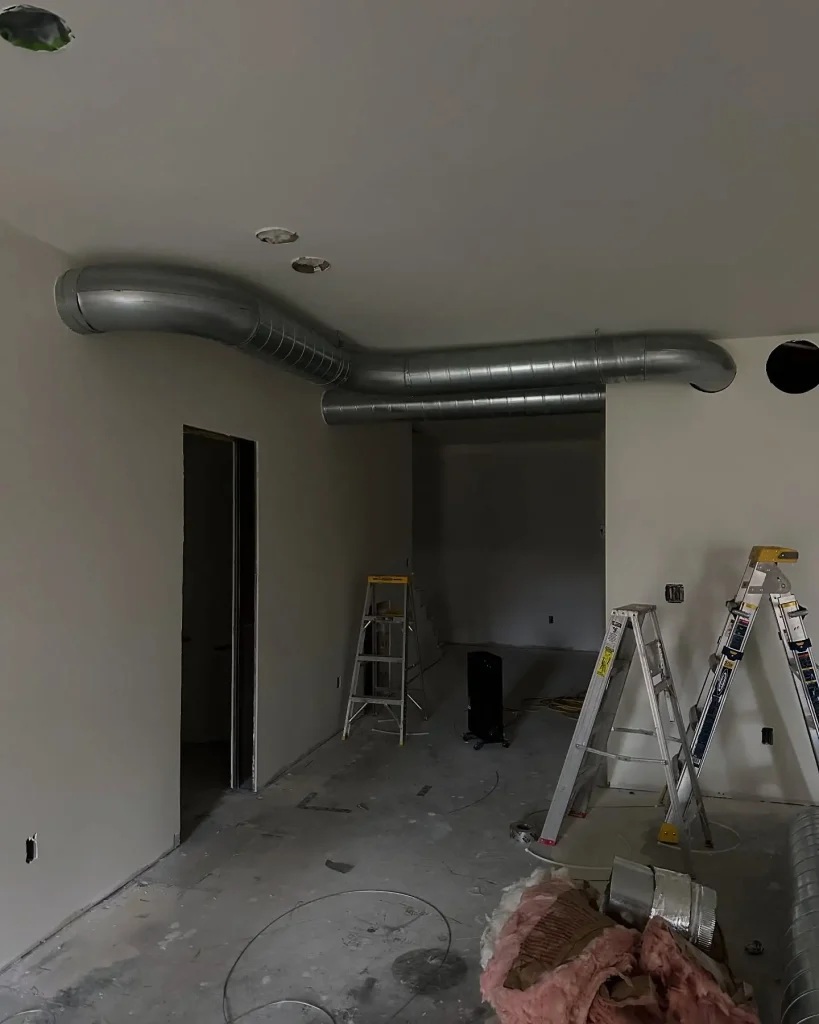
Extending your home’s HVAC system into the basement with additional ductwork (costing $2,000 to $5,000) or installing individual mini-split units ($3,000 to $8,000) allows for independent climate control. You may also explore creative slat ceiling options to conceal pipes while improving ventilation.
Designing Efficient Lighting
Basements naturally lack sunlight, so layering lighting is critical. Incorporate recessed lights (approximately one per 25-50 sq ft), track lighting, and portable fixtures to create bright, adaptable illumination.
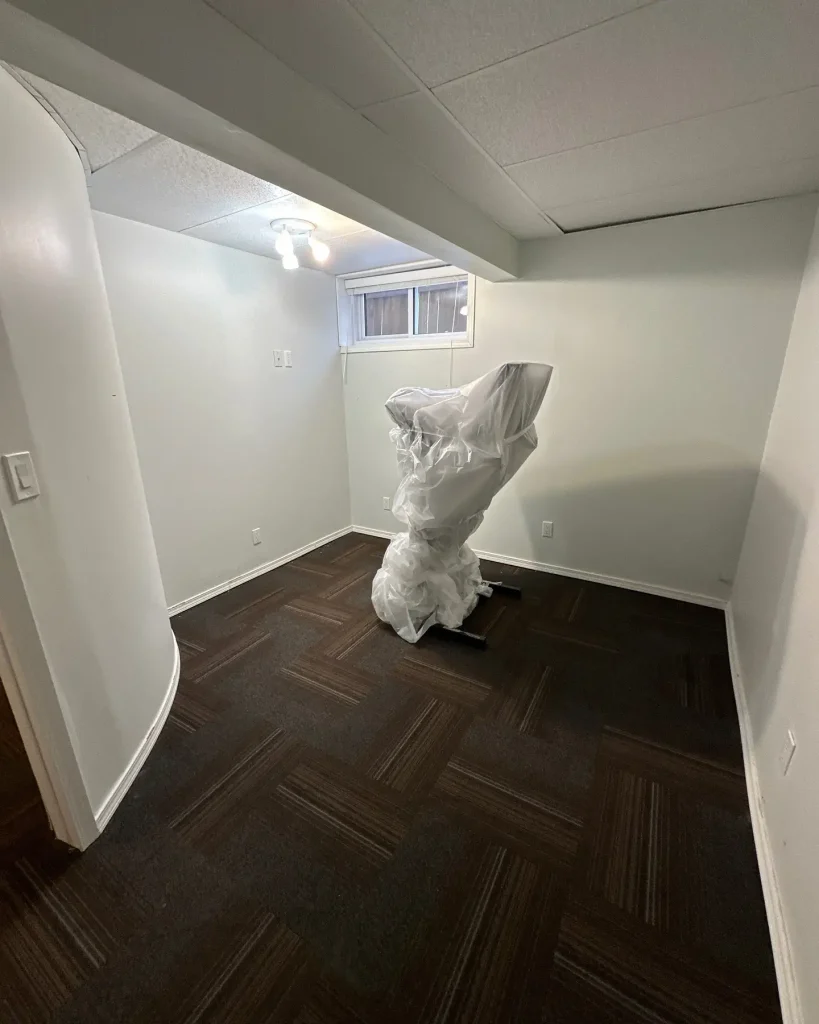
Consider adding dimmers to tailor brightness to activity or mood. Where feasible, maximize natural light with well-designed window wells or glass block installations to give the basement a more inviting feel. For further illumination ideas, explore our comprehensive ceiling lights guide.
Ceiling Treatment Choices
Basement ceilings often pose challenges with exposed systems and limited height. Options include drop ceilings ($2–$5 per sq ft) offering easy utility access, painted exposed joists for an industrial look ($1–$3 per sq ft), or drywall for a polished finish ($3–$8 per sq ft), though drywall conceals infrastructure and may complicate future work.
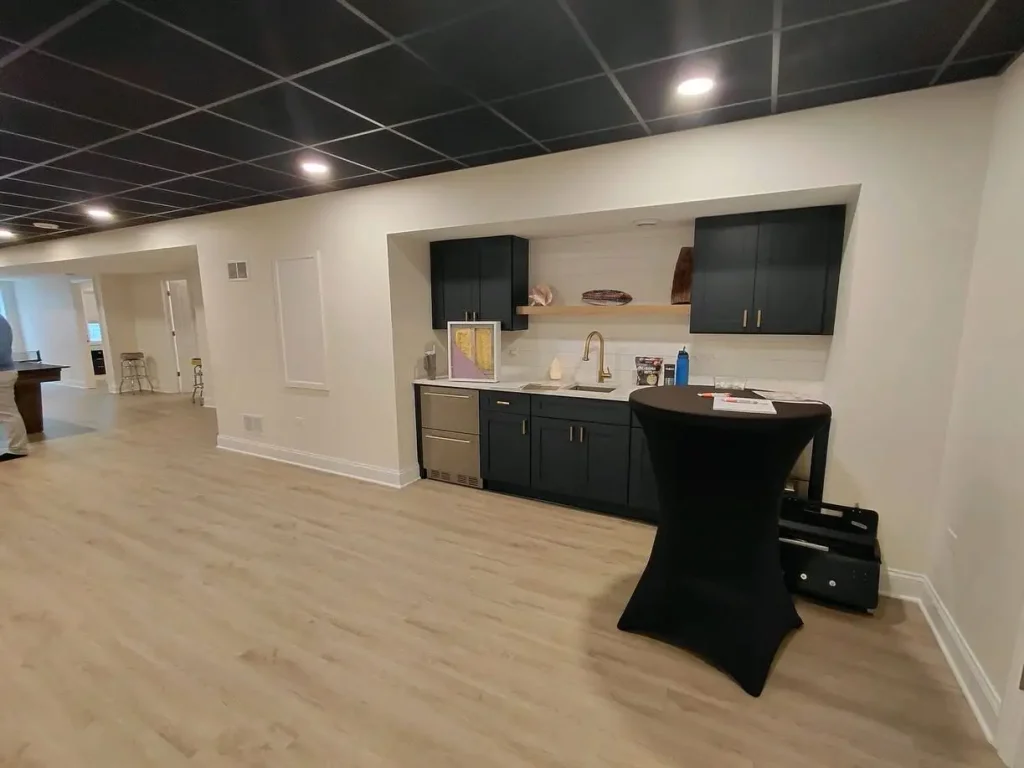
For more inspiration, see our featured articles on innovative ceiling finishes and exposed basement ceilings.
Creative Basement Transformation Concepts
Cozy Family Gathering Room
Convert your basement into a welcoming family lounge with plush sectional sofas, large flat-screen TVs, board game tables, and even a stylish wet bar. These setups typically cost between $15,000 and $35,000 for a 400 to 600 sq ft area, covering floors, drywall, lighting, and essential appointments.
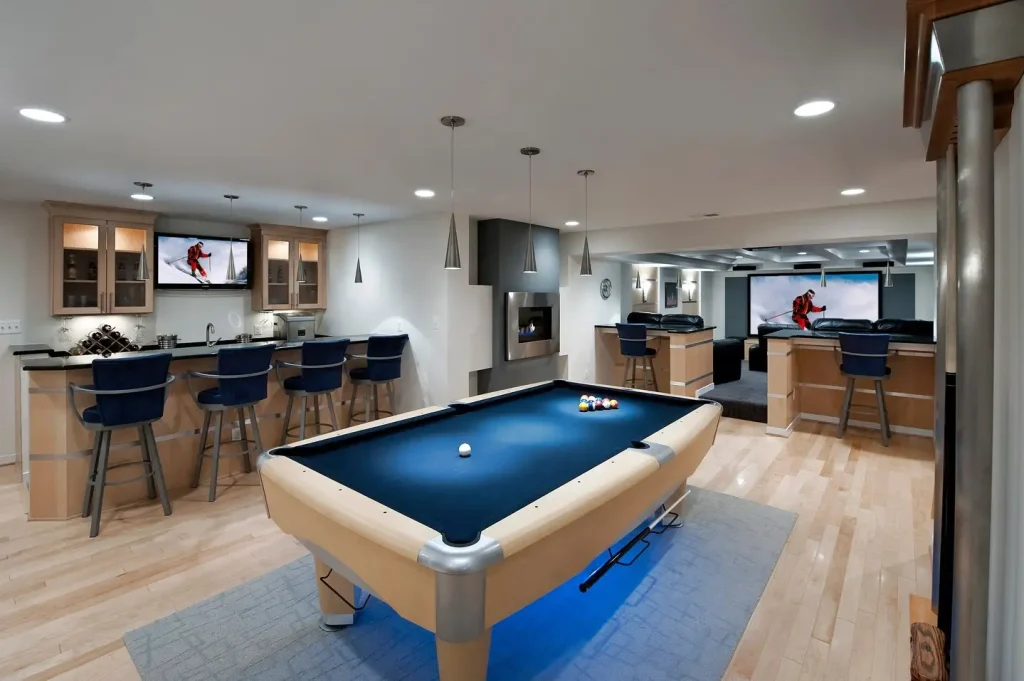
Elevate your entertainment features with home theater seating ($2,000-$10,000) for a cinema-like experience in the comfort of home. This casual space invites relaxation without the formal upkeep of main living rooms. For inspiration, check out our living room design ideas.
Dedicated Remote Work Office
Create a professional workspace in your basement, insulated from household distractions, with ergonomic desks, sufficient electrical outlets, bright light, and controlled temperature to maximize productivity.

Budget between $10,000 and $25,000 for 200 to 300 sq ft outfitted with quality finishes. Dedicated offices help maintain clear boundaries between work and home life, an increasingly vital aspect in today’s remote work environment. Explore our office design inspirations for practical setups.
Private Guest or In-Law Suites
Design self-sufficient living quarters with bedrooms, bathrooms, and kitchenettes, providing privacy and independence for visitors or family members. Comprehensive remodels range from $30,000 to $80,000, varying with amenities and finishes.
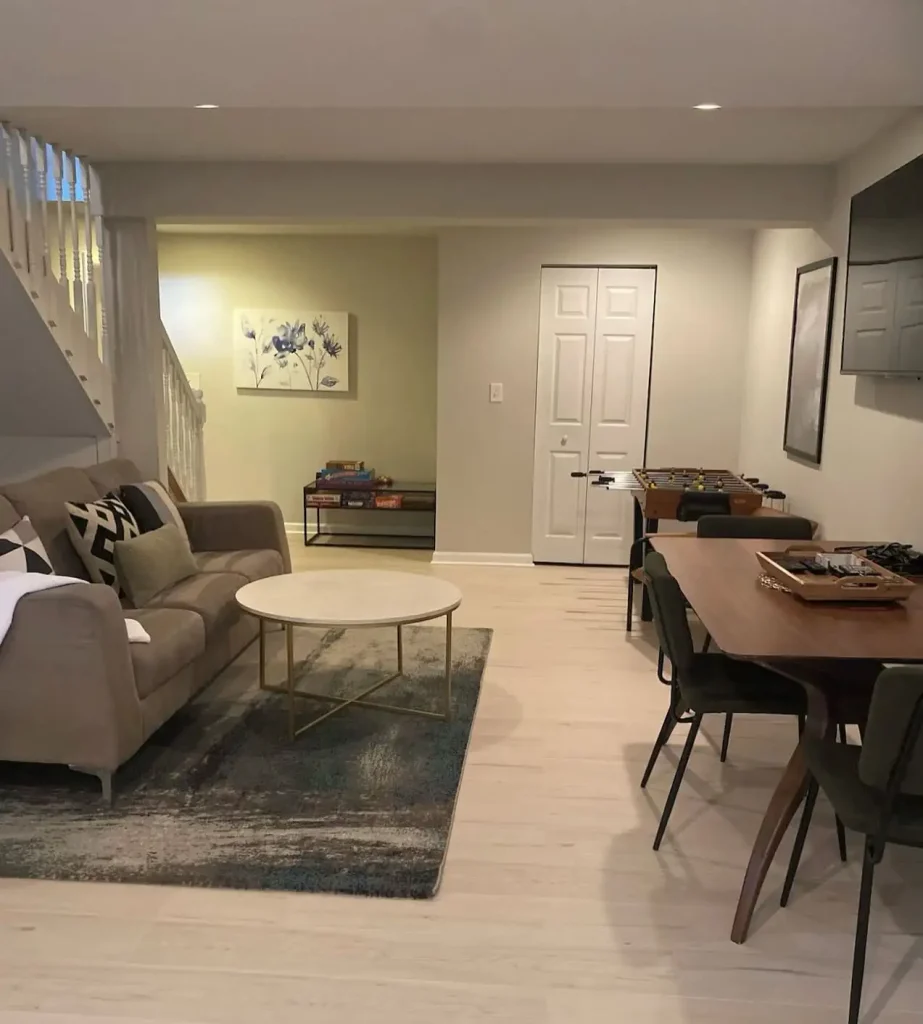
Adding dedicated external entrances ($3,000-$8,000) and compliant egress windows ($2,000-$5,000 each) enhances safety and autonomy. These suites often repay investment costs by reducing assisted living expenses or generating steady rental revenue. See more on guest space design.
Personal Gym and Wellness Zone
Establish an in-home workout area outfitted with durable rubber flooring ($2-$8 per sq ft), full-length mirrors ($200-$500), and versatile exercise equipment ($2,000+), all for approximately $8,000 to $20,000 total.
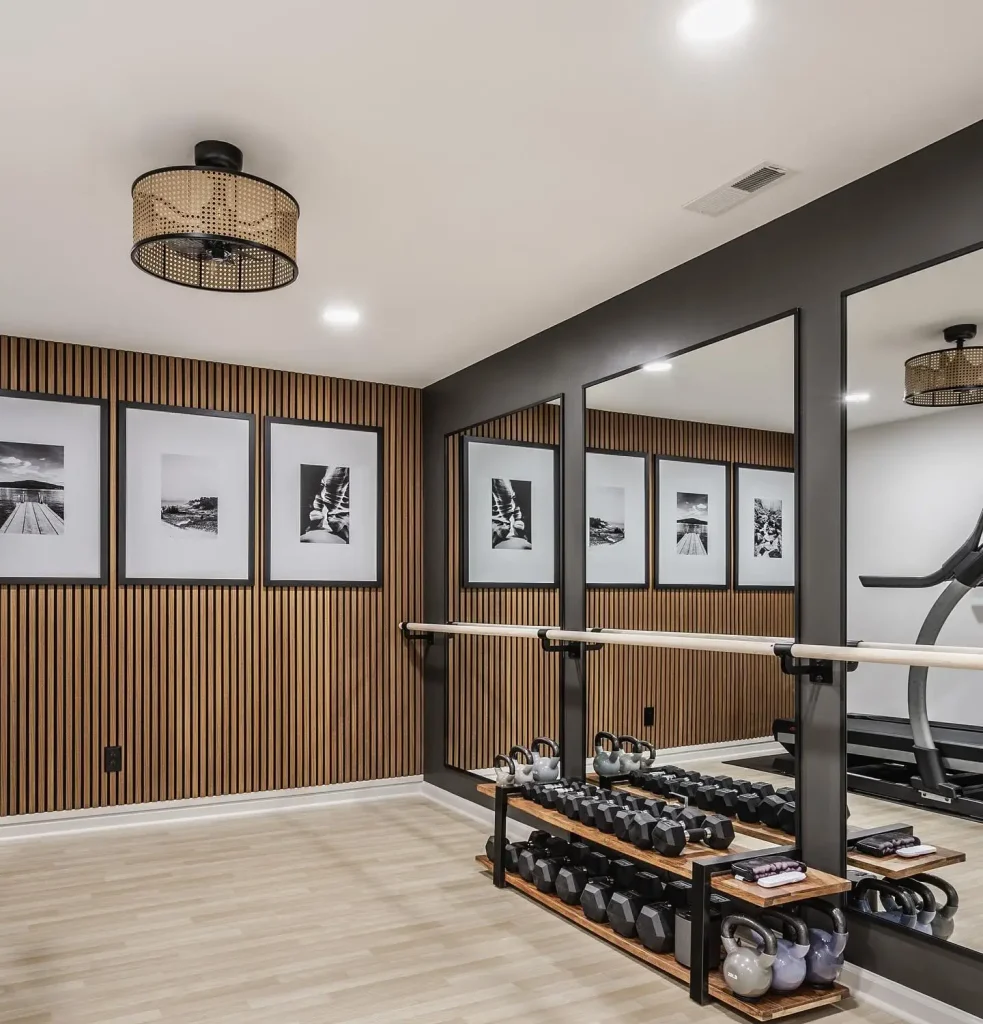
Locating your gym below stairs helps contain noise and clutter from main living areas, while proper climate control ensures year-round usability regardless of the weather.
Children’s Playroom or Hangout
Dedicate basement space for kids’ toys, crafting, and activities, keeping messes out of primary living zones. Install tough, stain-resistant finishes such as luxury vinyl flooring (LVP) and washable paint to withstand heavy use.
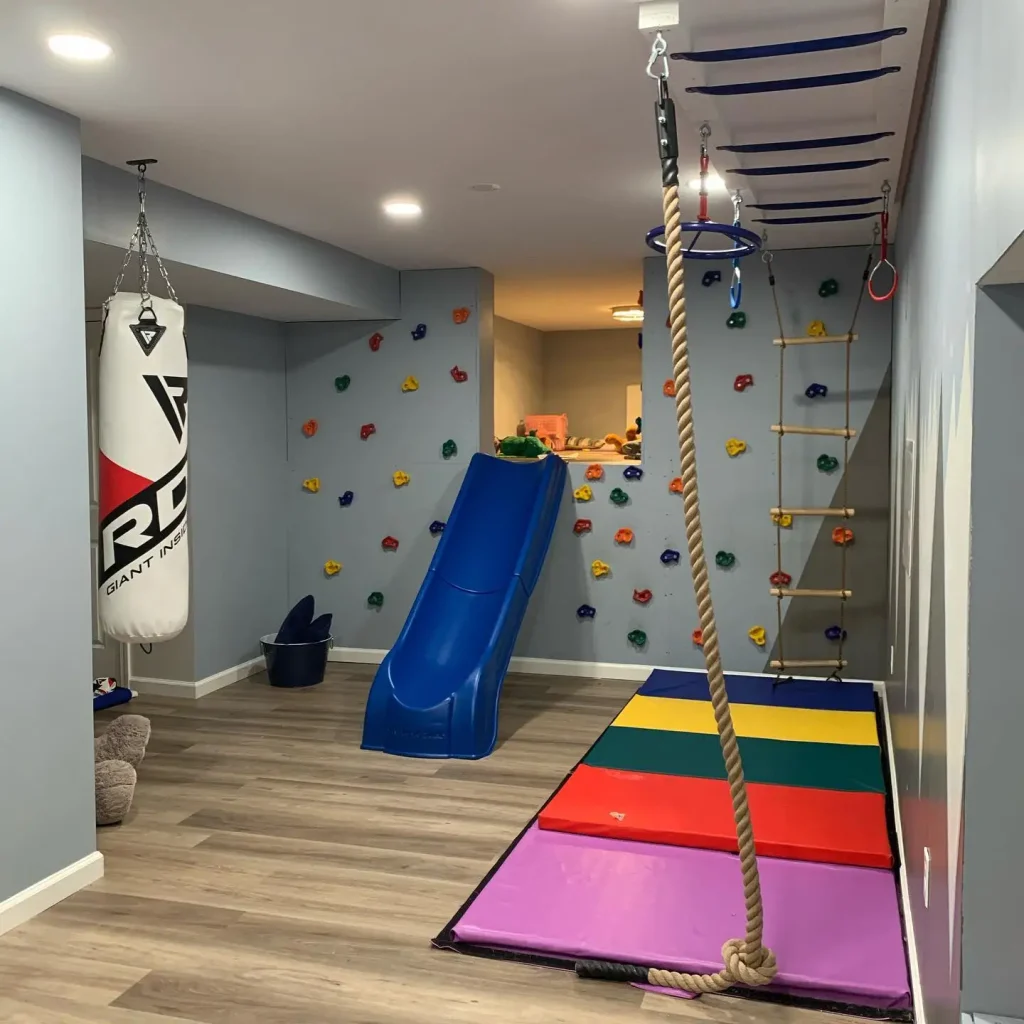
Provide generous storage to contain clutter and maintain order, budgeting between $12,000 and $25,000 for 400 to 500 sq ft play spaces that evolve as your children grow.
Income-Generating Rental Area
Adapt your basement into a self-contained rental unit that can yield $800-$2,000+ monthly, helping offset your mortgage and accrue property equity. Comprehensive renovations cost $40,000 to well over $100,000, depending on amenities like kitchens, bathrooms, and private entrances.
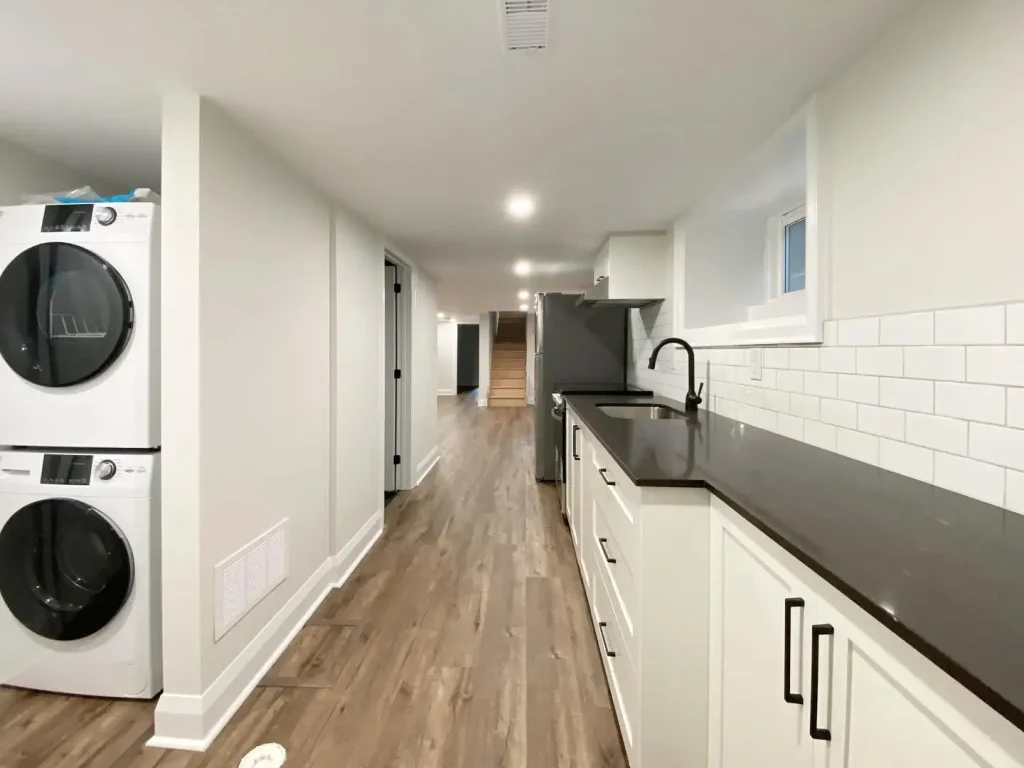
Before investing, research zoning rules, rental licensing, and tax considerations. Rental income can recoup remodeling expenses over several years while adding long-term asset value attractive to investors or future homeowners.
Basement Flooring: Choosing the Right Surface
Luxury Vinyl Plank (LVP) Flooring
Luxury vinyl plank (LVP) flooring is favored for basements thanks to its waterproof properties, authentic wood or stone looks, and comfortable feel. It installs easily as a floating floor over concrete, making it an appealing option for DIYers, with professional installation usually costing an additional $1 to $3 per sq ft.
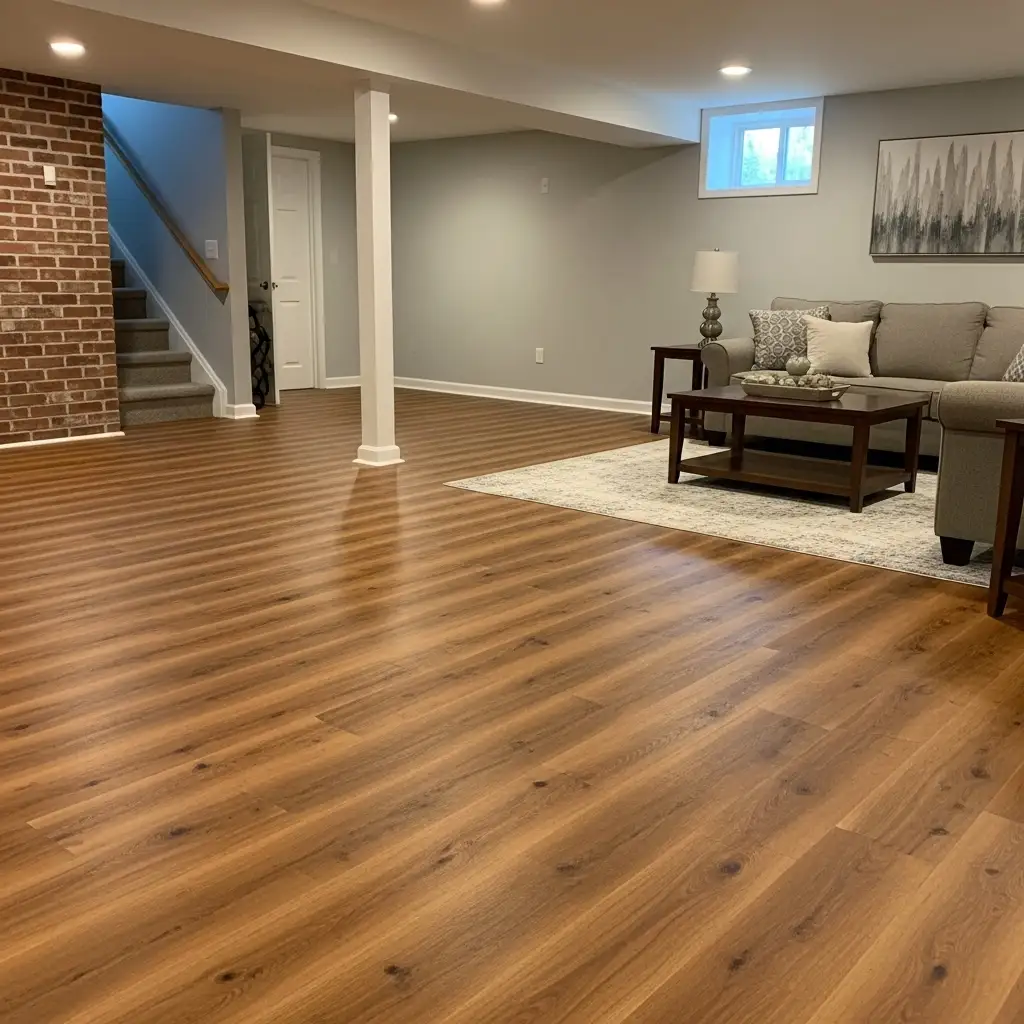
LVP tolerates moisture spikes better than laminate or hardwood, making it a smart choice for areas prone to humidity or minor water exposure. Its toughness and minimal upkeep requirements suit heavily trafficked family spaces perfectly.
Engineered Hardwood
Engineered hardwood offers the warmth and richness of real wood but with enhanced resistance to moisture, unlike traditional hardwood that is prone to warping in humid or damp basements. Composed of layered wood veneers, it provides dimensional stability against environmental changes.
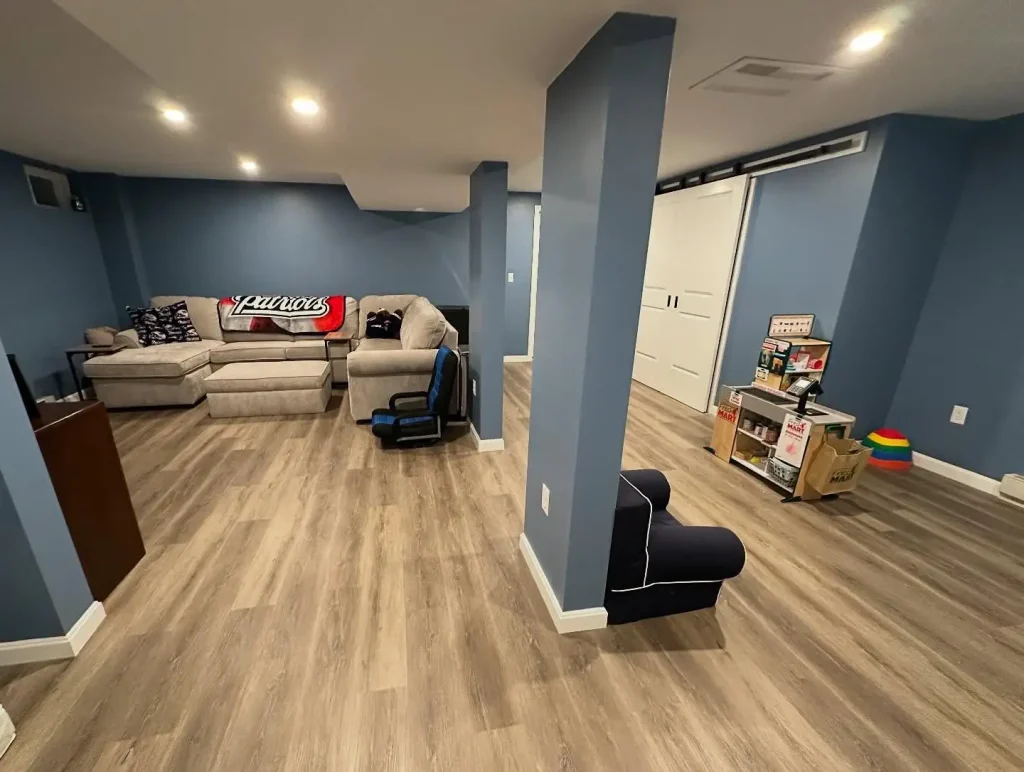
Proper installation requires moisture barriers and quality underlayment to shield from concrete dampness. While pricier than vinyl, engineered hardwood’s upscale feel elevates basements designed for comfort and value enhancement.
Carpeting and Carpet Tiles
Carpet adds warmth and softness, ideal for bedrooms and family rooms. Opt for low-pile, stain-resistant varieties or carpet tiles, which allow easy spot replacement without redoing the entire area.
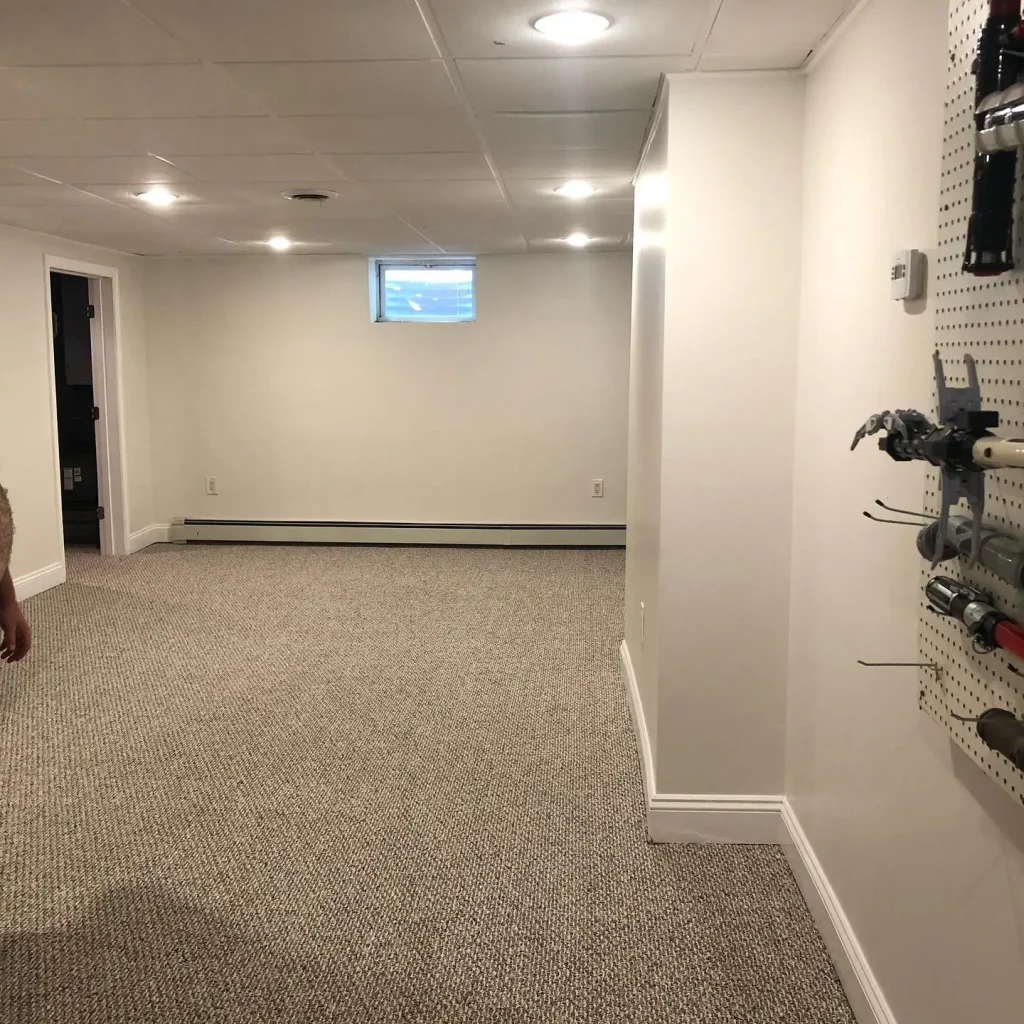
However, ensure your basement is thoroughly moisture-managed before laying carpet, as dampness can foster mold within padding. Carpet tiles, in particular, are practical for basements occasionally challenged by humidity fluctuations.
Concrete Polishing and Staining
Embracing the raw concrete floor with staining, polishing, or epoxy finishes delivers a sleek, industrial vibe that endures heavy use with minimal maintenance, requiring only periodic mopping.
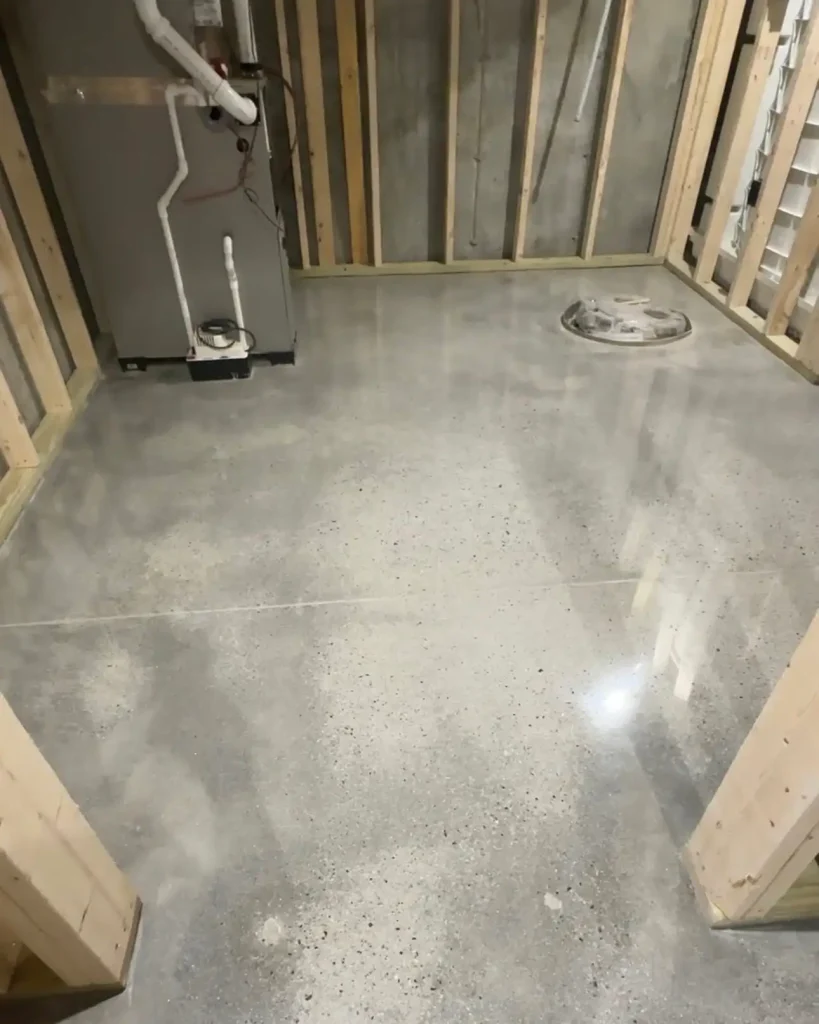
Basic staining runs $3 to $6 per sq ft, while decorative epoxy coatings with metallic or flake effects cost between $8 and $15 per sq ft, fitting perfectly with contemporary basement gyms or work areas prioritizing durability.
Decoding Basement Remodel Expenses
Entry-Level Finish ($25-$50 per sq ft)
Entry-level renovations cover drywall framing, drop ceilings, simple lighting, vinyl or carpet flooring, and fresh paint. For example, a 500 sq ft project costs about $12,500 to $25,000, making spaces suitable for playrooms, storage, or rental units where function trumps luxury. This approach lets homeowners upgrade incrementally over time.
Mid-Tier Remodel ($50-$75 per sq ft)
Mid-tier projects add touches like engineered hardwood flooring, better lighting, drywall ceilings, built-in furniture, and a bathroom. A typical 700 sq ft basement in this category costs $35,000 to $52,500, yielding comfortable family areas, workspaces, or guest suites with polished aesthetics. This price-quality balance satisfies most homeowner expectations.
Premium Renovation ($75-$150+ per sq ft)
Luxury remodels boast high-end materials such as stone countertops, custom cabinetry, upscale flooring, elaborate lighting schemes, full kitchens, and multiple bathrooms. Completing a 1,000 sq ft basement at this tier may exceed $75,000 to $150,000, producing spaces rivaling main living floors. Such investments often pay dividends in rental income potential and home resale value.
Cost-Cutting Tips for Basement Makeovers
DIY with Caution
Taking on demolition, painting, and finishing yourself significantly cuts labor expenses—sometimes by 40-60%. However, critical systems like electrical, plumbing, and structural elements should be left to licensed professionals to ensure safety and code compliance. Be honest about your skills and available time to avoid costly mistakes and delays.
Divide the Renovation into Phases
Completing your basement remodel in stages spreads out expenses, easing financial pressure. Begin by securing foundational elements, then gradually add features as budgets permit. This strategy maintains livable areas and reduces debt stress.
Opt for Value-Driven Materials
Choose high-performing but budget-conscious materials such as standard LED lighting, builder-grade fixtures, and basic LVP flooring. Reserve splurges for highly visible or frequently-used areas, balancing quality and cost effectively.
Embrace Exposed and Industrial Styles
Leaving ceilings exposed and staining concrete floors can save thousands and capitalize on trendy industrial aesthetics that are popular in modern design. This approach celebrates basement character rather than concealing it, reducing finishing expenses while adding contemporary flair. For more on this, check our basement painted ceiling concepts guide.
Typical Pitfalls to Dodge During Remodeling
Failing to Address Moisture Thoroughly
Starting cosmetic work before resolving water intrusion leads to mold, wood rot, and wasted funds. Prioritize drainage, sealants, and humidity control to protect your investment long-term.
Underestimating Lighting Needs
Insufficient illumination leaves basements dim and uninviting, even with upscale finishes. Install ample, layered lighting to overcome natural deficits and create spaces where occupants want to spend time.
Neglecting Proper Insulation
Inadequate insulation results in cold floors and high energy bills, defeating the purpose of extra livable space. Comply with or exceed energy codes to maintain comfort throughout the year while controlling costs.
Poor Layout Planning
Overlooking space functionality and flow can create awkward rooms that don’t suit intended uses. Test furniture placement and circulation paths beforehand using mock-ups to ensure efficient, inviting designs.
Basement Remodel FAQs
What are typical basement remodeling costs?
Basement remodel expenses generally range from $20,000 to $50,000 for average 500-800 sq ft projects, about $25 to $75 per square foot depending on finish quality. Basic remodels are $25-$50/sq ft, mid-grade finishes cost $50-$75/sq ft, and luxury designs exceed $75-$150/sq ft. Prices vary widely with existing conditions, regional labor rates, and additions like bathrooms or kitchens.
Do basement updates increase home value?
Yes, completing your basement often adds $50,000 to $80,000 or more in home value, typically outweighing remodel costs, which boosts your return on investment. Finished basements make properties more attractive in competitive markets, especially when they include bedrooms and bathrooms that homebuyers prioritize.
How long does a basement renovation usually take?
Simple basement remodels typically require 4 to 8 weeks from demolition through to completion, while more complex projects featuring kitchens, bathrooms, or structural changes may extend to 2 to 4 months. Timelines depend on scope, contractor schedules, permitting processes, and whether you DIY certain tasks.
Is it feasible to finish a basement myself?
Absolutely, homeowners with the right skills can manage demolition, framing, drywall installation, painting, and floor laying. However, critical systems like electrical, plumbing, and HVAC require licensed professionals and permits. DIY remodels can cut labor costs by nearly half but demand sufficient time, tools, and knowledge to avoid costly errors.
Final Thoughts: Reveal the Full Potential Beneath Your Home
Basement remodeling opens avenues for increased living space, heightened property value, and enhanced lifestyle flexibility, all without expanding your home’s footprint. From casual entertainment hubs to income-generating units, well-planned basement improvements convert forgotten underground rooms into indispensable parts of daily life.
Embark on your basement upgrade journey by critically assessing current conditions, establishing clear and achievable budgets, pinpointing intended uses, and understanding local building codes. Whether you opt for professional contractors or partial DIY, strong preparation guarantees a transformation that maximizes both enjoyment and investment returns.
Hungry for more inspiration? Explore our extensive guides on multipurpose room layouts, cozy home libraries, efficient small apartment designs, creative interior design trends, and laundry room upgrades.
Your basement’s transformation is within reach—turn that shadowy, underutilized area into a bright, functional, and beautiful extension of your home today.
As an Amazon Associate I earn from qualifying purchases.