BlackJack Furniture Dante U-Shaped Sectional for Your Home

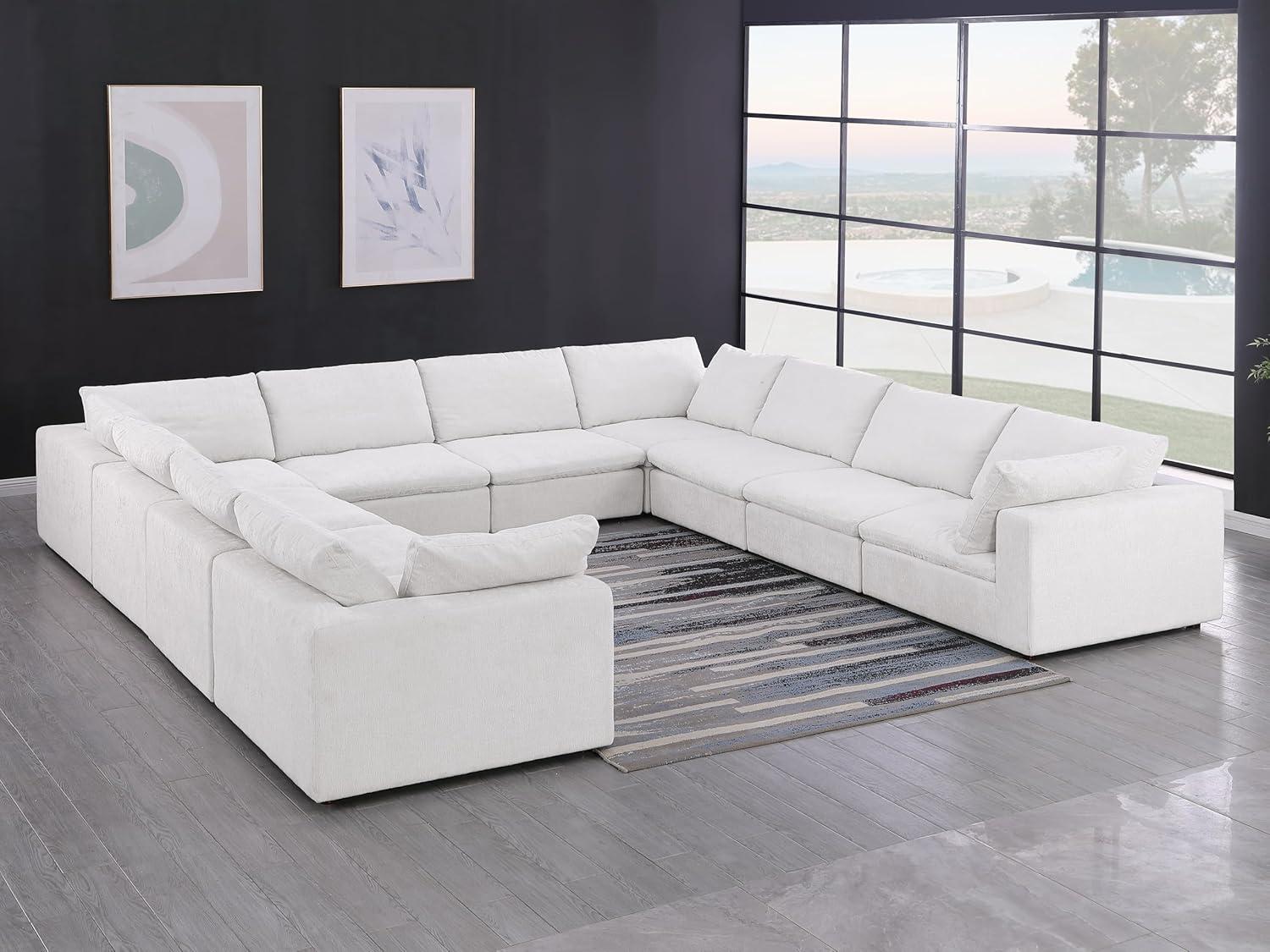
When you first see the BlackJack Furniture Dante 10 Piece U Shaped Modular Sectional in your living room, its broad, low profile reads less like a single sofa and more like a relaxed, low-walled lounge. Up close the Genuine Belfast fabric feels slightly napped and linen-like under your hand, and the feather-down cushions give with a quiet, pillowy sink before pushing back just enough. You notice a gentle firming where your lower back meets the cushions, and the solid Brazilian‑wood edges lend a restrained visual weight to the piece.The ten modular sections change the sightlines as you move around the room, so it settles into the space with a lived-in presence rather than shouting for attention.
when you first see the BlackJack Dante U shaped modular sectional in light grey
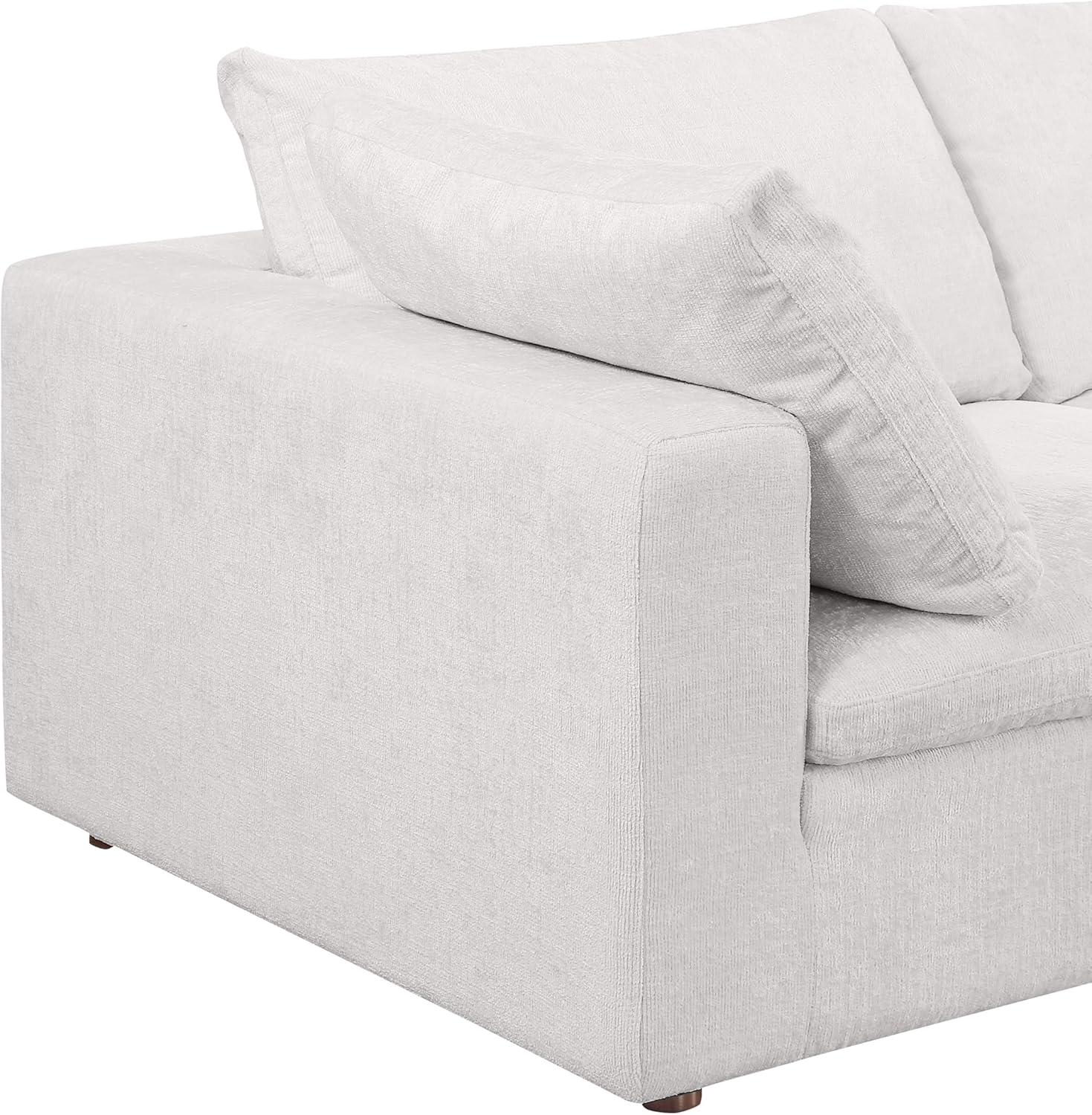
You step into the room and the first thing that meets your eye is the broad, U-shaped mass of soft grey. At a glance the color reads as a neutral mid-to-light tone that shifts depending on the angle of the light—cooler in shadow, a touch warmer where the sun catches the face of the cushions. The sectional’s profile is instantly legible: low-slung yet substantial, with a continuous sweep from one arm through the back and around the curve of the U. Modular joins are visible but sit flush enough that the whole looks composed rather than pieced-together.
Up close, the surface shows a fine texture; you’ll find yourself smoothing a cushion or nudging a seam without thinking about it. Cushion edges soften where people have sat, and small creases collect light and shadow along seat lines.The backrests rise just enough to frame a seated silhouette, and the arms present a modest, squared-off edge that keeps the outline orderly. When you move around the piece, the way the fabric catches highlights and the seams line up gives a sense of deliberate construction rather than decoration.
What you notice about the proportions, the tailoring, and how the Belfast fabric reads in the light
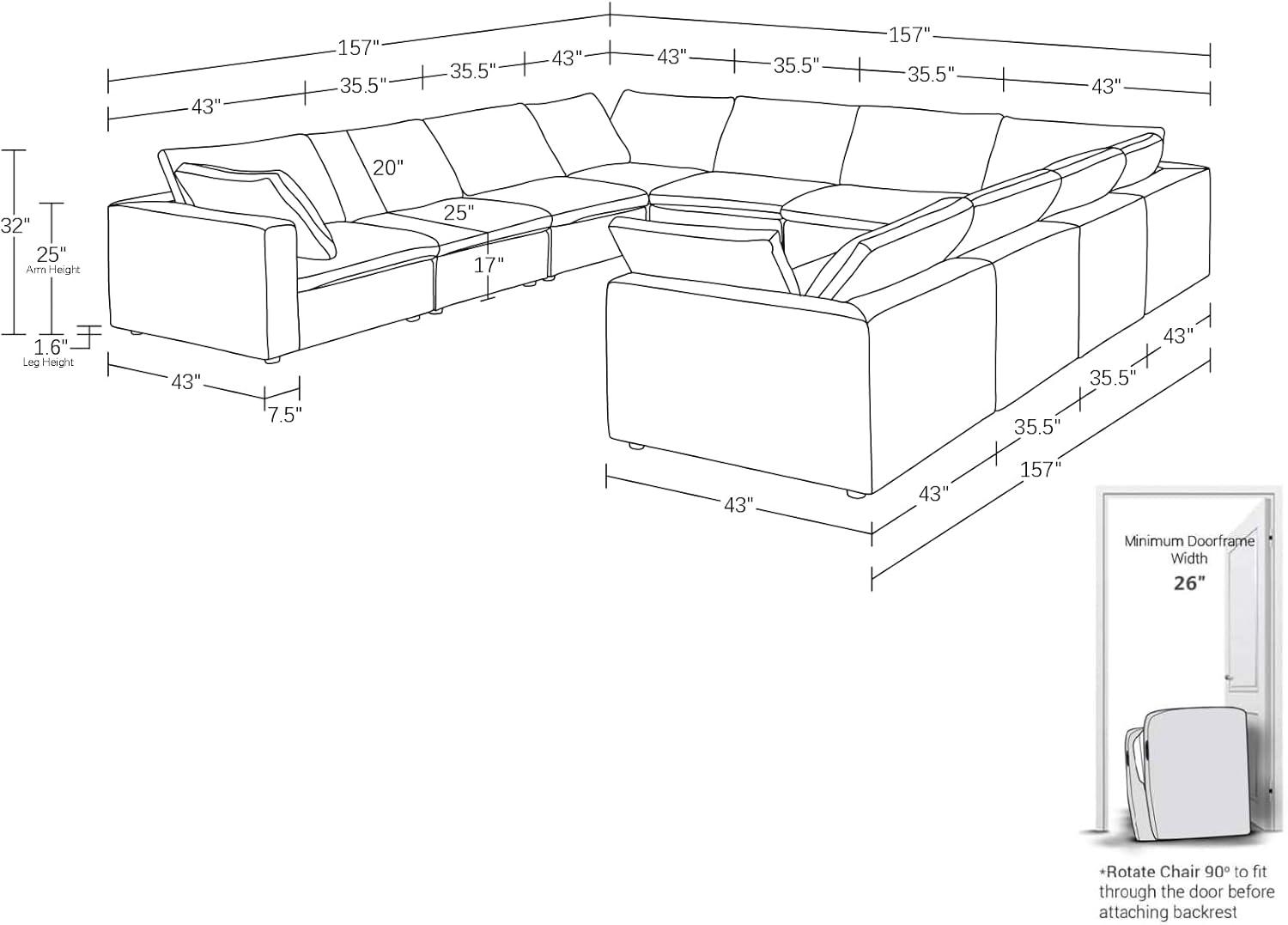
When you approach the sofa, the first thing you register is how the volumes relate to one another: the seating plane sits comparatively low against the height of the back, and the arms read as slightly squared rather than tapered. As you sit and shift, those relationships become more obvious — the back rises just enough to cradle without overtaking the profile, and the seat depth gives the impression of roominess without appearing oversized. Your hands will find the seams and corners: the cushions tuck neatly into their frames, though you may smooth a corner or two after someone has leaned a knee against them. The joins between modules sit flush moast of the time, and they can momentarily separate or compress in everyday use, subtly changing the silhouette.
The Belfast fabric changes character with light and motion. In bright, indirect daylight the weave shows a faint, linen-like texture and the grey reads clean and airy; under warm, low lighting the same surface softens, taking on a muted, almost velveteen depth. When you run your hand across a cushion the nap shifts and small bands of lighter and darker greys appear where the yarns catch the light differently — nothing dramatic, but enough that the couch looks a little lived-in after people have been up and down. Tailoring details — topstitching lines, piping, and corner mitres — throw thin shadows that accentuate the sofa’s linear geometry, especially across the seat fronts and arm seams.
| Element | What you notice |
|---|---|
| Proportions | Low seat plane vs. moderate back height; arms read boxy and contained |
| Tailoring | Clean stitch lines and tucked cushions, with small shifts where people sit or lean |
| Belfast fabric in light | Subtle texture and light-reactive tone shifts; nap reveals faint light/dark banding when brushed |
When you look under the cushions the solid brazilian wood frame, joinery, and feather down seat construction reveal themselves
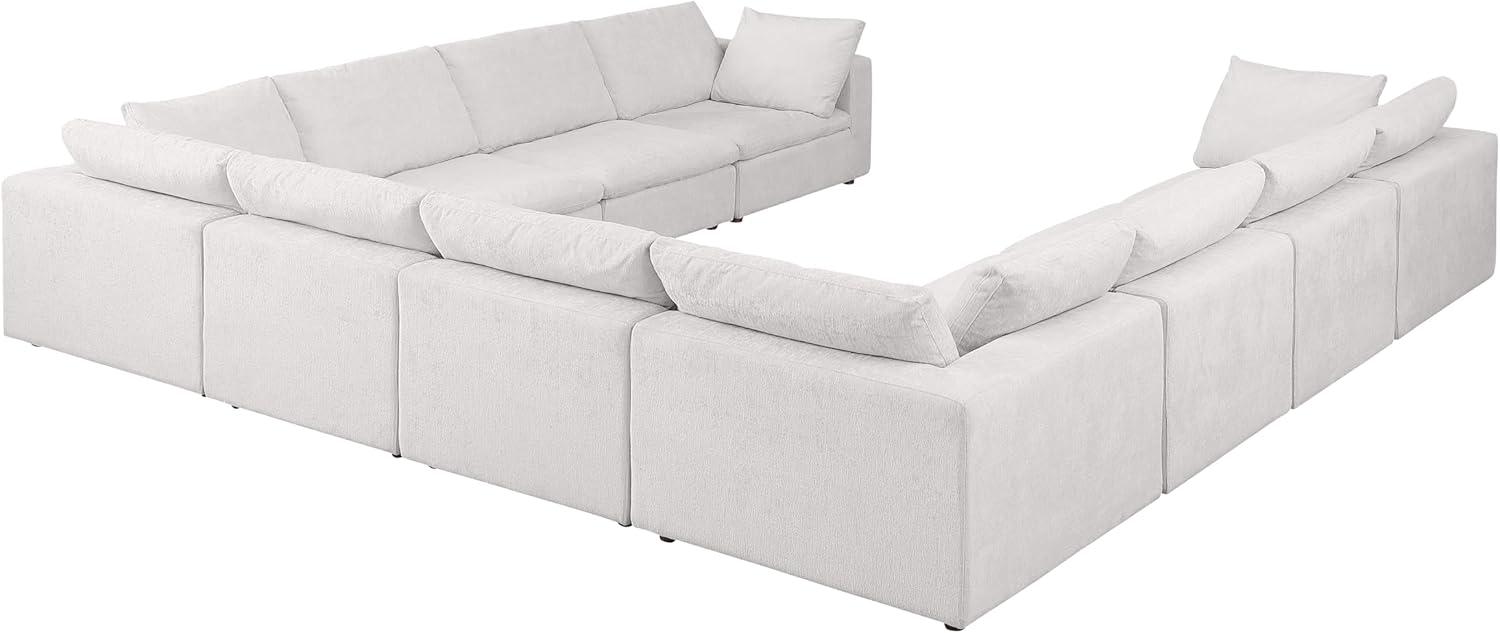
When you lift a seat cushion to peek underneath, the skeleton of the piece comes into view: a lattice of rails and blocks in a warm, raw wood tone. The solid Brazilian wood frame shows its construction seams — corner blocks glued and screwed into place, dowel joins tucked into rebates, and a few flush-headed screws along the rails. You might notice small factory stamps or penciled marks on the timber, and the occasional squeeze of glue left where joints met; the underside feels utilitarian, not finished for show, with burlap or lining fabric stapled along edges and webbing stretched across the voids beneath the pad.
Pulling the cushion back into place offers a different, softer reveal. The feather down filling shifts audibly as you press: a faint rustle from the ticking, the subtle migration of feathers against the inner bag. When you nudge a corner or pat the seat, the down settles unevenly at first and then fluffs back as you smooth the cover — small plumes sometimes press into seam lines or peek at a zipper opening.Those little,habitual adjustments you make — tugging the cushion into alignment,smoothing a fold — are the moments that show how the feather package and the frame meet in everyday use,rather than in a factory photo.
Daily life around the U shaped layout how the modules move, the footprint they create, and the circulation you make through a room
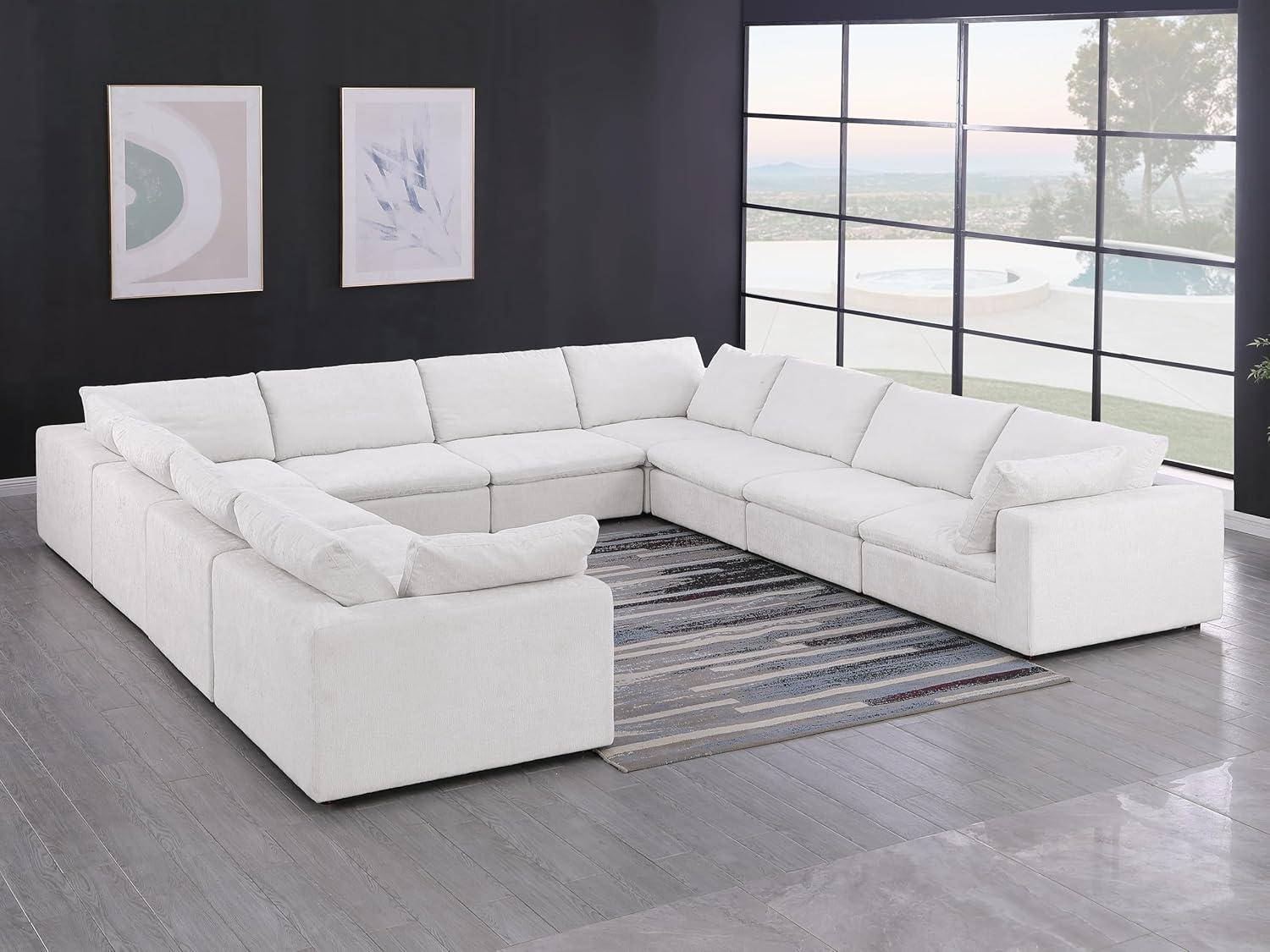
When you live with a U-shaped arrangement, the seating becomes a stage for everyday motion. Sliding into a corner seat nudges the adjacent modules a fraction—cushions soften, seams shift, and you frequently enough find yourself smoothing a back pillow or giving a cushion a quick fluff without thinking. If you linger with a book or a laptop, your legs angle toward the interior void of the U and the modules respond: seats compress more at the ends, the center segment sees less shifting, and the overall silhouette of the set subtly alters over the course of an evening.
The footprint reads like a room within a room. the U defines an interior zone that people move into and then circulate around the outside, so most traffic flows along the sofa’s outer perimeter or through the open mouth of the U if one exists. That interior area tends to become a low-traffic lounging pocket—coffee table, blankets, and feet live there—while quick routes across the room are rerouted to the sofa’s exposed edges. In practise this means you walk around the ends more often, pass behind the back cushions when retrieving something, or step through the gap when entering from a side doorway. For some moments the layout feels expansive and enclosed at once; for others, pathways around the set narrow as people congregate and modules settle into use.
How the Dante measures up to your expectations and where it shows limits in everyday use
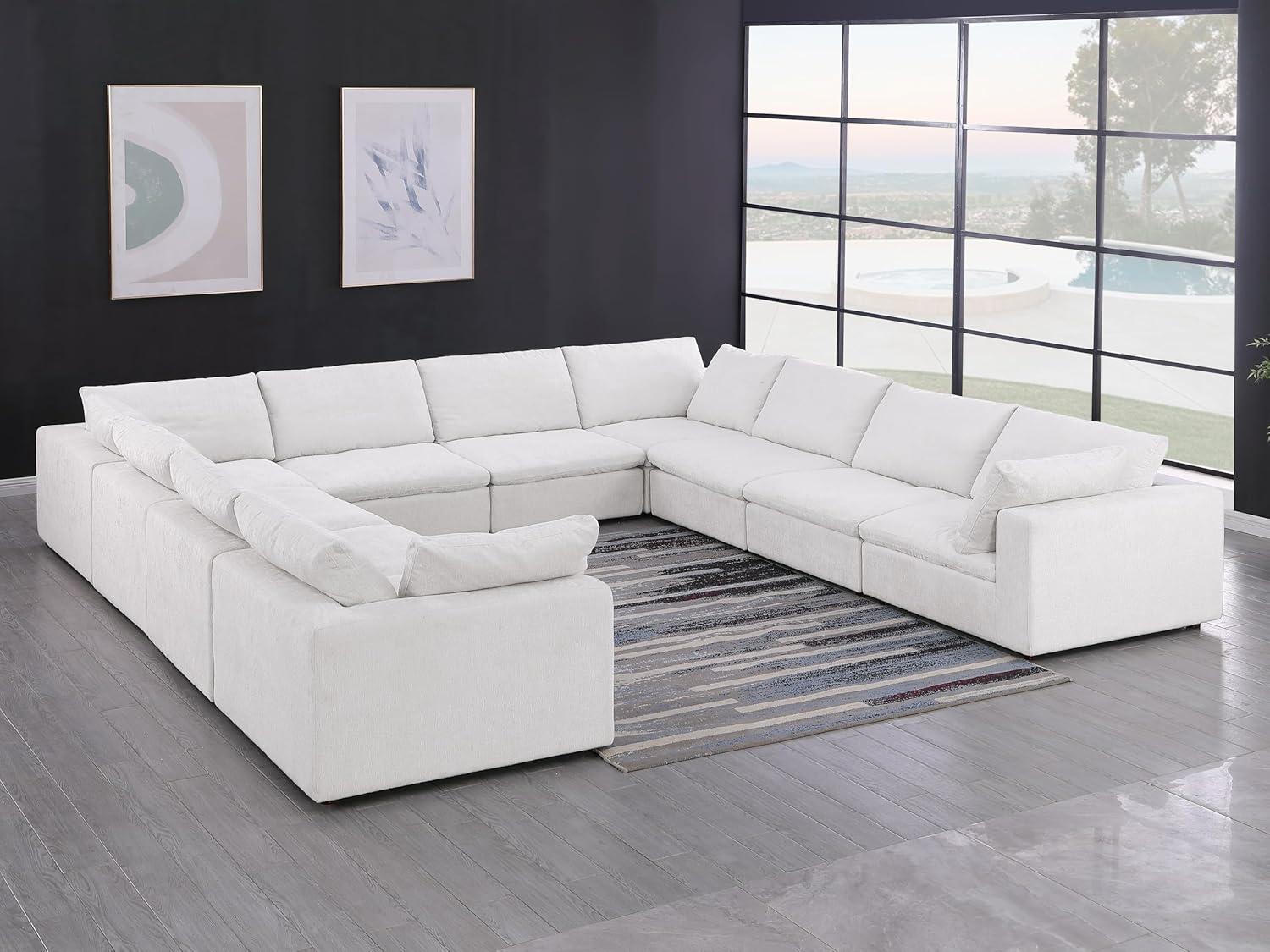
In day-to-day living, the sectional mostly behaves as expected: the feather-down seats compress around an occupant and then slowly rebound, the lumbar elements register when someone settles in for a long stretch, and the pocketed construction gives a responsive, slightly springy feel at the sit. Movements around the room provoke small rituals — cushions are nudged back into place, seams smoothed with a hand, and back pads fluffed after extended use. The modular joints usually stay put under normal lounging, though they sometimes need a light push after lively shifting. Light-colored upholstery shows impressions and dust more readily,so the surface benefits from a quick brush or vacuum between uses.
Limits become apparent over time and in certain moments of use. The down filling compresses unevenly with heavy, repeated sitting, so the center of long runs can feel softer than the ends after several weeks. Seat depth allows for very relaxed postures but can leave the lower legs less supported when sitting upright, which results in a habit of sliding forward or reaching for a throw to fold under the knees. Junctions between modules can gap slightly during more active use, and the need to re-fluff or reposition cushions becomes a small, recurring task rather than a one-off. Spills and smudges are more visible on the pale surface, and cleaning typically requires immediate attention to avoid lasting marks.
| Expectation | Observed in daily use |
|---|---|
| Consistent, long-term seat resilience | Responsive at first; central sections can soften with repeated use |
| Minimal daily upkeep | Regular smoothing and occasional fluffing become common habits |
| Stable modular connections | generally stable, but links may need realignment after activity |
View full specifications,sizes,and color options
What you see on delivery and during routine care from assembly to spot cleaning
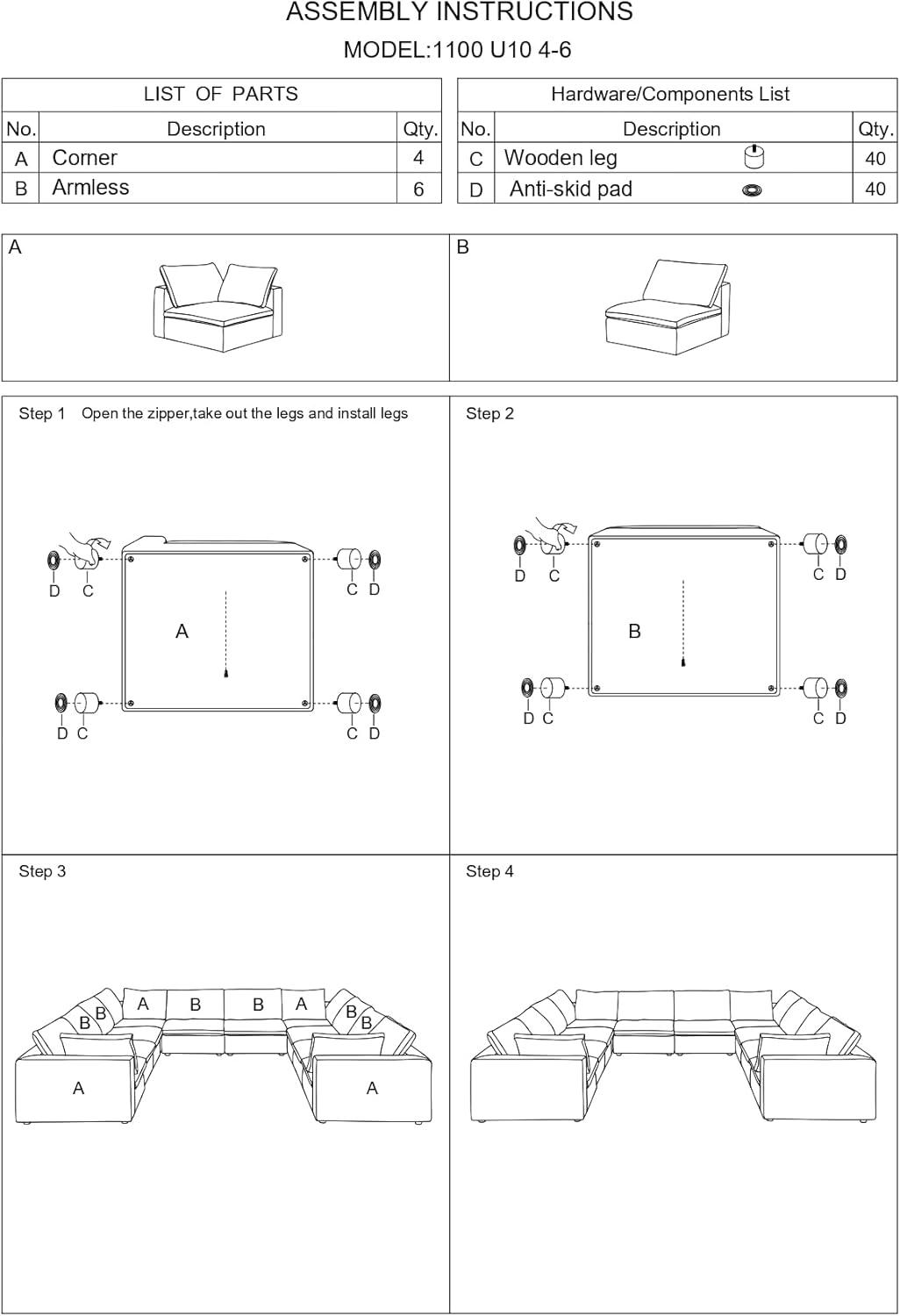
When the pieces arrive, you’ll see each module packed in heavy cardboard and wrapped in clear stretch film; corners are often reinforced with foam or cardboard and tape holds a small hardware bag or instruction sheet to an outer panel. The seat and back cushions usually look compressed and flat at first, their profiles softened by transit. Zipper pulls and any fastening tabs are commonly tucked into seams or taped down, so a quick run of your hand will reveal where covers begin and end. There’s sometimes a faint factory odor that fades after the pieces air out for a day or two.
As you fit sections together during assembly, the metal brackets and connector plates show plainly along the underside or inside the joining edges; they tend to click or slot in rather than hide entirely. Seams line up most of the time, though you’ll find yourself nudging cushions and smoothing fabric to settle stitches and piping into place. Feather-filled seats compress unevenly at first — you might press, pat or rotate cushions to redistribute fill — and small surface creases or dimples form where people sit most often. Expect the modular joints to sit flush once weight and movement settle the pieces,with occasional tiny gaps that close over a few uses.
In routine care you’ll notice light grey fabric reveals dust, lint and pet hair more readily than darker finishes; a quick brush or vacuum run alters the nap and evens the color back out. Spot cleaning leaves visible changes while wet — darkened halos or darker patches appear and then lighten as the area dries, sometimes showing faint watermark lines that blend back over time. When covers are unzipped for inspection you’ll see inner ticking, foam edges and feather clusters shifting inside their chambers. Small pills or loose fibers can form on high-contact arms and seat edges for some households, and a loose thread or two may pop up now and then; smoothing the fabric with your hands often camouflages those small imperfections without much effort.
| Moment | Typical visible signs |
|---|---|
| On delivery | Wrapped modules, compressed cushion profile, taped hardware/instructions, faint odor |
| After assembly | Visible connectors under joins, aligned seams after smoothing, cushions settling and feather redistribution |
| During spot cleaning | Temporary darkening while wet, faint watermark lines while drying, inner materials visible when covers opened |
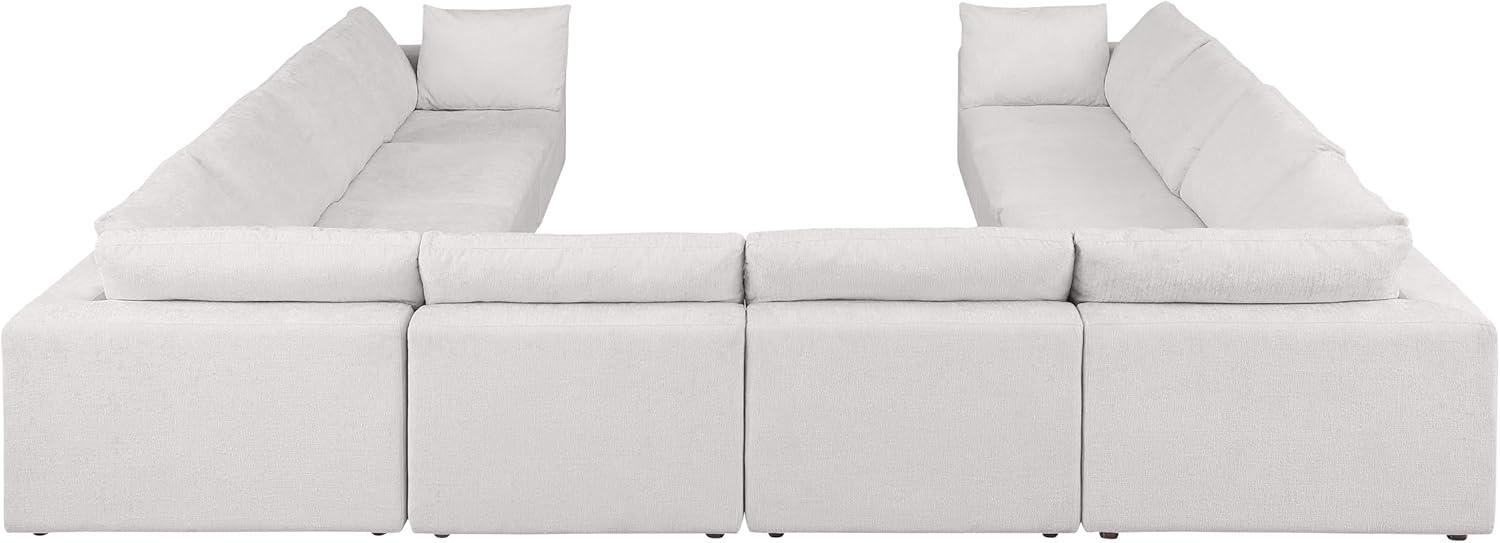
How the Set Settles Into the room
Living with the BlackJack Furniture Dante 10 Piece U Shaped Modular Sectional Sofa Set, you notice it doesn’t so much arrive as ease into the patterns already here. Over time, as the room is used in regular household rhythms, the pieces get nudged into habitual configurations, cushions sink into familiar hollows, and the surfaces gather the small marks of everyday life. In daily routines it becomes the place for a half-drunk mug, the corner where a book is always left open, the seat people fall into without thinking. In time it simply stays.
As an Amazon Associate I earn from qualifying purchases.