BlackJack Furniture Venice Top Grain Set in your living room

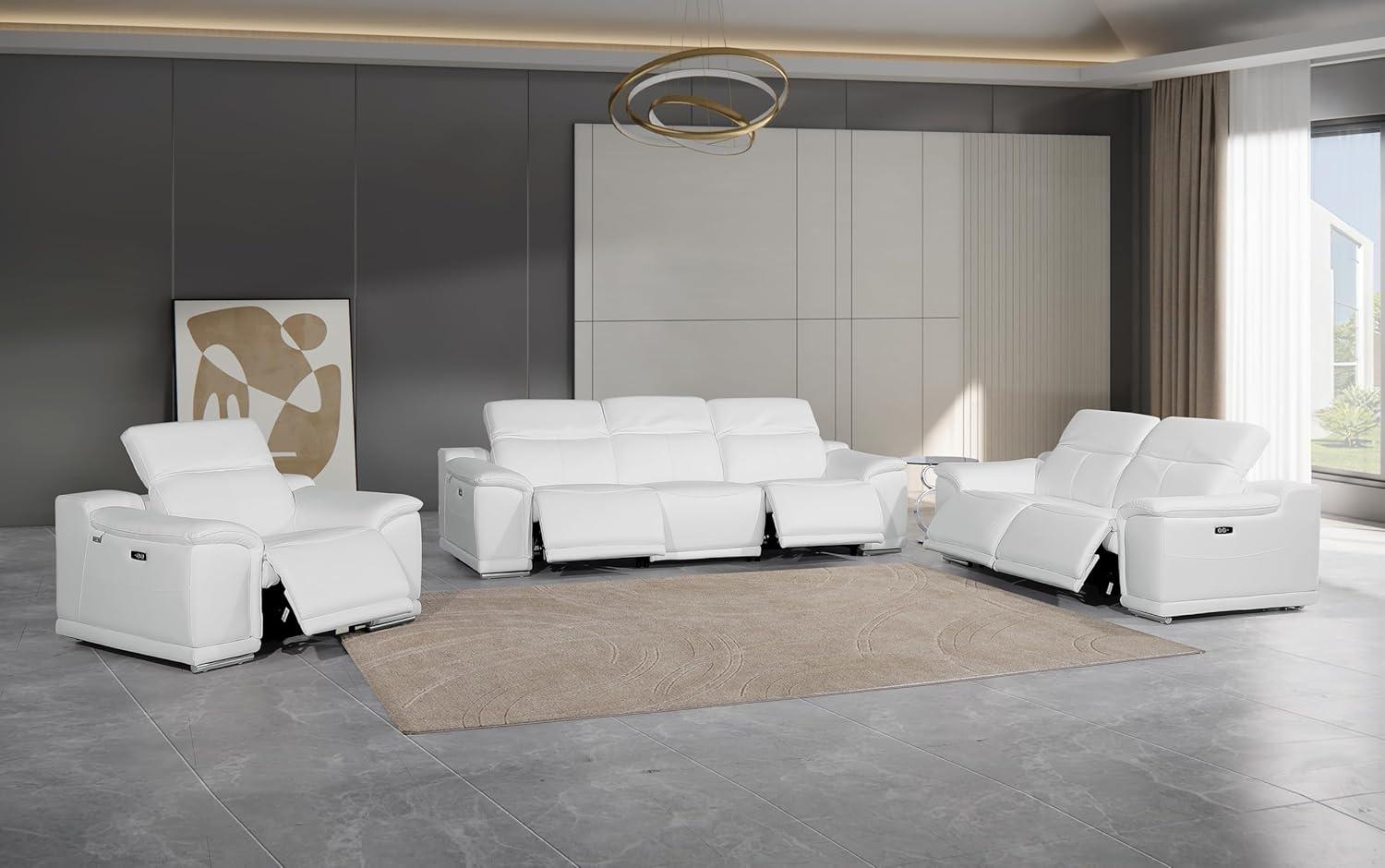
You step into the room and the three pieces announce themselves with a steady, modern presence — low-backed, spread across the floor like a deliberately casual conversation area. The BlackJack Furniture Venice top-grain Italian leather reclining set reads as quietly engineered: seams that catch the light, cool, subtly grained leather under your palm, and chrome-accented legs that nibble at the shadow. One arm hides a small control panel; a discreet USB port peeks from a seam — details that suggest movement and utility rather then ornament. From across the room the white upholstery gives the set a visual lightness, but up close it feels considerable, the cushions offering firm resistance before they yield.
A first look at your BlackJack Furniture Venice top grain Italian leather recliner set

When you first pull the covers back, the set presents itself more like furniture than a package—clean lines, panelled seams, and a soft sheen across the leather that catches light differently as you move around it. The headrests sit raised, the arm profiles look compact, and the metal accents at the feet and trim reflect a thin, chrome edge. Packing creases and faint folds are visible where cushions were compressed; they relax with a few hours of use and a couple of passes of your hand smoothing along the seams. Small controls and a USB opening are easy to spot on the outer arms, placed where you naturally reach without rummaging.
Put weight into a seat and the interaction becomes more obvious. The leather feels cool at first, then warms and gives as the cushions compress; the back and seat cushions settle beneath you and the outlines of the stitching shift subtly as you adjust your position. The power controls respond with a soft mechanical sound and incremental motion when you recline or tilt the headrest,and you tend to nudge the headrest a few times before it finds a spot that lines up with your neck. As you shift, seams tug and settle in ways that feel lived-in rather than perfectly taut, and small noises—a mild creak or the frame settling—can accompany larger position changes. first contact shows a piece that breaks in visibly and adapts to small, habitual adjustments you make without much fuss.
| What you notice | How it appears in use |
|---|---|
| Leather finish and seams | Subtle sheen, packing creases that smooth out; stitching shifts as cushions compress |
| Controls and ports | Buttons and USB access sit within easy reach on the arms |
| Movement and feel | Quiet motorized motion, cushions settle under weight, small frame noises on larger adjustments |
how the silhouette color and leather texture read when you place it in your room

When you set the white three-piece in your room, the profile reads as a low, modern block that lengthens and softens as headrests lift or seats recline. From across the room the white surface catches and bounces ambient light, so the silhouette can look more pronounced against darker walls and quieter against pale backgrounds. Up close, the leather’s grain shows as a tight, irregular texture that breaks highlights into small, soft reflections; when someone settles into a seat, the cushions crease and the seams relax, creating lived-in lines that interrupt the clean outline.
In everyday use the color and finish behave in predictable ways. Under cooler, daylight-balanced light the white tends to read crisp and slightly clinical; under warmer lighting it leans toward a softer, creamier tone.The top-grain surface can register brief marks and finger oils during high-traffic moments, and movement—shifting, smoothing cushions, adjusting headrests—changes how the leather throws light across its planes. Observers in most rooms note the combination of a bright silhouette with visible, tactile creasing where the leather compresses and recovers.
| Lighting | How color and texture read |
|---|---|
| Cool daylight / LED | Sharp white, grain and seams more visible; reflections are crisper |
| warm incandescent / evening | Warmer, slightly creamy cast; leather appears softer and less reflective |
| Indirect or dim light | Silhouette softens; texture recedes and panels blend into a unified shape |
What you feel when you sit the motion of the power recline and the adjustable headrests
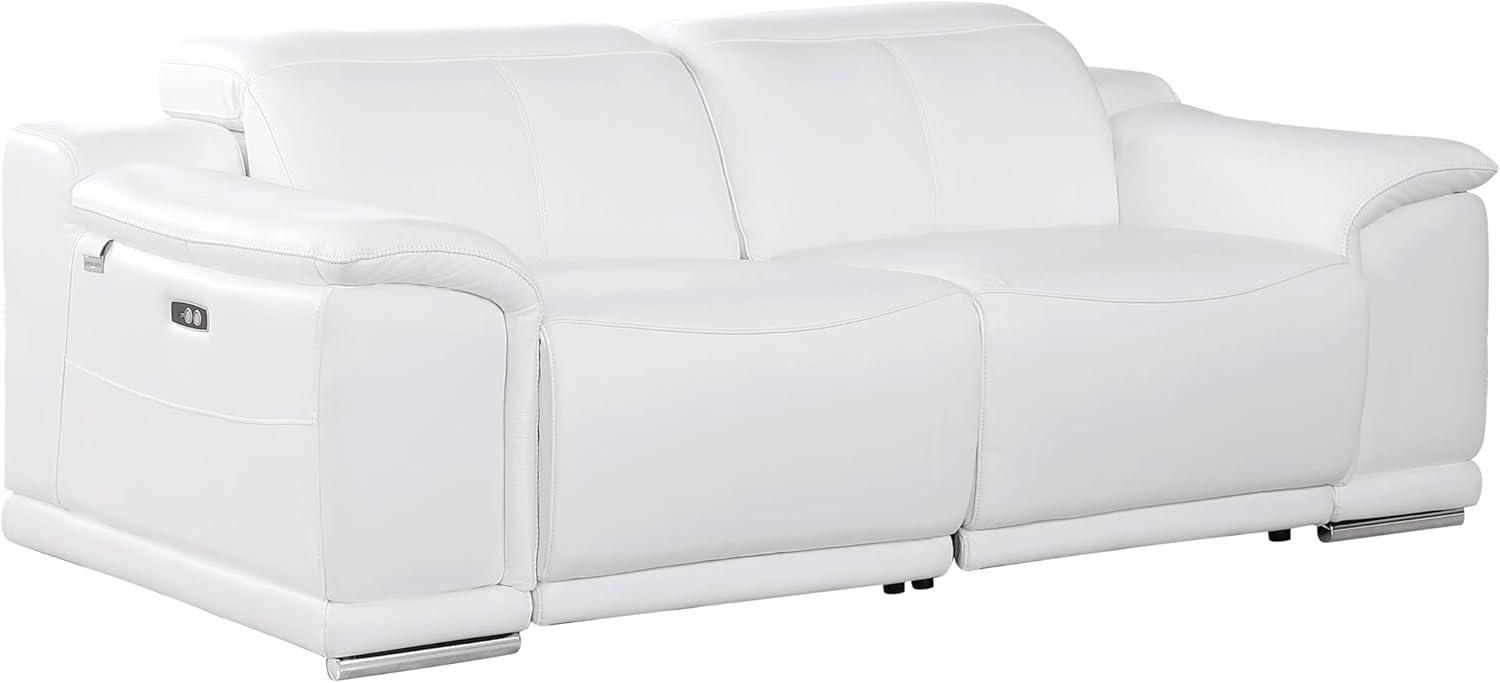
When you settle into a seat and press the button, the power recline moves with a steady, mechanical hush. The backback tilts back while the footrest lifts; your weight shifts rearward and the cushion below you compresses a little more than when upright. Ther’s a brief, almost imperceptible nudge as the mechanism takes up slack, then a smooth glide into the chosen angle.You’ll notice the difference between small adjustments and a full recline: tiny changes feel incremental and controlled, while larger shifts change how your hips and lower back meet the seat, prompting a rapid repositioning of legs or arms.
Adjusting the headrest rearranges the contact points around the neck and shoulders. As the headrest rises or lowers, the leather surface pulls and softens where your hands smooth it, and the foam beneath gives in stages—first a shallow cradle, then firmer support closer to the skull. Small movements of the head and shoulders are absorbed rather than bounced; at certain positions seams or cushion edges can register as a faint pressure point that you may shift to alleviate. Overall the experience tends to feel like a series of micro-adjustments: you smooth the leather,nudge a cushion,and settle again until the recline and headrest alignment match the moment. Some of those readjustments happen unconsciously, especially during longer sits or when switching from watching to napping.
Measuring the sofa loveseat and chair and fitting each piece into your living space
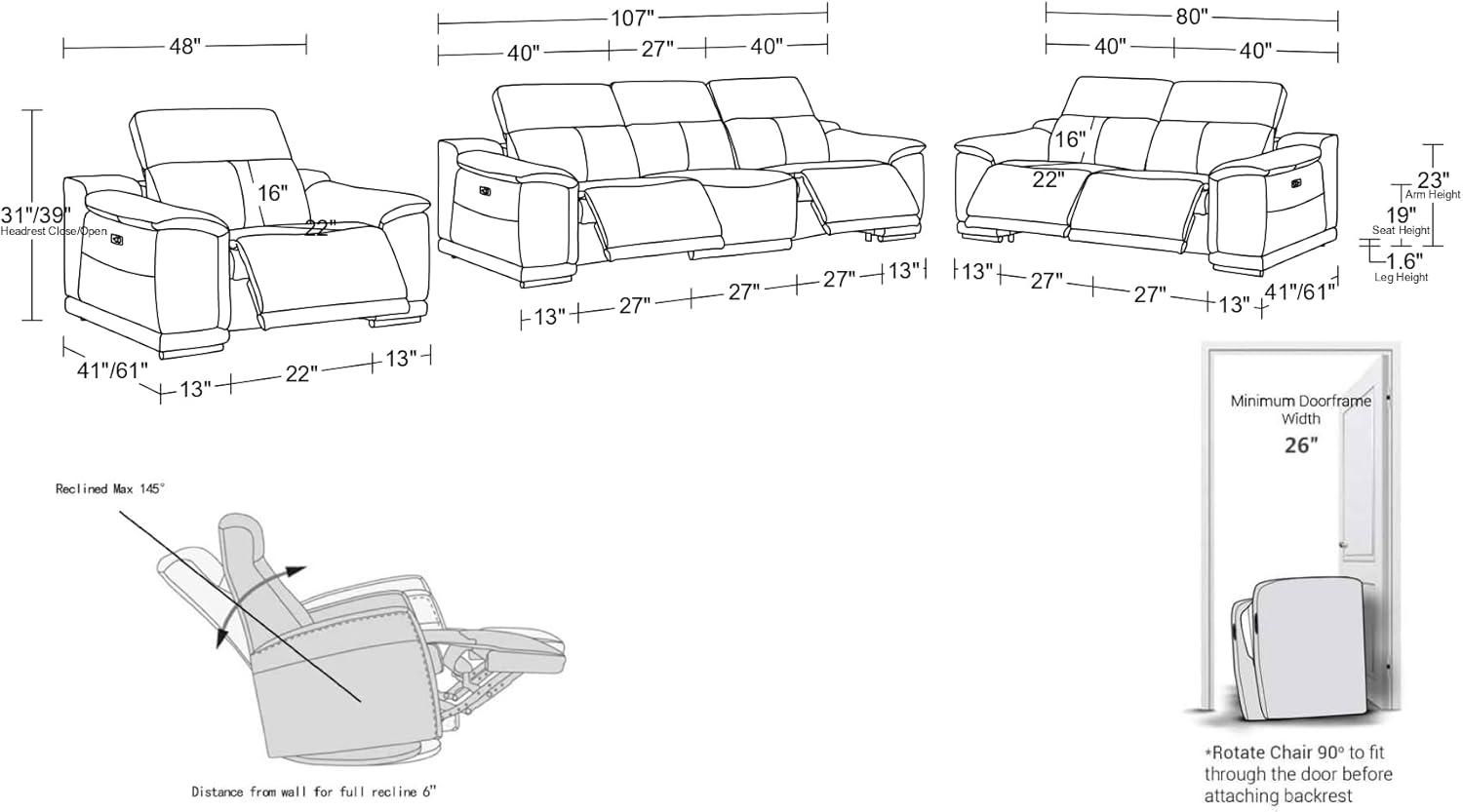
Start by mapping the exact spot where each piece will sit. Measure the wall-to-wall length and the usable depth from the wall to the nearest obstruction — radiator, fireplace hearth, or window seat — and mark those limits on the floor. Take the path from the delivery point into the room: doorway width and height, narrow hall turns, elevator dimensions and stair landings can all affect how the sofa, loveseat, and chair need to be rotated or tilted to get inside.When you carry a piece, it often behaves differently than a flat measurement suggests; seams catch on corners and cushions shift, so plan for a little extra wiggle room.
Think about how each piece behaves when in use. When a seat reclines the back moves farther back and the front edge can extend or drop; adjustable headrests rise and change the vertical profile. These motions mean the amount of clearance you measured for the upright footprint isn’t the whole story — the occupied envelope expands during operation. Observers commonly notice that rear clearance and front projection matter more than static depth, and that leather surfaces tend to smooth and stretch slightly as cushions settle, which can subtly change how close a piece sits to a wall.
| What to measure | What you’ll learn |
|---|---|
| Doorways, hallways and stair openings | weather pieces need to be angled, partially disassembled, or carried vertically through tight spots |
| Room footprint and traffic flow | How much clear space remains for movement once each piece is placed |
| Clearance for recline and headrest travel | How far the front and rear edges move when a seat is in use |
| Vertical obstacles near placement (shelves, sconces) | Whether adjustable headrests or tall backs will interfere when raised |
For those arranging multiple pieces,test-fit one item first if possible; its presence will change sightlines and the practical space available for the remaining pieces as cushions compress and seams shift with use.
View full specifications and size options
How the Venice set performs in your home compared with your initial impressions and the product claims

Initial impressions of high-end mechanics and buttery leather largely carry through into everyday use, though they arrive with the usual domestic caveats. The reclining mechanism moves through positions smoothly and without the abrupt stops that might have been expected from a motorized system; in typical viewing sessions the transitions are gradual, and the headrests slide into place with small, continuous adjustments that feel aligned with the claim of infinite positioning. The leather develops soft creasing where occupants sit,revealing a subtler grain and a slight darkening in contact areas after a few weeks — a behaviour consistent with top-grain materials settling rather than a sudden change in finish. Built-in USB ports remain convenient and accessible during use, though devices rest on the arm surface rather than being tucked away, which affects how often that feature is used in practice.
Everyday wear also highlights a few trade-offs that emerge only in situ. Seating cushions compress and recover in short cycles during frequent use, prompting mild, occasional smoothing of the seams and a habitual shift in posture; integrated lumbar support is perceptible during recline but tends to be gentle rather than pronounced when someone leans back for long stretches. Motor noise is present but unobtrusive for the most part; it becomes more noticeable when multiple recline motors operate in quick succession. The white upholstery shows fingerprints and light marks more readily on armrests and the central seats in active rooms, so contact patterns shape its appearance over time. the real-life behaviors tend to mirror the product’s claims, with practical nuances that appear only after regular use.
| Claim | Observed in the home |
|---|---|
| Infinite power recline positions | Transitions are smooth and nearly continuous; small positional adjustments are easy during TV viewing |
| Adjustable headrests | Headrests adjust through a fine range and hold position, felt most when settling into a reclined pose |
| Built-in USB chargers | functionally useful and within reach, though devices tend to sit exposed on arm surfaces |
| Top-grain italian leather | Develops natural creasing and slight darkening at contact points; texture softens with use |
| Sturdy construction | Frame feels solid during normal movement; occasional cushion settling requires minor readjustment |
| Integrated lumbar support | Noticeable during reclining but relatively subtle during upright seating |
View full specifications and color options on Amazon
Everyday care assembly and routine adjustments you make as the set settles into your lounge

When the pieces first arrive and you slot them into place, much of the early work feels tactile: you line up connectors, nudge armrests until seams meet, and jiggle the legs a touch so each unit sits level on your floor. Over the first few days you notice small shifts — cushions relax a little where people sit most,the leather warms and shows faint crease lines along predictable contact points,and the reclining mechanisms settle into their usual range of motion. You find yourself smoothing the seat surfaces with the heel of your hand, tucking a seam that has popped out slightly, or nudging a headrest an inch or two to get the posture you prefer; these are the routines that make the set feel like it belongs in the room.
Daily interactions also reveal the little maintenance habits that stick. Crumbs and dust collect in the gap between seat and back; the power cords and charging ports are checked more often at first as you learn which sockets end up most convenient; and the reclining motors sometimes need a quick reset if a cushion has shifted during use. For some households, the leather will develop a soft patina within weeks — light surface marks that wipe away with a damp cloth in most cases — while in others the sheen remains more consistent and you end up polishing only occasionally.
| Routine task | How often you tend to do it |
|---|---|
| Smoothing cushions and aligning seams | Daily to several times a week |
| Vacuuming crevices and removing crumbs | Weekly or after gatherings |
| wiping leather surfaces | As needed; more often in high-use spots |
| Checking recline function and power connections | Occasionally; more during the break-in period |
| Tightening legs or reconnecting fasteners | Occasional — usually within the first few weeks |
Those small adjustments — a fingertip run along the arm, a quick press of a recline button, a light wipe and a tuck — are how the set integrates into daily life. You don’t perform them as a checklist so much as respond to what the furniture asks for: a flattening where someone always sits, a seam that wants straightening, a cord that needs re-routing. Over time those habits soften into an unconscious rhythm and the set simply becomes the background to ordinary evenings.
How the Set Settles into the Room
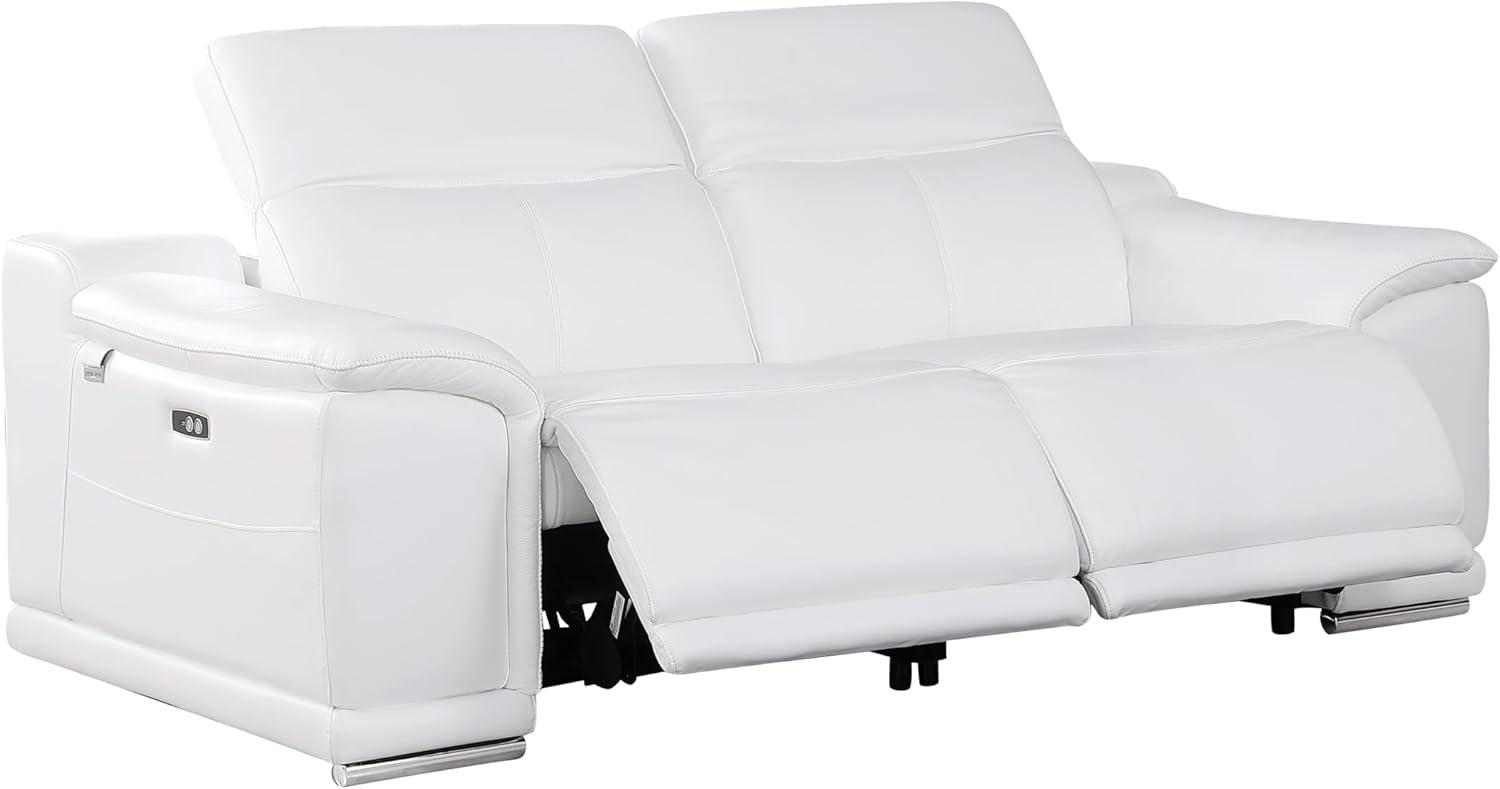
Living with the BlackJack Furniture Venice Top Grain Italian Leather Recliner 6 Seater 5 Power 3 Piece Sofa Set with Adjustable Headrests Modern Luxury Seating sofa, Loveseat and Chair for Living Room Lounge, White over time, you notice how it becomes part of the daily backdrop rather than a focal point. In daily routines you see how people choose spots, how cushions soften where elbows rest, and how the surface takes on a gentle patina from ordinary use.Surface marks and small changes in comfort start to read like habit — the remote’s usual place, the corner picked for an evening read, the little impressions that appear after weeks. Eventually it settles into the room’s rhythms and simply stays.
As an Amazon Associate I earn from qualifying purchases.