Creative Basement Stair Design Ideas to Transform Your Space

The basement often represents one of the most adaptable areas in your home. Whether it’s been transformed into a state-of-the-art media room, a welcoming guest retreat, or a fully equipped fitness space, the potential is vast.
However, if the staircase descending to this space feels neglected or uninspired, it can undermine the entire atmosphere before anyone even steps down.
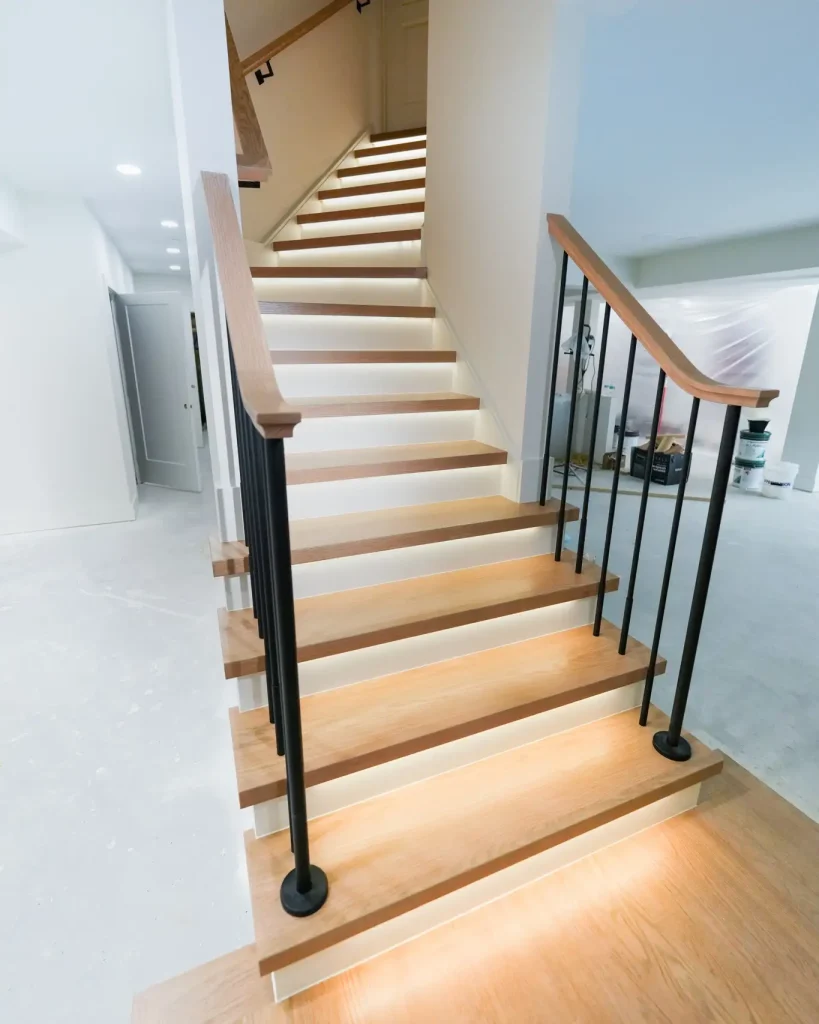
Consider this: a staircase is more than just a functional link between floors—it’s an opportunity to create ambiance. It can serve as a grand gateway to your entertainment haven, cleverly conceal storage for miscellaneous items, or stand as an architectural highlight that impresses guests.
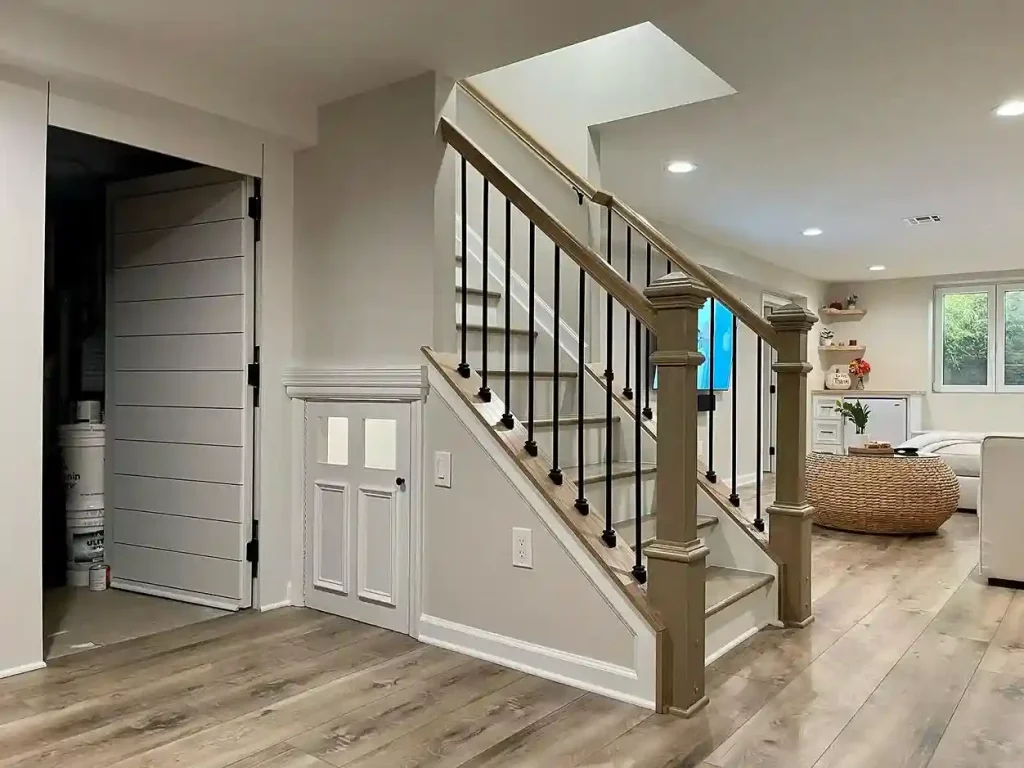
Say goodbye to dull, generic staircases. It’s time to transform that overlooked passageway into a captivating feature that prompts visitors to say, “Wow, your basement stairs are amazing.” Below are 21 innovative basement stair design concepts to inspire your renovation.
1. Sleek Open-Riser Stairs
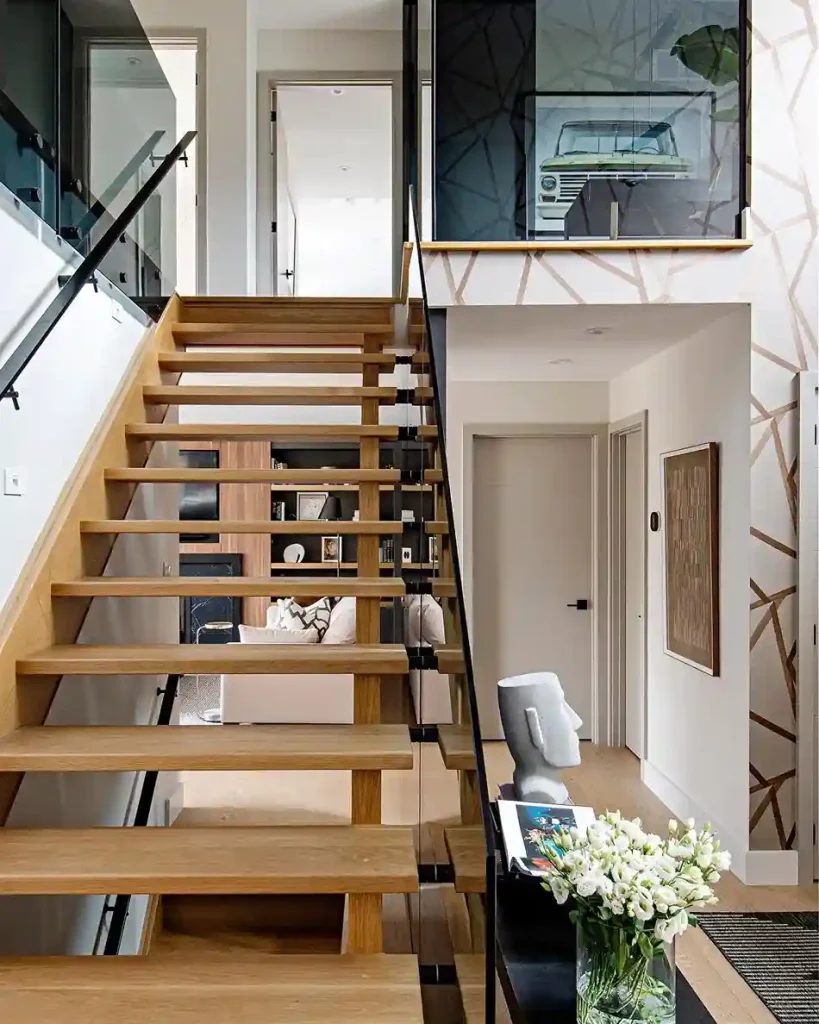
Eliminate traditional risers to create open spaces between each step. This design invites natural light to permeate, making tight stairwells feel more spacious and airy. It complements contemporary, minimalist, or Scandinavian-inspired interiors beautifully.
2. Eye-Catching Stair Runners
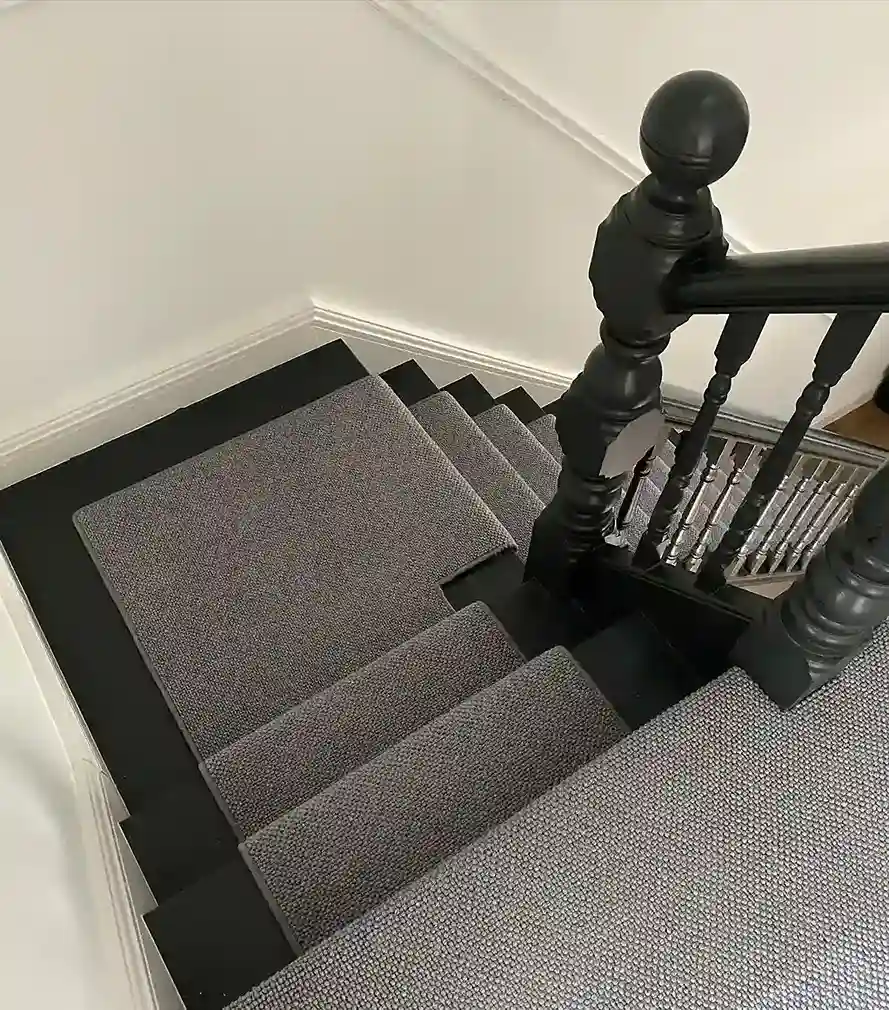
Introduce a vibrant, patterned runner along the center of your wooden stairs to inject color, texture, and elegance. Besides aesthetics, runners enhance safety by providing grip, reduce noise, and protect the stair surface.
Opt for durable materials like low-pile wool or weather-resistant indoor-outdoor fabrics that withstand heavy foot traffic. This accent naturally guides the eye downward into your thoughtfully curated basement lounge.
3. Clever Built-In Storage Drawers
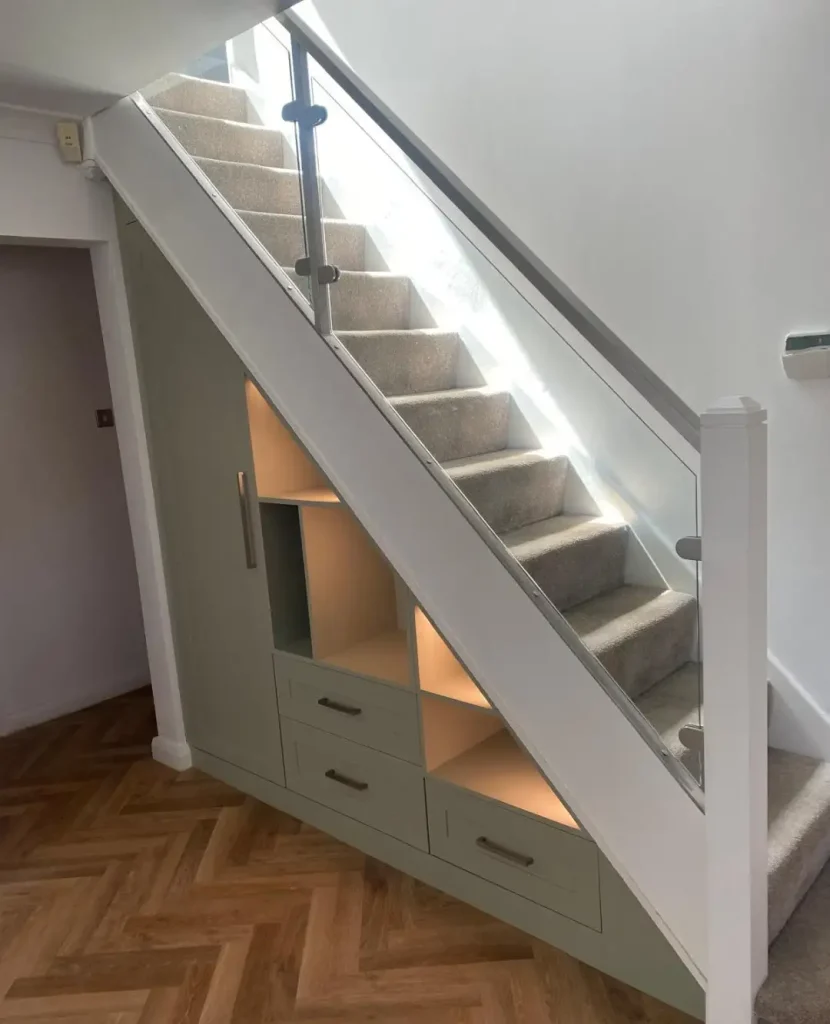
Utilize the often-unused space beneath the stairs by integrating shallow pull-out drawers into the stair stringers. These compartments are perfect for organizing shoes, board games, seasonal decorations, or cleaning essentials, enhancing your basement’s overall storage efficiency.
4. Vibrant Painted Stair Treads
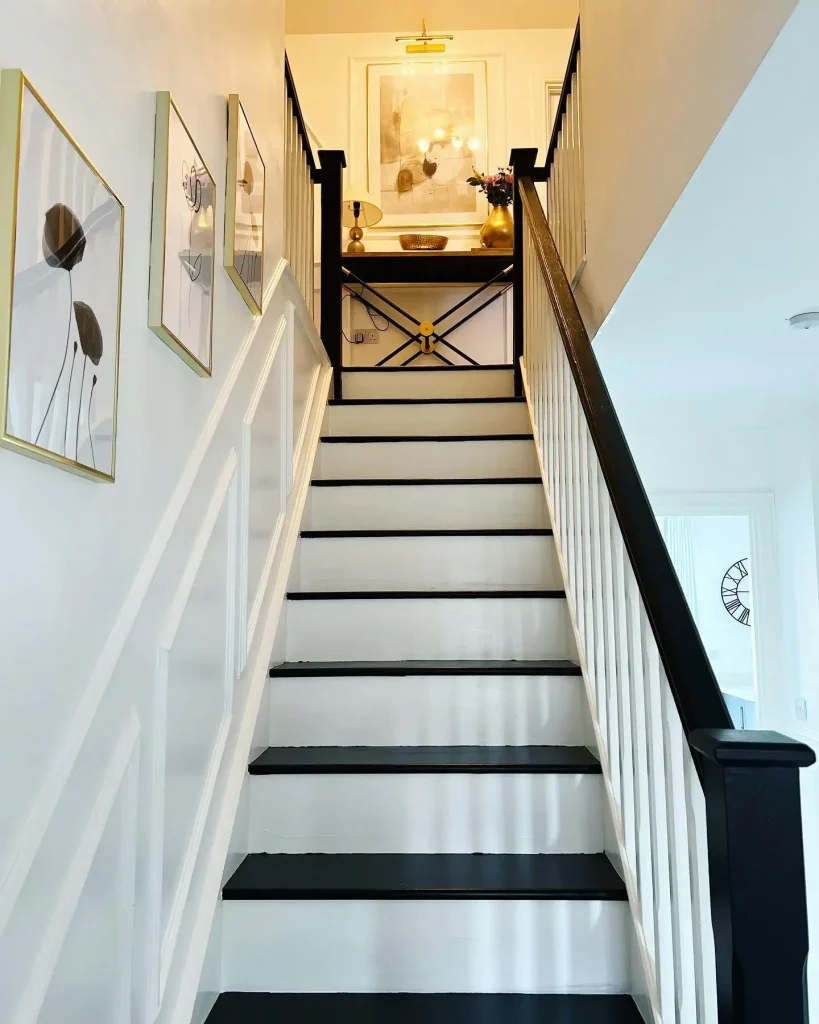
For a striking yet budget-friendly makeover, paint your stair treads in a bold, contrasting hue. Shades like deep emerald, charcoal, or rich navy paired with crisp white risers create a visually compelling effect.
Choose a durable enamel paint to ensure longevity. This technique can be as transformative as selecting the perfect basement paint colors for your walls.
5. Staircase Library Wall
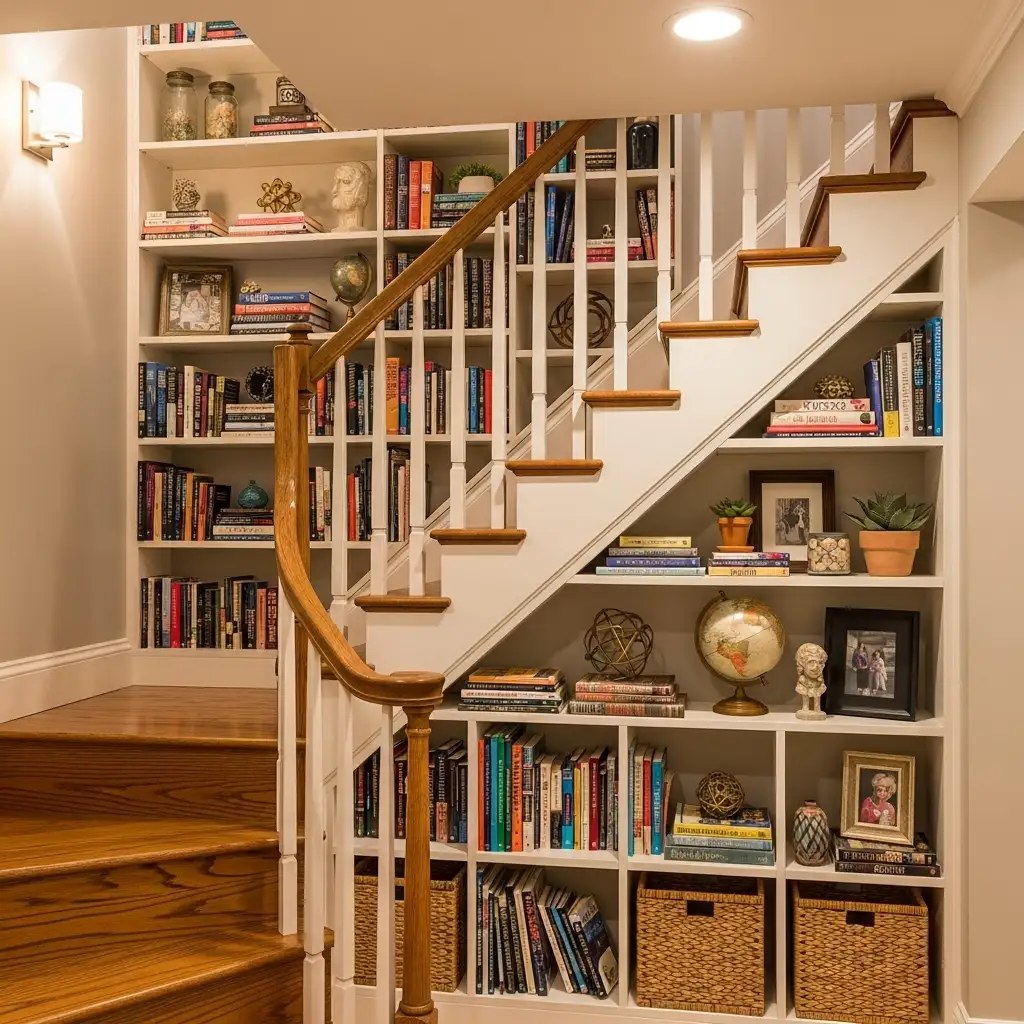
Convert the stairwell wall into a custom bookshelf that follows the incline of the stairs. This dynamic shelving can house books, decorative items, and storage baskets, turning a simple passage into a cozy reading nook extension and adding unique character.
6. Industrial-Style Metal and Cable Railings
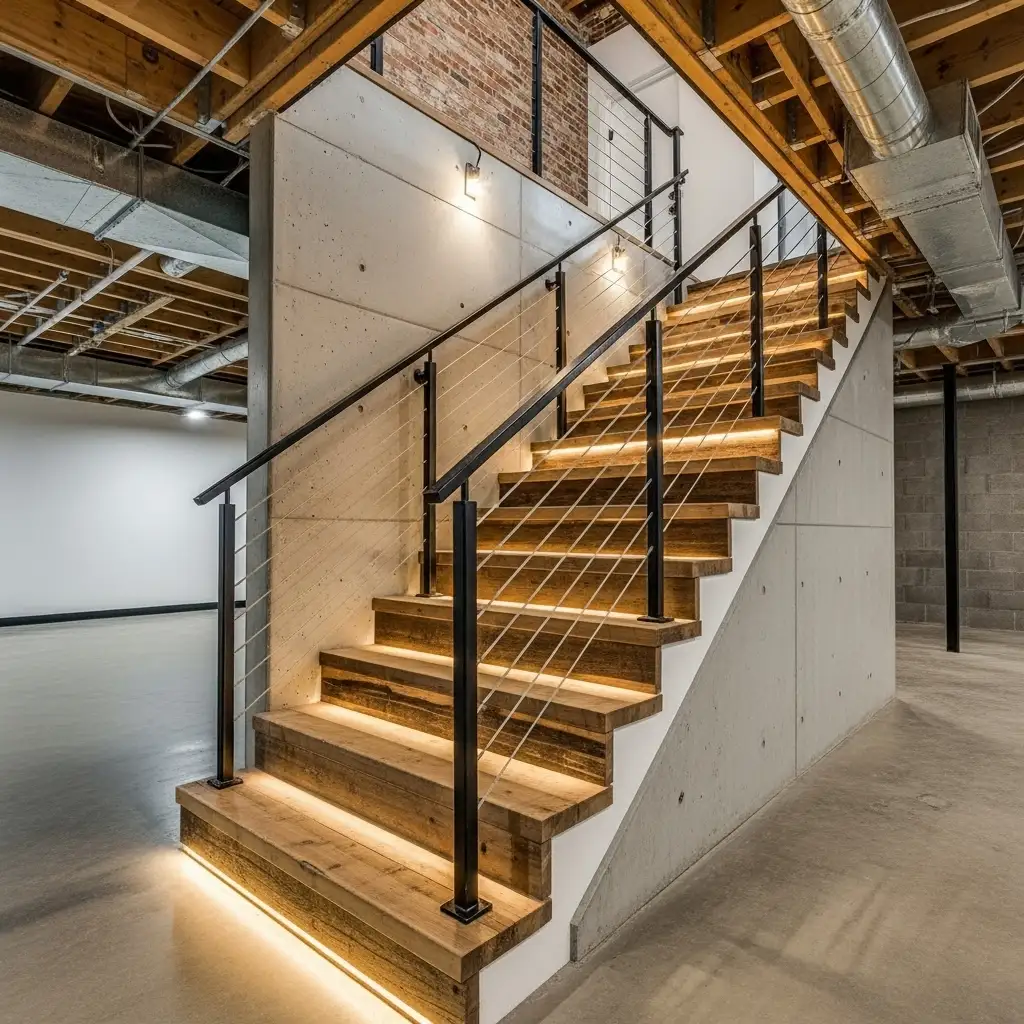
Replace traditional wooden balusters with slender metal rods or cable railings for a sleek, industrial vibe. This design is visually unobtrusive, durable, and pairs well with reclaimed wood steps or exposed concrete walls, perfect for a modern basement aesthetic.
7. Ambient LED Lighting Beneath Steps
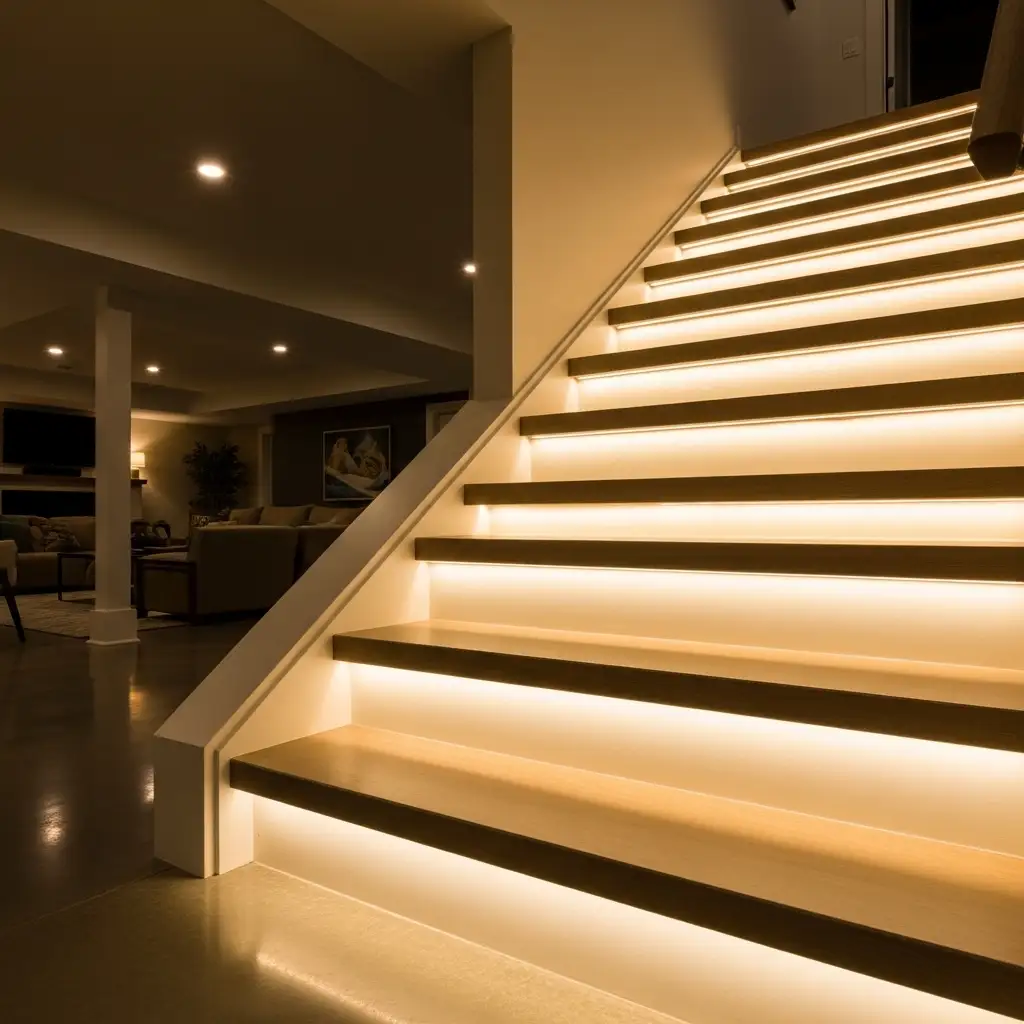
Incorporate LED strip lights under each tread or along the baseboards to create a floating effect. This modern lighting solution enhances safety during nighttime use and adds a subtle glow, making the staircase a focal point in a home theater or entertainment basement.
8. Rustic Reclaimed Wood Steps
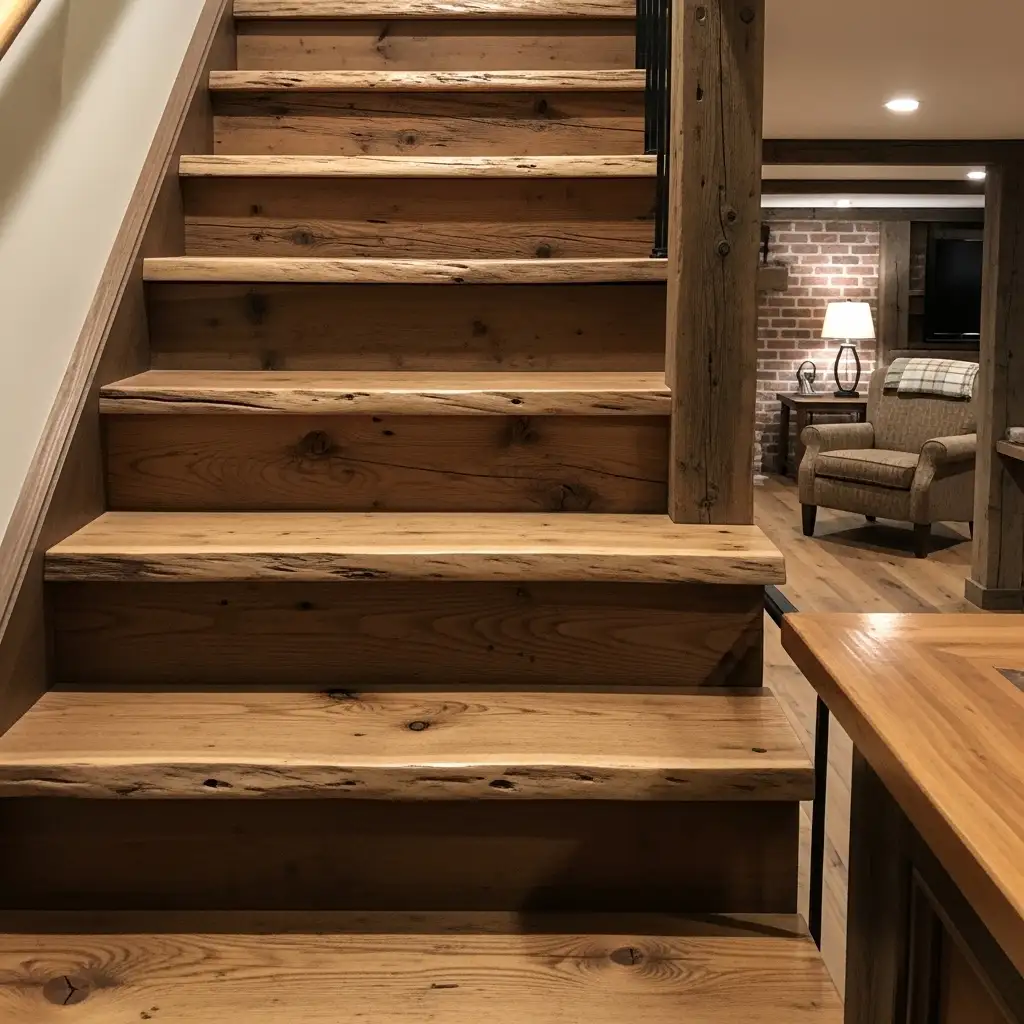
Use reclaimed barn wood or planks with natural live edges for your stair treads. Each step becomes a one-of-a-kind piece, rich with texture and history, ideal for complementing a rustic basement lounge or a cozy home bar.
9. Wood-Framed Carpet Inserts
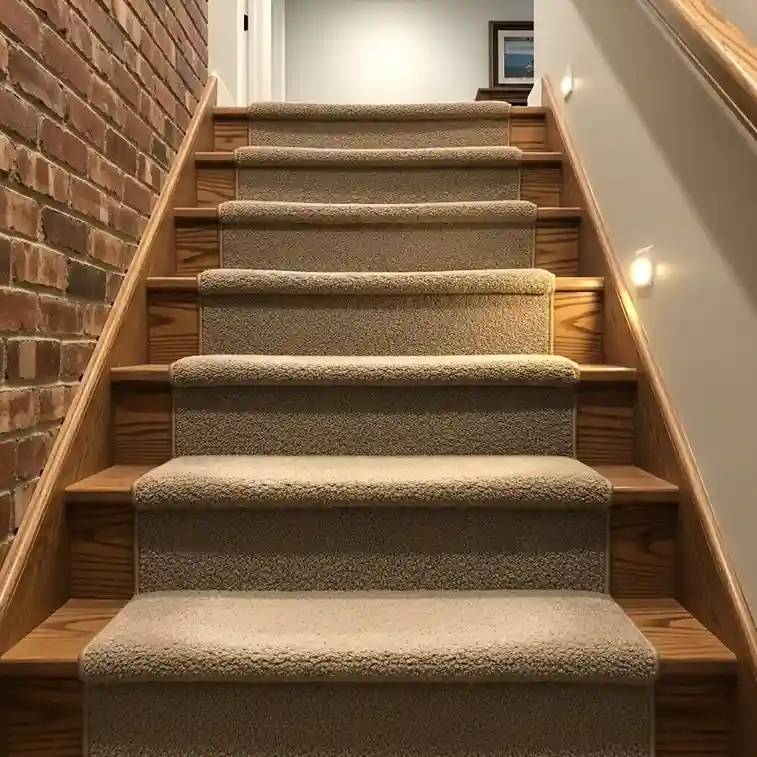
Combine the softness and sound absorption of carpet with the durability and elegance of wood by installing carpet insets bordered by stained wood on each tread. This hybrid design offers comfort and a polished, custom appearance.
10. Transparent Glass Railings
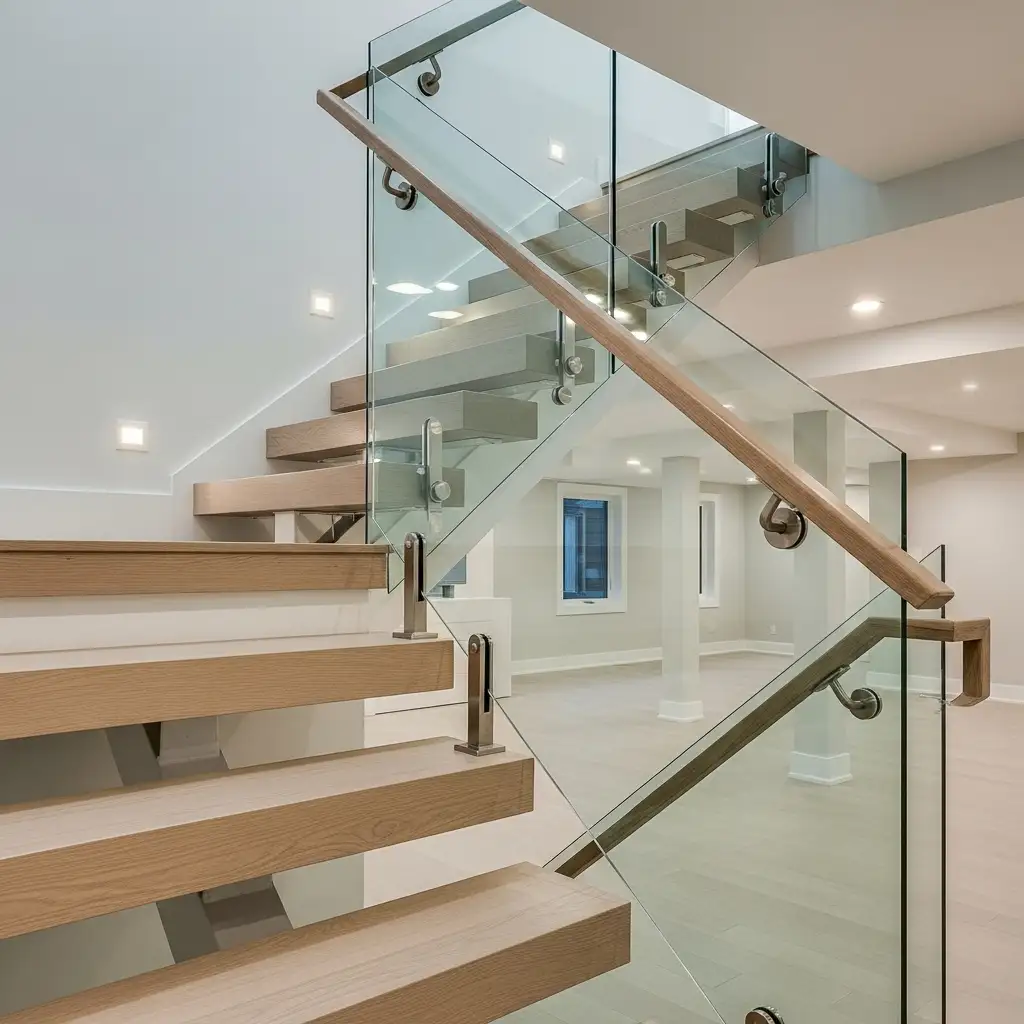
For maximum openness and light transmission, opt for tempered glass panels as railings. This choice maintains clear sightlines, making the basement feel more expansive and providing a sleek, modern backdrop for your design elements.
11. Neutral Wall-to-Wall Carpet
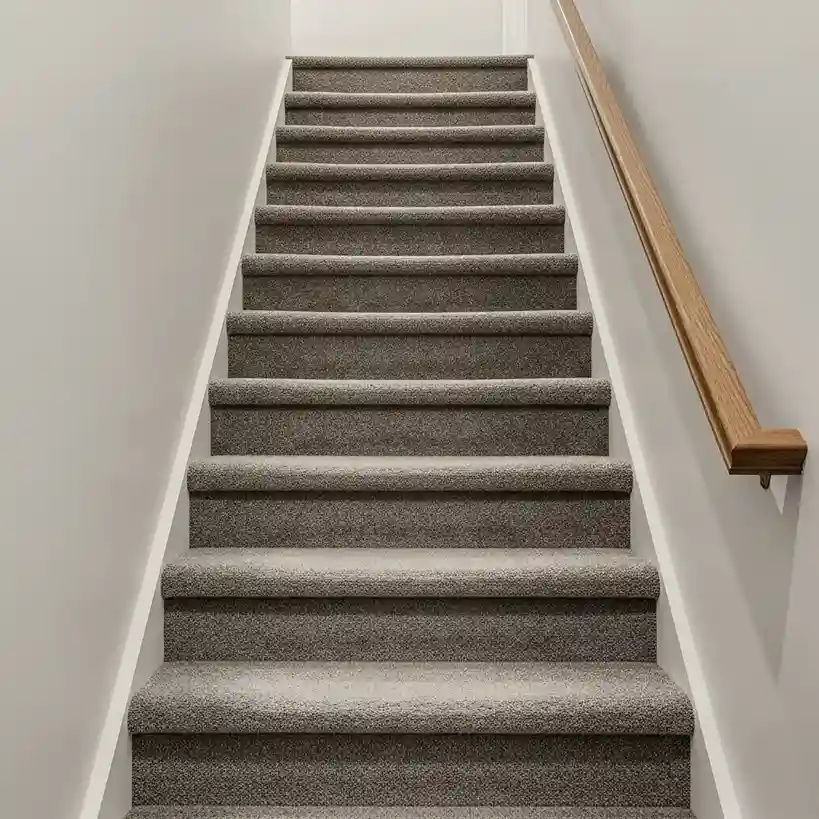
Installing wall-to-wall carpeting on basement stairs offers softness, noise reduction, and safety. Select a dense, low-pile carpet in neutral shades like charcoal, taupe, or gray to conceal dirt and create a seamless transition from upper floors.
12. Bold Geometric Wallpaper
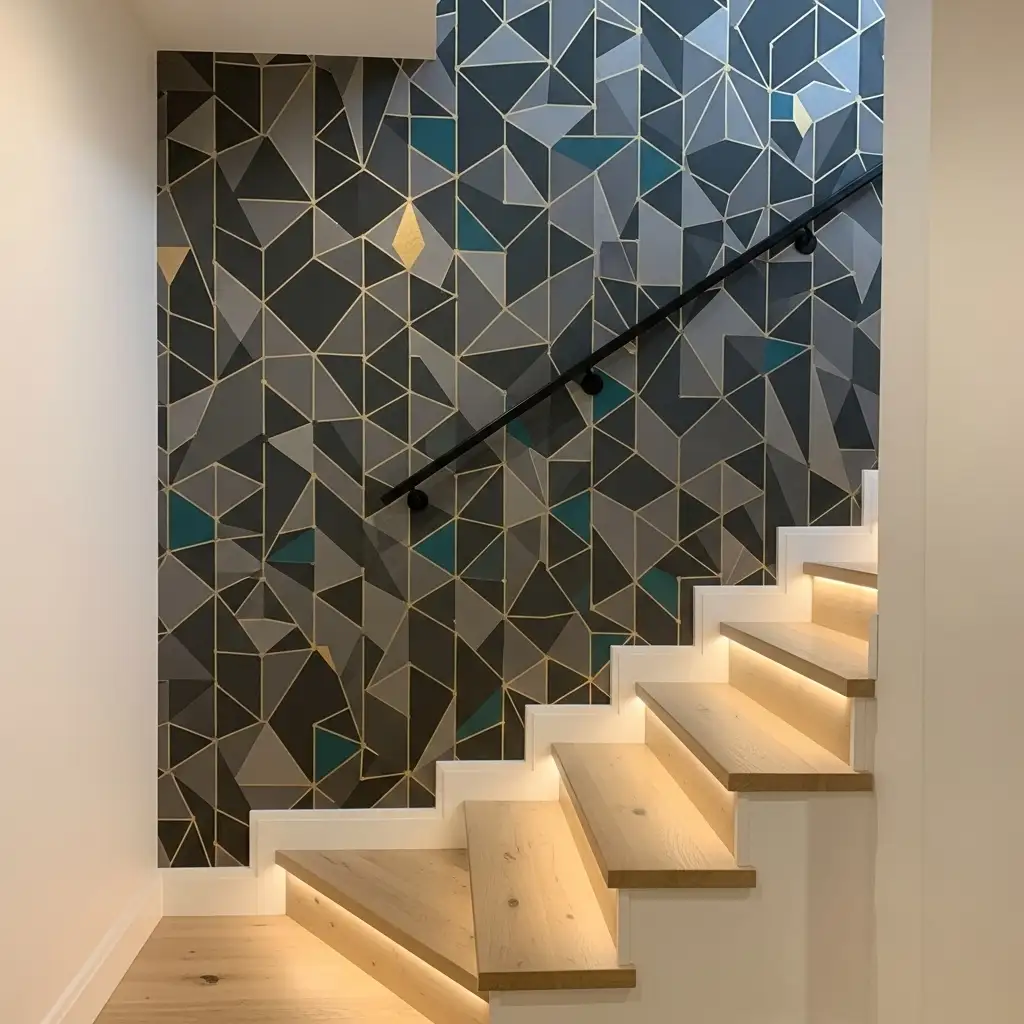
Apply a large-scale geometric or botanical wallpaper to the stairwell wall to create a striking visual accent. This draws attention downward and adds personality to a narrow space. Keep other elements simple to let the wallpaper shine.
13. Classic Wainscoting or Beadboard
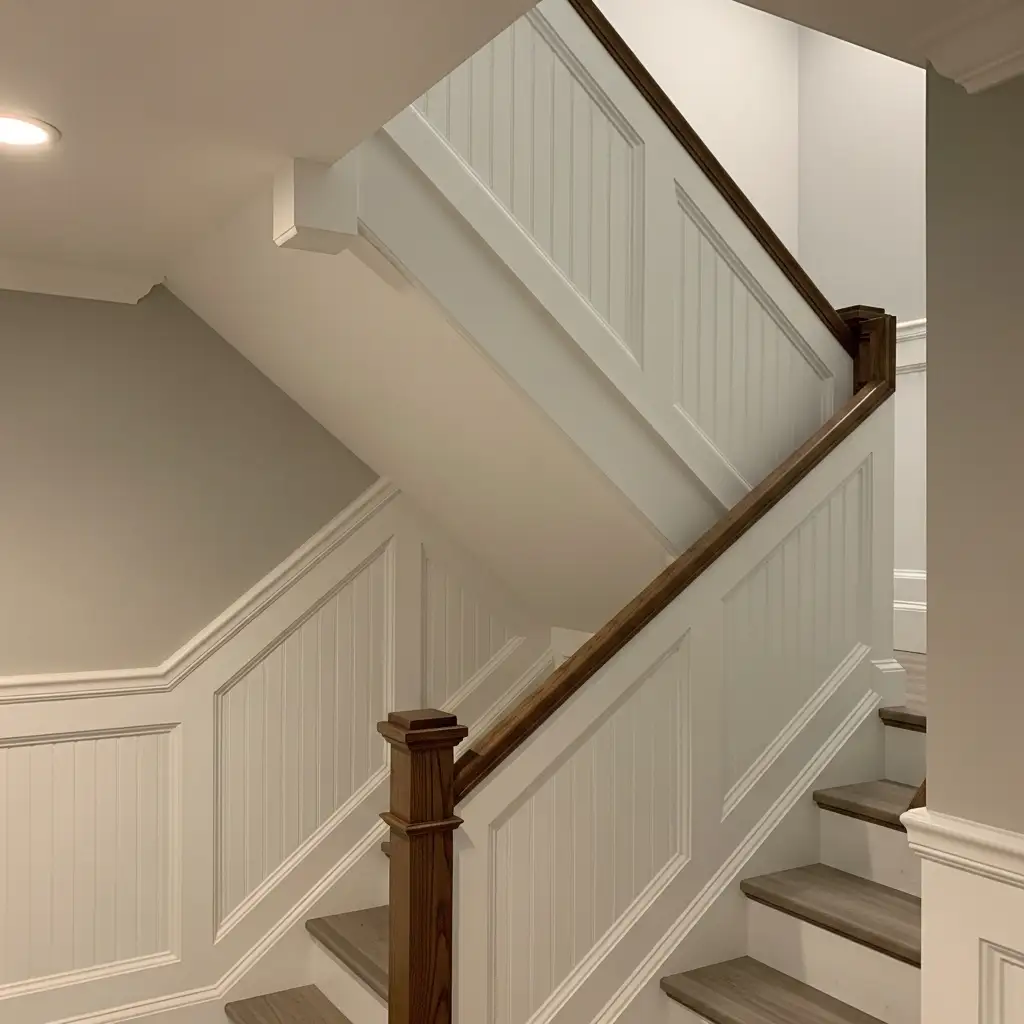
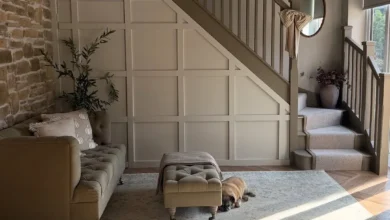
Add texture and durability to stairwell walls with beadboard or wainscoting. Painting it in crisp white or a contrasting tone enhances architectural interest and complements homes with traditional woodwork details.
14. Color-Contrasted Risers
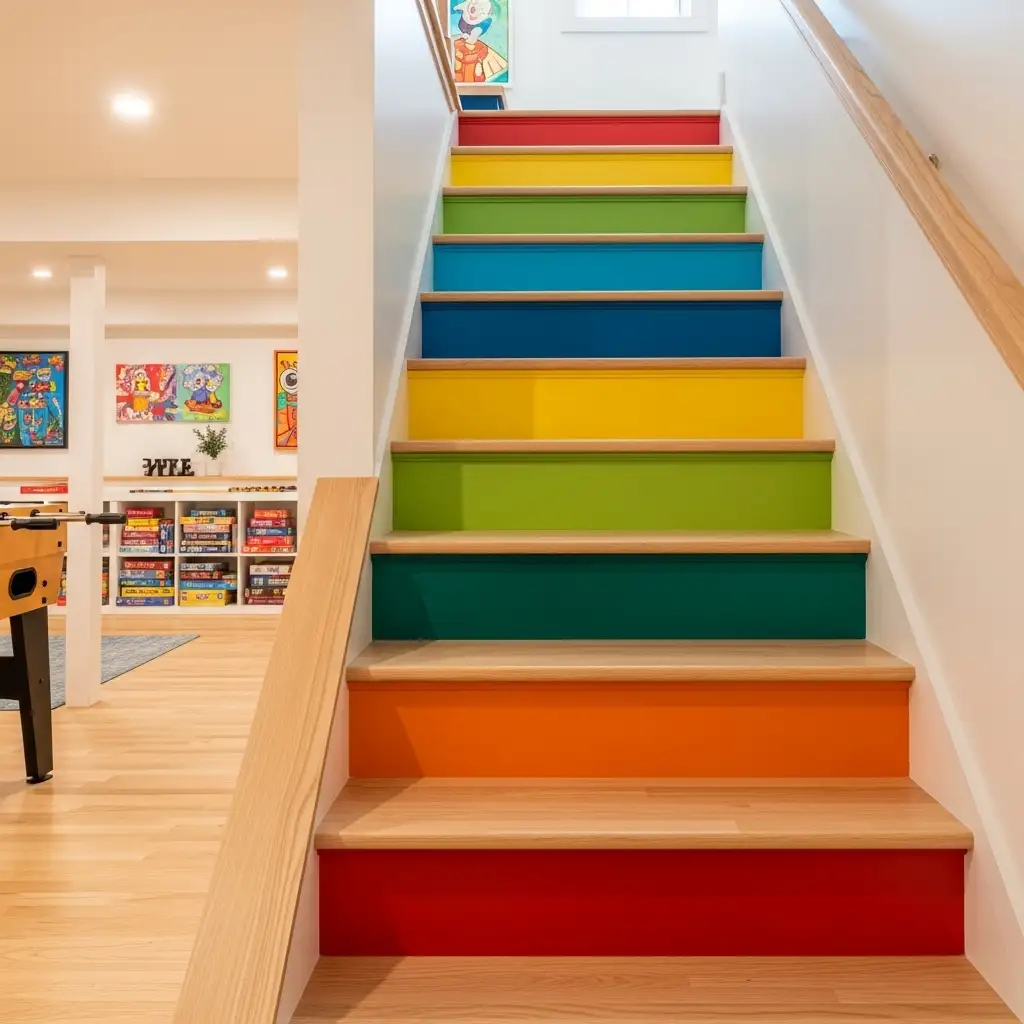
Introduce visual rhythm by painting or tiling stair risers in alternating colors. This playful design works especially well in family-friendly basements or creative hobby areas.
15. Space-Saving Spiral Staircase
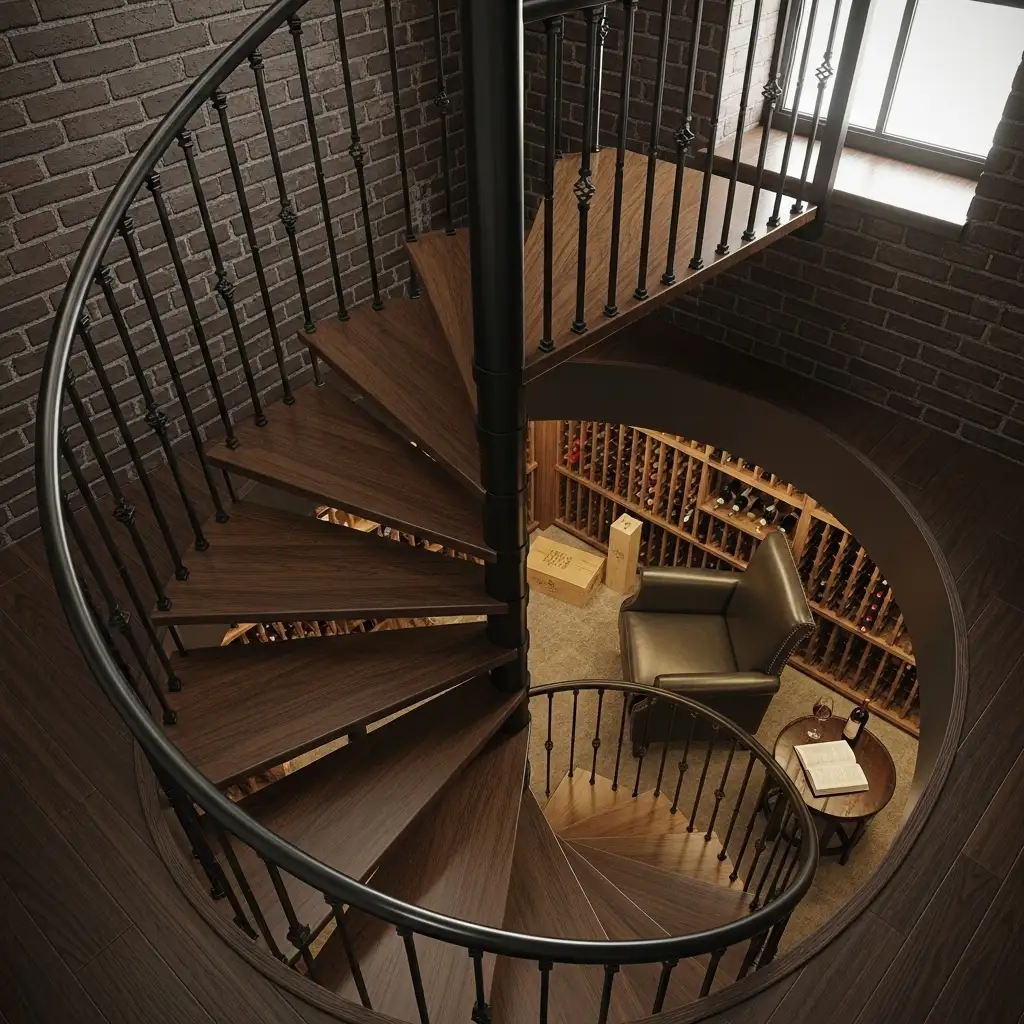
When floor space is at a premium, a spiral staircase crafted from metal or wood offers a compact and sculptural solution. While it’s less practical for moving bulky items, it creates a striking architectural feature ideal for accessing a wine cellar or a quiet retreat.
16. Integrated Greenery Ledges
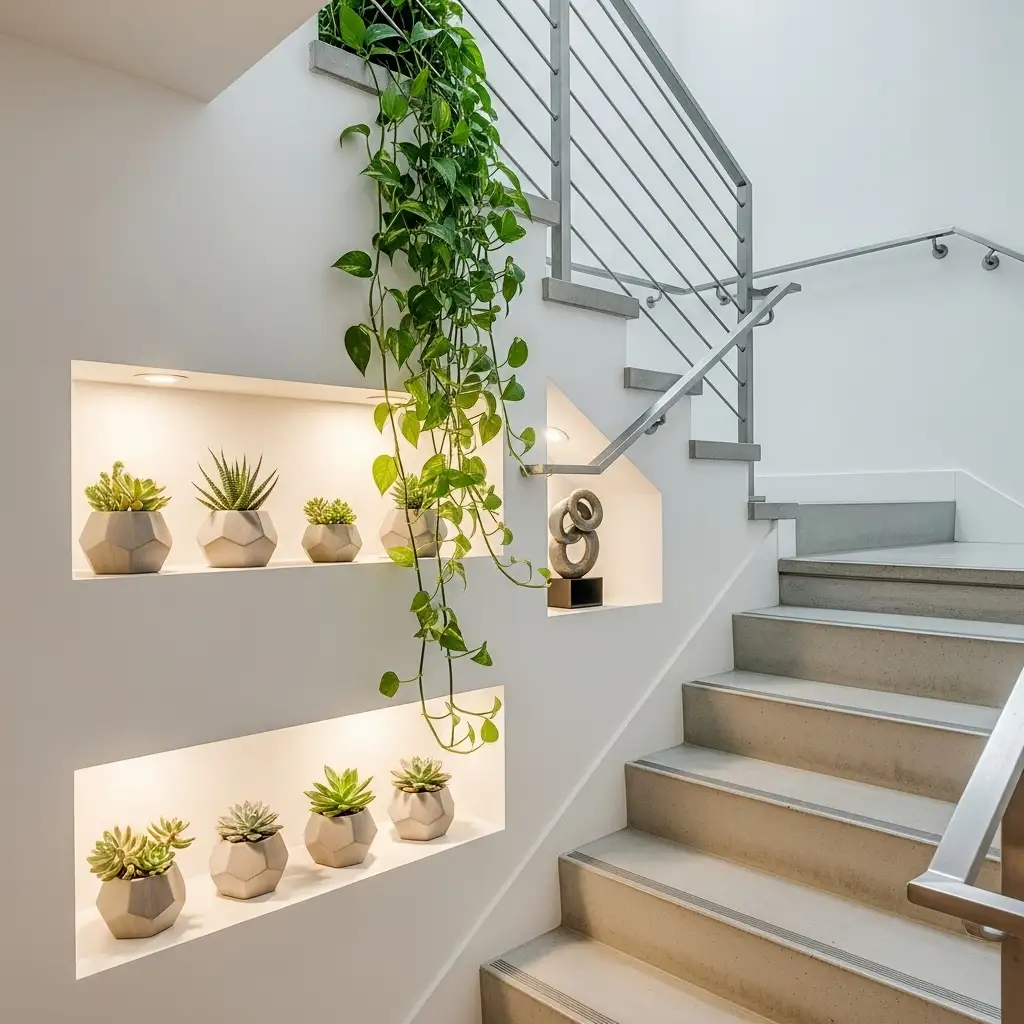
Incorporate shallow shelves or recessed niches at varying heights along the stairwell wall. These spots are perfect for trailing plants like pothos, small succulents, or curated decorative pieces, infusing the space with life and personality.
17. Industrial Black Steel with Warm Wood
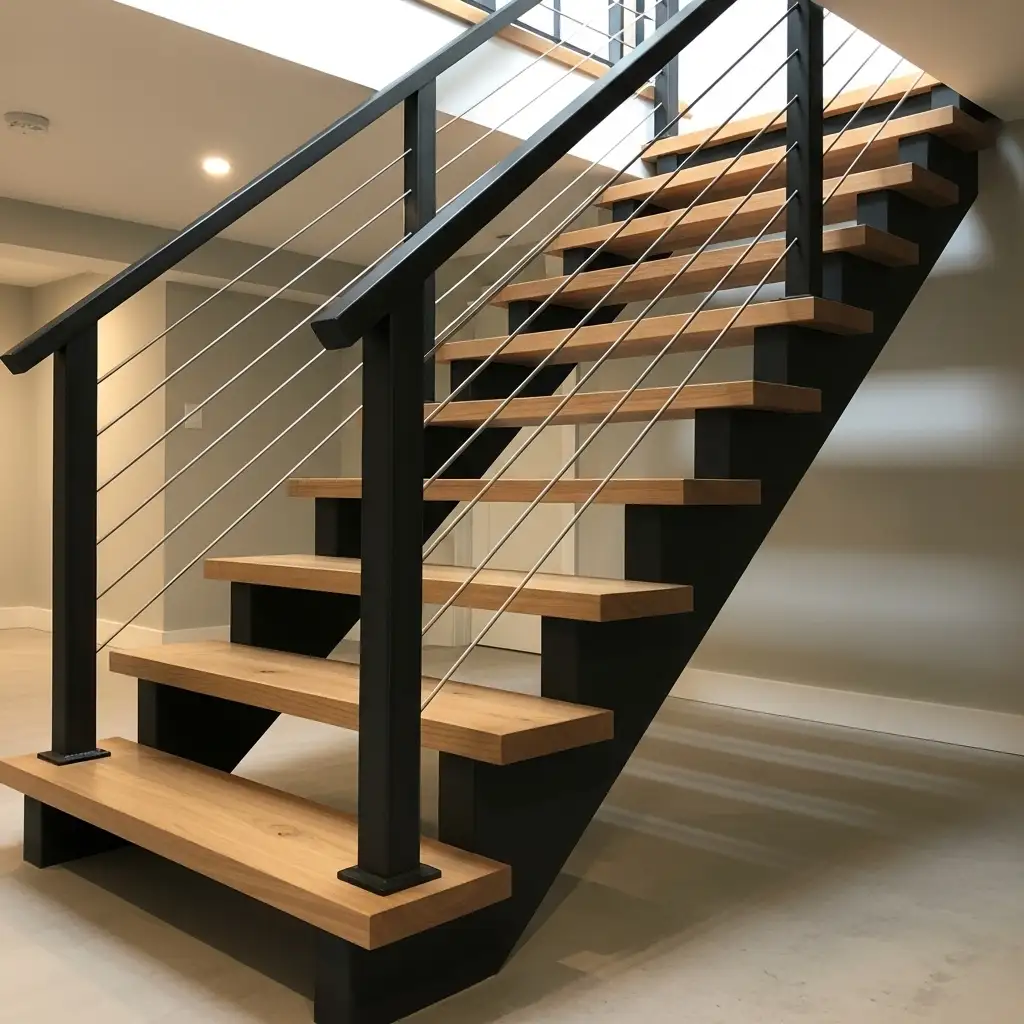
Combine blackened or powder-coated steel stringers with light-toned wooden treads for a modern industrial look. This blend of materials is both visually compelling and structurally robust.
18. Personalized Stairway Gallery
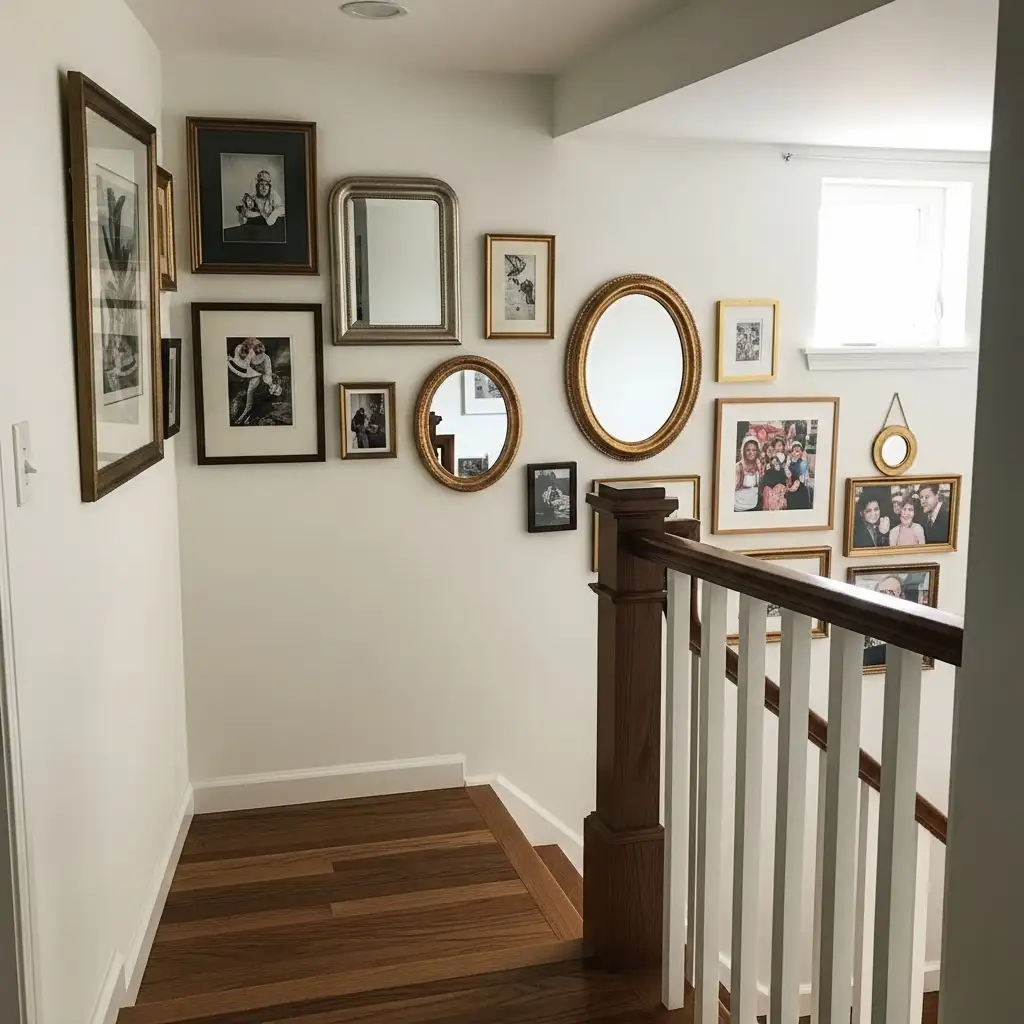
Transform the sloped wall beside your stairs into a gallery by hanging framed photos, artwork, or mirrors that follow the stair’s angle. This adds a personal touch and encourages a slower, more appreciative descent.
19. Urban Concrete Steps
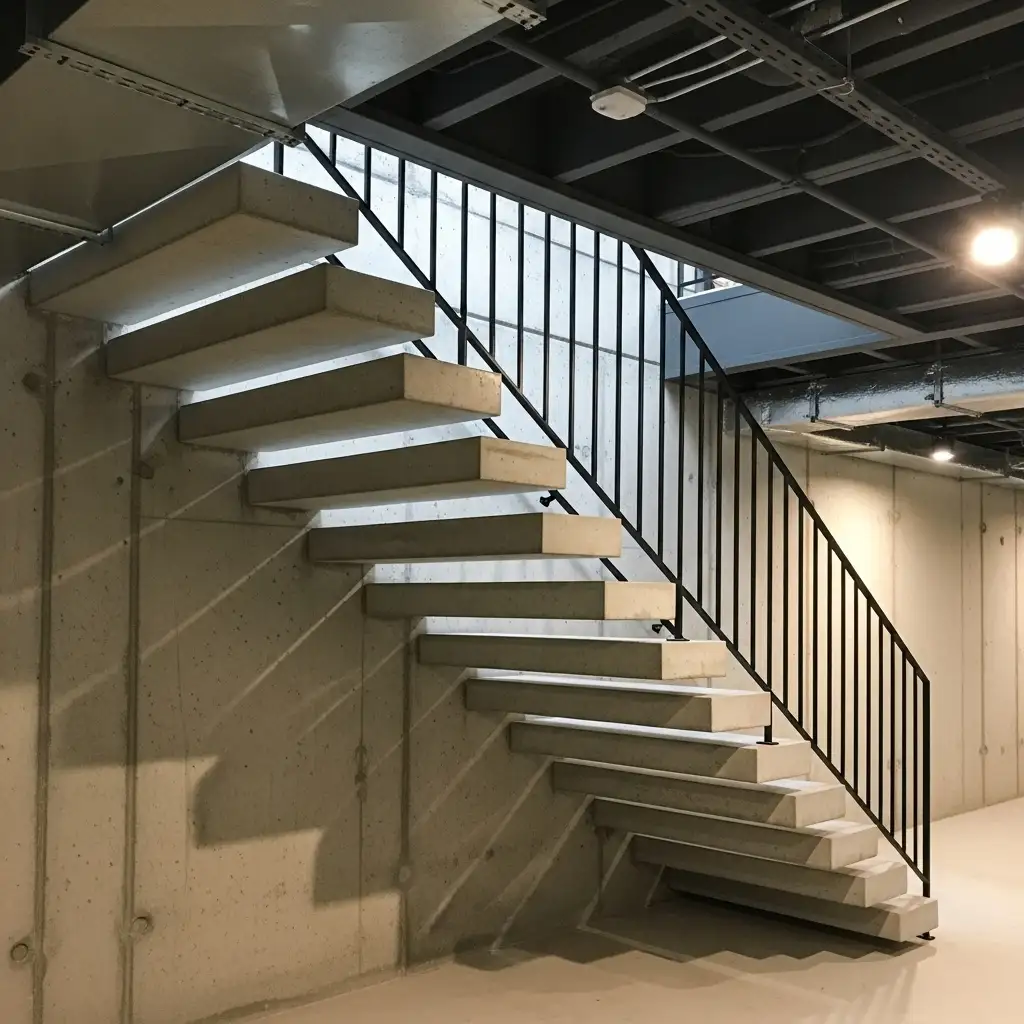
For a bold, loft-inspired aesthetic, opt for concrete stair treads. They offer exceptional durability and pair well with minimalist metal railings and exposed painted ceilings, creating a cohesive industrial vibe.
20. Bright White Palette with Natural Illumination
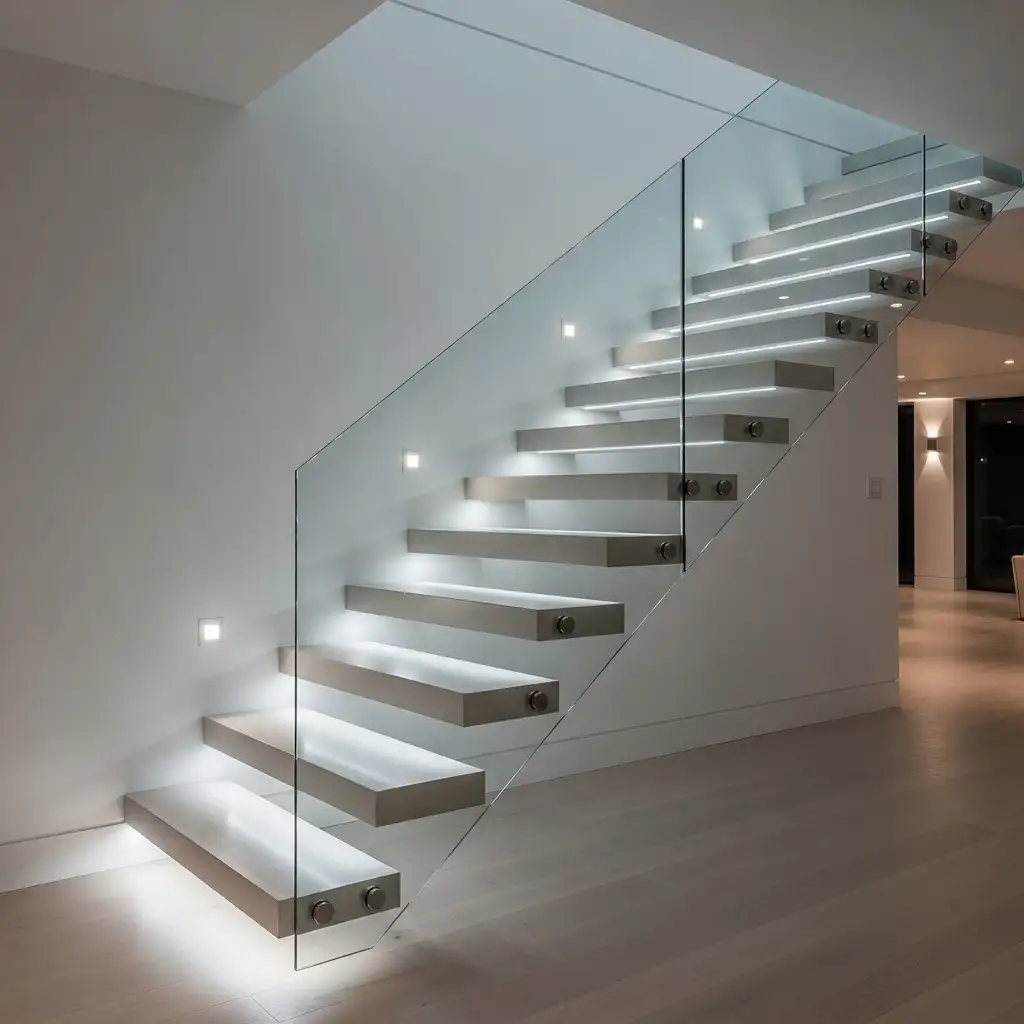
If your stairwell benefits from natural light via a window, enhance brightness by painting walls, risers, trim, and railings in crisp white. This reflective approach transforms a potentially gloomy basement entry into a welcoming, airy space.
21. Minimalist Floating Cantilevered Stairs
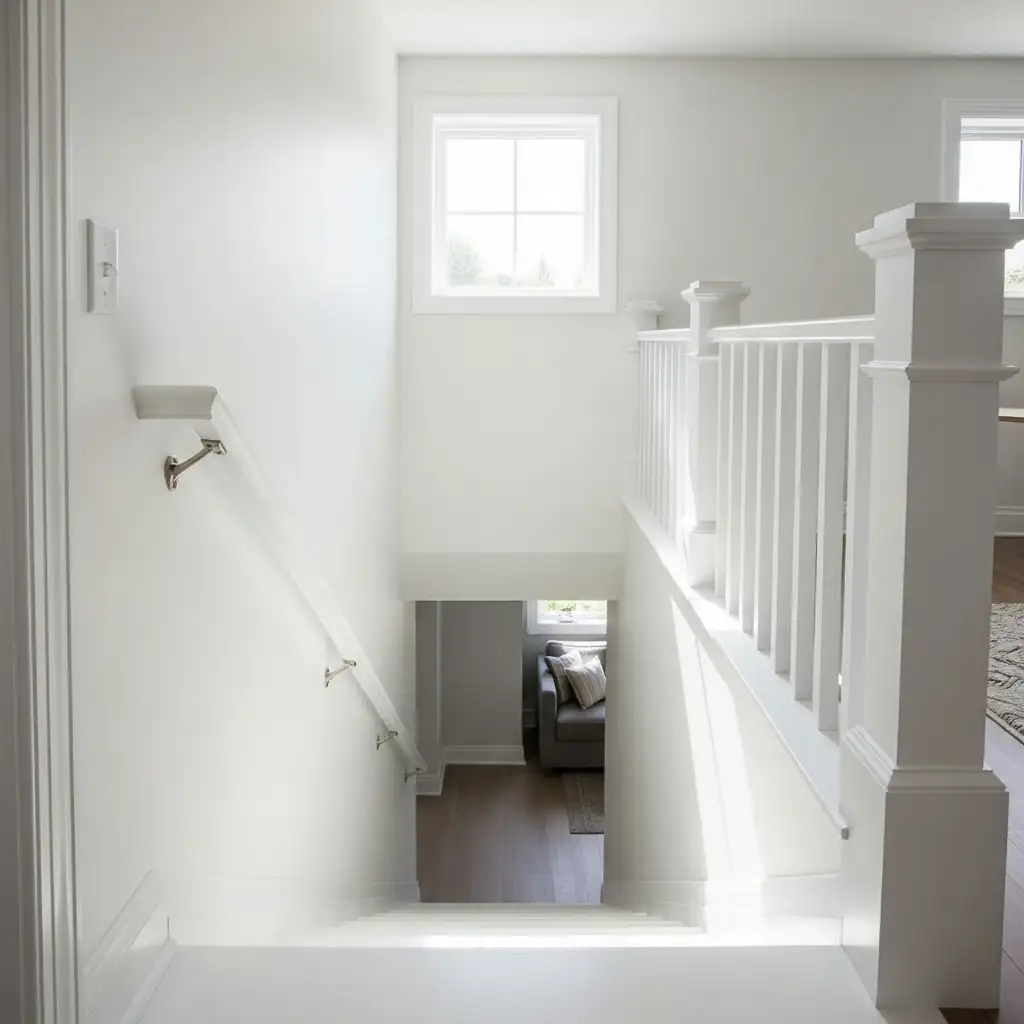
Make a striking architectural statement with cantilevered stairs that appear to float, anchored invisibly into the wall without visible supports. This sculptural design maximizes light flow and creates a stunning minimalist focal point, though it requires expert engineering.
Frequently Asked Questions About Basement Stair Design
1. What safety standards should I prioritize when remodeling basement stairs?
Adhering to the building code is essential. This includes maintaining uniform tread depths (generally at least 10 inches), limiting riser heights (commonly no more than 7.75 inches), ensuring a minimum headroom clearance of 80 inches, and installing secure, graspable handrails on at least one side. Balusters should be spaced no wider than 4 inches apart. Always consult your local building authority before undertaking structural changes.
2. How can I reduce noise from basement stairs?
Stair creaks often stem from loose treads rubbing against stringers. Secure treads firmly with screws rather than nails. Adding a thick carpet pad or rubber underlayment beneath a stair runner can significantly dampen sound. For open-riser stairs, placing felt pads between metal and wood connections helps minimize noise.
3. What lighting options work best for dark basement stairwells?
Effective lighting involves layering. Start with bright overhead fixtures at both the top and bottom of the stairs. Supplement with ambient lighting such as LED strips under handrails or treads, plug-in wall sconces, or recessed ceiling lights. The goal is to eliminate shadows on each step for safety and aesthetics. For more ideas, explore our ceiling lights guide.
4. Should I tackle basement stair renovations myself or hire a professional?
The answer depends on the project’s complexity. DIY-friendly tasks include painting, installing stair runners, applying wallpaper or wainscoting, and swapping out balusters or newel posts. Professional help is necessary for structural modifications such as altering stair pitch, creating open risers, installing spiral stairs, or working on load-bearing walls. Electrical installations for lighting should always be performed by a licensed electrician.
Final Thoughts: Elevate Your Basement Entryway
Your basement staircase is more than a mere passage—it’s a transitional space brimming with design potential. Whether you opt for the understated elegance of a woven runner, the smart utility of built-in storage, or the bold impact of floating concrete steps, your choice shapes the first impression of your basement.
Investing creativity and care into this often-overlooked area not only enhances visual appeal but also boosts safety and functionality, enriching your home’s overall experience. A thoughtfully designed basement stairway doesn’t just lead downstairs—it announces a grand arrival. Treat it as the opening chapter of your basement’s story and make it unforgettable.
As an Amazon Associate I earn from qualifying purchases.