HABUTWAY 105 L-Shape Sofa: how it settles into your space

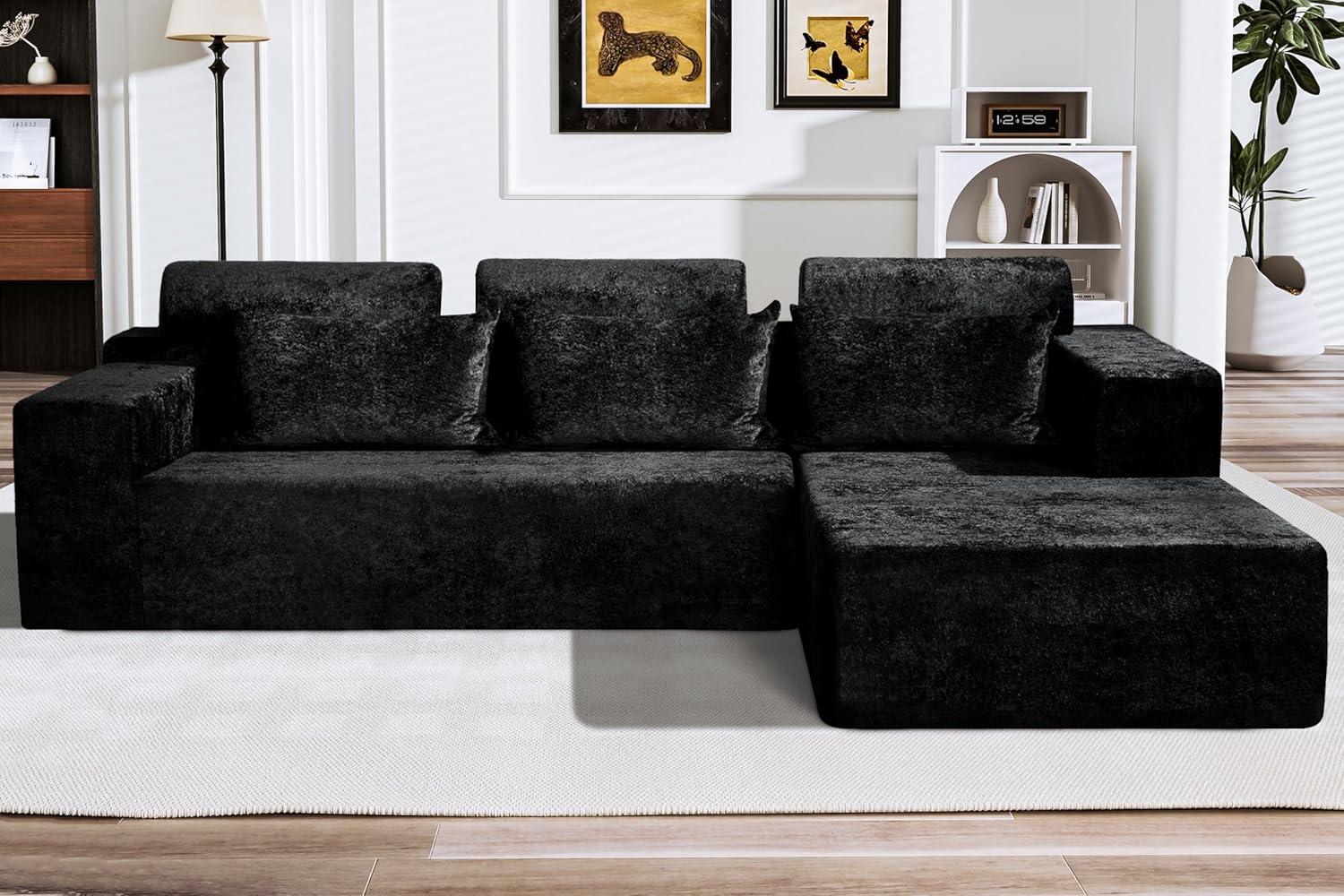
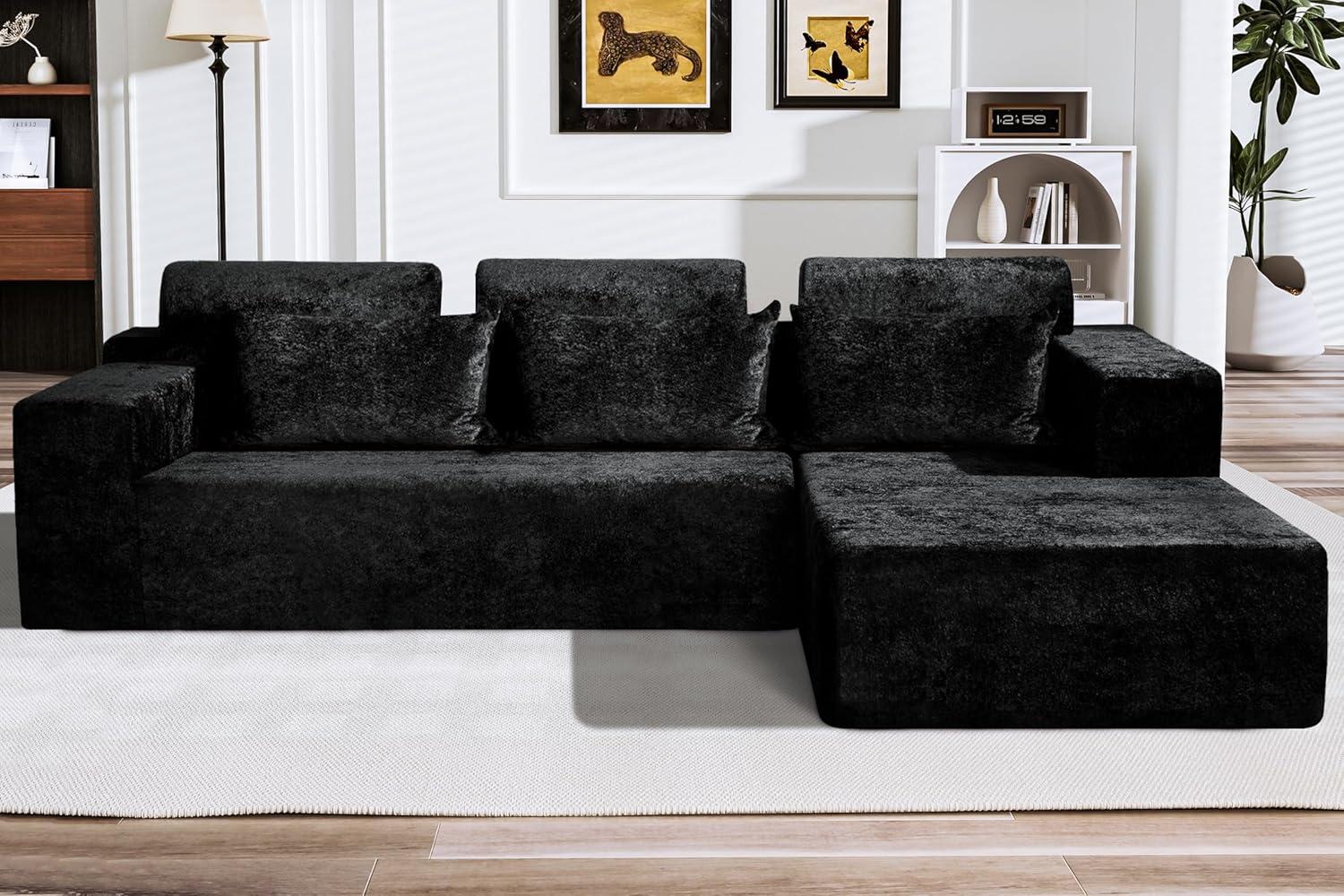
Sunlight skims over the distressed velvet and you find yourself brushing it with the back of your hand, surprised at how soft yet slightly textured it feels. The HABUTWAY 105 L-Shape modular sectional sits low and broad in the room, the right-facing chaise stretching out and changing the room’s proportions as soon as you glance up. Sink a palm into the deep seat and the cushions push back with a buoyant firmness—there’s a sense of density underfoot and underhand that gives the piece visual weight. It arrives in clear modules, the seams and hidden legs keeping the silhouette simple so the fabric and scale do most of the talking. Small lived-in details catch your eye: the velvet’s subtle sheen, the way the lounger invites you to linger, the way the whole arrangement alters how the space breathes.
When you first see the HABUTWAY L shape modular sectional in distressed black velvet
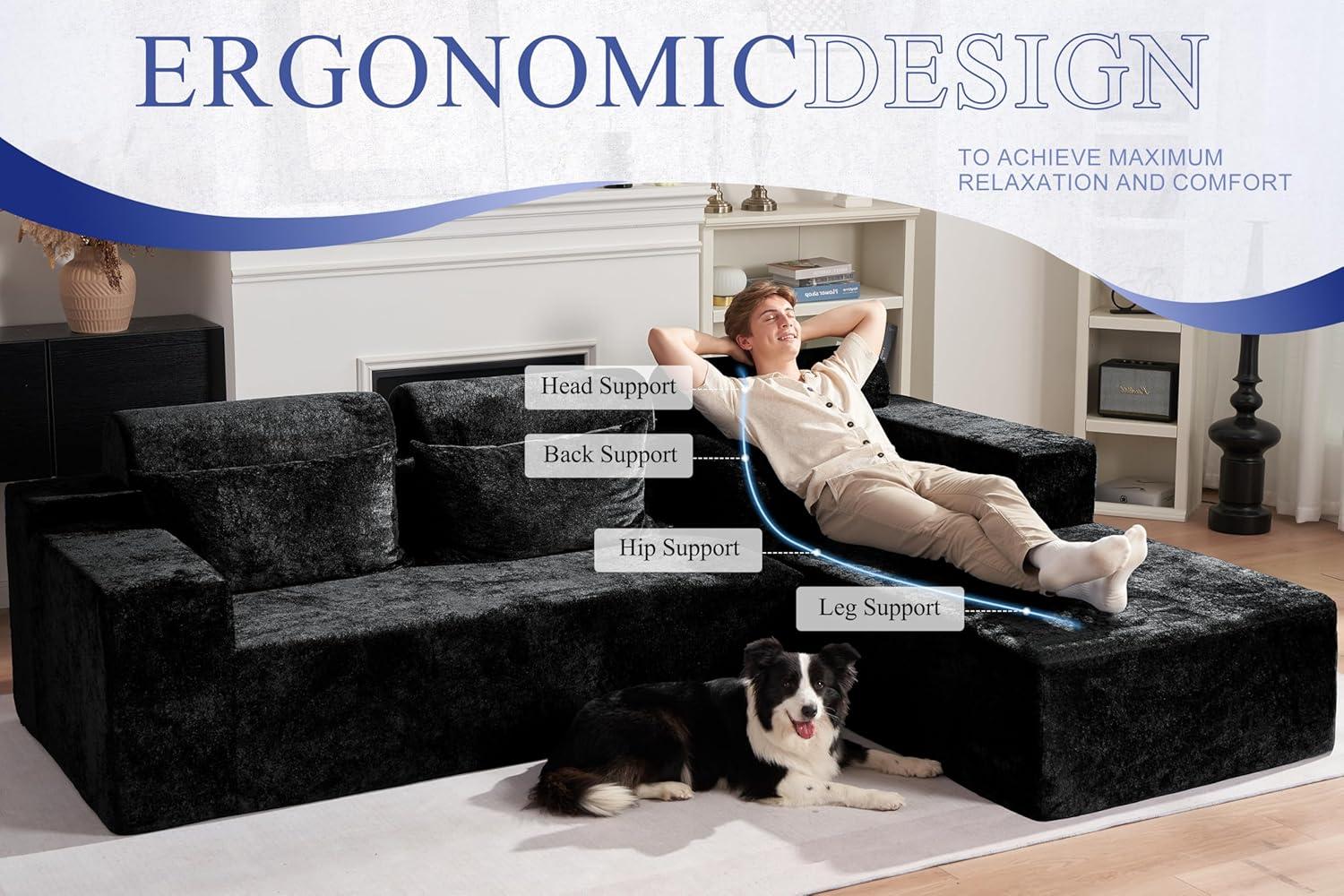
when you first see the L‑shape modular sectional in distressed black velvet, the color reads deeper than a flat black — it shifts with the light so that some panels look almost slate while others pick up a softer, worn highlight.The velvet’s nap is visible at a glance: brushed areas and subtle streaks catch a faint sheen, and the distressed finish gives the surface a slightly lived‑in patina rather than a uniform sheen. The overall silhouette sits low and horizontal; where the two modules meet you can make out the seam lines and the slight gap that marks their junction, and the chaise arm and back form a continuous plane that anchors the composition against a wall or in a room corner.
Up close you find yourself smoothing cushions and running a hand along the fabric — the nap responds, leaving momentary tracks that shift when you shift. The cushions give a little under your palm, and seams tremble faintly as you adjust them or settle onto the seat; creases open and relax over the next few minutes. For some viewing angles the distressed effect reads more pronounced, and small light plays across the velvet as people pass or as you move around it, so the first impression is as much about motion and touch as about the static form.
How the velvet, stitching, and frame present themselves to you in the room
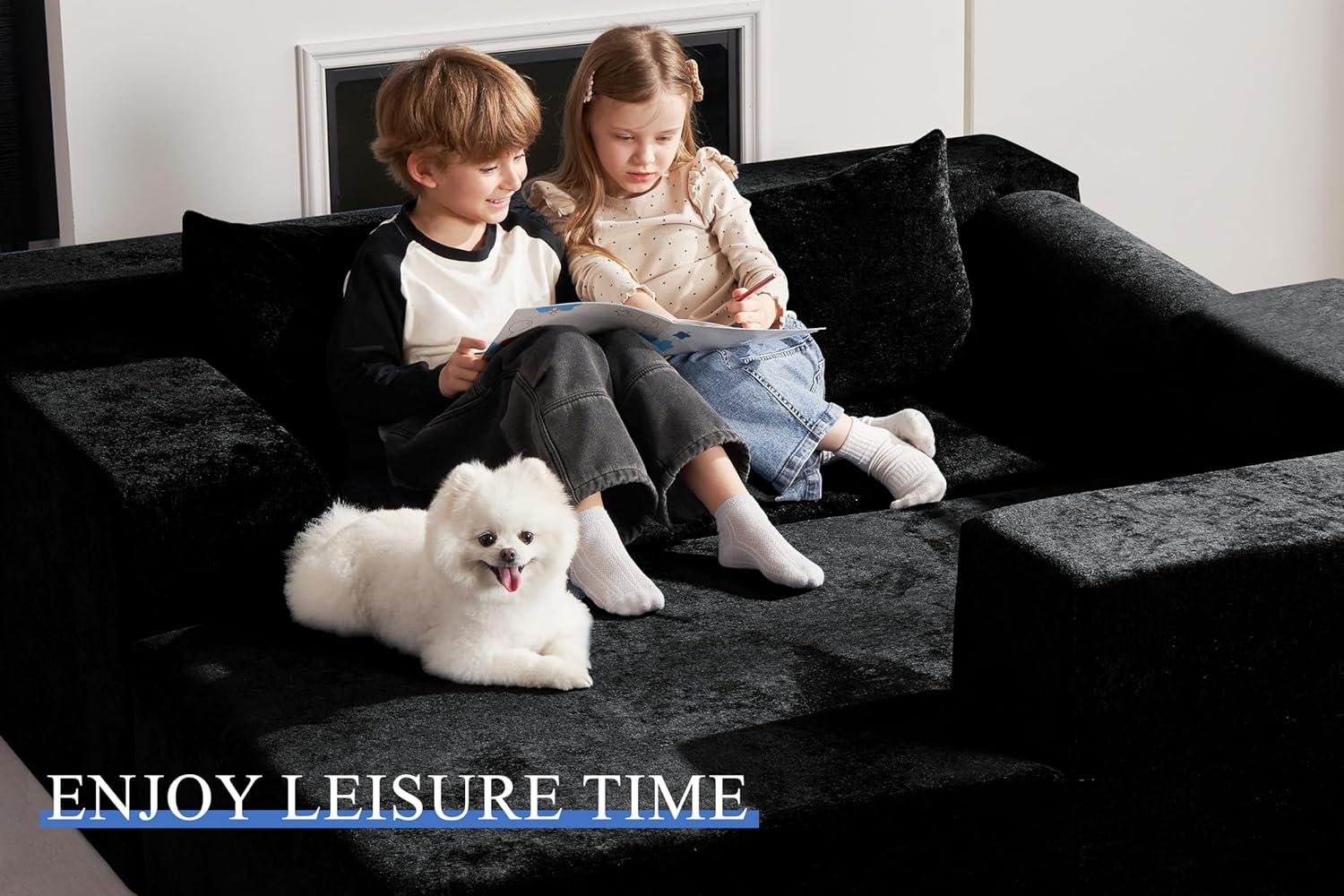
Up close, the velvet reads like a living surface — light and movement rewrite its tone. Walk past at different times of day and you’ll notice the nap flipping between inky and slightly luminous patches; run your hand along a cushion and the fibers lay smooth, then catch at a different angle and faint striations appear where you brushed them. When you sit and shift, those brushed marks can trail across the seats and backrests for a few minutes before the pile settles again, and smoothing the fabric with a palm is almost automatic. In dimmer light the finish quiets down; under a direct lamp the texture becomes more visible, so small disturbances in the pile register as subtle shifts rather than bold marks.
the stitching and frame present themselves through texture and shadow more than through flash.The seam lines trace the sofa’s edges and join points; when you adjust a cushion you feel the seams tense and relax, and the stitchwork tends to hold its shape while allowing the cover to move. From across the room the frame gives the piece a defined silhouette — the base and legs tuck the mass down so the upholstery reads as a continuous plane, but when you sit the frame’s geometry is hinted at where the cushions meet the base and where the seat meets the arm. Small habits — nudging a cushion into place, smoothing a flap of fabric — make those construction details become part of the room’s everyday choreography rather than fixed decoration.
| When you… | What you notice |
|---|---|
| Pass by in daylight | Velvet shows light and dark shifts; pile reflects at angles |
| Run your hand along a seam | Seams feel taut,stitching visible as a fine line; fabric momentarily smooths |
| Sit and settle in | Frame creates a low,anchored silhouette; cushion edges reveal where structure supports the seat |
What you notice when you sink into the deep seat and lean back against the cushions

When you sink into the deep seat you feel the initial give of the foam—there’s a brief, almost weightless drop before the cushions take over and cradle your hips and thighs. Your knees tuck back farther than on a standard sofa; the seat feels long under your legs so your weight shifts toward the backrest more quickly than on a shallow couch. As you settle, you’ll notice the way the seat compresses beneath your sit-bones while the front edge still supports the underside of your thighs.
Leaning back, the back cushions yield and then push back gently, cupping your lower spine and letting the upper back and shoulders sink into the plush surface. The fabric brushes cool at first and then warms against your skin; smoothing the surface with a hand is a near‑automatic gesture,and seams or cushion joins sometimes nudge out of place as you move. Small sounds of shifting upholstery follow larger adjustments, and over a longer sit the cushions subtly flatten where you perch most often, prompting micro‑shifts in posture. For some moments you’ll find yourself readjusting the back or arm cushions without thinking, smoothing fabric or nudging a seam to regain that settled contact with the backrest.
How the sofa occupies your living space and fits into day to day routines
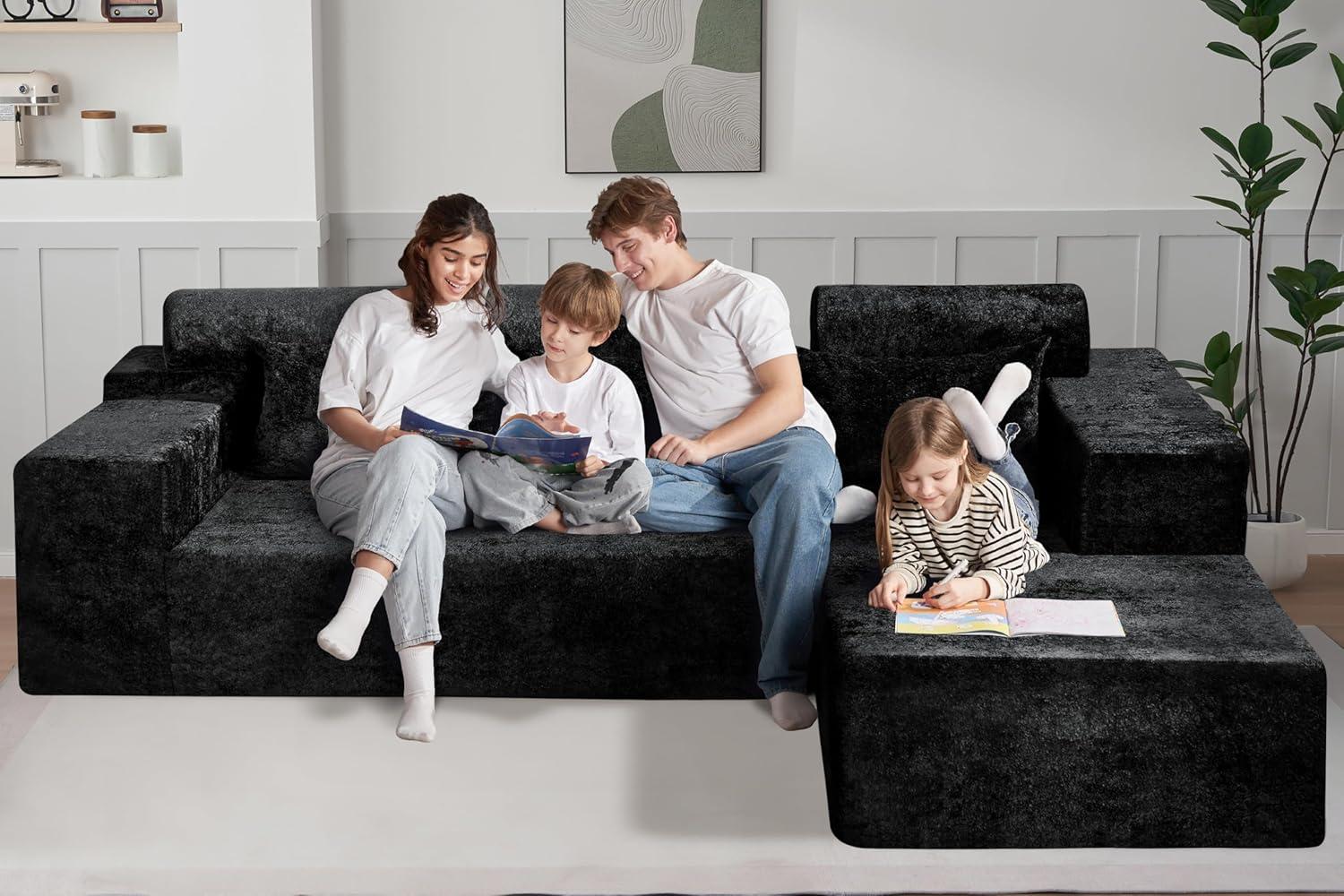
The L-shaped footprint quickly reads as an anchor in a room,steering movement around its chaise and defining a primary lounging zone. When placed against a wall the configuration frees up the opposite floor for traffic and an occasional side table; when pulled slightly away from the wall it creates a more intimate pocket. Over the course of a day the chaise often becomes a habitual landing place, with cushions being shifted, seams eased back into place, and the fabric smoothed more than once as people settle and get up. The sofa’s depth and low profile encourage sprawled positions and semi-reclined postures rather than upright sitting, which subtly alters how adjacent surfaces — coffee table, rug, walkways — are used.
Daily rhythms tend to leave visible traces: a preferred corner for morning coffee cups, a scrunched area where a laptop spends the afternoon, and a flattened strip on the chaise after an evening of lounging. The modular pieces are usually left assembled, though occasional reconfiguration appears in households that alternately need open floor space or a larger entertaining arrangement. Routine care shows up in small gestures — a fast pat of the cushions, a tug to re-align a seam, or running a hand over the velvet to restore its nap — rather than formal maintainance every day. For some households pets and children turn the sofa into a shifting landscape of toys and blankets during the day, then back into a single social surface by evening.
| Moment | Common Use Pattern |
|---|---|
| Morning | Brief seating for coffee or reading; cushions frequently enough fluffed after overnight settling. |
| Afternoon | Casual work or napping spot; laptop or device impressions appear on the deep seat. |
| Evening | Primary lounging area for media and socializing; chaise acts as the default recline zone. |
How it measures against your expectations and the practical limits you may find
expectations framed around initial plushness and long-term resilience meet a mixed reality in everyday use. Cushions settle with repeated sitting, so the first few days of use often feel firmer than imagined before the padding regains loft; after several quick readjustments—pushing back a seam, smoothing the surface—the seating returns closer to that original softness. The chaise keeps its lounging profile, but the junctions between modules can show minor gaps after people stand up abruptly or when cushions are shifted frequently.
in routine living conditions, surface behavior and small annoyances become the most visible limits. The upholstered finish shows hand impressions and brief changes in nap after someone slides across the fabric; those marks generally soften with a few strokes of the hand, though they can reappear with repeated use. Modules moved for cleaning or reconfiguration tend to travel more easily than bulkier pieces, yet the corners sometimes scrape or catch on thresholds until positions are fine-tuned. Over time, edges where people habitually sit develop a slightly different compression than less-used areas, producing a subtle unevenness that users commonly address by patting and rotating cushions.
| Expectation | Common practical limit observed |
|---|---|
| Immediate cloud-like give | Initial firmness from packed cushions that loosens after a few sits and smoothing |
| Seamless modular alignment | Minor gaps appear after movement and need occasional repositioning |
| Uniform surface appearance | Hand impressions and differential wear show where use is concentrated |
People tend to develop small habits around the piece—tapping cushions back into place after guests leave or running a hand along the nap to even it out—so the everyday limits are frequently enough managed through repeated, low-effort gestures rather than overhaul.
check full specifications and available sizes and colors
What delivery, the no assembly setup, and moving the modules look like in your home
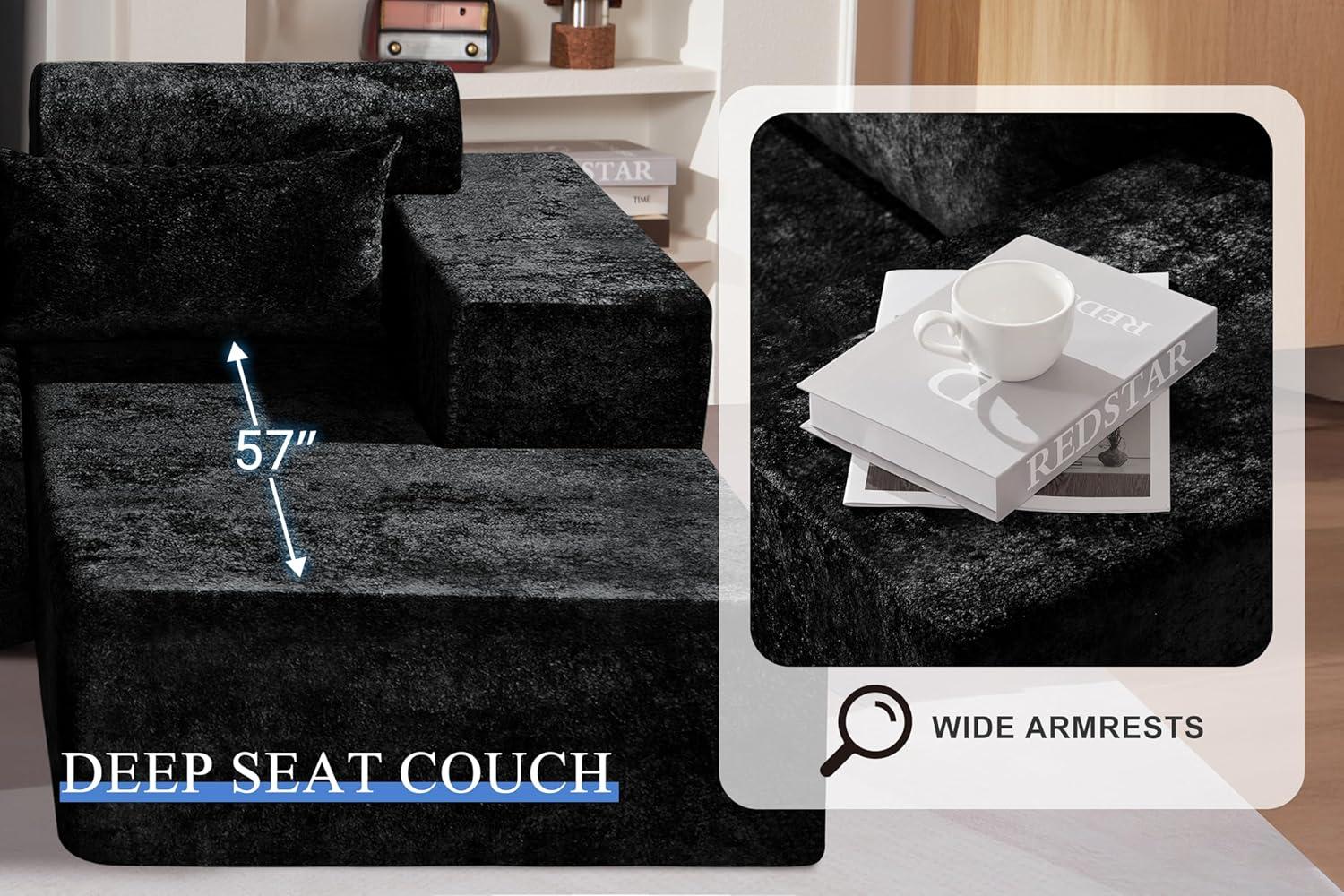
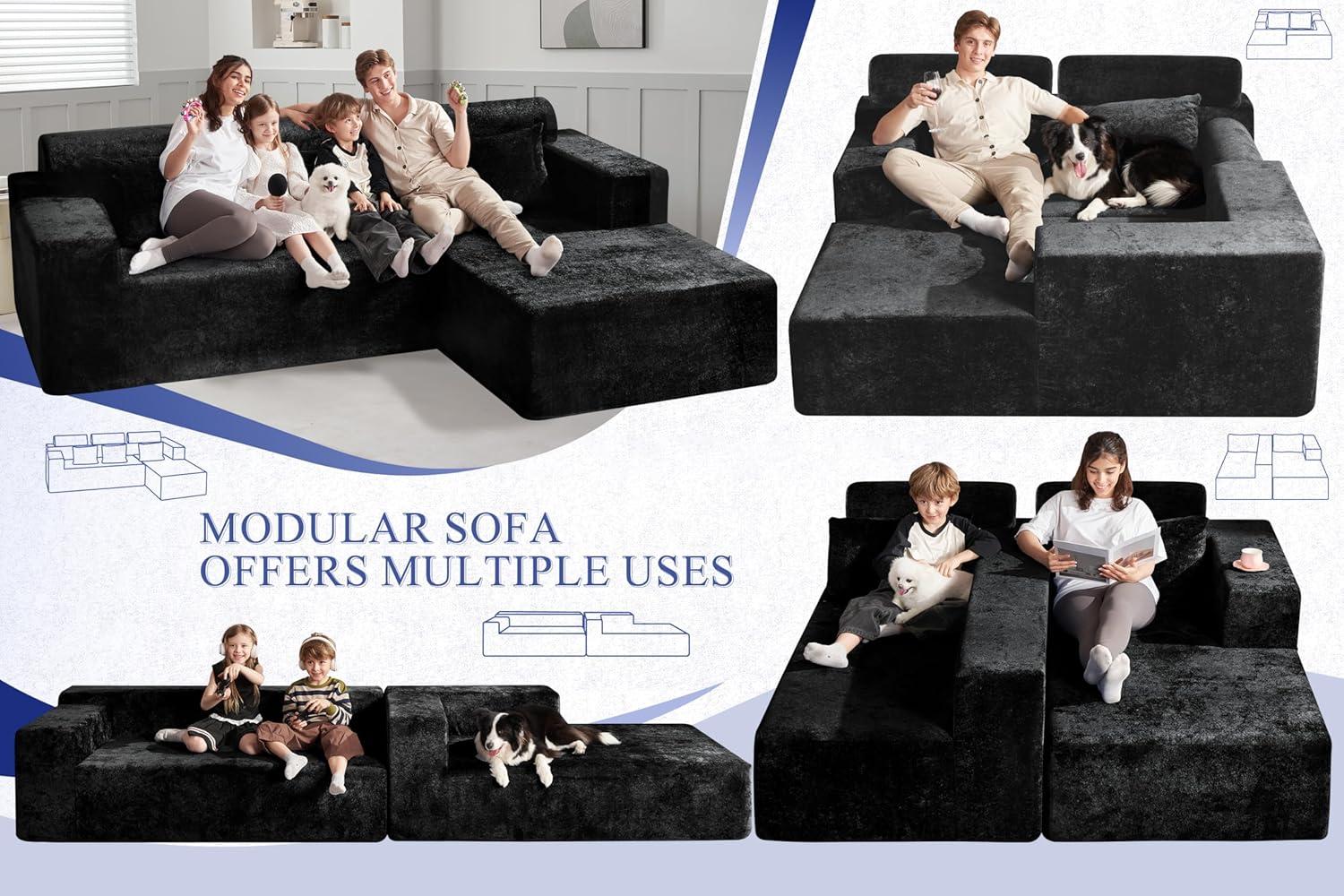
When the delivery shows up, the sectional comes in a couple of compact packages that you carry into the room rather than a single hulking crate. You’ll notice the modules feel dense and require a deliberate lift, but their narrower profiles make it possible to angle them through most doorways and around tight corners.Unwrapping releases a faint factory scent and some surface creases in the fabric; as you pull off the packaging you’ll probably smooth seams with your hands, prod the cushions into place, and give the velvet a few swipes to settle the pile.
The advertised “no assembly” part mostly means there aren’t screws or tools to fuss with — you set each piece down, line them up, and live with small adjustments. The cushions compress back and then refill over the next day or two, so the seating looks a bit flatter at first and then firms up across 48–72 hours. In day‑to‑day movement you’ll find yourself nudging modules to re‑align corners, tucking the chaise closer to the main piece, or sliding a section a few inches to square it against a wall; those little shifts are part of how the set sits in a lived space.
| Stage | Typical observation |
|---|---|
| Right after unboxing | Visible folds in the fabric, cushions somewhat compressed, easy to reposition modules |
| Within 24–48 hours | cushions regain loft, upholstery smooths with gentle smoothing and use |
| Moving modules later | Pieces can be shifted individually; fabric shows hand impressions and seams may need straightening |
When you move modules through the house later — to clean, reconfigure, or replace a rug — they tend to slide more smoothly on hard floors than on dense carpeting, and you may find it easier to lift one corner and pivot rather than drag.Small habits emerge: you straighten the back cushions after guests, press the seams back into place after someone sits heavily, and occasionally pat the seat to redistribute filling. Those adjustments are part of how the sofa settles into daily use rather than visible signs of extra assembly or equipment.
How the Set Settles into the Room
When you live with the HABUTWAY 105 L-Shape Modular Sectional Sofa for a while, it becomes less a new purchase and more a familiar shape in the room’s routines. Over time you notice where people habitually sink into the deep seats, how the distressed velvet quiets its sheen where hands and feet touch, and how its presence nudges the way the space is used in daily routines. In regular household rhythms it picks up small wear and softens into the background of mornings,late nights,and the in-between moments of everyday life. It stays.
As an Amazon Associate I earn from qualifying purchases.