Hydeline Magnum Chair, how it fits your space

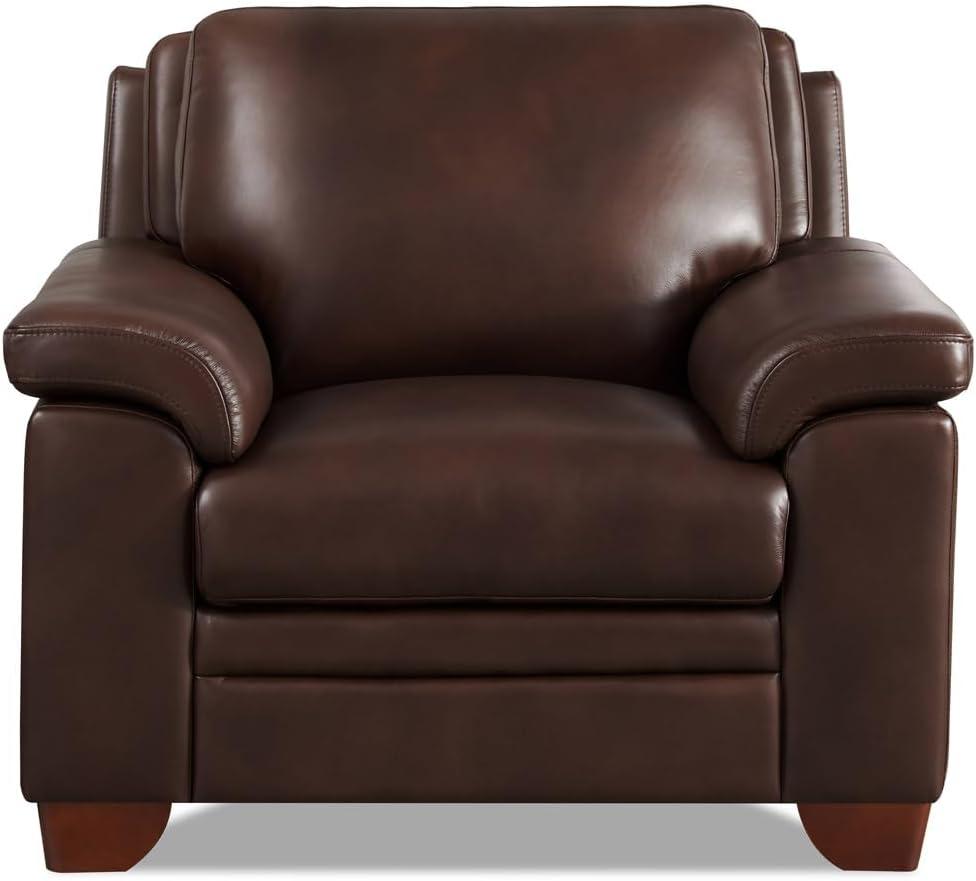
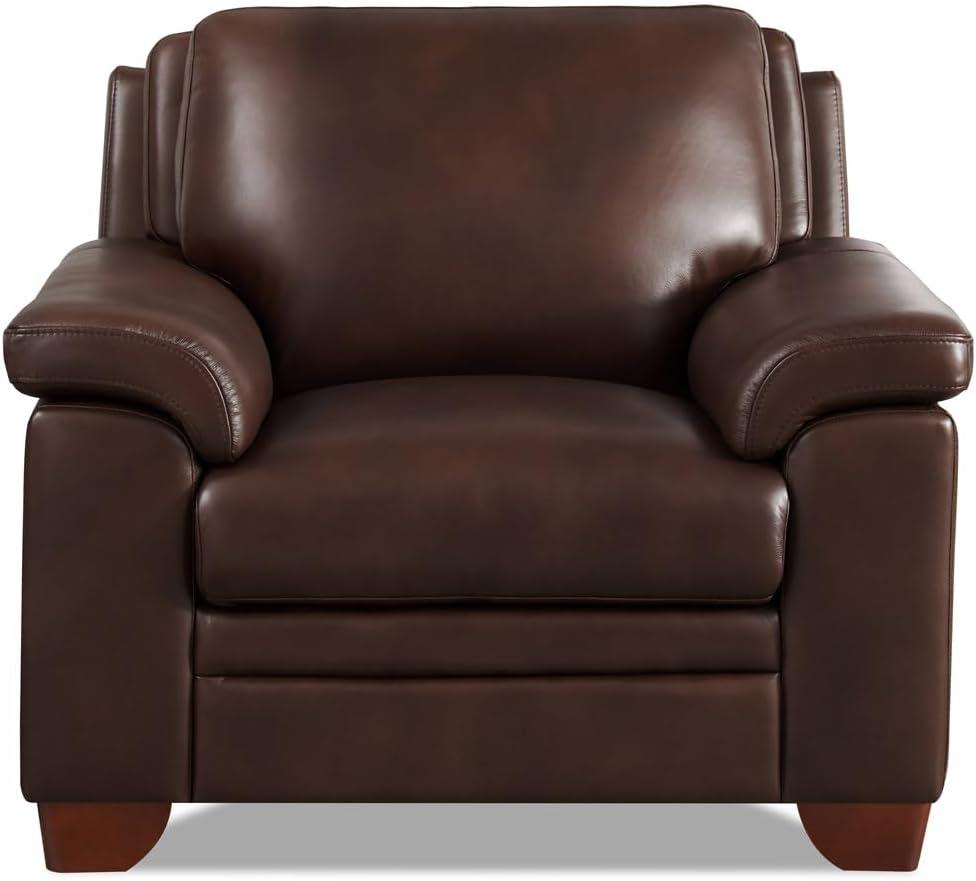
Afternoon light catches the chestnut leather and the piece reads as a calm, deliberate presence in the room. The Hydeline Magnum chair settles into the space with broad, squared arms and a low, generous seat that seems too invite a pause. Reach out and your fingers notice a soft, slightly pebbled top-grain on the seating surfaces while the sides have a smoother, more uniform skin; the seam lines catch the light more than the padding does.Sit and the first give is a slow, memory-foam cradle, followed by a gentle springy push that keeps the cushions from flattening under you. From across the room it has the visual weight of a handbuilt frame—solid, composed—and up close the leather’s texture and the arm’s measured give make it feel quietly lived-in.
When you first see the Hydeline Magnum in chestnut brown,here’s what stands out
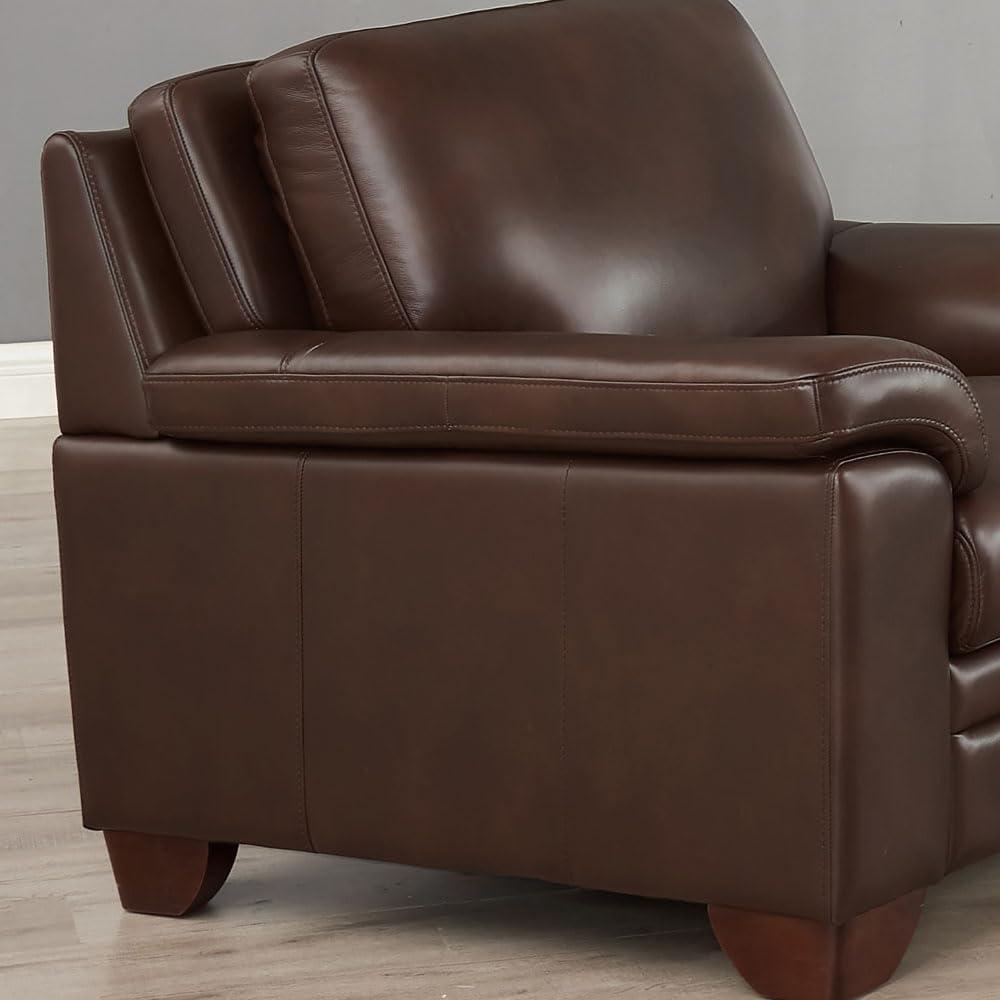
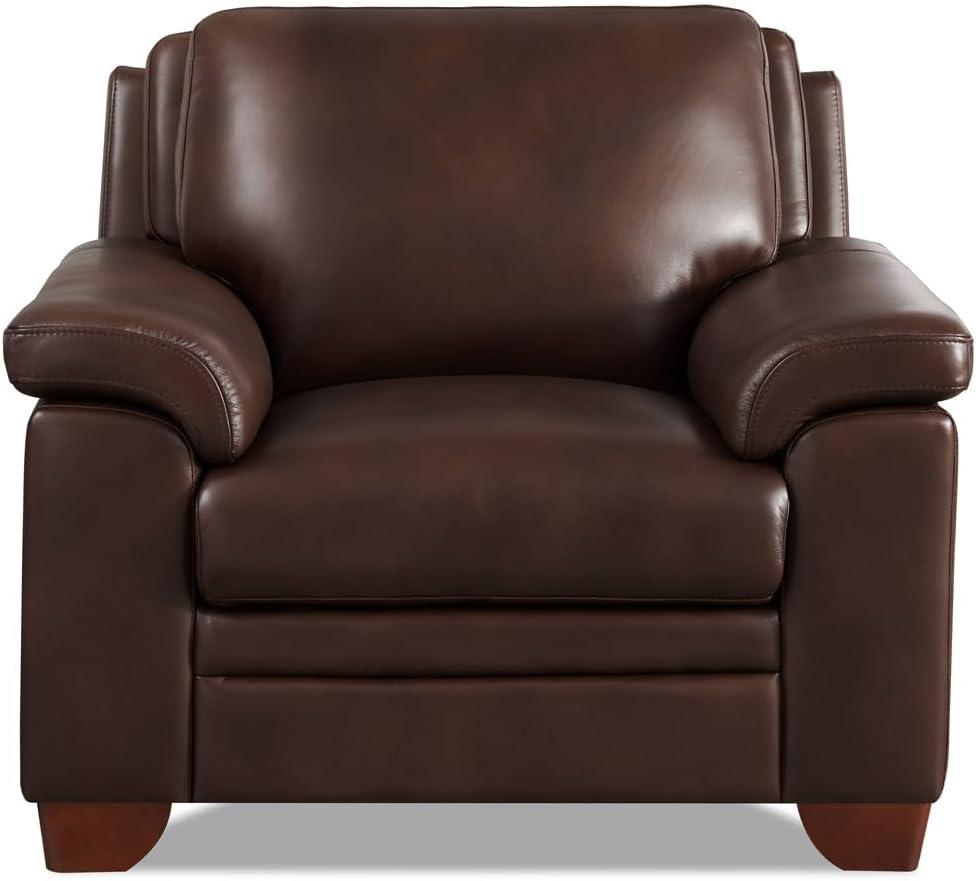
The first thing you notice is the color: a warm chestnut brown that shifts with the light. In luminous rooms the leather shows amber highlights along the curved arms and the front rail; in softer light those same panels read deeper and more even. Seams and stitching catch the eye the way they divide the surface into panels—there’s a regular rythm to them, and the piping along the edges gives the silhouette a quietly defined outline.
When you sit, small, everyday movements become part of the impression. The seat surface softens beneath you and the back cushion hugs in a short, measured way; you find yourself smoothing a crease or nudging the bolster with an unconscious gesture. The outer panels keep a slightly different sheen from the seating area, so as you shift position the contrast becomes more noticeable. the piece presents as composed but lived-in, with the leather responding to touch and time rather than staying rigid.
When you inspect the top grain leather and stitching up close, these details are visible
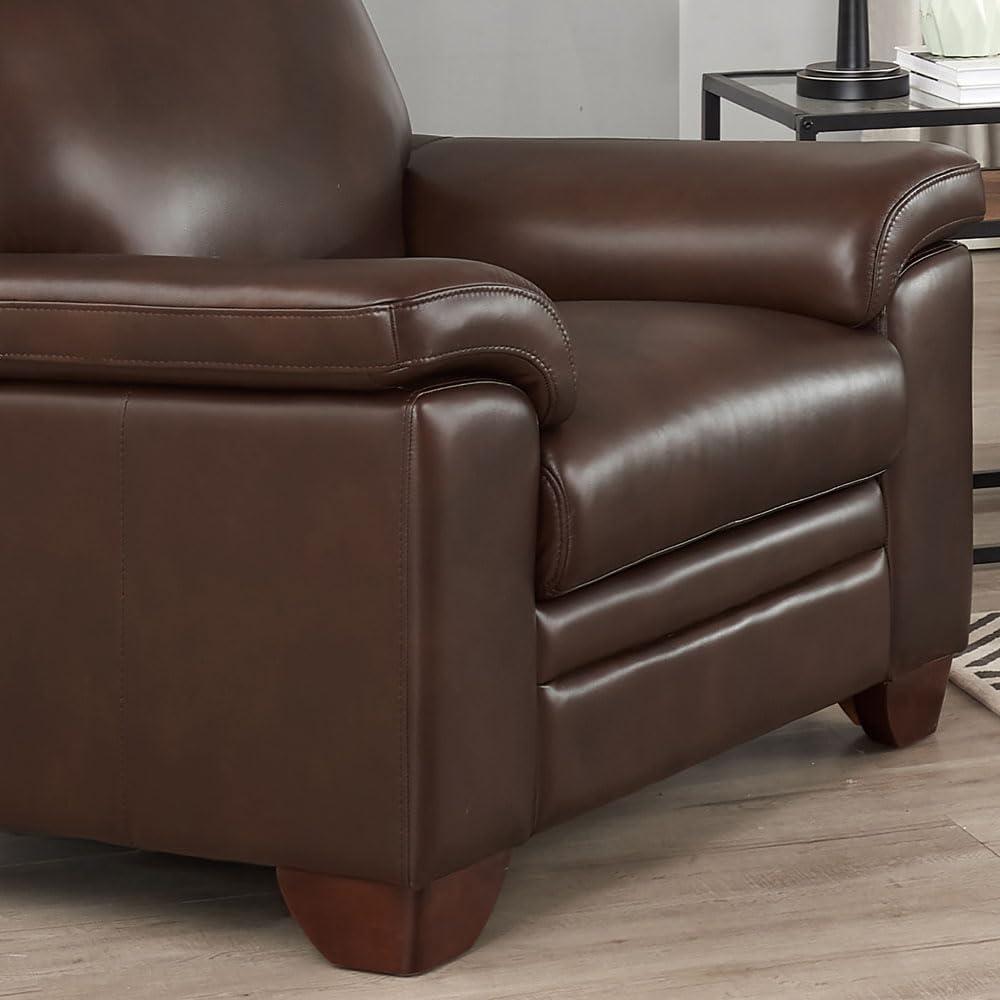
When you bring your face or hand close, the leather reads like a skin that has already started to respond to use. Light pools differently across the seat and the arm—areas you habitually rest your weight or forearms show a softer sheen and thin,radiating crease lines where the hide compresses. If you press and release a cushion the surface gives with a faint returning memory; tiny stretch marks follow the fold and, for some households, faint fingerprints or darker oil spots appear along seams and on the flatter reaches of the arms. The edges where panels meet are slightly darker from burnishing and friction, and the transition from the flat panels to the rounded piping is visible as a subtle change in gloss and grain direction.
Stitching becomes its own texture under inspection. Your fingers catch the thread runs—mostly even, with double rows at the points you smooth most—though at corners and where cushions join you may notice a little puckering or slightly tighter tension. Thread color aligns closely with the leather but reads lighter at a distance, outlining seams when you lean in. Small terminal knots or tucked thread ends show where the stitching starts and stops, and the reinforcement stitching at stress points is plainly denser; when you adjust cushions or shift in the chair those areas stay put while nearby seams flex and settle.
inside the seat: what you find in the memory foam, springs, and padding layers

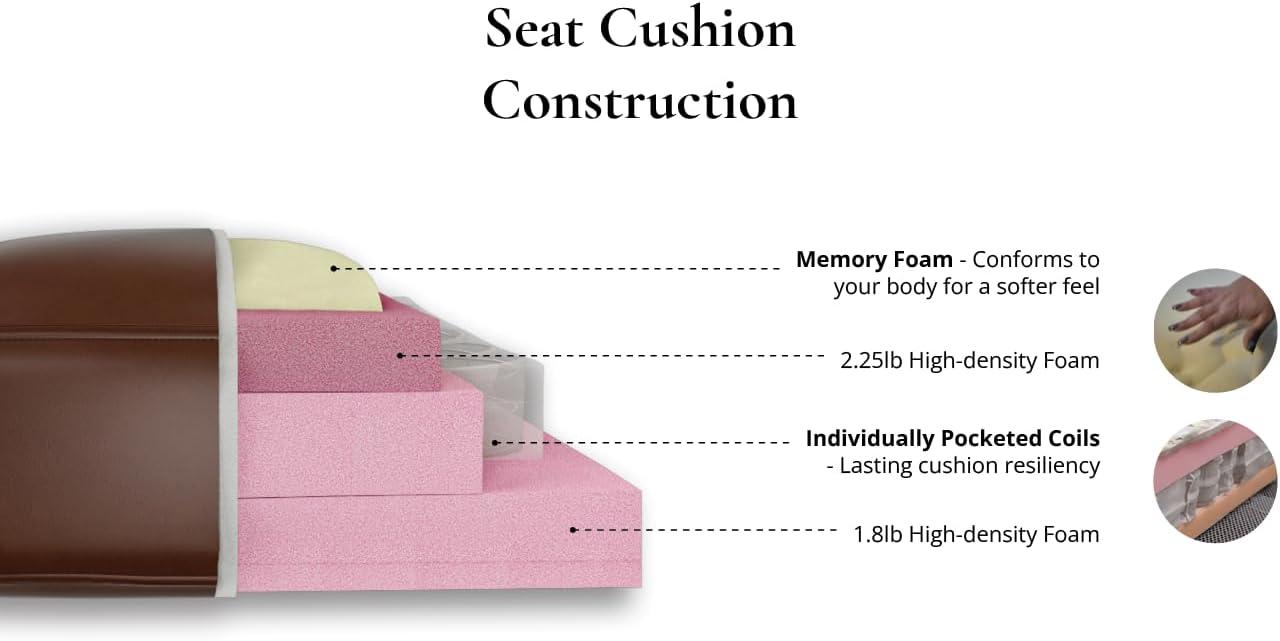
When you sink into the seat, the first thing you notice is the memory foam layer giving way under your weight. It offers a gradual, cushioning descent that molds to the contours of your hips and thighs; as you settle it can feel slightly warm where your body presses most. Beneath that slower-moving foam there’s a firmer padding layer that evens out the pressure and keeps the surface from feeling bumpy, so the transition from soft top layer to the spring system below is smoother than a single cushion might be. You may find yourself smoothing the cover or nudging the cushion back into place as seams shift with each change of position.
Below the padding, the spring unit responds more directly. When you sit squarely the springs compress and offer a gentle rebound; if you lean forward or sit close to the edge they engage noticeably more, giving a livelier pushback. The springs are wrapped or layered so you don’t feel individual coils sharply,though with repeated movement the seat shows the expected give — small creases,a slow return of the memory foam,and a subtle change in how the layers stack. Minor sounds or a soft settling thump can occur when you shift abruptly,and the combined system tends to settle into slightly different contours over hours of use.
| Layer | How it feels while seated |
|---|---|
| Top memory foam | Slow, contouring give; warms and holds shape briefly after you rise |
| Intermediate padding | Buffers pressure, smooths transitions, shows minor creasing with movement |
| Spring unit | Provides rebound and lift; more apparent when you shift or sit near edges |
How it sits in your room: dimensions, seat geometry, and the clearances you’ll need
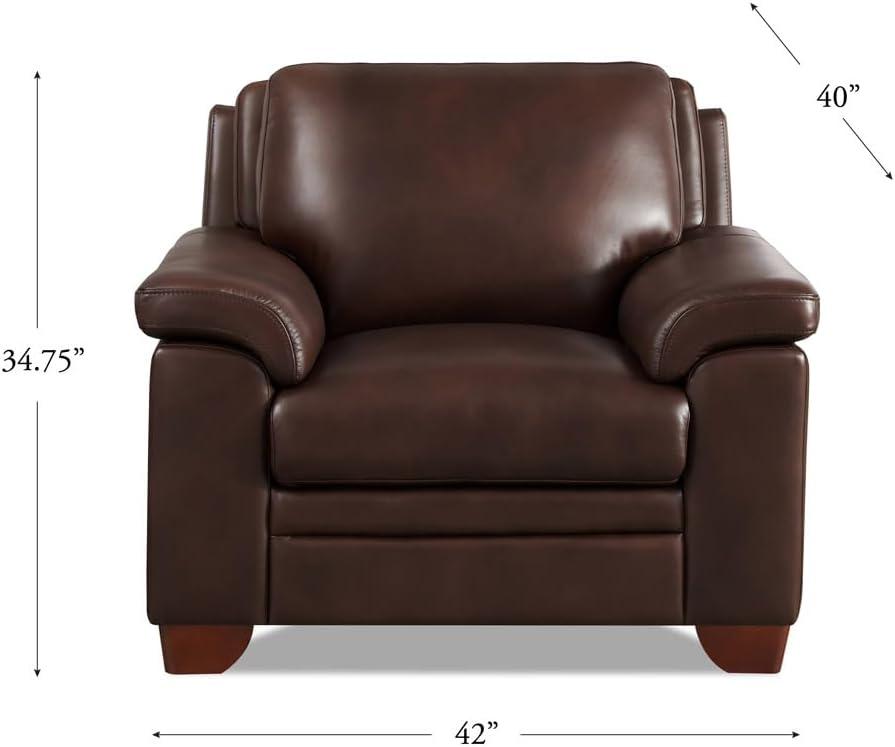
The chair occupies a noticeable footprint: roughly 42 inches wide by 40 inches deep and about 34.75 inches tall. In everyday use that footprint reads as a compact, square block — the arms and front rail create a visible edge when entering a room, while the back cushion rises to about 17 inches above the seat and shifts a bit when someone leans back. The 22‑inch seat depth produces a deep sit that tends to cradle the lower body; with a 19.5‑inch seat height the front edge sits at a common living‑room level, and the 10.5‑inch arm width cuts into usable lateral space on either side of the cushion in subtle ways as people smooth the leather or slide along the seat.
| Measurement | Value | observed room clearance pattern |
|---|---|---|
| Overall footprint | 42″ W × 40″ D × 34.75″ H | Reads as a compact block; often left with a small gap to surrounding pieces |
| Seat depth | 22″ | Feels deep when sat in; people tend to scoot forward or lean back to change posture |
| Seat height | 19.5″ | Matches standard sofa heights; entry/exit motion slightly affected by cushion compression |
| Arm height / width | 25″ / 10.5″ | Creates a visible armplane; arm width reduces lateral seating space |
| Back cushion height | 17″ | Forms the skyline of the piece; the cushion settles and wrinkles with use |
In daily life the chair tends to need a modest gap around it rather than being tucked tight to other furniture. When cushions are smoothed or someone slides to one side the leather briefly pulls and relaxes, which can change how the chair reads against a wall or beside a sofa; seams and small creases appear where hands or bodies make adjustments. For some households a few extra inches in front are left to accommodate reaching past the front rail and to prevent the seat from feeling crowded when someone rises or sits down.
View full specifications and size options
How the chair measures up to your expectations and where it reveals limits in everyday use
In everyday use the chair largely behaves like an object that settles into routine. The leather surface warms with regular contact and develops soft creases where people smooth the cushions and shift position; those small adjustments — tucking the back cushion, nudging a seam — happen naturally after a few sittings. The seat’s combination of memory foam and springs initially feels evenly supportive and then slightly deeper as the foam conforms, so occupants tend to sit a touch lower over time rather than perch on a rigid plane. Armrests and the front rail present as firm contact points; leaning, draping an arm, or rising from the seat produces predictable resistance rather than sudden collapse.
Certain limits reveal themselves in normal, repeated use. The leather surface can attract body oils and light scuffing in the most-contacted zones, so the visible texture changes before other parts show wear. Extended sessions make the foam feel warmer and more molded, which encourages small position shifts instead of prolonged static posture. Areas of the chair that see less contact age differently from the main seating plane, and seams that are rarely smoothed can appear slightly raised beside frequently adjusted cushions. Movement across the seat tends to funnel toward the centre over months rather than staying evenly distributed, and occasional settling in the deepest point is a noted behavior rather than a fault.
| expectation | Observed in everyday use |
|---|---|
| Consistent initial firmness | Firm at first, then gently conforms as memory foam settles |
| Uniform surface appearance | High-contact zones develop creases and light patina sooner |
| Even wear across coverings | Contacted areas show texture change while sides and back remain less affected |
View full specifications, sizes, and available color options
Care and maintenance notes you’ll find in the manual, the assembly steps you encounter, and the box contents
The owner’s manual you unpack with the pieces leans toward practical, short reminders rather than long protocols. You’ll see instructions about wiping spills promptly with a soft, slightly damp cloth and letting the leather air-dry; it notes that the top grain areas and the leather-match panels react differently over time, so you may find yourself smoothing seams or rubbing the armrests more frequently enough than the sides. There’s a brief schedule suggesting you condition the leather at intervals so it doesn’t feel stiff, and a note to avoid abrasive cleaners. The manual also points out that the kiln-dried solid wood frame benefits from a quick hardware check after the first week of use and again after a month—small bolts can feel looser after initial settling and normal movement.
Assembly follows a small number of hands-on stages. When you open the box you’ll notice protective foam and straps around major pieces; the legs are usually packed separately, and the backpiece often arrives strapped to the seat base. The steps you encounter move from laying out parts, attaching legs with the included fasteners and allen key, to aligning and securing the back to the base, then settling and positioning the cushions. It’s common to smooth the leather and press the cushions into place as you tighten fasteners; the springs and memory foam settle a little with the first few sits and the manual reminds you that a short re-tighten of visible connections can follow that initial period.
| Item in the box | Typical count | Notes |
|---|---|---|
| Main frame/base and back | 1 set | Often strapped for protection |
| Seat and back cushions | Varies by piece | Memory foam with sewn covers; you’ll adjust them into place |
| Legs | 4 | Packaged separately, attached by bolts |
| Hardware pack | 1 | Bolts, washers, allen key |
| Protective packing | Multiple | Foam panels and plastic straps |
| Manual & warranty card | 1 | Care notes and basic assembly diagram |
As you live with the piece you’ll notice small, habitual interactions—smoothing a panel after you sit, nudging a cushion into alignment, or checking a screw after a few days—that the manual quietly anticipates. Those incidental movements and the short maintenance notes in the booklet are presented more as routine adjustments than as technical upkeep, so they fold into everyday use rather than into a separate chore.
How the Set Settles Into the Room
you notice, over time, how the Hydeline Magnum top Grain Leather Chair, Chestnut Brown, Memory Foam and Springs Seating quietly finds its place in the flow of the room, the spot people sink into after dinner. In daily routines its comfort reveals itself in small ways: the seat softening where you sit, the leather picking up the light scuffs and sheen of regular use, the give of the foam and springs shifting with the weeks.It becomes part of ordinary household rhythms — a place for a book, a brief rest, a corner the conversation curves toward — familiar more than remarked on. It stays.
As an Amazon Associate I earn from qualifying purchases.