Japandi Small Bedroom Designs: Perfectly Blending Minimalism and Warmth

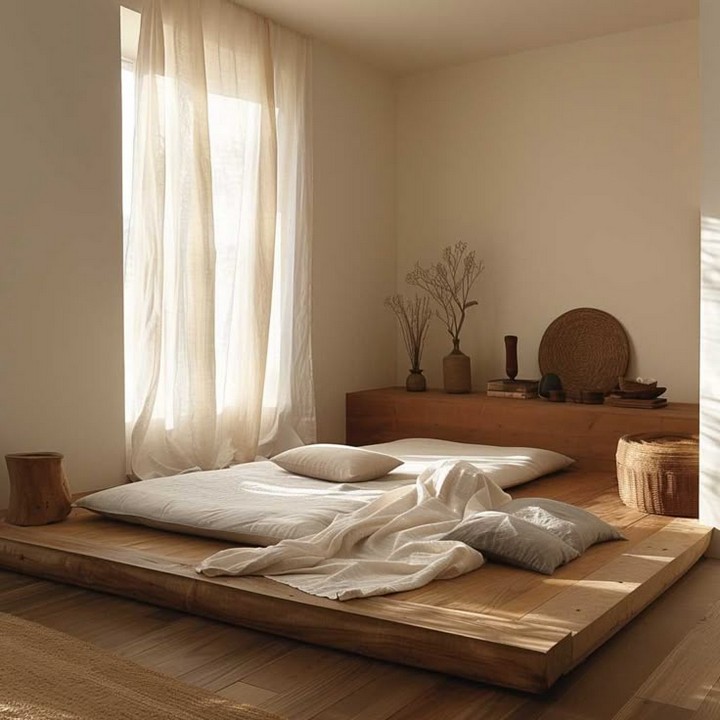
Japandi design has gained popularity as an ideal approach for enhancing small bedroom spaces. This style fuses Japanese minimalist aesthetics with Scandinavian practicality, resulting in rooms that exude tranquility while remaining welcoming—perfect for compact bedrooms. By incorporating the sleek simplicity and soft color schemes from Japanese tradition alongside the cozy, functional elements found in Nordic interiors, Japandi effectively redefines how limited areas can feel both elegant and spacious.
At its core, Japandi unites two design philosophies that share a deep appreciation for simplicity, nature-inspired materials, and artisanal craftsmanship. The Japanese notion of wabi-sabi—finding beauty within imperfection—intertwines gracefully with the Scandinavian hygge, which emphasizes comfort and well-being. Together, these concepts inspire interiors that are both minimalist and cozy, blending usability with aesthetic grace.
Optimizing Small Bedrooms with Japandi Style
Let’s dive into 23 thoughtfully curated Japandi-inspired ideas that can help you create a peaceful and practical refuge, even in tight bedroom spaces.
1. Low-Profile Platform Bed Featuring Concealed Storage
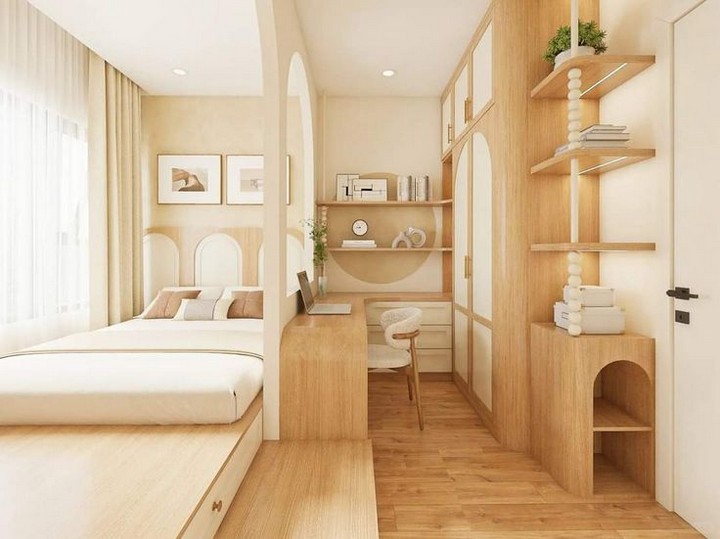
An essential element of Japandi bedrooms is the sleek, floor-level platform bed. For limited spaces, beds equipped with hidden under-bed drawers offer extra storage without taking up additional room. Look for designs crafted from natural woods such as oak or ash, emphasizing minimalist lines. Positioning the bed close to the ground—usually between 12 to 18 inches in height—helps enhance the perception of higher ceilings and airiness.
By eschewing bulky frames or elaborate headboards, these beds free up more usable floor space. Some models also integrate compact side tables into their structure, optimizing functionality while maintaining an uncluttered mood.
2. Floating Wall-Mounted Nightstands
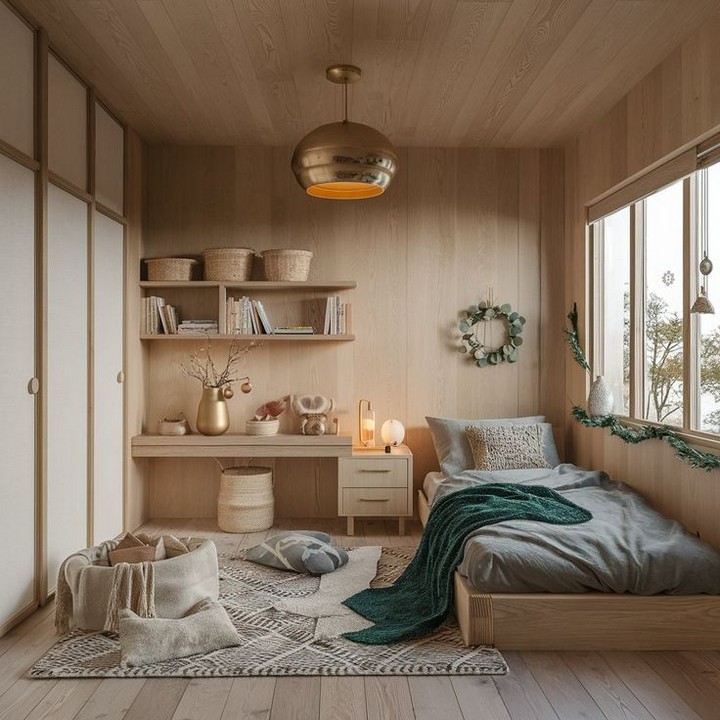
Maximize floor room by installing wall-mounted bedside tables that appear to float. These compact shelves provide essential storage for bedside necessities without the bulk of traditional nightstands. Opt for simple wooden finishes with clean silhouettes and minimal hardware; some might include a discreet drawer for stowing small items.
Place these at a comfortable height relative to the platform bed and leave the space underneath free, which increases the room’s sense of openness. Additional small baskets tucked below can supplement storage harmoniously, embodying Japandi’s balance of function and simplicity.
3. Shoji Screen-Inspired Partition Solutions
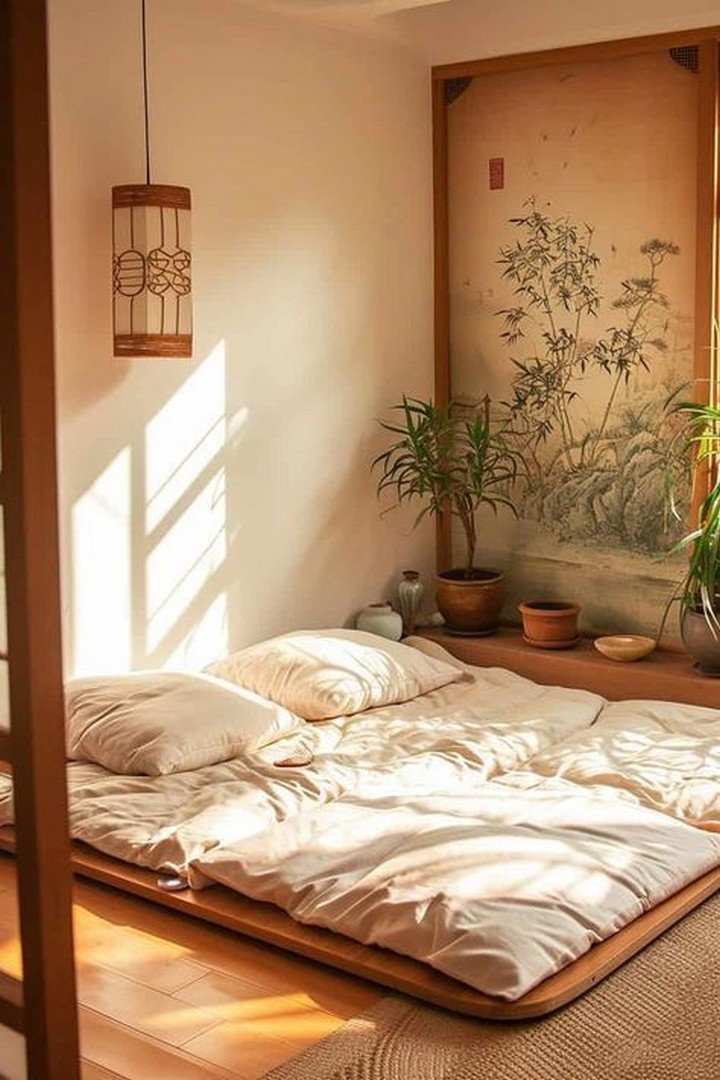
For studio apartments or shared sleeping areas, privacy can be tactfully created using partitions that draw inspiration from traditional Japanese shoji screens. These translucent dividers softly diffuse natural light while dividing zones effectively.
Contemporary versions may use slim black frames paired with white rice paper panels or incorporate geometric wooden latticework. When privacy is not a priority, these folding dividers can be neatly tucked away, making them adaptable for multifunctional small spaces.
4. Lighting Featuring Organic Fibers
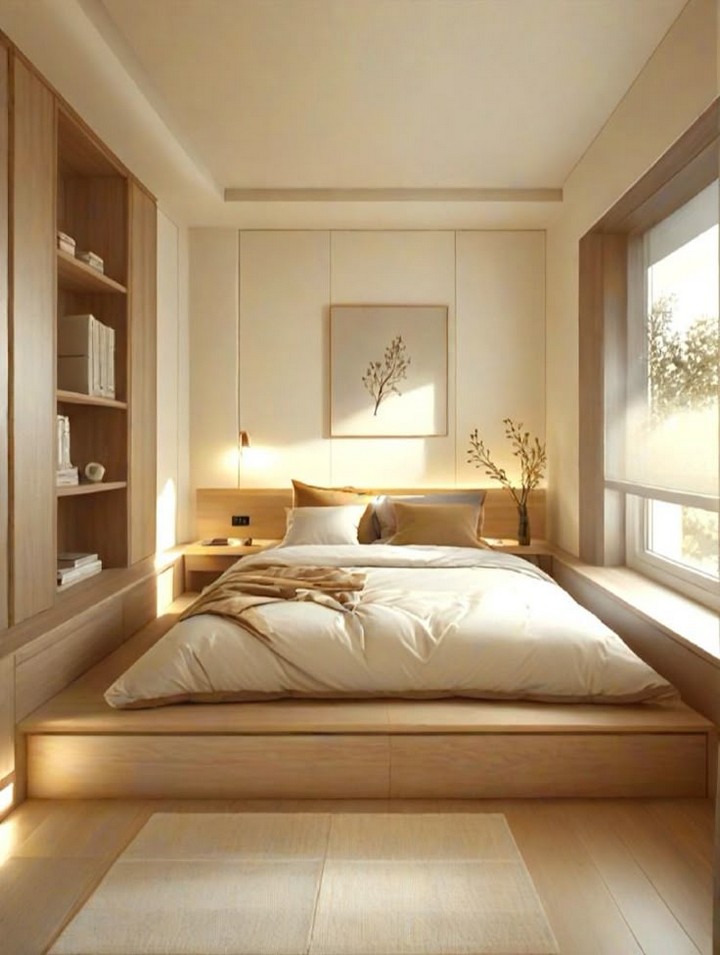
Japandi lighting highlights organic materials such as bamboo, paper, and rattan to lend a serene glow. Consider options like:
- Wall sconces that open up surface space
- Suspended pendant lights that emphasize verticality
- Floor lamps shaded with rice paper, emitting warm ambient illumination
Choosing fixtures with simple yet sculptural forms enhances the room’s ambiance while providing the comforting warmth characteristic of Scandinavian designs.
5. Window Bench with Built-In Storage
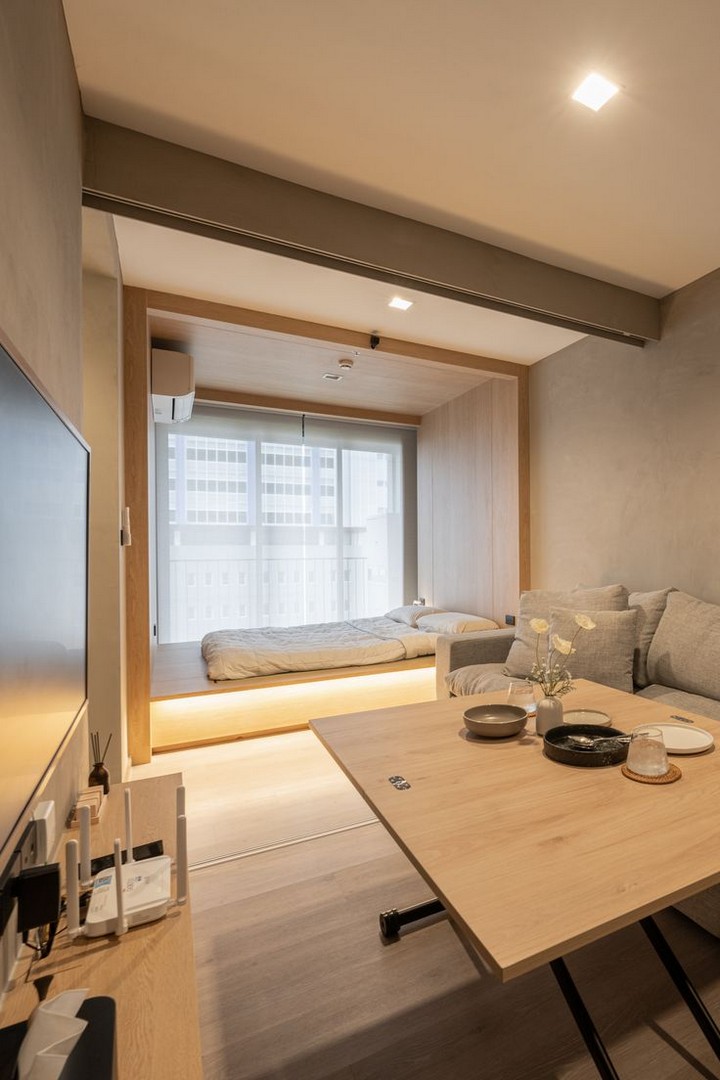
Leverage the space beneath windows by introducing a multifunctional bench that doubles as storage. This cleverly utilizes otherwise overlooked areas and provides a cozy nook for reading or relaxation.
Top the seating with cushions or throws in natural textiles like cotton or linen, and add understated pillows in muted shades to keep the space inviting yet uncluttered.
6. Subtle and Minimalist Wall Finishes
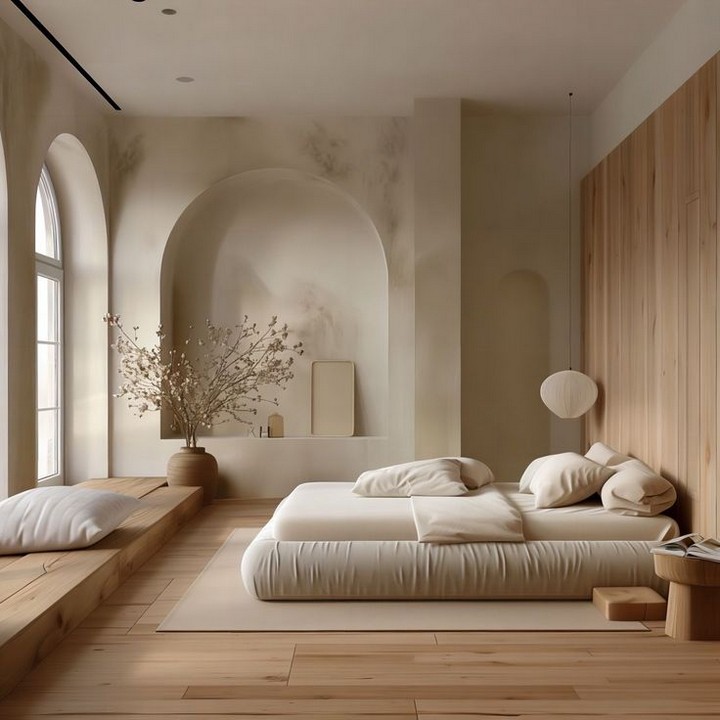
Creating a tranquil backdrop is essential in Japandi design. Consider employing:
- Soft warm white or gentle gray paint finishes
- Textured natural clay plaster for understated depth
- Light wood paneling or shiplap with subtle grain
- Botanical motifs rendered minimally on accent walls
These treatments promote harmony and allow focal furnishings and decor to shine, enhancing light and space perception — particularly vital in compact bedrooms.
7. Dual-Purpose Desk and Vanity
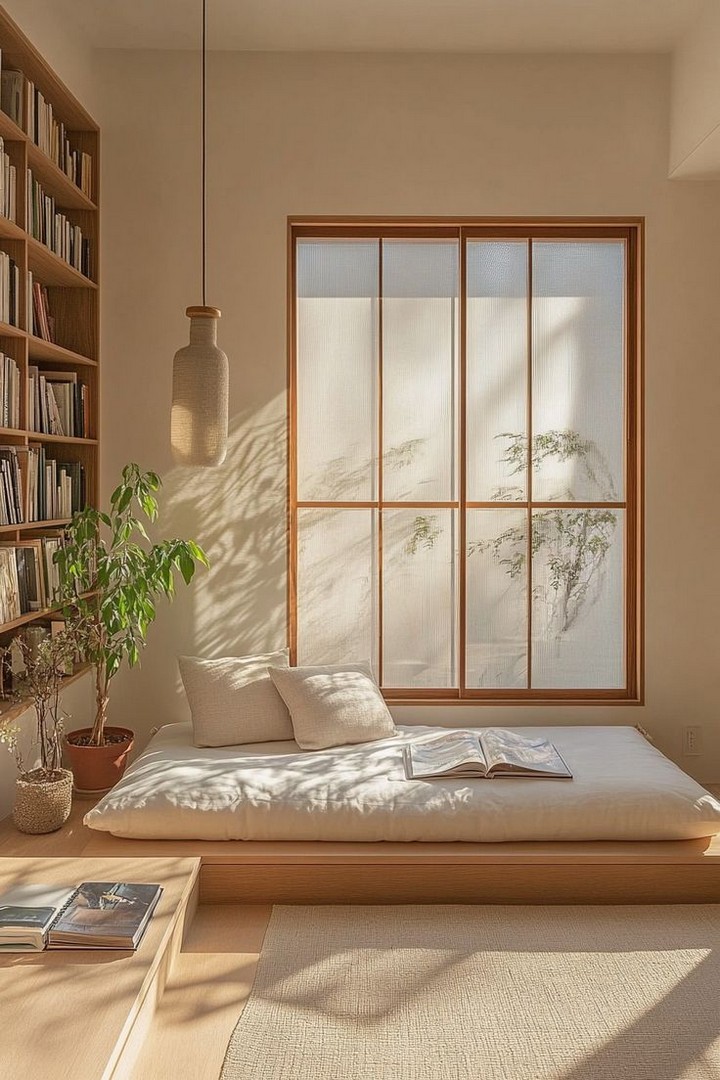
In small bedrooms that serve multiple roles, a minimalist desk convertible into a vanity maximizes utility without crowding the room. Options include:
- Streamlined wooden desks with limited drawer space
- Wall-mounted fold-away tablets that vanish when idle
- Narrow console tables adaptable for different uses
Pair with a compact stool or chair tucked away neatly and a frameless mirror mounted above to maintain the uncluttered Japandi vibe.
8. Layering Neutrals in Textiles for Depth
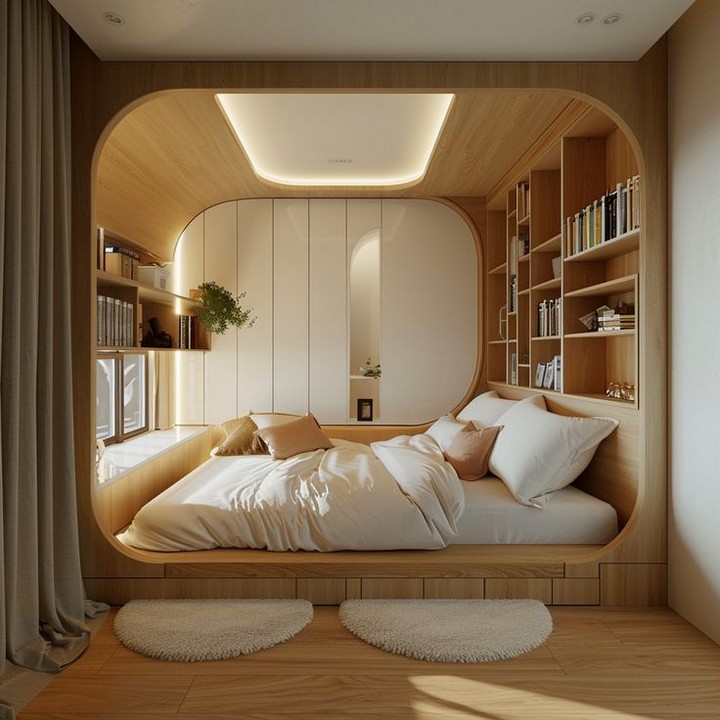
Japandi interiors gain texture and richness through careful layering of textiles in calm, natural hues such as:
- Oatmeal or soft gray linen bedding
- Cotton sheets in matching neutral shades
- A lightweight woolen throw draped at the bed’s foot
- Multiple pillows with varied tactile feels but similar colors
This creates warmth without visual chaos, an important balance in compact bedrooms.
9. Efficient and Streamlined Closet Systems
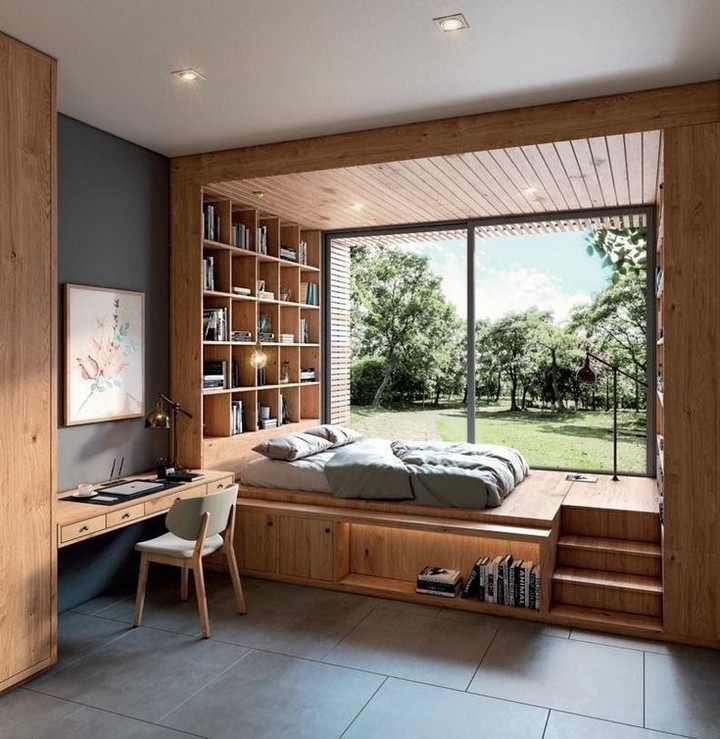
Organized storage is critical in small spaces. Japandi closets emphasize concealed storage and order using:
- Wardrobes with handle-less, sleek doors
- Sliding panels to save swing room
- Open shelves fitted with fabric bins for folded items
- Visible rods with only seasonal garments displayed
This system ensures a tranquil environment free from visual clutter, honoring the Japandi ethos of simplicity and calmness.
10. Incorporating Greenery Thoughtfully
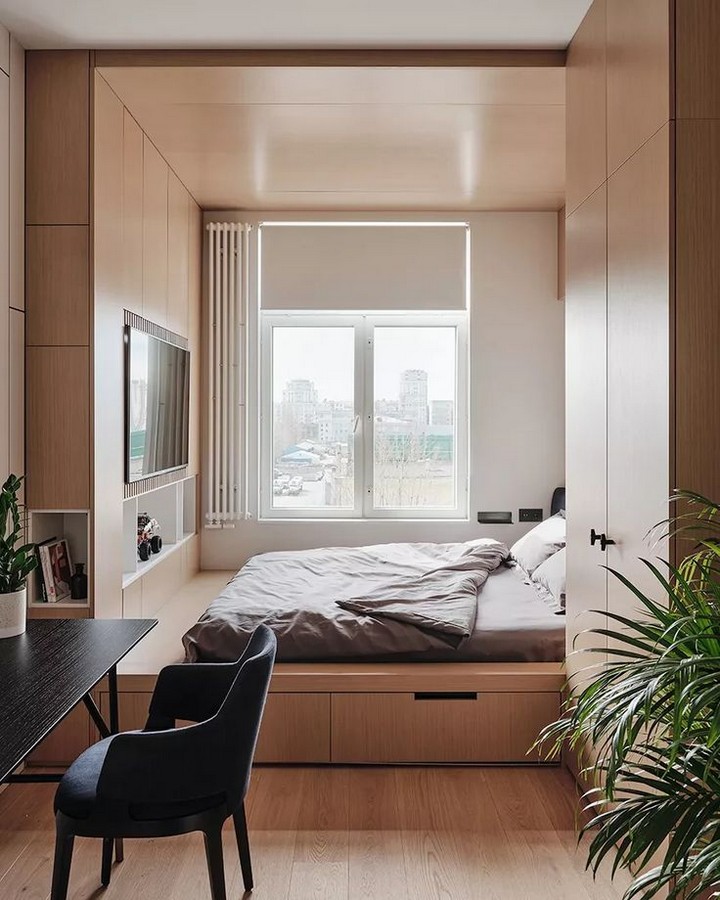
A vital aspect of both Japanese and Scandinavian aesthetics is the integration of nature. In small bedrooms, bring this alive by:
- Placing a singular, sculptural statement plant like a monstera or snake plant
- Arranging petite pots on floating ledges
- Hanging suspension planters to free floor space
- Using air plants in simple ceramic pots for easy upkeep
Determine plants with architectural lines that don’t overwhelm, combined with minimalist containers in materials like concrete or unglazed ceramics, maintaining Japandi’s understated beauty.
11. Discreet Tech Integration
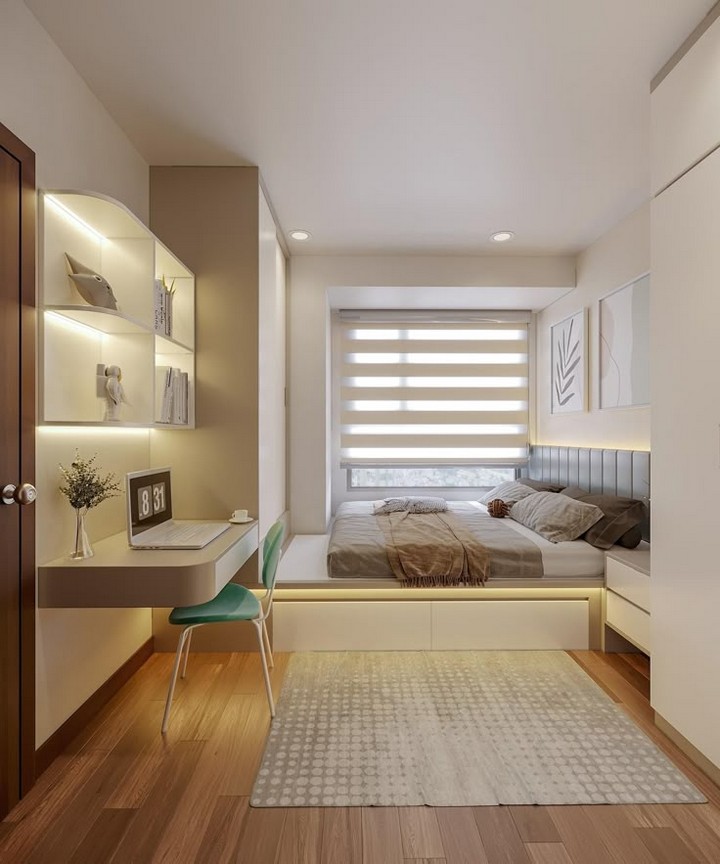
Modern life brings tech into bedrooms, but Japandi style minimizes its visual footprint by incorporating features such as:
- Furniture with integrated charging ports
- Smart cable management to keep wires concealed
- Audio devices and alarms designed with wood finishes
- TV setups that fold away or mount flush to the wall
Maintaining a calm, undistracted atmosphere transforms the bedroom into a serene retreat rather than a workspace offshoot.
12. Custom Vertical Wall Storage
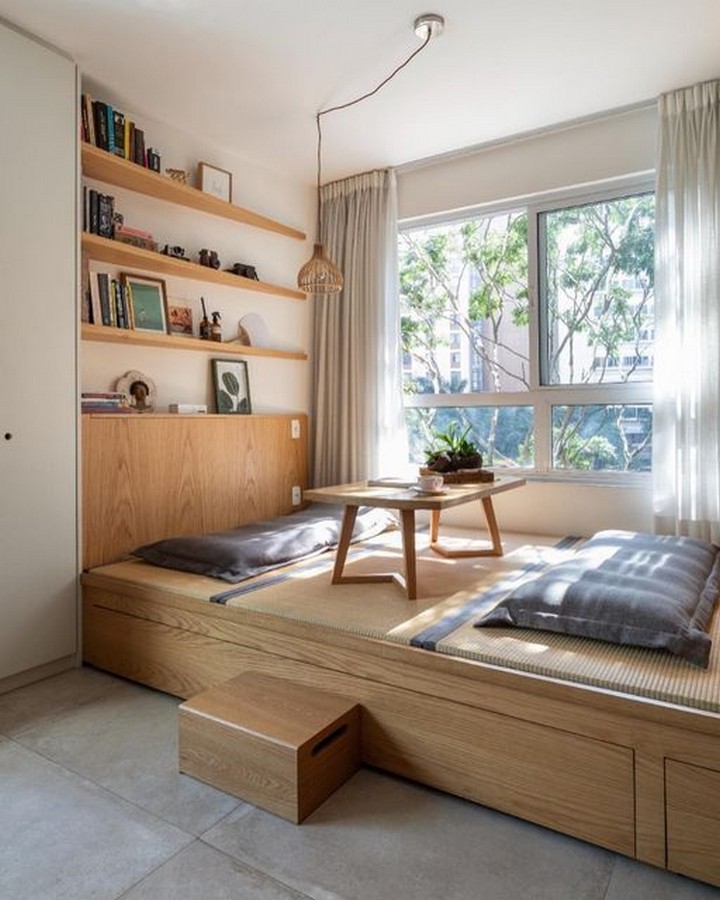
Taking advantage of vertical surfaces with tailored storage solutions helps small bedrooms stay organized, examples include:
- Floating wooden shelves in natural tones
- Modular systems blending open and enclosed compartments
- Wall-mounted peg rails for hanging accessories or clothing
- Built-ins designed for awkward corners
Design these to appear as architectural features with minimal hardware and showcase only select meaningful possessions, aligning with the philosophy to keep only items that spark joy.
13. Natural-Fiber Rugs for Grounding
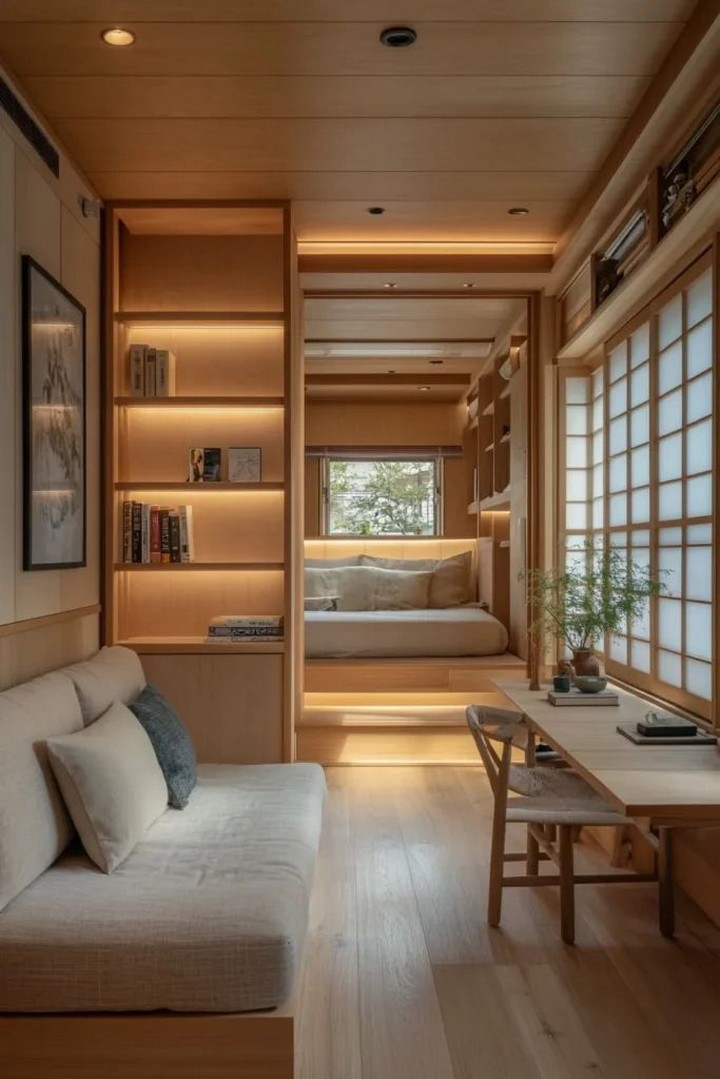
Layering floor coverings made of natural fibers can add warmth and softness without dominating the room. Options include:
- Jute or sisal rugs in earth tones
- Wool rugs featuring modest geometric motifs
- Tatami-style mats for seating nooks
- Muted Swedish rag rugs balancing texture and color
Choose scales that suit the room size—runners often work better in tighter spaces than full-size area rugs. These materials improve acoustic comfort and reinforce Japandi’s organic aesthetic.
14. Practical Artwork and Decor
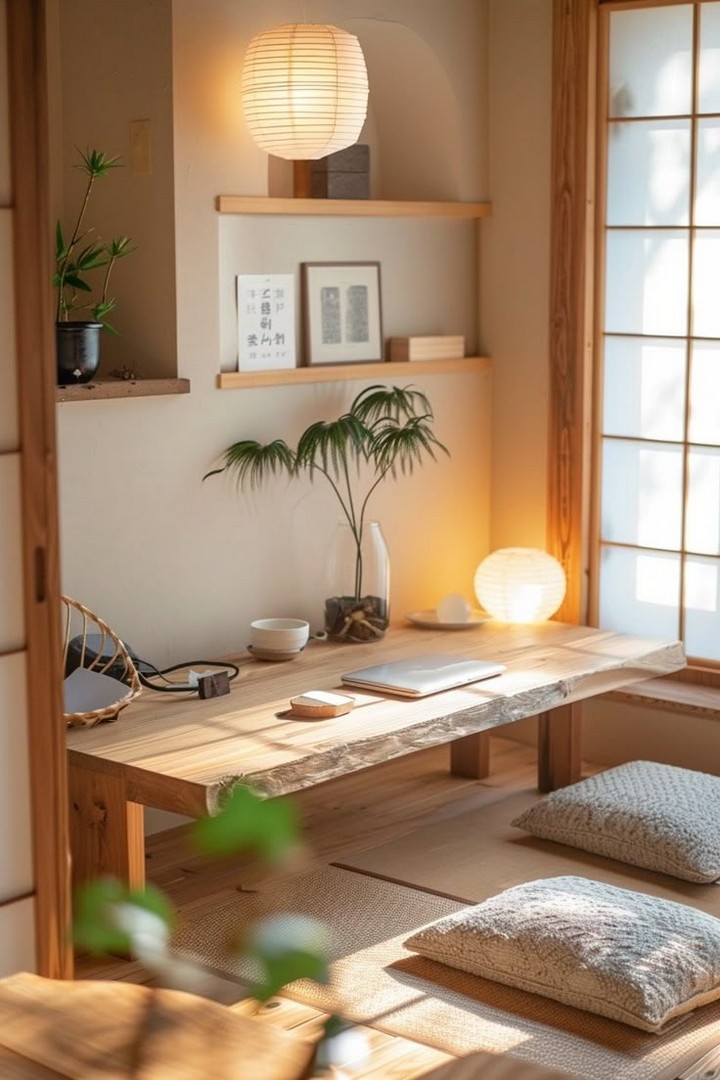
Japandi interiors favor decorative objects that blend function and artistry, such as:
- Hand-thrown ceramic water pitchers beside the bed
- Japan-inspired paper storage boxes
- Wooden trays organizing daily essentials
- Textile hangings that help absorb sound
Every piece serves a dual purpose—beauty and utility—keeping the environment clutter-free yet aesthetically rich.
15. Space-Saving Sliding Doors and Dividers
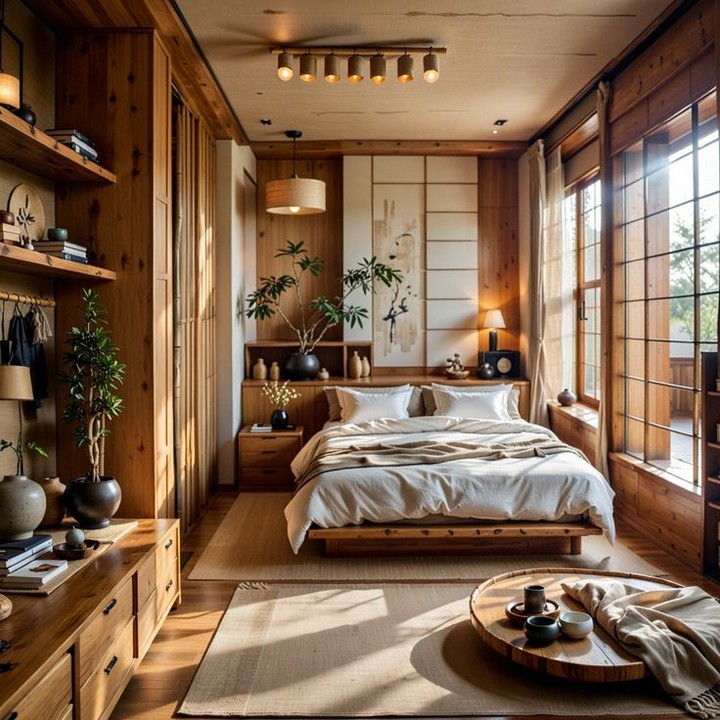
Inspired by traditional Japanese design, sliding and foldable partitions can redefine the flow and utility of a small bedroom:
- Barn-style sliding doors conserving floor space
- Pocket doors that disappear completely into walls
- Fabric panels used as temporary room dividers
- Folding screens adding privacy without permanence
This adaptability allows a single room to serve evolving purposes throughout the day.
16. Dynamic Asymmetrical Layouts
Japandi interiors often ditch formal symmetry in favor of balanced, asymmetrical compositions that feel thoughtfully composed rather than random. Examples might include:
- Off-center platform beds creating space for a work corner
- A prominent bedside cabinet offset by a minimalist shelf on the opposite side
- A prominent plant or lamp balancing furniture weight visually
Such arrangements add spatial interest and personality without needing extra space or decor.
17. A Unified Tone-on-Tone Color Palette
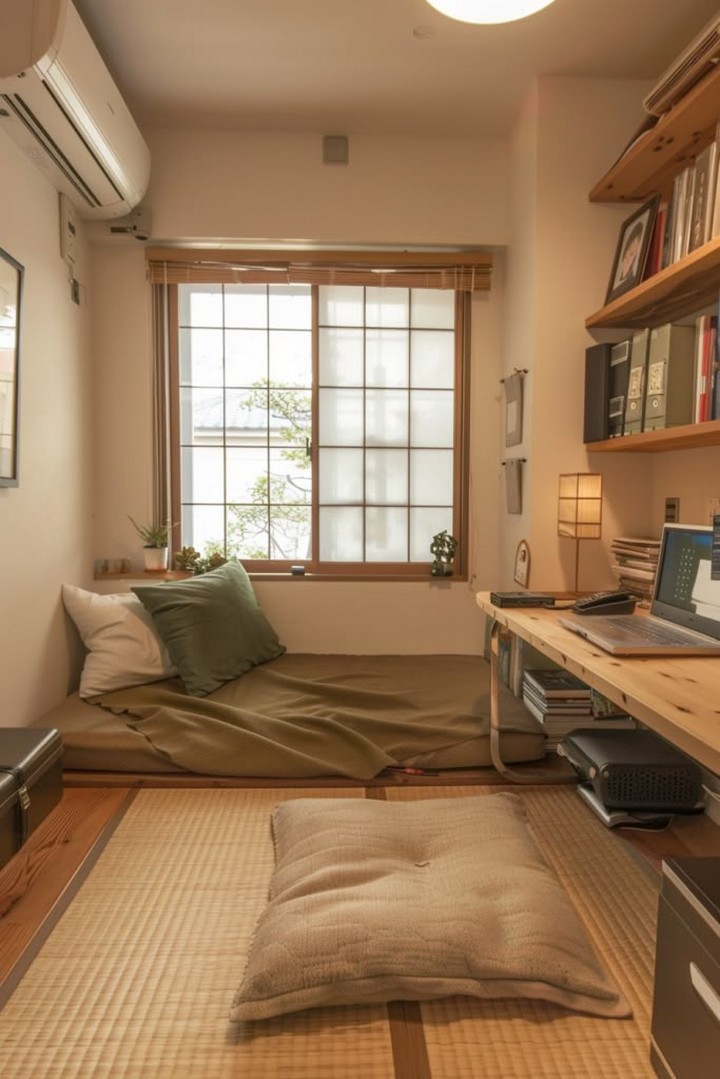
Rather than stark contrasts, Japandi rooms favor subtle color gradations within a narrow spectrum:
- Walls, ceilings, and trims in nuanced variations of a single shade
- Textiles and bedding incorporating gentle tonal patterns
- Accessories echoing deeper or lighter hues from the base palette
This method fosters visual depth while keeping harmony intact. Warm neutrals like sand, taupe, and champagne or cool grays such as dove and fog are popular choices.
18. Functional Headboard Storage
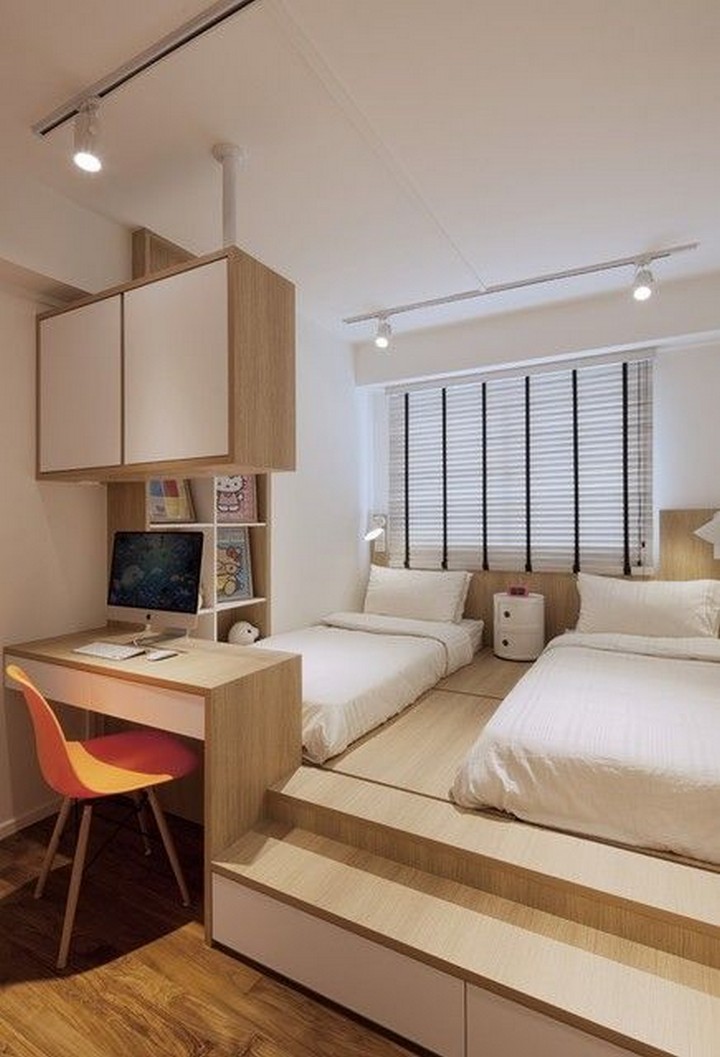
Utilize the wall behind your bed to incorporate discreet storage through:
- Slim floating shelves framing the bed’s backrest
- Shallow push-to-open cabinets for hidden compartments
- Recessed wall niches suited for books or decor
- Wall-mounted task lights to eliminate table lamp requirements
This strategy consolidates storage, reduces floor clutter, and reinforces Japandi’s clean-lined ethos.
19. Contrasting Natural Elements
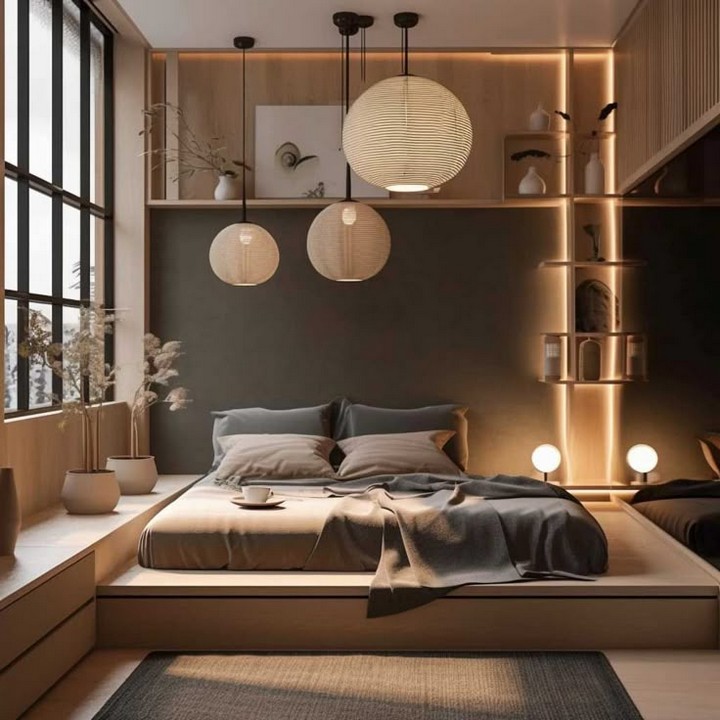
The interplay of complementary natural materials is a hallmark of Japandi interiors. Combinations might include:
- Light timber surfaces contrasted with matte black metals
- Glossy ceramics alongside rugged stone accessories
- Soft linens paired with textured leather or canvas pieces
- Matte finishes balancing limited glossy accents
Such contrasts create tactile depth and invite engagement without visually crowding the room.
20. Elevated, Organized Essential Displays
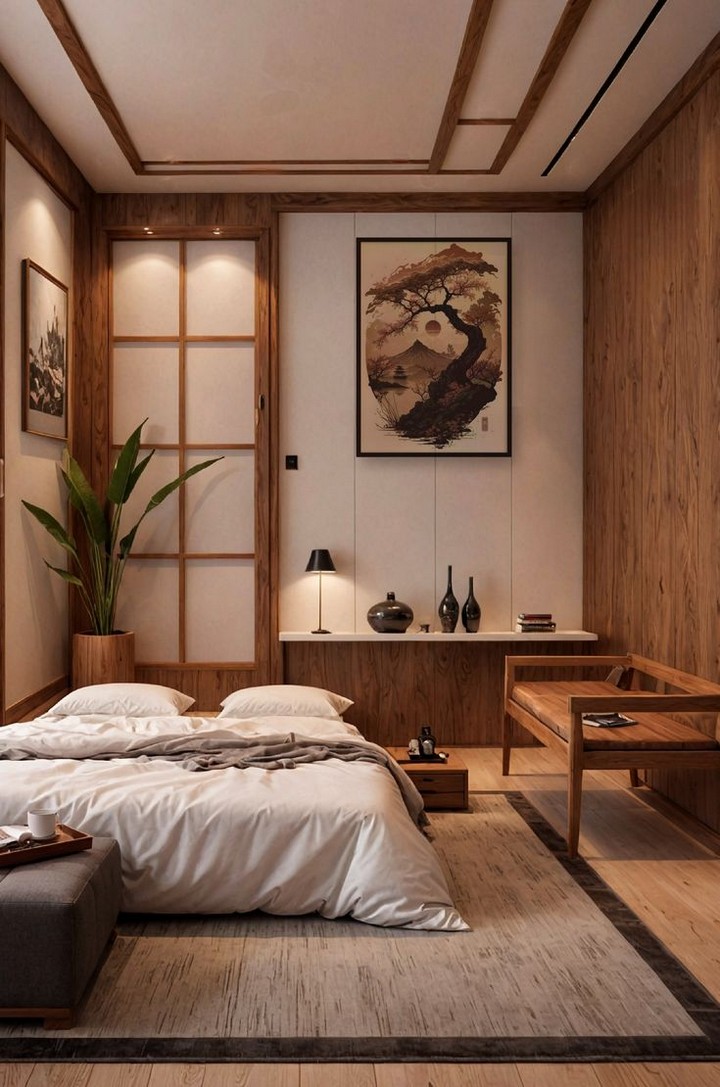
Everyday personal belongings can enhance décor when showcased purposefully using:
- Open shelving displaying curated books and meaningful objects
- Stylish hooks or hangers for prepping the next day’s outfit
- Beautifully crafted boxes and woven baskets that stash clutter
- Wall-mounted organizers designed for jewelry and accessories
Select and arrange items for both beauty and utility, fostering a calm and inviting ambiance.
21. Deliberate Accent Lighting
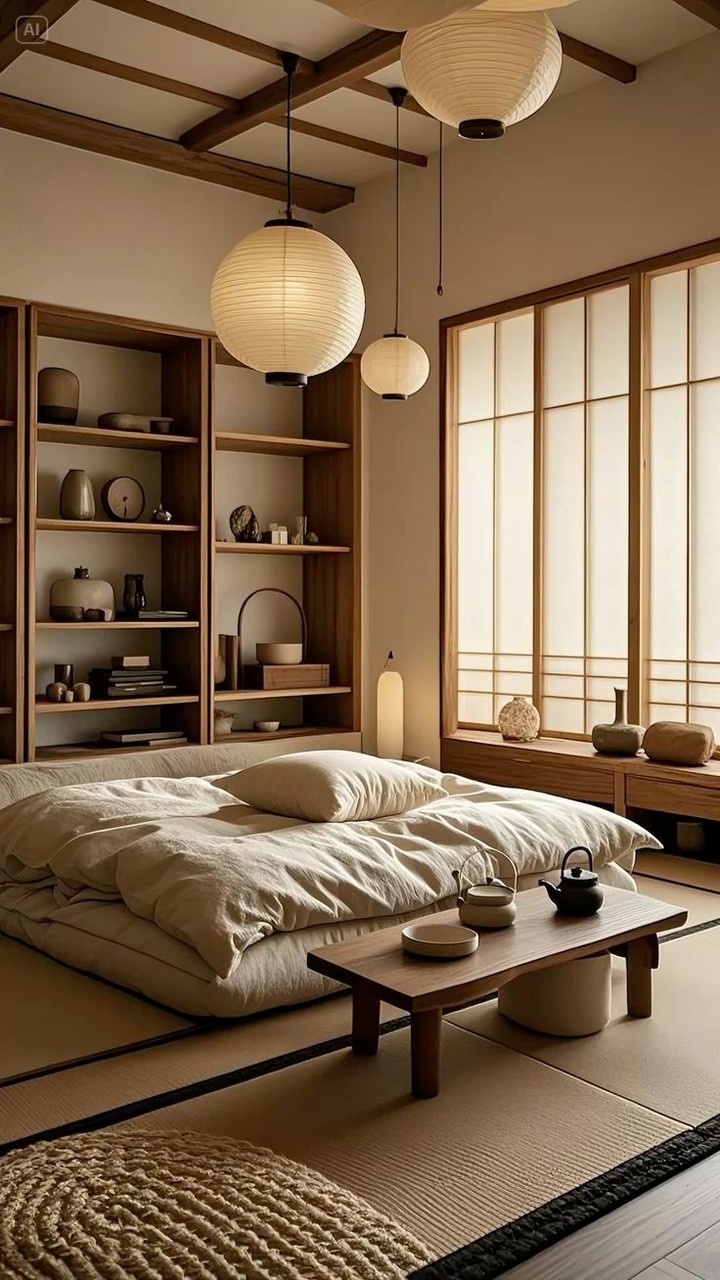
Light plays a pivotal role in shaping atmosphere. Consider incorporating:
- Reading lights built into headboards
- Artwork illumination with directional picture lights
- LED strips concealed under shelves creating ethereal floating effects
- Table lamps with minimalist bases crafted from wood, ceramic, or metal
Such lighting zoning helps small rooms feel layered and inviting while adhering to Japandi’s natural material palette.
22. Textural Variations within a Neutral Framework
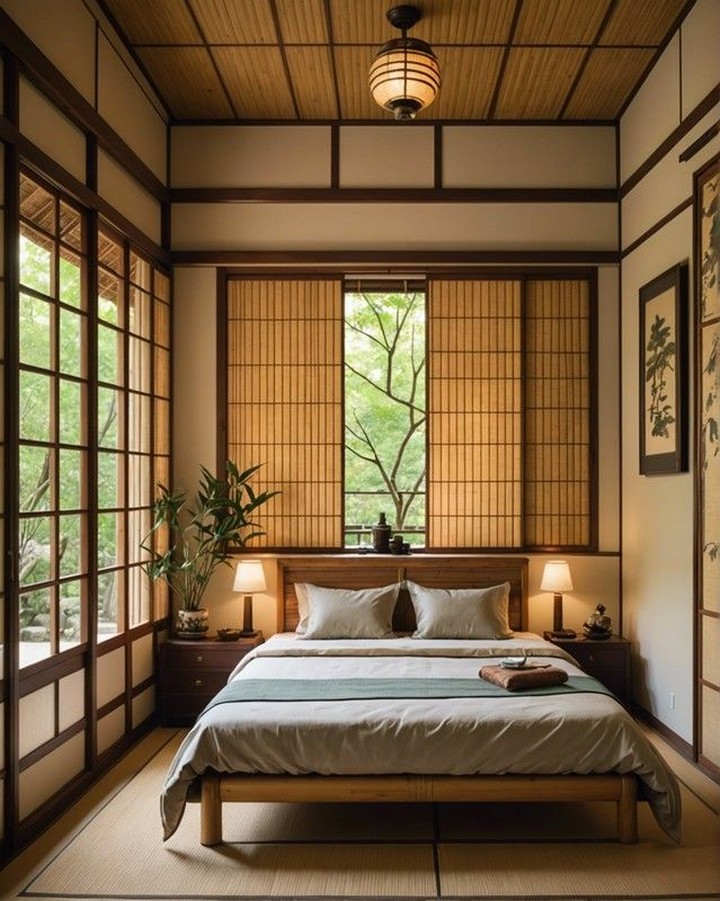
Japandi bedrooms embrace a restrained color story enriched by multiple textures to spark visual and tactile interest:
- Nubby linen bedding contrasting with smooth cotton sheets
- Rough ceramic decor paired with polished wood surfaces
- Handwoven baskets alongside sleek metal detailing
- Soft wool throws over structured furniture frames
This layering deepens character within limited spaces without relying on excess decor.
23. Embracing the Art of Negative Space
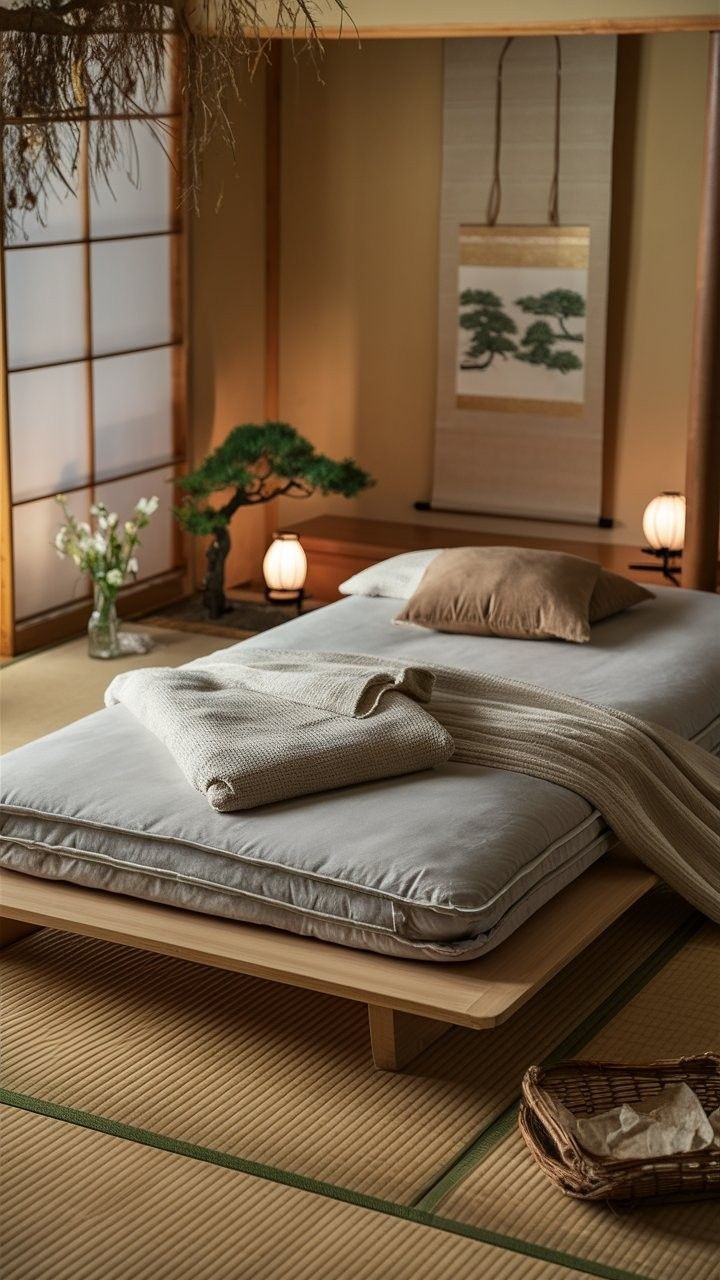
Perhaps the most defining feature of Japandi is a conscious embrace of negative space—the deliberate empty areas that allow visual and mental breathing room. This can manifest as:
- Walls kept mostly bare except for one or two meaningful artworks
- Clear nightstand surfaces holding only essentials
- Uncluttered windowsills framing natural views
- Ample space between furnishings for comfortable movement
Rooted in the Japanese principle of “ma”, or the “meaningful interval,” this thoughtful void creates balance and peace, especially valuable in limited square footage bedrooms.
Creating Calm within Compact Quarters
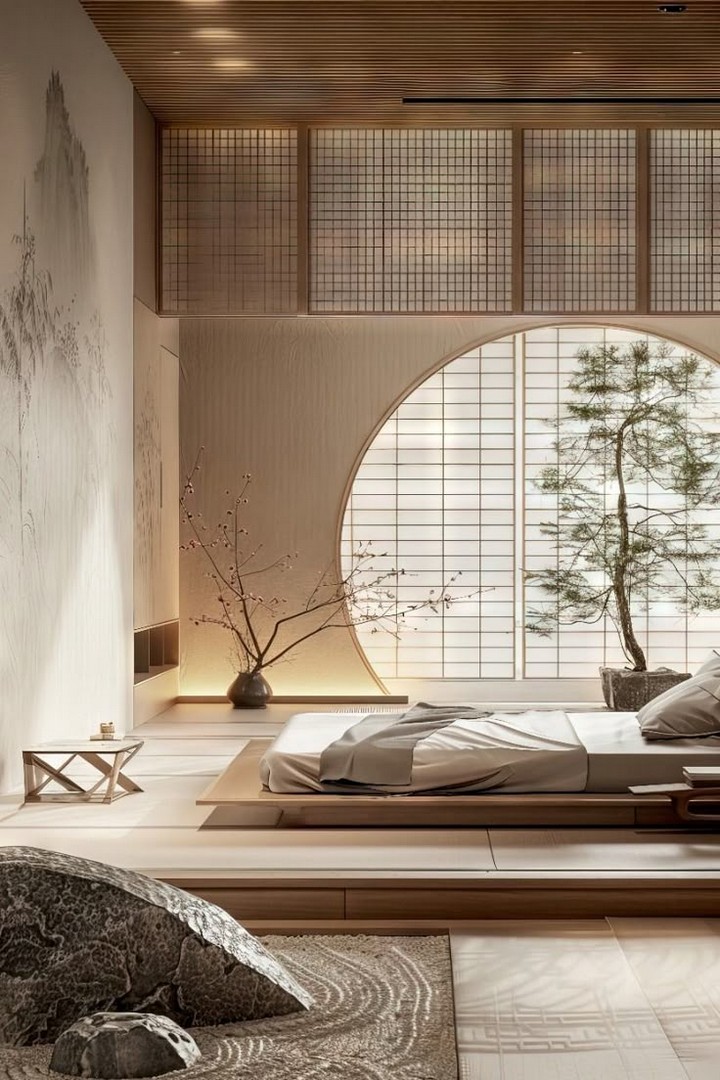
The charm of Japandi style lies in reimagining limited spaces as opportunities for thoughtful living. By merging Japanese minimalism’s refined simplicity and Scandinavian warmth, this design philosophy doesn’t just work around bedroom size constraints—it thrives within them.
A well-executed Japandi bedroom becomes a private sanctuary designed for relaxation, mindfulness, and connection with nature. In an era saturated with noise and distraction, embracing this style may be the ideal path to cultivating a restful and nurturing personal environment.
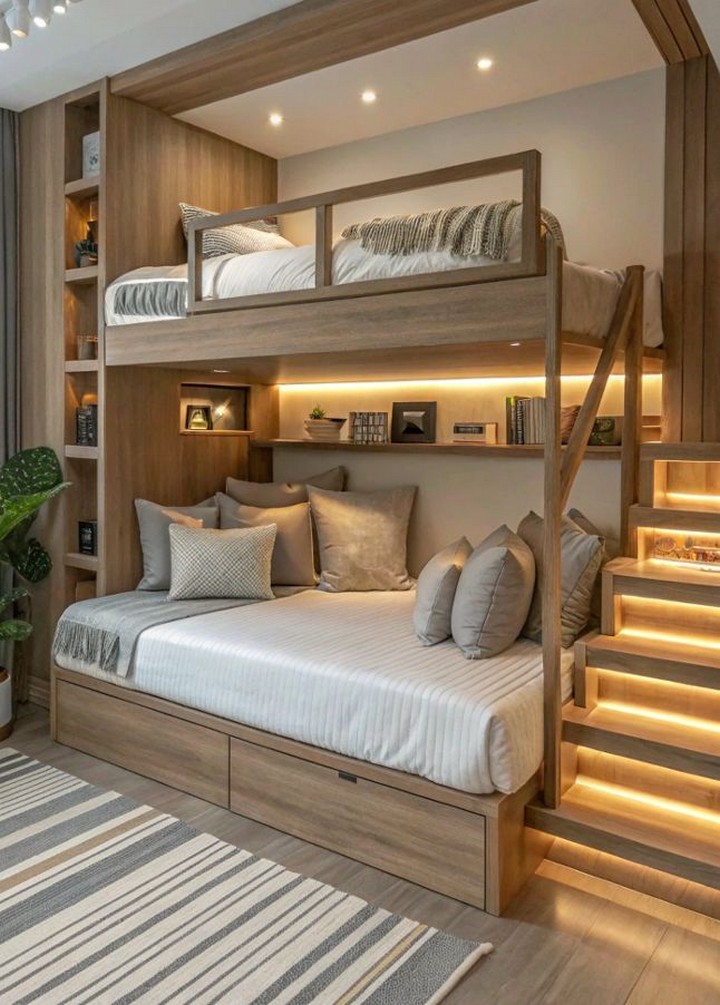
Which Japandi principles resonate most with your bedroom transformation goals? Have you tried integrating any of these strategies in your own home? Share your journey in the comments or connect with us for tailored recommendations to bring Japandi harmony into your personal space. For further inspiration on optimizing compact living, explore our articles on minimalist storage ideas and natural material schemes tailored for small rooms.
Ready to design your Japandi bedroom sanctuary? Embark on your transformation today! 🏡✨
As an Amazon Associate I earn from qualifying purchases.