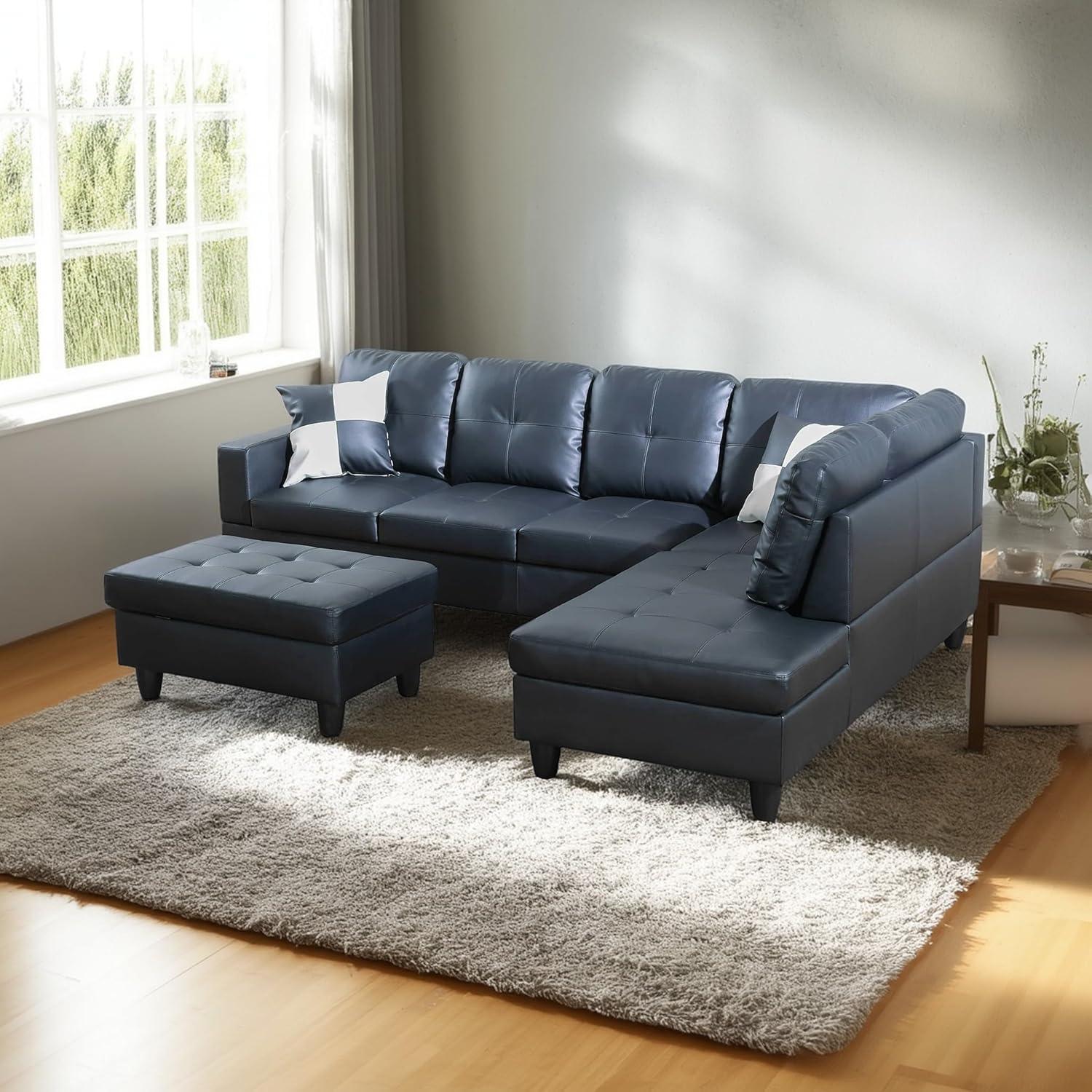
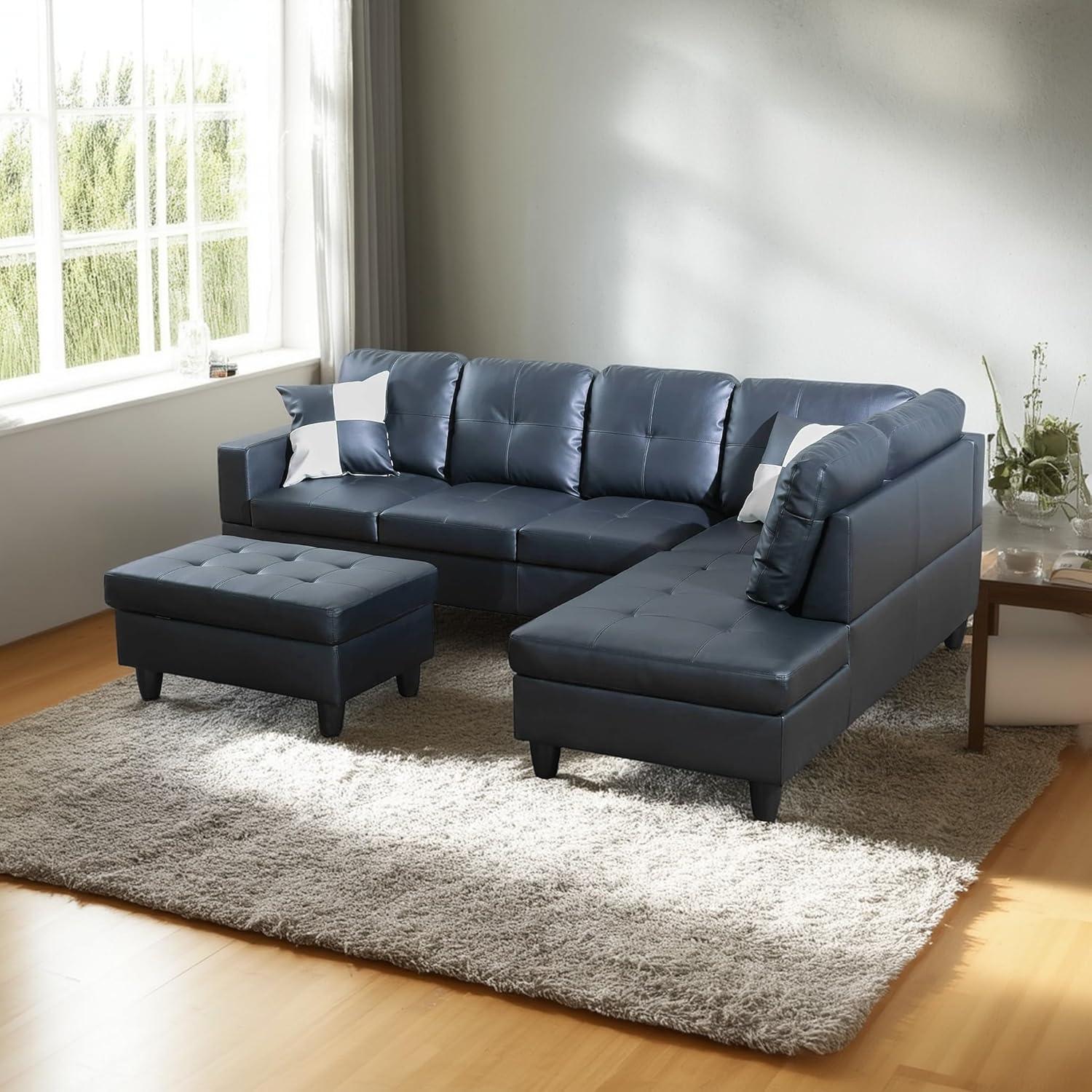
Leather L-Shape Sectional 103″ Button Tufted, in your room

You notice it before you sit: the L-shaped silhouette in black leather pulling light into soft highlights across its button‑tufted back. The box, labeled simply “Leather L‑Shape sectional sofa Set,” promised a three‑piece arrangement, and in the room the chaise and ottoman settle into a grounded, horizontal presence rather than a floating cluster. Slide your hand over the upholstery and the surface feels cool with a slight grain; press into the seat and a dense, immediate give answers back, not a slow sink. The ottoman lifts on a quiet hinge to reveal storage, a small practical detail that interrupts the formality of the tufting. From where you stand, its proportions read as a intentional room anchor — substantial without looming, textured where you expect smoothness, already reshaping how the space moves.
Your first impression and unboxing experience with the leather L Shape sectional
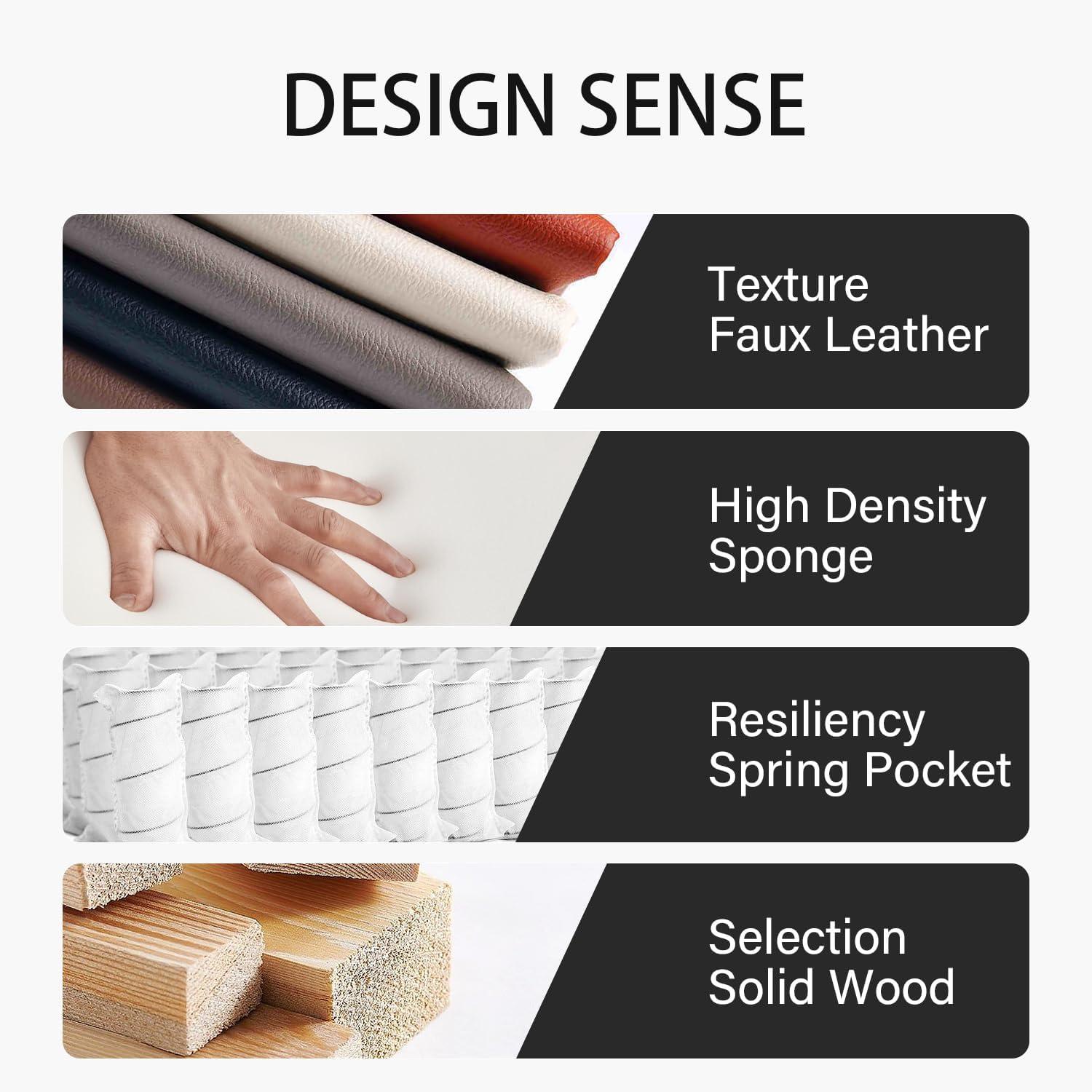
Your first impression arrives before the pieces are even out of the boxes. The three cartons are long and flat; the labels name each component so you can tell which is the chaise, the main seat, and the ottoman. Once you slit the tape, layers of plastic and foam come away in a predictable stack—cardboard corners, thick bubble wrap around the tufted surface, and a small hardware bag tucked into a corner. There’s a faint synthetic-leather scent at first that tends to fade after an hour or two of air; the button tufting appears pressed flat from shipping, and you’ll find yourself smoothing seams and patting cushions as the foam and springs begin to rebound. The ottoman lid is wrapped separately, its hinges and interior lining folded flat inside the same box.
Handling feels situational. Each carton has noticeable heft—enough that you’ll likely shift pieces one at a time and angle them through doorways. The included instructions and a single Allen key sit with the screws; legs and small plastic feet are grouped in labeled bags. As you assemble (mostly just screwing on feet and aligning modules), the upholstery sometimes creases where it was folded; those creases tend to relax after you reposition cushions and press the seams. Small habits crop up: you smooth the chaise’s backrest with the heel of your hand, nudge the ottoman into place, and check that the storage lid opens without catching on packaging remnants.
| Packaged Piece | Package Size (in) | Gross weight (lbs) |
|---|---|---|
| Main Section (C) | 66.5 × 29.5 × 12.5 | 92.00 |
| secondary Section (S) | 66.5 × 29.5 × 12.5 | 92.00 |
| Ottoman (O) | 28.5 × 18.5 × 12.5 | 28.75 |
What the button tufting, stitched seams and underlying frame tell you about the build
When you run your hand across the seat and back, the button tufting reads less like decoration and more like a construction choice. The dimples hold the top layer of upholstery against the cushion beneath, so when you sit and shift your weight the surface tugs back into place instead of bunching up.Pressing into a tufted section, you can feel the foam compress around the anchor points; the result is a slightly interrupted give under your palm rather than a smooth, continuous sink. Over repeated use you may notice the fabric around the buttons lies flatter in some spots and slightly raised in others, a sign that those anchors are doing the job of keeping filling and cover aligned as you adjust or smooth the cushions.
the stitched seams frame those tufts and tell their own story when you move across the sofa. Seams that run along the edges keep the profile crisp as you slide onto the chaise or pull the ottoman closer; you’ll see the lines stay straight even after you reposition a cushion. In places you press often the threads can sit a bit tighter and the surface can pucker subtly,revealing where tension is concentrated when the cushions settle. As for the structure beneath, the sofa’s responses — a firm initial support, a measured give when you settle in, and only minor flex at joins — show how the internal framework and connections share loads. When you shift from seat to seat you can sometimes hear or feel the frame settle at the connection points; the way the unit returns to shape after people rise off it hints at how well the inner supports keep the cushions aligned over time.
| Observed cue | What it shows while you use it |
|---|---|
| Button tufting that stays centered | Upholstery and fill are being held in place, so the surface resists bunching when you move |
| Close, straight stitched seams | Edges remain defined as you slide cushions; tension points reveal where the fabric is pulled taut |
| Slight frame settling or faint creak when you shift | Load-bearing connections are engaging under use and distributing weight across supports |
Where you sit and how the cushions respond when you settle into the chaise or pull up the ottoman
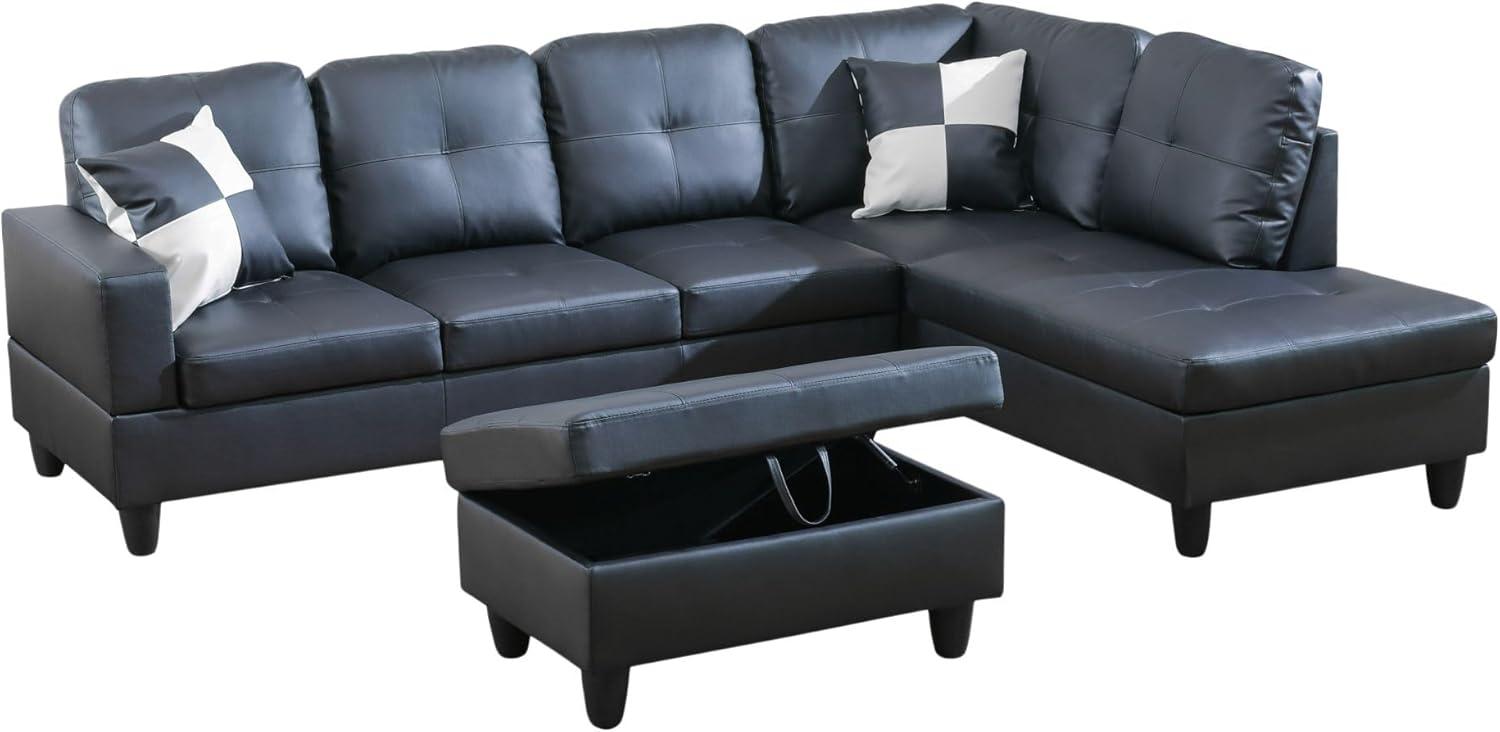
When you settle into the chaise, the first thing you notice is the soft give under your hips—the surface yields enough that your body settles in rather than perches on top. Your legs find a shallow cradle and the tufted back receives you with a measured pushback: not a hard stop, but a steady resistance that asks you to shift slightly to find a comfortable spot. As you move, seams nudge against your clothing and the cushion edges compress a bit where you rest your weight; you’ll often reach down to smooth the surface or rotate a pillow without really thinking about it.
Pulling the ottoman in front of you changes the geometry of that response.When you lay your feet on the top, the padding compresses more broadly than the chaise cushion, spreading pressure across the surface and rebounding a little slower when you lift your legs. The top can feel a touch firmer near the hinge or storage area, so your feet may settle into the center while the edges stay a bit raised. Small adjustments—sliding the ottoman a hair closer, nudging a seam flat—are common as the pieces settle together and the cushions redistribute under your weight.
How the couch’s proportions map onto your living space and what moving it through doorways looks like
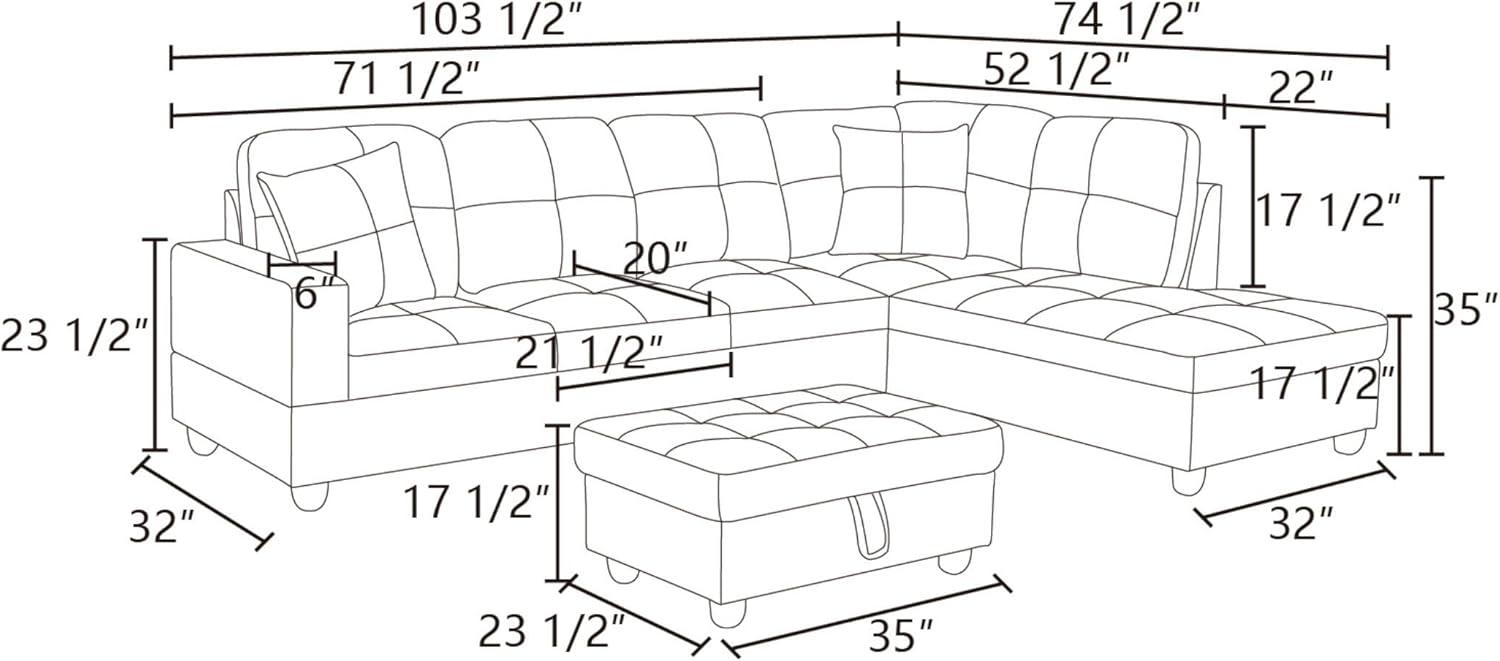
The sectional assembles into an L where each of the two main modules runs roughly the same length along its back, and the ottoman sits as a separate, lower block. In a lived setting the two main pieces create a clear footprint that projects in two directions from the corner; the chaise leg extends the seating line without adding much extra height. When the pieces are nudged into position, cushions are often shifted and seams smoothed as installers push and pivot the modules to sit flush against walls and each other, so the finished outline can vary a little from initial measurements.
Delivery and doorway movement happen in two distinct phases: boxed transport and final placement as separate modules. The cartons are long and flat rather than bulky, and the weight listed for packaged pieces means the boxes are substantial but not excessively heavy. In practice, the long, slim crates tend to slide through most interior doorways when turned on edge; narrower hallways or tight stair landings can make the maneuver feel fiddly, and the pieces sometimes need a slight angle to clear frames. During these moments fabric gets briefly smoothed, cushions shifted aside, and the legs or connection points are checked for catching on trim or thresholds.
| component | package Size (in) | Gross Weight (lbs) |
|---|---|---|
| Main module (each) | 66.5 × 29.5 × 12.5 | 92.00 |
| Ottoman | 28.5 × 18.5 × 12.5 | 28.75 |
Once inside the room,the two main modules meet at a corner connection and the ottoman slides into place; the overall silhouette can feel roomier or tighter depending on small shifts during that final nudging. For some households, those last adjustments—re-centering cushions, aligning the tufting, checking that the chaise sits square—are part of settling the sofa into its intended footprint.
View full specifications and size options
How this sectional measures up to your expectations and the practical limits you might face in real rooms
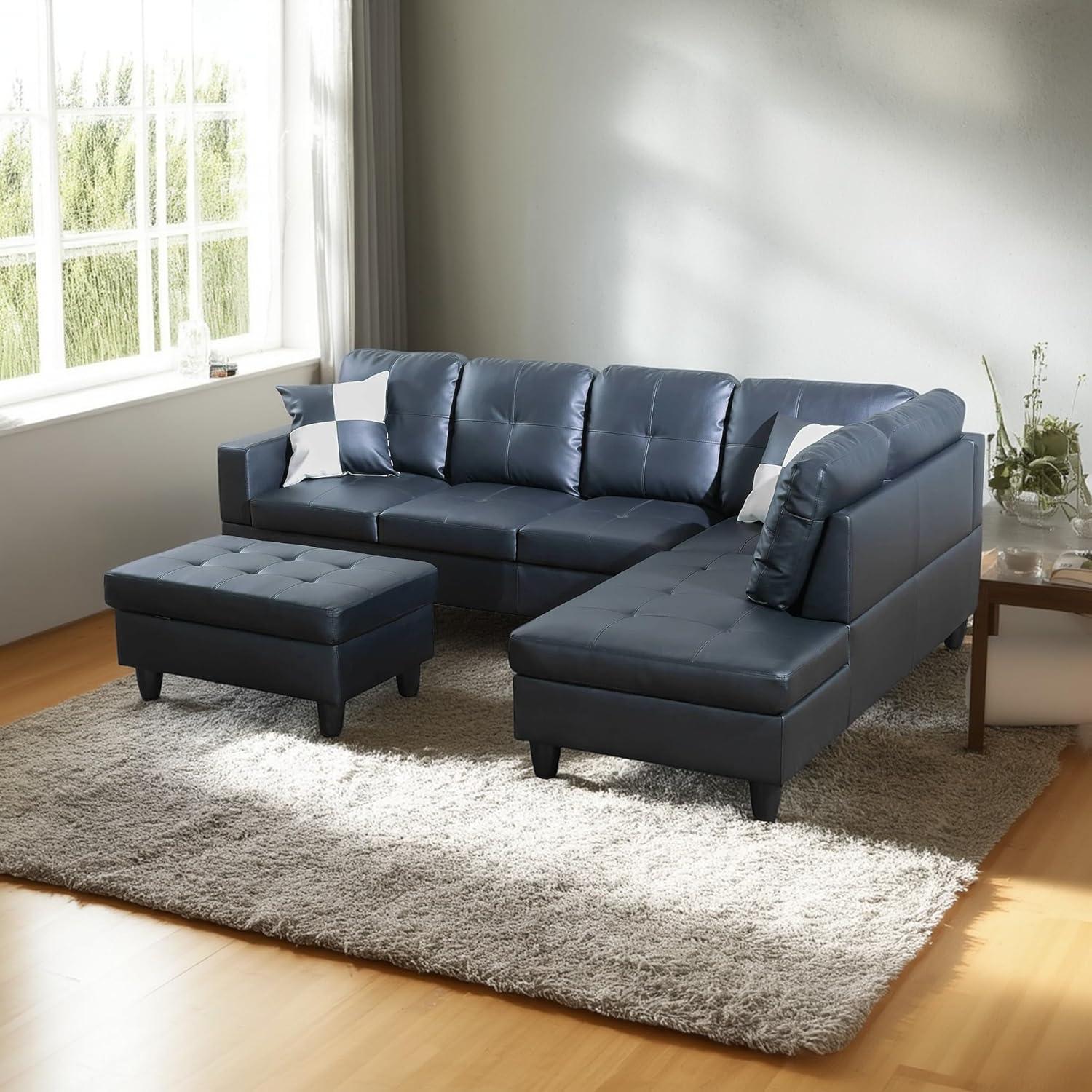
In everyday use the sectional reads as a definite room fixture rather than a background piece. The chaise and sofa settle into predictable wear patterns: the seat cushions compress where people favor one spot and are smoothed back into place out of habit; tufted buttons keep the surface visually taut while shallow impressions form around them; seams and panel lines shift slightly when someone slides across the cushions. The ottoman’s top closes and opens with a small settling motion,and stored items will shift the lid alignment if they aren’t arranged evenly. When the two major pieces are moved or rejoined, the connection frequently enough needs a fast nudge to sit flat again.
Practical limits show up as everyday interactions rather than dramatic failures. The corner footprint establishes a traffic flow that most rooms adapt to,but it also reduces maneuvering space along adjacent walls and can make vacuuming under the feet a multi-step task. Frequent use near the chaise edge produces fabric rubbing and faint creasing over weeks, and heavier use of the storage compartment can make lifting the top feel awkward at first. In many living spaces the sectional’s presence encourages small, repeated habits — adjusting cushions, smoothing upholstery, reseating the pieces — more than large, one-time fixes.
| Observed during use | What that means in a room |
|---|---|
| Cushions develop favored depressions | Seating looks broken-in; occasional fluffing or shifting restores evenness |
| Chaise edge sees concentrated movement | Edge shows subtle creasing where people rest feet or slide down |
| Ottoman lid settles with stored items | lid alignment varies with contents, requiring small adjustments to sit flush |
View full specifications, size and color options
How daily life plays out around your sofa your cleaning routines care and the storage ottoman in use
You learn quickly how the sofa becomes the center of daily motion. Mornings often start with a brisk smoothing of the seat and chaise where you slump down with coffee; seams and tufted buttons settle into small, familiar hollows after a few minutes of sitting.In the evenings the chaise is the default spot for stretching out, and the cushions will show a pattern of slight compression that you unconsciously plump back into shape between uses. When pets or kids weave through the room, you find yourself nudging a cushion, tucking a corner of a throw back under an arm, or shifting the ottoman a little closer so everything feels within reach.
Your cleaning interactions tend to be short and frequent rather than deep and rare. quick runs with a lint roller or a soft brush over the visible surfaces are common, and crumbs pop out from between buttons when you lift a cushion. Spills usually get a damp cloth right away; there are times when you pause to press the fabric back into place after wiping so the surface reads even. Vacuuming around the base and under the chaise happens on a predictable schedule, though you often catch a stray dust bunnie only after it catches the light.
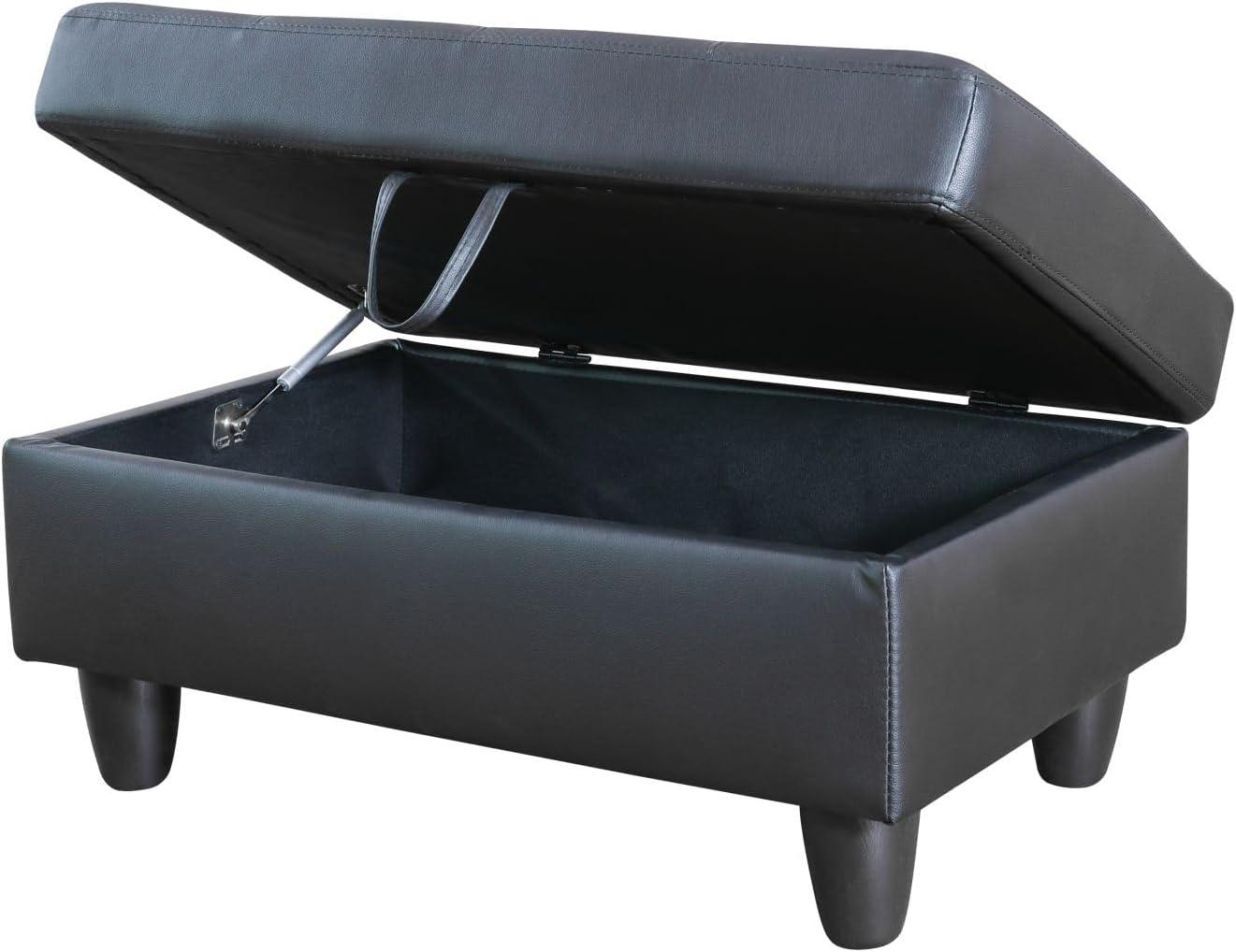
The storage ottoman moves through a lot of small tasks: stashing remotes and magazines between movie nights, holding a small blanket or a handful of toys that get spread back out hours later. You lift the lid enough times a day that the interior shows the soft scatter of household detritus—loose change, the corner of a receipt, a stray hair—items that you dump out in passing rather than on purpose. Opening it can be a one-handed grab when you’re already seated, or a two-handed lift when you’re rummaging; the lid’s alignment sometimes needs a slight nudge after heavy use. Over time the ottoman’s top will carry the same faint, personal marks as the rest of the set—subtle impressions where you rest your feet, a smoother patch where you lean most frequently enough.
A Note on Everyday Presence
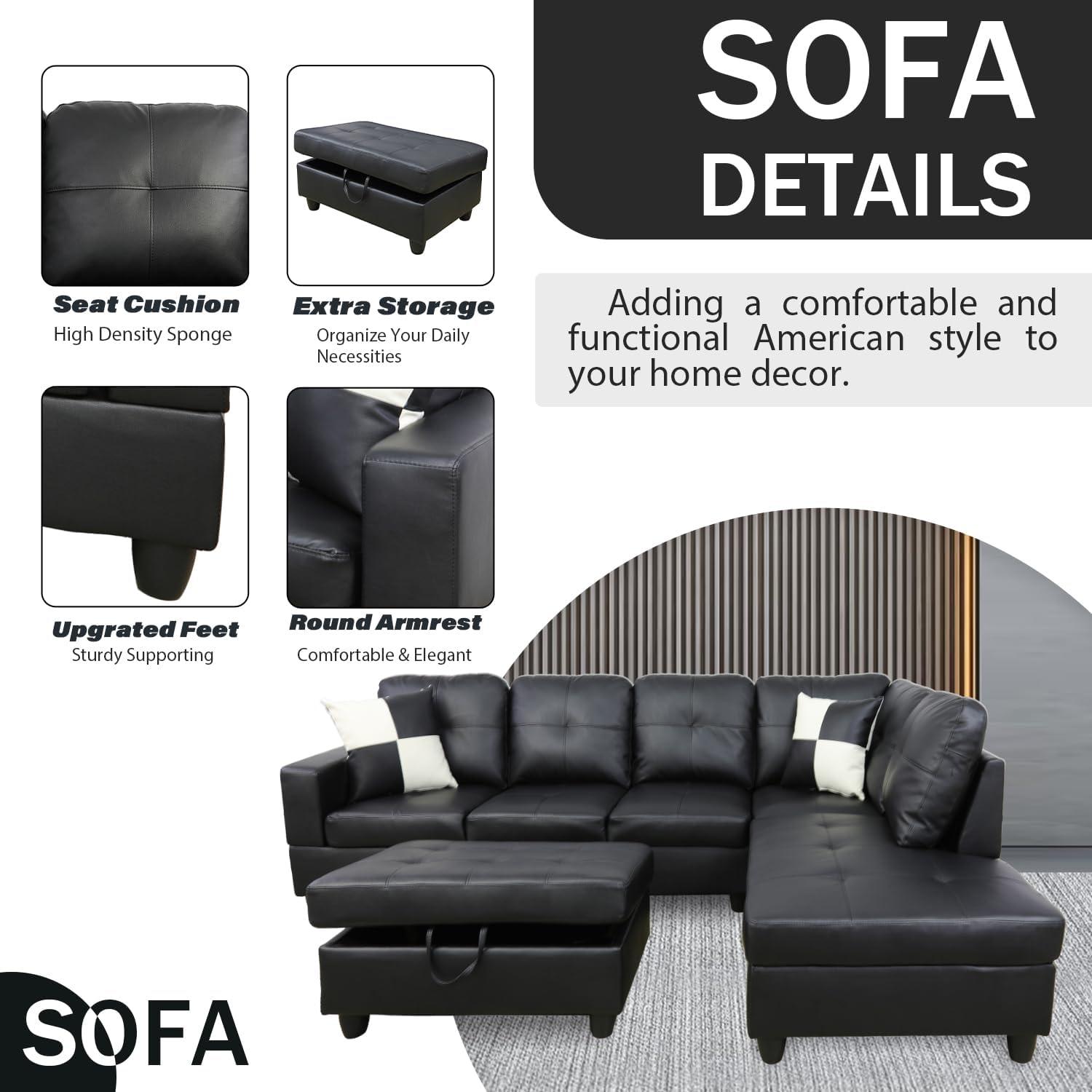
Seen over time, the sofa quietly becomes part of how the room is used, folding into morning coffee and slow evenings without fanfare.The Leather L-Shape Sectional Sofa Set, 3 Piece Microfiber Couch with Storage Ottoman & Right Chaise Lounge, 103″ Button Tufted Upholstered Corner Couch for Home, Living Room, Apartment, Black settles into its corner so that naps, conversations and the habit of leaning into the chaise feel ordinary. Cushions soften in daily routines, and the surface gathers the faint marks and smoothed spots that come from regular use, signaling presence rather than perfection. It becomes part of the room.
As an Amazon Associate I earn from qualifying purchases.