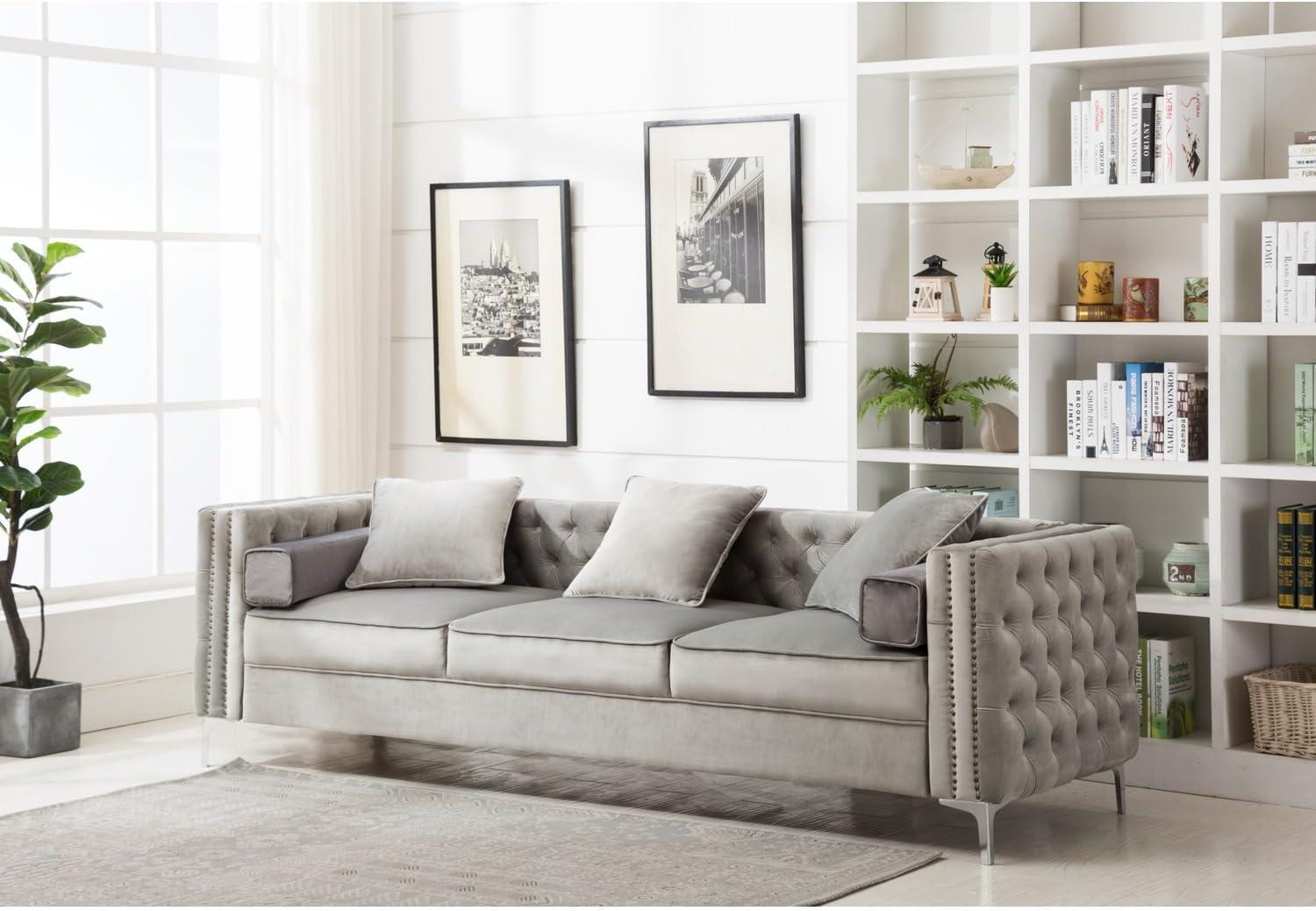
Legend Vansen Modern couches: how they fit your living room

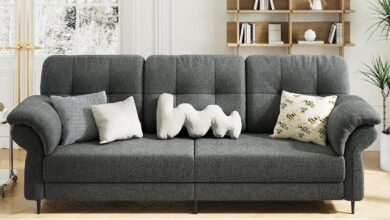
Light catches the gray velvet and makes the nap read richer than the swatch on your phone. The Legend Vansen 104-inch velvet sofa sits like a low, purposeful presence, its tufted back and nailhead trim throwing tiny highlights across the room. Run your hand along the seat and the fabric gives with a plush, slightly cool glide; the cushions push back with enough resistance that you notice the frame beneath. From the doorway it alters the room’s scale—visual weight across a long line, yet a restrained profile that keeps the sightlines airy. Three soft throw pillows settle into the corners, mellowing the Chesterfield-inspired angles into something lived-in.
A first look at the Legend Vansen velvet sofa and how it greets your living room
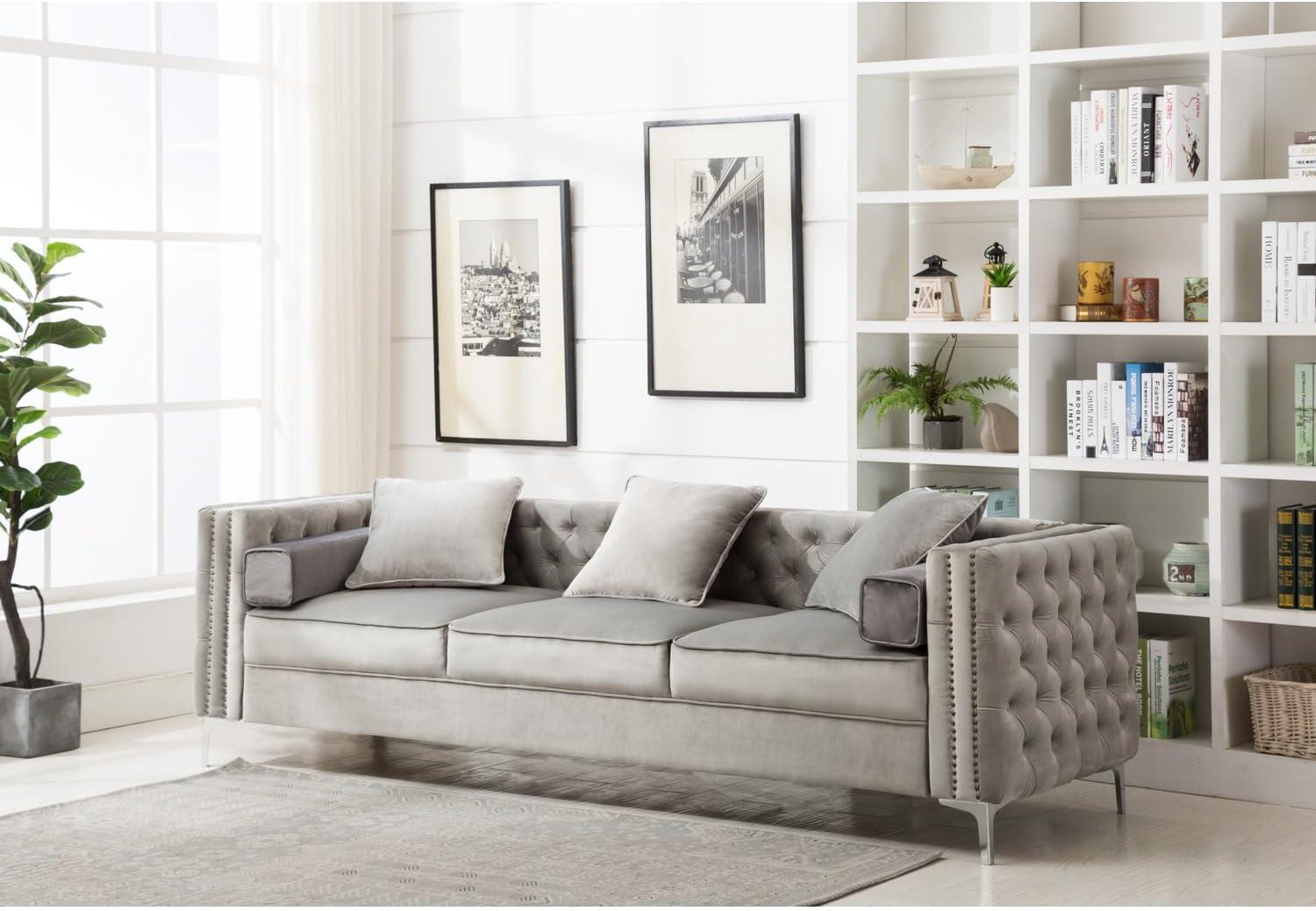
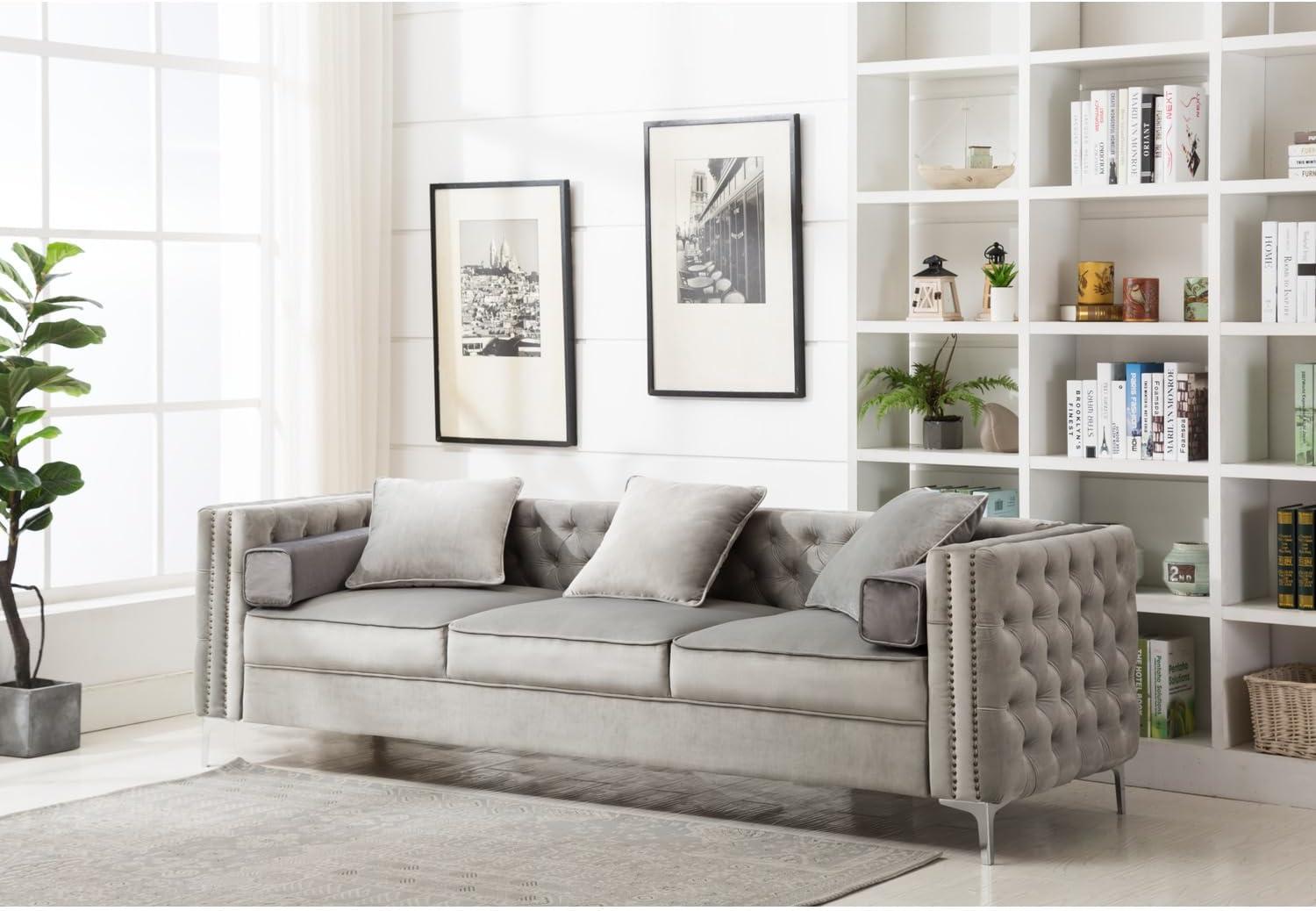
When you step into the room the sofa announces itself more by shape and presence than by any single detail. Its low, continuous back and sweeping arms create a horizontal line that immediately defines the seating zone; from the doorway your eye follows that line before it settles on texture and shadow. the surface takes on different moods as daylight shifts—there are moments when the upholstery reads deeper and more saturated, and others when it softens under lamp light—so the piece rarely looks identical from one hour to the next. You might find yourself pausing at different angles to see how the seams and tufting break up the silhouette, or angling a lamp to let the subtle highlights show along the frame.
Nearby movement and everyday use alter the first impression in small, familiar ways: a stray blanket tossed over an arm, a coffee table pulled a bit closer, a pair of feet tucked up on the cushion—these incidental gestures change how the sofa meets the room. A few quick visual cues to notice right away:
- Catch points: small metallic accents and buttoned tufting reflect light differently from across the room.
- Colour shift: tone deepens near walls and appears lighter under direct lighting.
- Footprint visibility: sit marks and impressions show more in certain lighting, so the appearance can feel slightly lived-in after use.
How the velvet surface, nailhead trim, and frame details register up close in your space
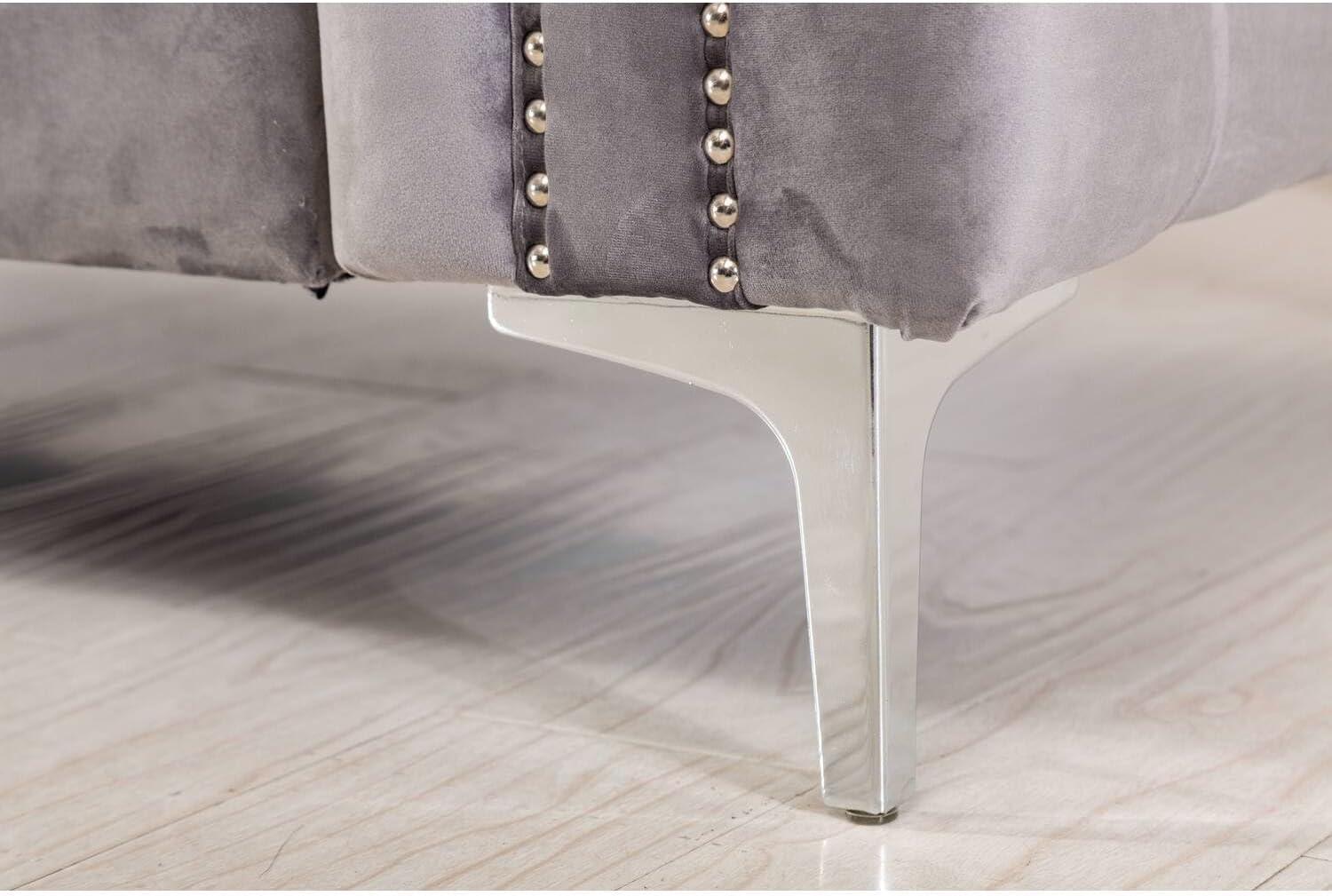
when you come close the velvet surface announces itself first by the way it catches light and responds to touch — sections will look slightly darker or lighter depending on the nap and the angle you view them from. Run your hand along the cushion and you can feel a soft directionality; small impressions from daily use tend to show as brief shadowing rather than permanent creases, and fingerprints or faint marks usually soften after you smooth the pile.the tufted details create shallow pockets that hold shadow and make the seat read as layered rather than flat, while the nailhead trim punctuates the silhouette with tiny highlights that glint when a lamp or window light hits them. In ordinary routines you may find yourself brushing crumbs or pet hair from the fabric more often than on a completely matte surface, and the finish tends to reveal these brief traces rather than hide them.
- Sheen: shifts with the nap and local lighting, producing subtle two-tone effects.
- Nailhead trim: registers as small, reflective accents that emphasize edges and seams.
- Tufting & seams: create shallow relief that reads as texture up close and gathers light differently across the seat.
At the edges the frame details become more apparent: the line where the upholstery wraps shows the construction rhythm and the feet or base finish meet the floor with a small, readable gap that affects how the piece sits in a room. close inspection reveals stitching lines and piping that tidy transitions between panels; these details catch dust in everyday life and can register as darker lines from certain viewpoints. How the frame color and the metal trim sit against your flooring and nearby finishes also changes the immediate impression — a cool-toned floor will make the metal highlights seem crisper, while warmer woods soften those highlights and make the overall texture feel more blended in the space.
| Element | Up-close observation |
|---|---|
| Velvet nap | Visible directionality; alters perceived shade with touch and light |
| Nailhead trim | Small reflective points that define edges and catch brief highlights |
| Frame seams & piping | Clean transition lines that can collect dust and emphasize panel joins |
What the seat construction, cushion response, and arm proportions feel like when you sit
When you settle into the couch the first thing you notice is the way the seat layers work together under your weight: there’s an immediate, soft top give that lets your hips sink in slightly, followed by a firmer underlying push that keeps you from bottoming out.The cushion response tends to be measured rather than snappy — pressure eases as you shift your position and the pad rebounds at a pleasant,not-quick pace. Edge zones feel a touch firmer than the center, so sitting toward the front gives a clearer sense of support, while moving back into the depth invites a more enveloping feel. Small adjustments — scooting an inch,leaning back a fraction — are part of how you find comfort here rather than settling in one static position for long periods.
- Initial give: immediate and soft, noticeable as you sit down
- Recovery: moderate rebound that smooths out after brief use
- Support distribution: firmer under the hips and along the edges
The arms present themselves as distinct resting points rather than decorative afterthoughts: thay are broad enough to support an elbow or forearm when you sit upright and long enough to serve as a casual head rest if you tilt sideways for a nap. their height relative to the seat means you’ll sometimes shift your torso forward a bit to rest an arm at a more comfortable angle, or reach for a pillow to raise the elbow slightly; you’ll also notice a slight difference between leaning against the inner curve versus the outer top — one feels flatter, the othre offers a firmer rim. A short table below summarizes those tactile contrasts in use.
| Arm feature | How it feels when you sit |
|---|---|
| Width | Generous enough to rest forearm or folded hands comfortably |
| Top edge | Provides a firmer rim if you lean or drape an arm; less cushiony than the seat |
How it occupies floor space and relates to common furniture arrangements in your room
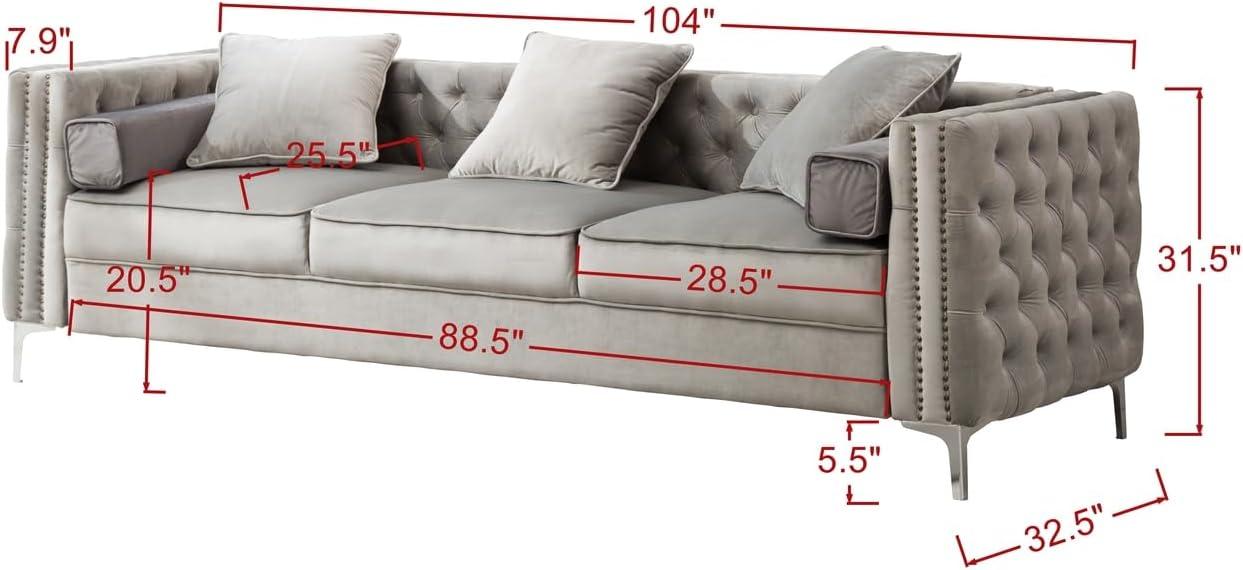
Its long, low profile tends to establish a dominant axis in a living room, so the sofa often determines where other pieces land. Placed against a wall it forms a continuous seating run that leaves the central floor open for a low coffee table; floated away from the wall it creates a conversational zone that faces the media console or fireplace. the depth pushes seating forward into the room, which can compress the immediate walking path and cause side tables or accent chairs to be set slightly offset. Everyday use shows this in small habits — people step around the ends,cushions are nudged toward the middle during gatherings,and the piece is occasionally shifted a few inches when vacuuming or rearranging the rug. Common practical effects include:
- Against a wall: frees the middle of the room and keeps traffic along the perimeter.
- Centered on a rug: anchors a seating group but requires backing chairs or an open walkway behind it.
- As a divider: separates living and dining zones while leaving a narrow clearance behind for passage.
| Placement | Typical relation to adjacent furniture |
|---|---|
| Against a long wall | Pairs with a low coffee table and leaves room for side tables at the ends |
| Floating in the center | Faces media console or fireplace; accent chairs flank it to complete a conversation circle |
| Back to an entry or dining area | Acts as a visual divider, with a small clearance left for walking behind |
Full specifications and configuration details can be found on the product listing: See full specifications
How it measures up to your living room needs and where limitations show
In everyday use the piece reads as a defined anchor in the room: it establishes a seating zone and narrows circulation paths around its breadth. The upholstery shows body outlines and light reflections over time, so cushions tend to be plumped and shifted regularly to keep a uniform look; the trim can catch on lightweight throws if those are tucked between cushions. Assembly being straightforward still leaves the object bulky to maneuver, and the low backline keeps sightlines open while the overall footprint requires deliberate placement to avoid crowding the TV or a walkway.Small, routine actions become part of living with it—occasional cushion rotation, smoothing of the cover, and moving a floor lamp an inch or two to balance sightlines are typical.
- Daily fluffing: frequent reshaping of seat and back cushions to maintain even appearance
- Surface care: routine brushing or vacuuming helps manage pet hair and crumbs on the upholstery
- Placement adjustments: minor shifts to avoid glare or to clear a path are common after initial setup
| Living room aspect | Observed behavior / limitation |
|---|---|
| Traffic and flow | Requires planned clearance around edges; not easily tucked into very tight walkways |
| Maintenance cadence | Benefits from regular surface care to keep finish consistent over time |
| Visual presence | Provides a definite focal point but can show wear patterns where seating is concentrated |
See full listing details and specifications
Daily care, observable wear, and practical use in your home
In everyday use the velvet upholstery shows familiar, situational changes rather than sudden failures. high-traffic zones—seat centers and arm rests—tend to develop a slight sheen and minor pile disruption after several weeks of regular sitting; brushing or stroking the nap reorients the fibres so the marks blend back in for a time. Tufted buttons and nailhead trim collect dust along their edges, and crumbs can lodge in the deeper folds of the tufting; those areas also reveal the earliest signs of flattening where people sit most often. Upholstery impressions from brief naps or cushions left in one position are visible but usually reversible with a quick hand smoothing; over months, seat cushioning shows gradual compression in the same spots. Pet hair and lint are more noticeable on the surface texture than on smooth fabrics, while quick contact with dampness leaves a pale watermark that typically evens out as it dries. The following table summarizes typical observable changes over time under routine household use.
| timeframe | Common observations | Typical household response |
|---|---|---|
| 0–3 months | Surface nap impressions,loose lint | Frequent brushing or lint rolling |
| 3–12 months | Light sheen in high-use areas,slight cushion settling | Rotating throw pillows,occasional reshaping |
| 12+ months | more persistent flattening of seat areas,dust accumulation near trim | Spot cleaning,deeper vacuuming around tufting |
Practical routines around the couch form naturally: blankets are often draped over arms where the fabric shows more contact,and throw pillows migrate toward the corners after everyday use. Common actions observed include:
- Quick maintenance: brushing the nap or using a lint roller to remove hair and crumbs
- Weekly upkeep: light vacuuming along seams and around nailheads to remove trapped dust
- Occasional care: spot-treating spills and reshaping cushions after prolonged use
Those small habits tend to keep visible wear from becoming pronounced, while also revealing trade-offs: the textured surface wears in a way that can look lived-in rather than uniformly pristine, and the tufting that defines the seats resists deep cleaning without more involved effort. For full specifications and configuration details, see the product listing: View complete listing information.
A Note on everyday Presence
After living with it, the Legend Vansen Modern couches for Living Room Velvet Upholstery Nailhead Trim Sofas, 104”, Grey settles into corners and pathways in ways that aren’t immediate but become familiar over time.In daily routines it softens the room’s movements — a place where your weight shifts into the cushions, where the nap of velvet shows a faint path and the nailhead trim quiets at the edges as surface wear appears. Its comfort behaves like a steady presence, responding differently as the day unfolds and as the room is used. It stays.
As an Amazon Associate I earn from qualifying purchases.