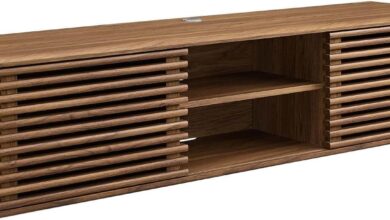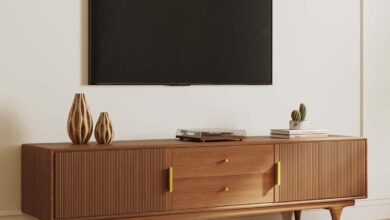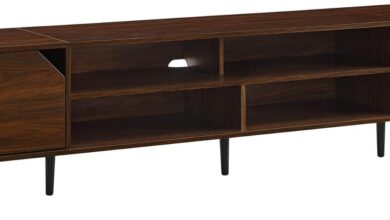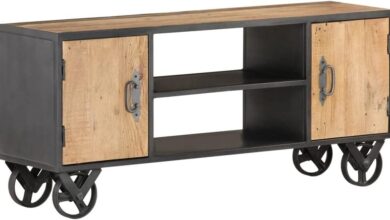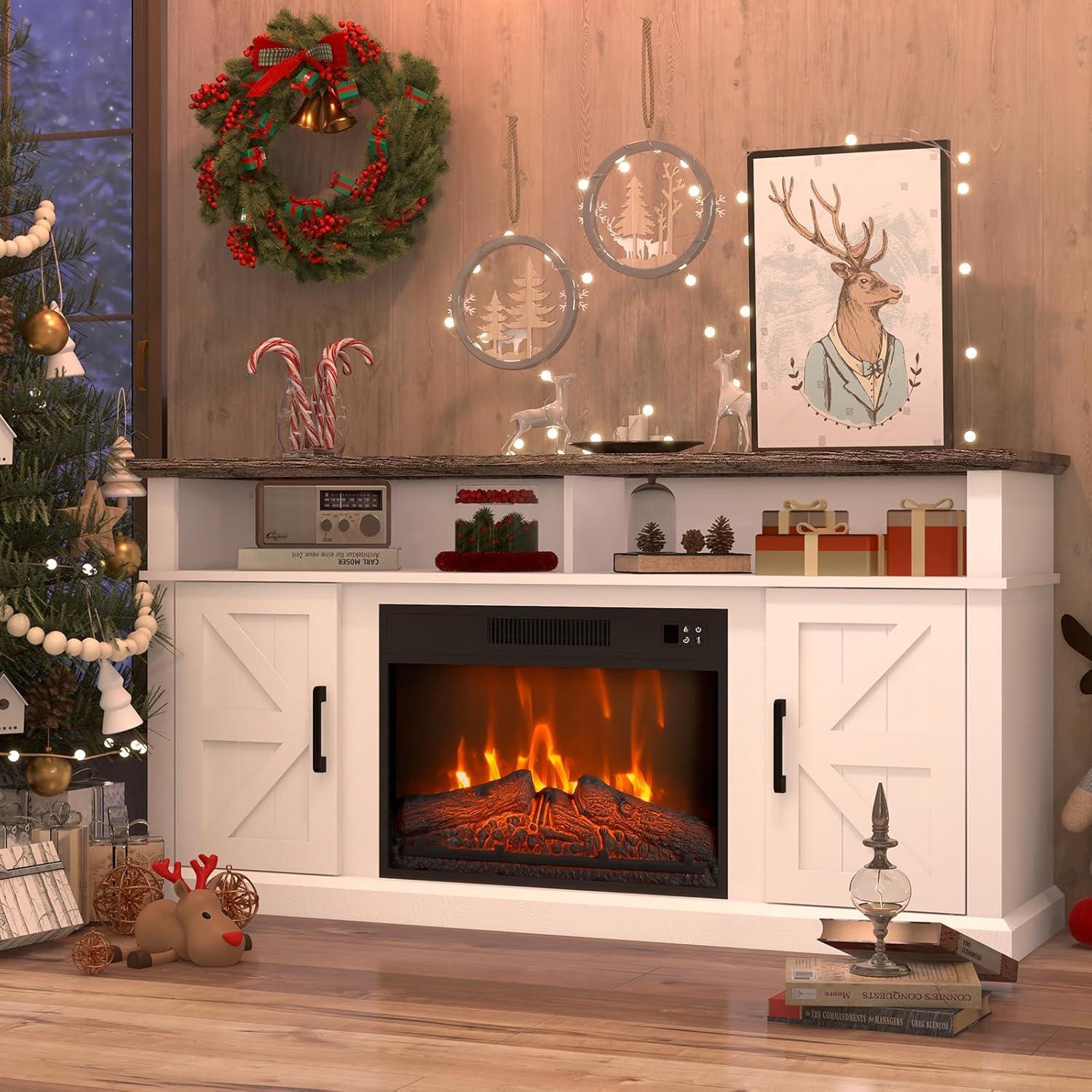
Luban Nese Fireplace TV Stand — how it fits your space

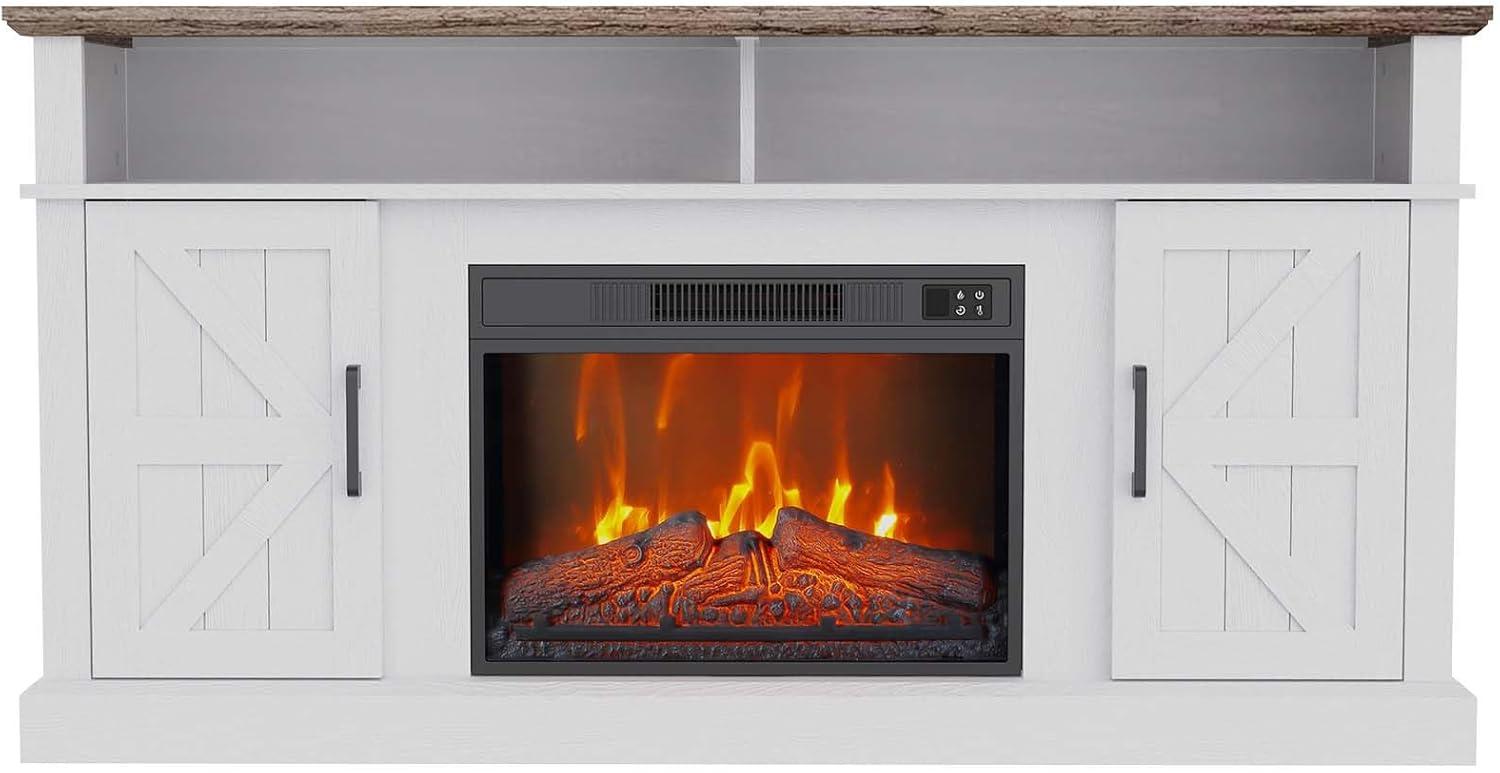
Light skims the painted surface and brings out knots in the wood—right away you notice the visual weight of the Luban Nese Fireplace TV Stand, a white farmhouse-style console with a built-in electric fire.Up close, the solid-wood top feels cool and slightly textured under your palm, while the barn doors slide on sturdy hardware with a faint, workmanlike thump. Open shelves sit low and horizontal, giving the piece a grounded silhouette, and the 23″ flame insert throws a soft amber flicker that warms the painted finish. In an everyday living room it reads like a lived-in fixture—you feel its scale and material presence before you even tune anything on.
A first look at your white fireplace TV stand with a twenty three inch electric insert
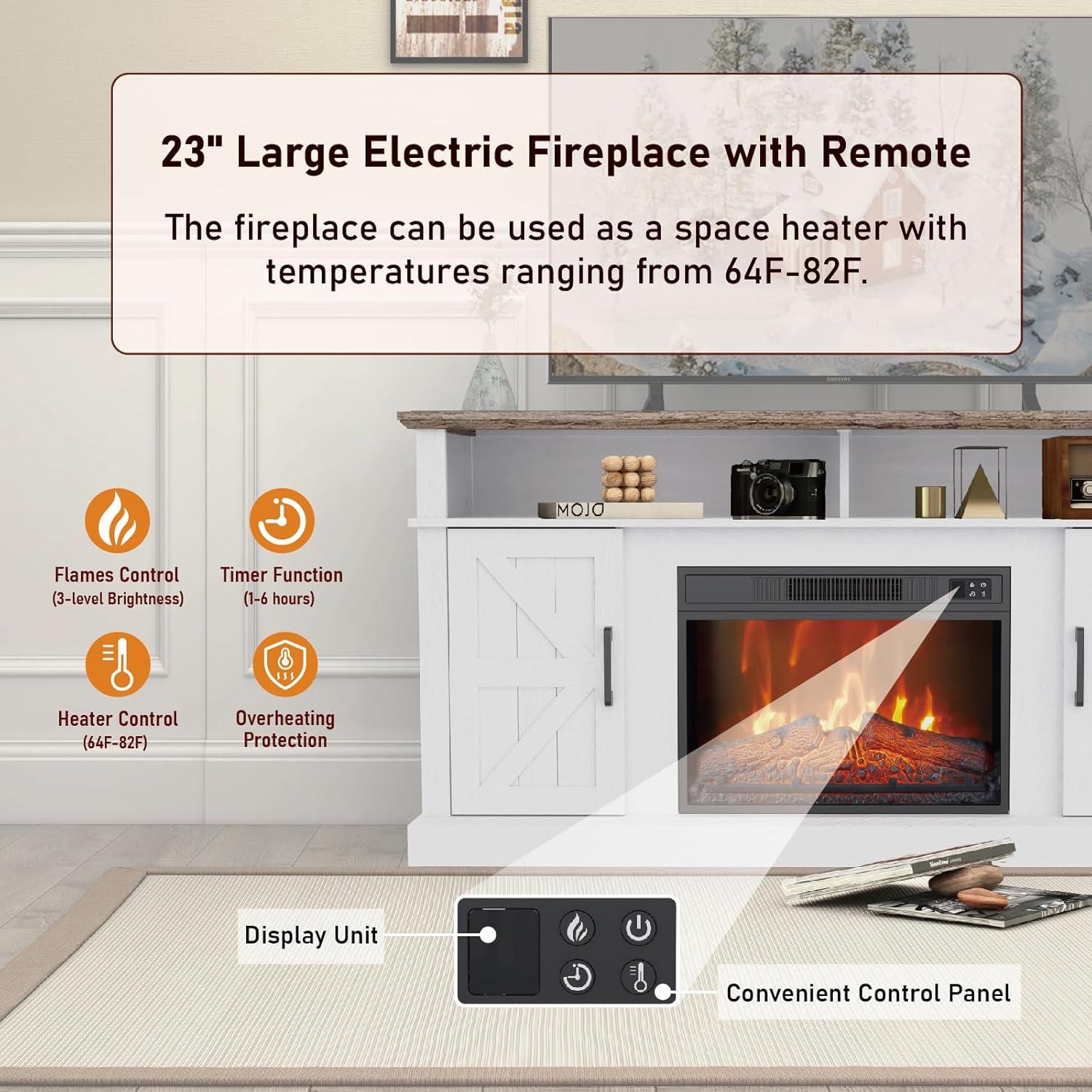
When you first bring the unit into the room and set it in place, the white finish reads as soft rather than stark — it catches indirect light and can look warmer or cooler depending on the time of day. Up close, the paint has a faint texture you notice when you run a hand along the top; minor joins and screw heads become apparent at arm’s length, the way they often do with assembled furniture. The open shelves reveal their depths at a glance, and the sliding barn doors glide with a small amount of resistance so you tend to give them a little nudge as you arrange items behind them.
Switching the 23‑inch insert on transforms that visual impression into something more immediate. the flame window fills with layered movement; the logs pick up a soft internal glow and the simulated embers seem to shift if you change viewing angle. The front bezel sits nearly flush with the surround, though a narrow gap is visible where the insert meets the cabinet frame. As the unit warms, a gentle heat disperses from the vent area and the sound of the fan is the sort you notice only in quieter moments. Taken together,those first interactions — touching the finish,sliding the doors,watching the flame come alive — give a clear sense of how the piece will feel in everyday use,with little,shifting details that reveal themselves over the first few days.
How the barn doors and open shelves shape your living room and what the materials reveal
You’ll notice the barn doors change the room every time you move them. Sliding a panel across the front redraws sightlines, turning a row of open compartments into a continuous plane or, when left partially ajar, creating an off‑center visual pause that catches the eye. The doors’ weight and the way they ride their track become part of routine: one smooth push can feel precise, another shove can reveal a slight catch or momentary wobble where joinery meets hardware. Close up,the finish tells a story—fingerprints collect near the pulls,paint thinness or the wood grain shows through at edges,and the seams around the doors let light and glimpses of whatever’s behind them leak into the room.
The open shelves keep the room in motion in a different way. Items arranged across the shelves become the room’s foreground; their shapes and vertical stacks alter how expansive the console looks from the couch. Horizontal surfaces gather dust and small habits—reaching for remotes, nudging a game controller off to one side—so the shelves’ surfaces and routed edges reveal everyday wear first.You can see construction details in use: shelf thickness, slight bowing under heavier loads over time, and the tiny gaps where panels meet. Together, doors and shelves trade opacity for immediacy, alternating between a tidy façade and an active display depending on how frequently enough you slide, reach, or rest things on them.
| Feature | Observed effect | Material cues |
|---|---|---|
| Barn doors | Alter sightlines; introduce movement when opened or closed | Wear near handles, visible seams, occasional track friction |
| Open shelves | Create layered display; show use through placed objects and dust | surface marks, edge wear, slight shelf deflection with weight |
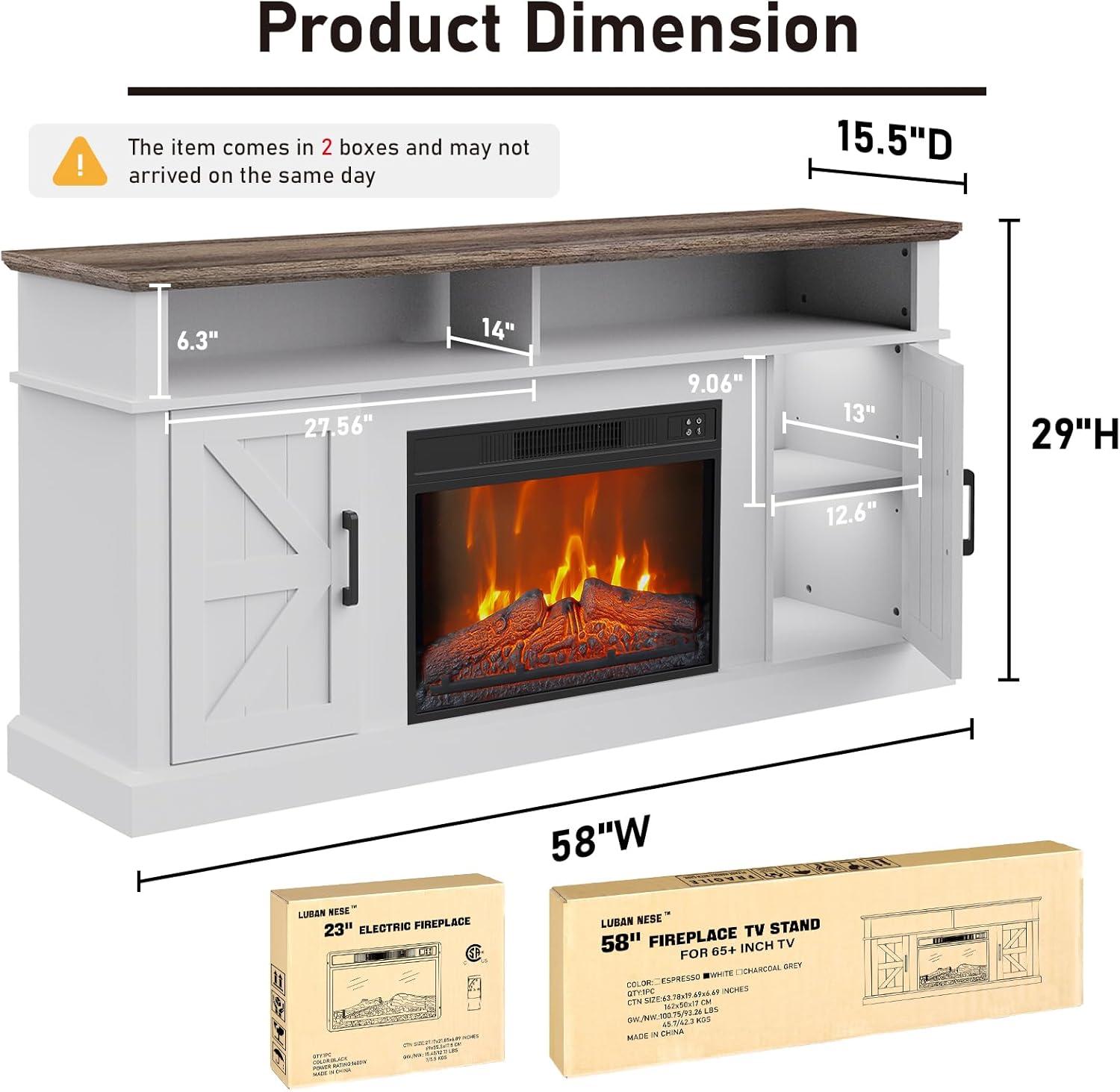
Measuring the footprint and how your sixty five inch or smaller television sits on the console
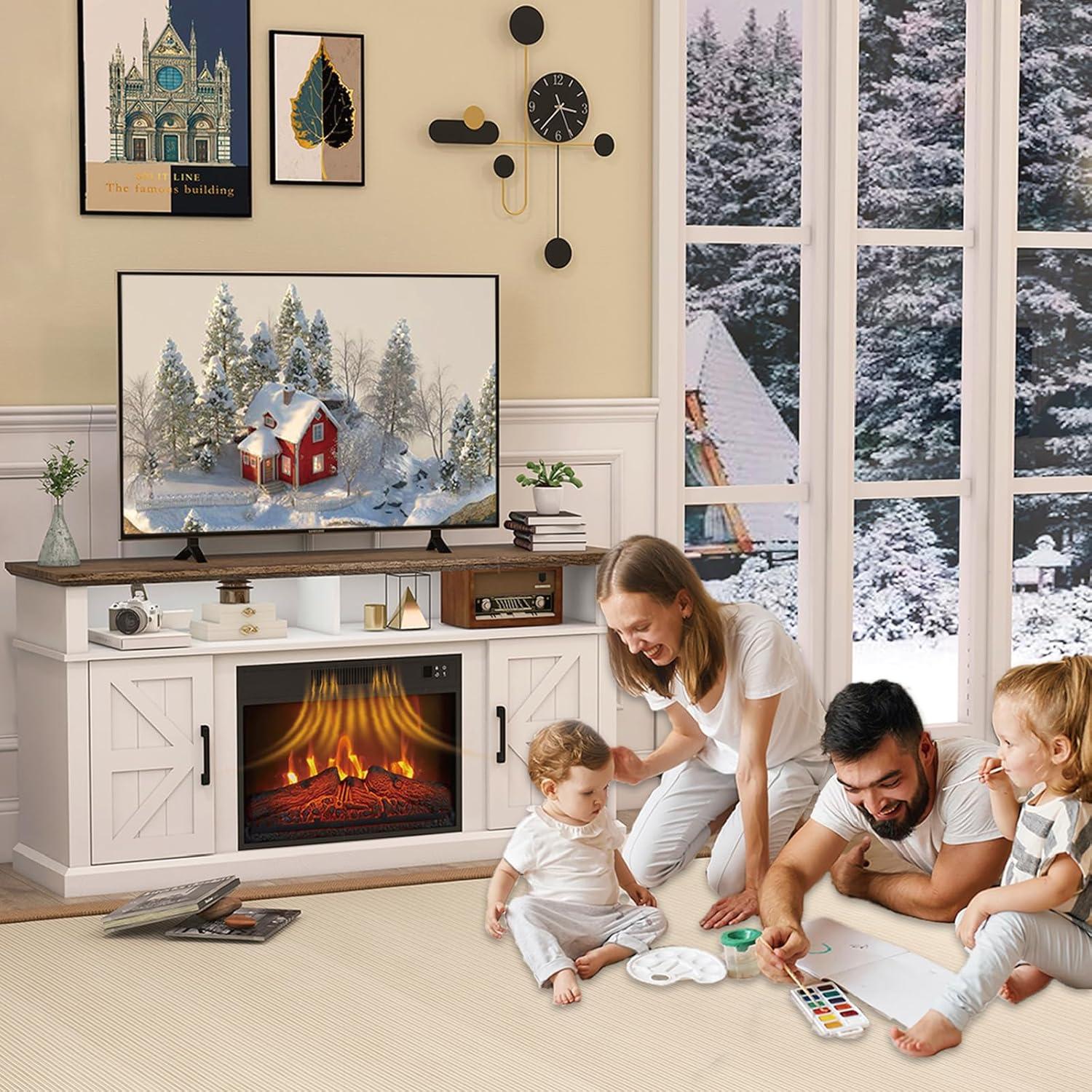
Measuring the footprint starts with the visible dimensions on the console top and the contact points of the TV stand. A 65‑inch diagonal screen is commonly about 56–57 inches wide, so the set will occupy most of a wide top surface; smaller models compress that width proportionally. Where the TV uses two side feet the weight spreads toward the edges and the outer corners of the console become the main contact points. A single central pedestal concentrates weight near the middle and leaves more usable surface on either side, which changes how the screen sits relative to the fireplace opening and the barn‑door tracks.
Depth matters as much as width. Typical TV stands or feet project roughly 8–14 inches from the rear of the screen, which affects how far the front edge of the set sits over the console lip and whether the rear panel clears the wall for cords and ventilation. In many setups the TV is nudged forward a few inches to balance sightlines with the fireplace fascia; in others it sits almost flush to the back edge so cables tuck down behind. The barn doors and open shelves also alter how the screen appears in situ—sliding doors can create a shadowed frame around the base, and open shelves may reveal cables unless the TV is positioned to mask them.
| Screen diagonal | Approx. overall width | Typical stand/foot depth |
|---|---|---|
| 65″ | ~56–57″ | ~9–14″ |
| 55″ | ~48–49″ | ~8–12″ |
| 50″ | ~43–44″ | ~8–10″ |
Observed trade‑offs tend to be subtle: placing a wide set toward the edges maximizes surface use but can reduce lateral clearance for ventilation or door movement, while centering a heavy pedestal leaves both sides free but sometimes looks slightly inset from the console edge. Small adjustments—sliding the screen an inch left or right, or bringing it a bit forward—are common when aligning the TV visually with the fireplace and the room’s sightlines.
View full specifications and size details
Where your remotes and media components live within the cabinet and open shelves
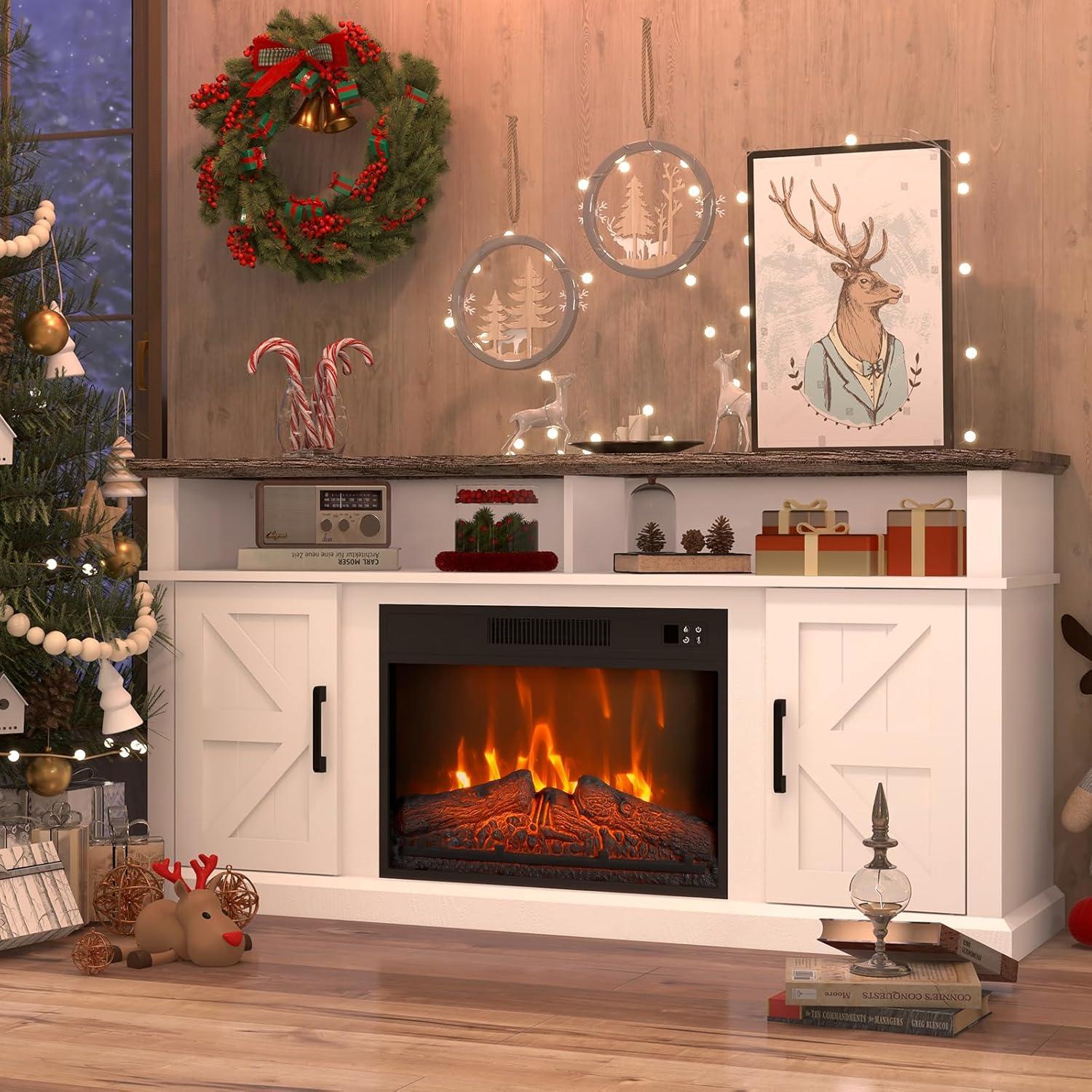
you’ll find the most frequently grabbed items—the TV remote, streaming sticks, and a game controller—tend to live on the open shelves where they sit within easy reach and in plain sight. Those shelves let you reach past a stack of discs or a slim soundbar without having to move a door, and they leave an uninterrupted line of sight for infrared remotes.When you slide the barn doors across, those same spots can get partially obscured; the doors hide the clutter but also interrupt direct remote signals and make quick access feel a bit more deliberate.
Inside the cabinet space behind the doors, devices usually sit pushed toward the back where cables pass through the rear openings. Harder-to-reach pieces—external hard drives, power strips, or an occasional overflow remote—often end up tucked to the side or behind other components. Over time you may notice small habits: a remote nudged farther back when you pull a device out, a flash of dust where a component rarely moves, the way cords catch on the shelf edge when you slide something in. Those everyday movements shape where things actually settle more than any intended layout.
| Location | How items typically sit |
|---|---|
| Open shelves | Remotes and regularly used players sit forward for quick reach and clear IR paths |
| Behind barn doors | Less-used components and tangled cables tend to be pushed back and out of sight |
How the unit matches your space and expectations and what practical limits appear in your daily use
The unit tends to settle into a steady role once placed: it defines a media wall and invites treating the middle shelves as everyday landing spots for remotes, game controllers, and the occasional book. Sliding barn doors create a rhythm to access — they glide but frequently enough require a nudge when left slightly misaligned, so reaching for equipment behind them can feel like a two-step motion. Open shelves collect dust and the visible cables form a loose cluster at the rear, prompting occasional shifting of devices to keep vents clear and LEDs unobstructed.
In routine use,the electric insert becomes the default source of ambience,operated mostly from the remote; when the remote is misplaced,controls on the unit are accessible but less convenient,so changing settings can interrupt the flow of watching.The console tends to remain stationary once set up,which makes deep cleaning behind it an infrequent task rather than a weekly chore.Heat from the insert is noticeable locally and influences where smaller items are left on nearby surfaces, and frequent door movement produces small scuffs over time in most households.
| Common task | Observed practical limit |
|---|---|
| Accessing devices behind doors | Sliding doors require alignment and sometimes a two-handed reach |
| Adjusting fireplace settings | Remote dependence means settings are changed less when remote is not handy |
| Cleaning and relocating | Unit is left in place for long stretches; moving it is infrequent and involved |
View full specifications and available options on Amazon
Living with the console day to day, including cord routing, heat presence and the moving parts you will notice
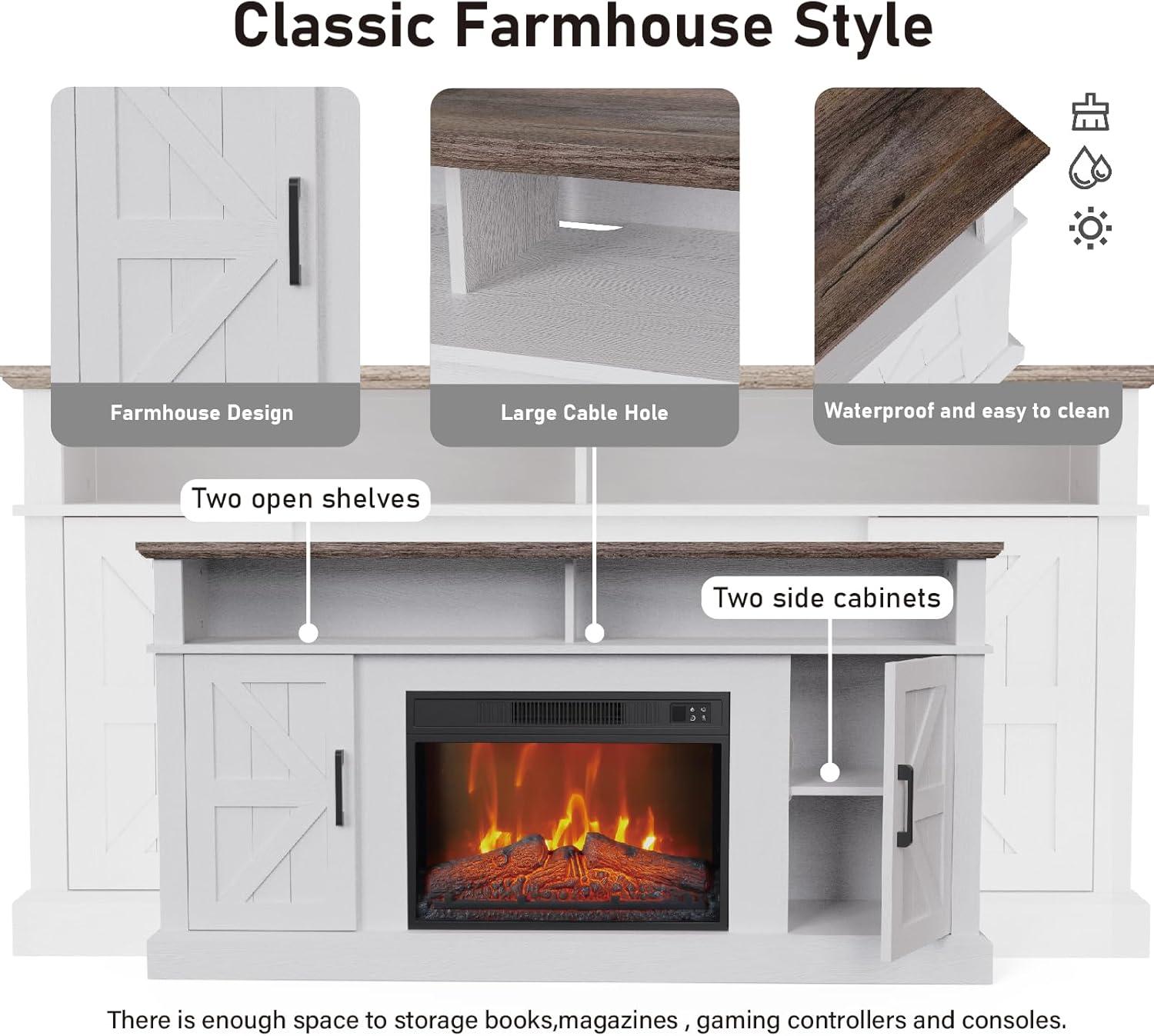
Cords: Open shelving and the rear access commonly leave cables visible and clustered behind the media bay. Power leads and HDMI runs tend to gather in the central compartment and then drop down toward the fireplace insert’s power outlet, so a small bundle will usually sit behind the console against the wall. Sliding the barn doors exposes those runs quickly; when the doors are closed they partly conceal the tangle but do not eliminate the sense of depth where wires collect. The IR receiver for the fireplace is visible from the front, so devices with external IR extenders or long-run cables will often route through the side gaps or over the top rather than through a hidden channel.
Heat and moving parts: The electric insert produces a steady, localized warmth that is most noticeable at the front grille and in the immediate shelving above it. The output tends to be warm-to-touch at close range and diminishes quickly a few feet away,with the fan creating a gentle airflow rather than a blast of heat. When the heater cycles or the fan runs at higher settings,a soft mechanical hum becomes part of the room’s background sound. The barn-style doors slide along their track with a light resistance; that motion can feel a small give when nudged and will sometimes shift from a single-handed push. The fireplace’s internal blower and the mechanism driving the flame effect are the other moving elements people are most likely to notice during routine use.
| What to expect | typical observation |
|---|---|
| Where cords gather | Central compartment behind the media bay; visible when doors open |
| Heat distribution | Warmest at the front grille, fades a few feet away; mild airflow from the fan |
| Notable moving parts | Sliding barn doors, fireplace blower and flame-effect motor |
View full specifications and available options
How the Set Settles Into the Room
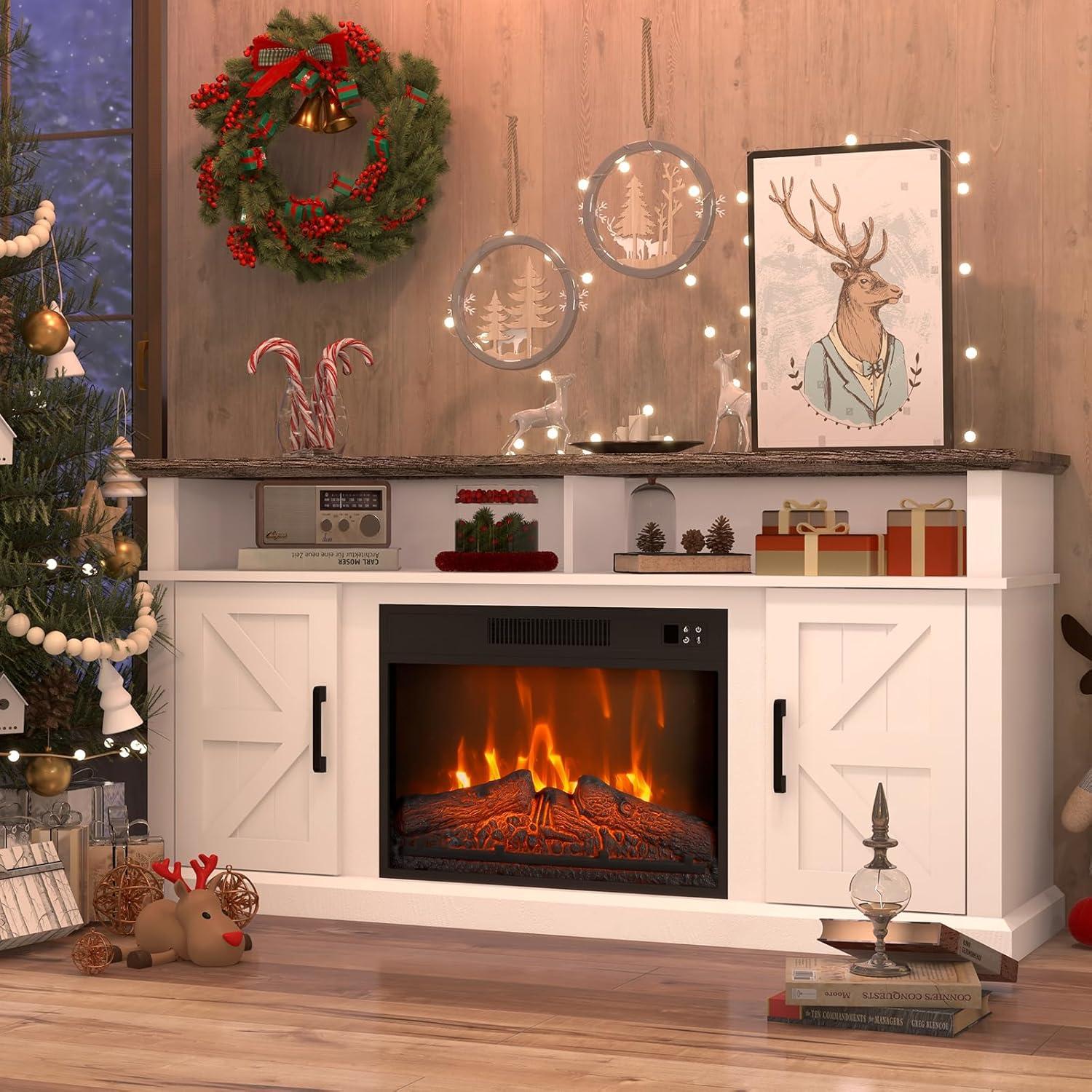
After a few weeks of regular use, the Fireplace TV Stand for TVs Up to 65 begins to feel less like a new piece and more like something that quietly belongs in the room. You find yourself arranging small habits around it — a charging cable tucked behind the cabinet, a mug left on the edge now and then, the cushions inching closer on slower evenings — and those small marks and movements change how it sits in the space. In daily routines the open shelves and sliding doors take on the soft work of holding what’s used most, and light catches minor scuffs without making a fuss. Over time you find it stays.
As an Amazon Associate I earn from qualifying purchases.