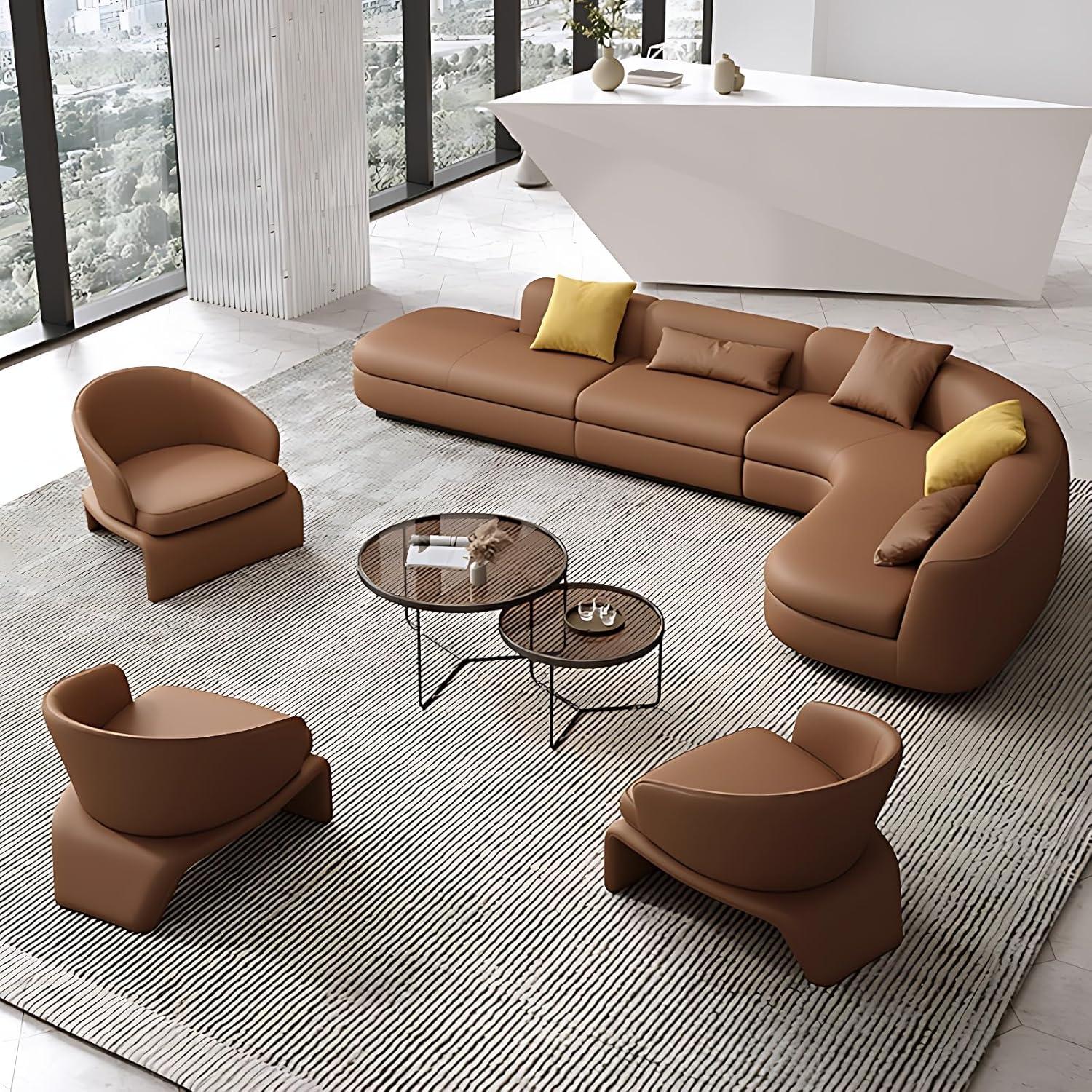
LyckTre Curved Sectional Couches: how they fit your space

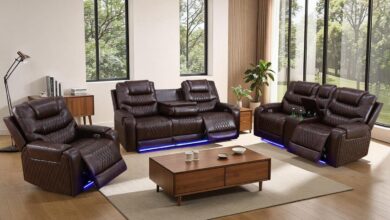
You run a palm along the curved back and the brown leather feels cool and slightly textured beneath your hand — the LyckTre Curved Sectional, as it arrived, reads like a quiet centerpiece in the room. Its low, sweeping silhouette nudges the eye around the space; three wide seats and a matching chair give the arrangement a settled visual weight. Under the lamp the leather catches a soft sheen, and the cushions push back with a springy firmness that changes how you drop into the sofa. Even before you sit,the set’s grounded presence is clear from the way it anchors the floor and frames the coffee table.
When you first see the curved brown sectional in your room
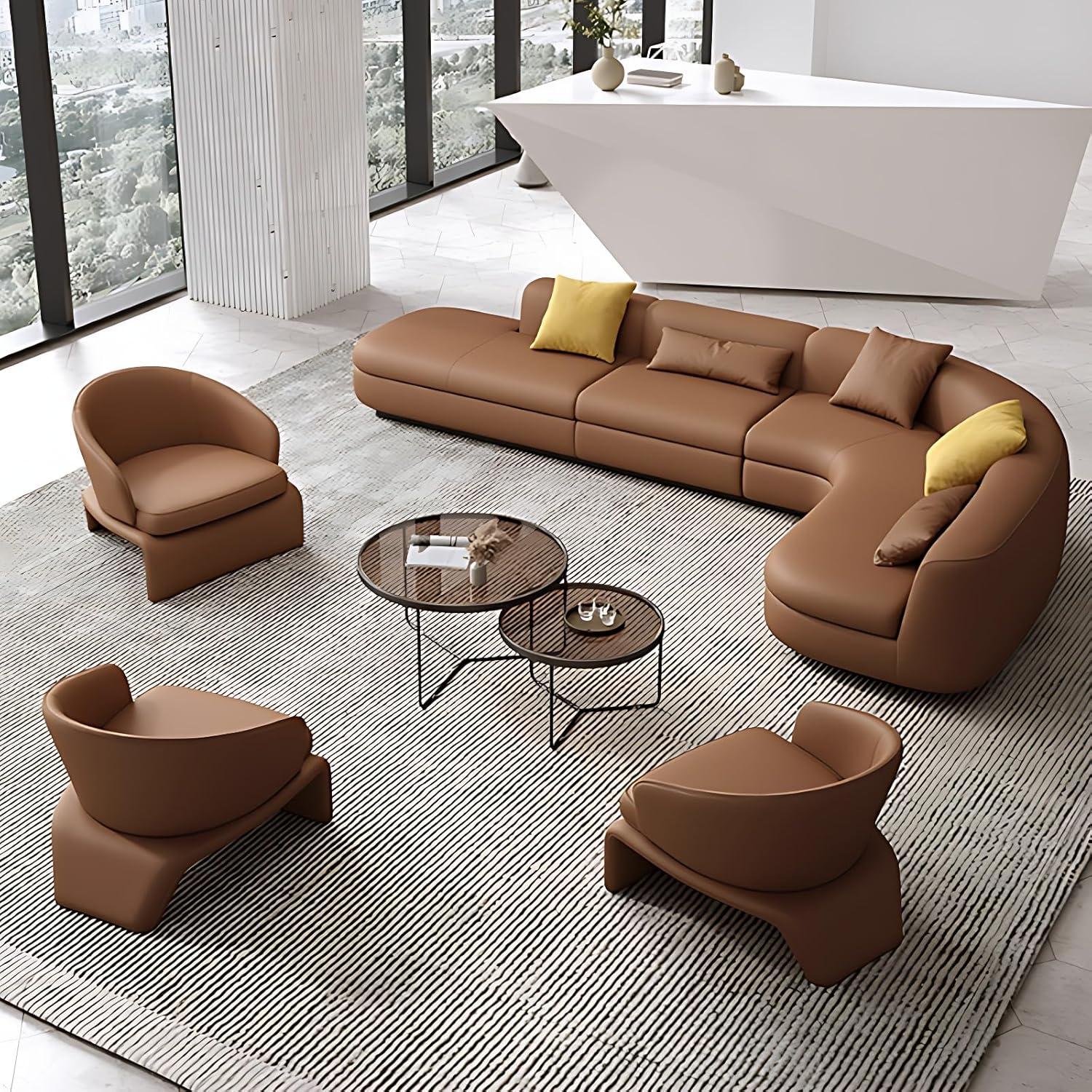
When you first spot the curved brown sectional in the room, the immediate effect is spatial: the arc interrupts straight lines and redirects where the eye travels. From most entry points the piece reads as a single, continuous shape rather than a cluster of seats, and that sweep tends to make the seating area feel deliberately composed. The brown tone shifts with daylight and artificial light — warmer and subdued in softer light, a little more saturated under direct lamps — which changes how other colors and textures around it register. You may find yourself pausing to take in how the curve frames nearby elements, like a coffee table or a rug, and making small, instinctive adjustments (stepping left or right, angling a lamp) to refine the view.
Up close the form invites a different set of observations: sightlines to windows and TVs, the way walkways thread around the ends, and how the curve creates a subtle central focus for the room. There’s a calm that comes from the rounded outline — it tends to soften corners and reduce visible clutter — though it can also demand more room to breathe than a straight couch would. Below are a few quick impressions by vantage point:
- From the doorway: the curve reads as an anchor, promptly defining the seating zone.
- From the side: the sweep becomes a compositional line that directs traffic and sightlines.
- When seated nearby: the shape creates a discreet sense of enclosure without complete separation.
| Viewing Angle | Immediate Impression |
|---|---|
| Entry / doorway | Defines the space and establishes a focal point |
| Beside a window | Interacts with light; color and shadow shift noticeably |
| From behind / overhead | Shows the full sweep and how the piece organizes surrounding furniture |
How the sweep of its curved silhouette and the three matching chairs frame your living area

The sweep of the curved silhouette tends to act like an invitation for the eye and the body: when you enter the room your gaze follows the arc, and movement around the seating often follows that same gentle line. that curve softens hard angles in the surrounding architecture, subtly redefining a centre point without a sharp boundary; seating positions feel more inward-facing and conversations naturally converge toward the middle.In practice this shows up as altered sightlines to windows or media — some views become framed by the arc while others fall slightly to the side — and occasional small gaps where the curve meets a straight wall, which people usually address by shifting a side table or angling a lamp.
Three matching chairs repeat the curve at a smaller scale and work like visual anchors, extending the sofa’s rhythm into adjacent zones so the whole arrangement reads as a single composition. You’ll notice the chairs create clear walkways between and around seats, and they let you nudge the edges of the seating group for different uses — pulling one forward for a closer chat, tilting another for a clearer line to the TV, or leaving them slightly splayed to open a pathway. Observations include:
- Conversation footprint — the arc plus trio forms a semi-enclosed area that focuses interactions toward the center.
- Circulation — the curve encourages circular movement patterns rather than straight cross-room traffic.
- Visual continuity — repeating shapes and upholstery tie separate elements together, so the set reads as a unified frame.
| Element | Observed effect in the room |
|---|---|
| Curved sectional sweep | Directs sightlines and anchors a central social zone |
| Three matching chairs | Extend the arc, create pathways, and offer flexible focal points |
| Combined silhouette | Defines a cohesive frame that separates the seating area from surrounding space |
Up close with the premium leather, solid wood frame and the accompanying coffee table that anchor your layout
Up close, the leather reads as a lived surface rather than a glossy showroom sample: fine pebbled grain catches light in streaks, seams and topstitching mark the edges where panels meet, and the piping around the cushions creates a narrow shadow line that helps define each curve. when you lean in, the leather gives a faint whisper under fingertips and the finish can pick up smudges or finger oils in bright light; those marks usually diffuse as the surface settles. Where upholstery folds meet the frame you can see the wood core peeking through at a low angle—the finish on the exposed base shows the grain and end-grain patterns, and the junctions reveal how the frame supports the silhouette without competing for attention.
The accompanying coffee table reads as a visual anchor: its horizontal plane interrupts the sectional’s sweep and becomes the focal point for light, reflections and daily clutter. In use the table tends to collect a ring of coasters and a small constellation of items along its near edge, which shifts the eye toward its center and defines traffic paths around the seating. A few particular details to notice in close quarters:
- Surface character: the table top shows brush strokes or a smooth sealant that affects how objects sit and how easily crumbs are visible.
- Edge treatment: chamfered or squared edges change how the table sits against the curve of the sofa and how close you can push it without bumping upholstery.
- visual weight: the table’s mass and finish modulate the perceived scale of the seating group and the negative space between pieces.
| Feature | Close-up observation |
|---|---|
| Leather finish | Subtle sheen with visible grain; shows light surface marks that even out over time |
| Wood frame | Visible grain and joinery lines at low angles; finish softens the transition to upholstery |
| Coffee table top | Surface texture directs reflections and anchors items placed on it |
what the seats and backs feel like to you and the measurements that determine how many can sit

When you settle into a cushion, the first thing you notice is the initial give — a soft top that compresses under your weight, followed by a firmer pushback that keeps you from sinking all the way through. The back pillows have a pillow-like feel that invites you to lean in; they compress around your shoulders but return shape relatively quickly, so you make small, unconscious adjustments as you shift positions. The seat edge offers enough resistance to help you rise without feeling like you’re perched on a board,and the rounded armrests invite casual elbowing or a short nap. Surface temperature and texture register immediately when you sit: it can feel cool at first and then warm a bit as you stay, and the stitching and seams are close enough that you rarely notice gaps where cushions rub together.
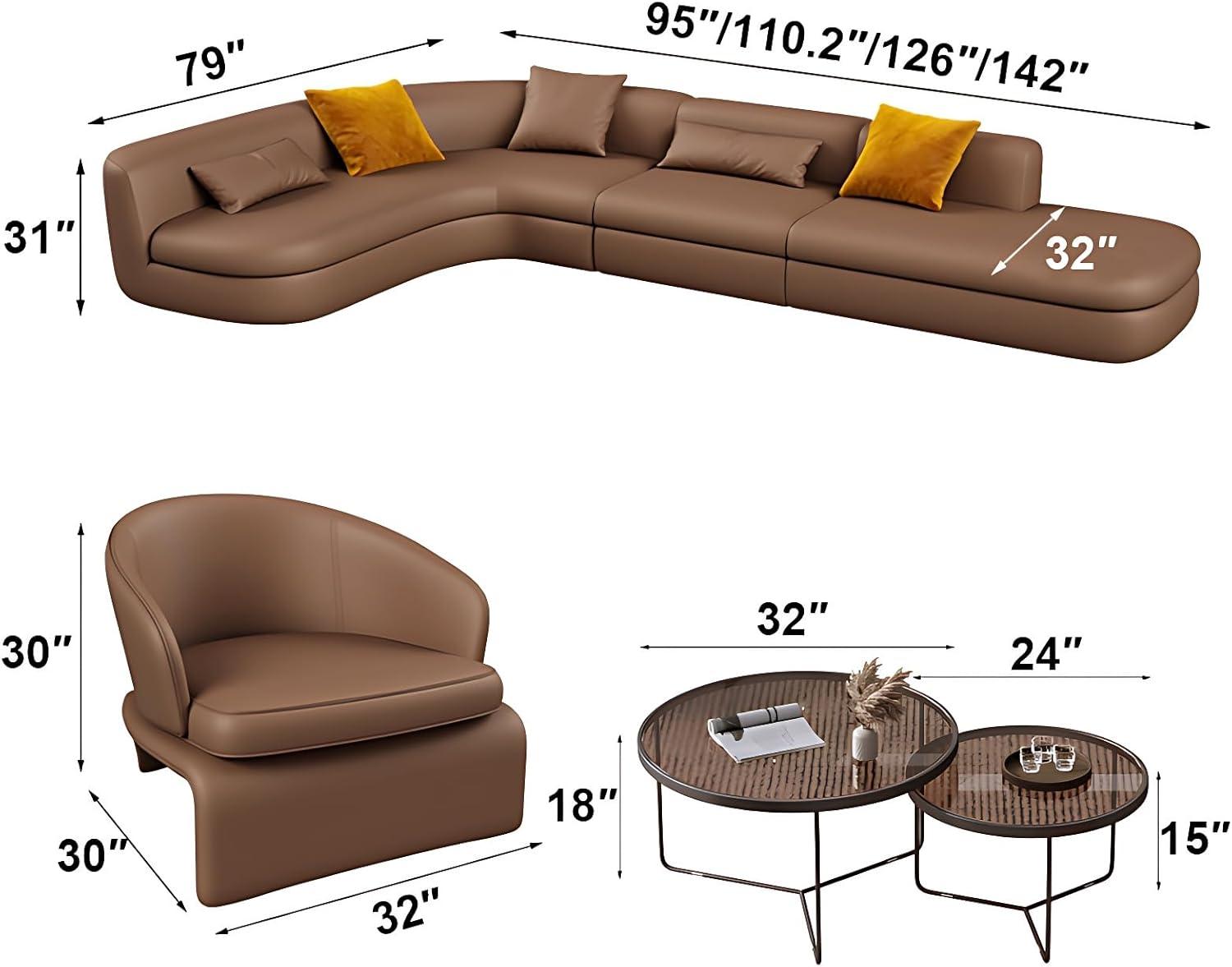
How many people can actually fit depends less on the total footprint and more on a few practical measurements you’ll use in the moment. In general, pay attention to usable seat width per person, seat depth, and placement of armrests or built-in dividers — those determine whether you sit shoulder-to-shoulder or need a little breathing room. A quick rule of thumb you’ll find yourself using in real life is to allow roughly 20–24 inches per casual sitter and 24–30 inches if people want more elbow room or to lounge. The small table below shows typical seating counts based on continuous seating width you might measure along the curve; these are observational anchors rather than fixed rules.
- Seat depth: deeper seats tend to become single loungers rather than two upright sitters
- Armrest intrusion: wide or padded arms reduce usable width at the ends
- back height: taller backs let people sit more upright,changing how shoulder space feels
| Approx. continuous seating width | Observed seating count |
|---|---|
| 60–72 inches | 2–3 people |
| 73–96 inches | 3–4 people |
| 97–120 inches | 4–5 people |
How this set measures up to your expectations and what it asks of your space
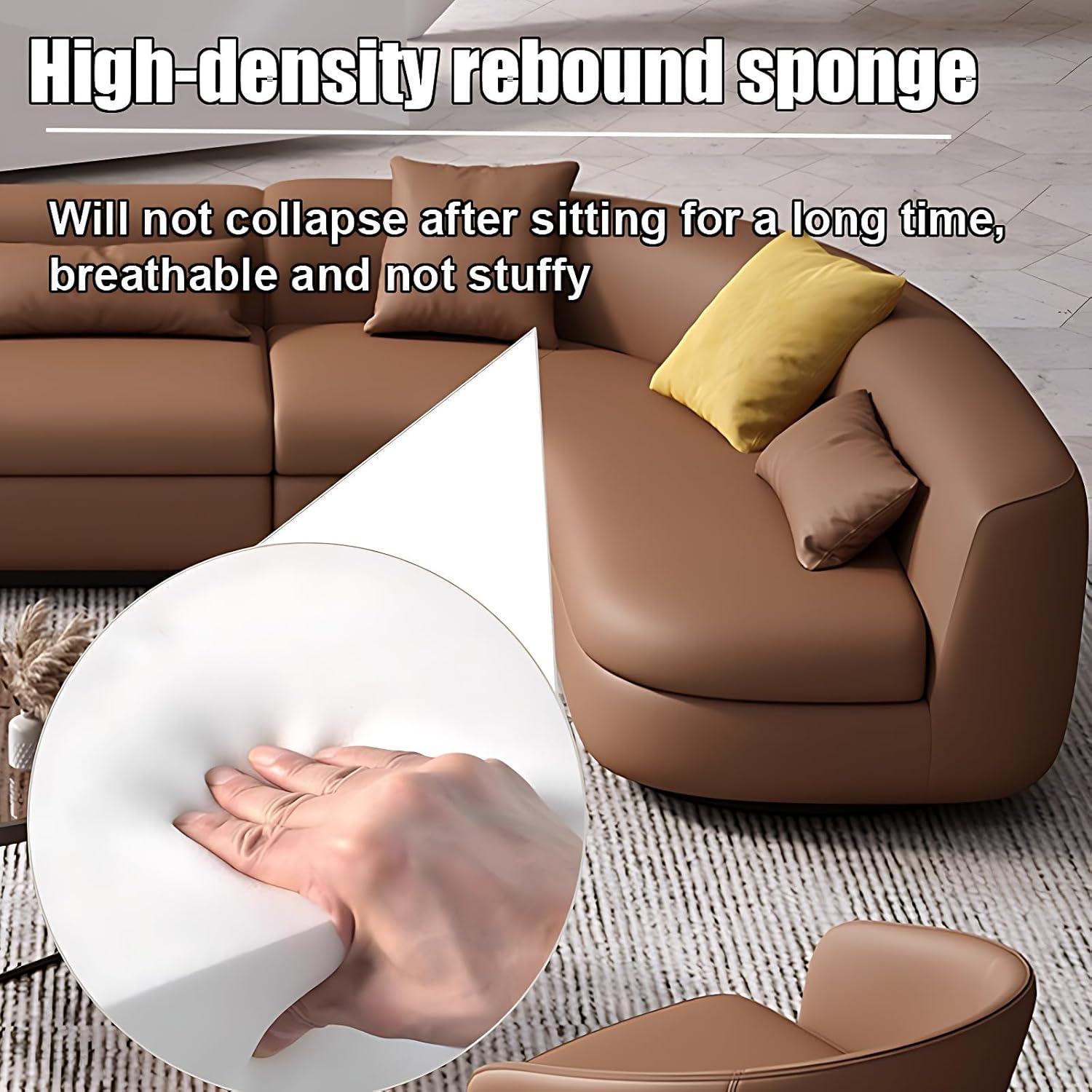
When placed in a living area, the set tends to deliver the visual weight and enveloping seating that many anticipate from a curved sectional: the sweep of the curve naturally defines a seating zone and draws attention toward a central focal point. In use,the cushions and rounded arm profiles create an impression of layered softness,while the scale of the pieces limits spontaneous reconfiguration — moving individual chairs or swapping orientations is possible but feels intentional rather than casual. The presence is noticeable across different light conditions; under bright light the surface reads more textured,and in dimmer rooms the arrangement can seem to occupy more of the visual field. There is a subtle trade-off between the sense of a unified lounge area and the space that must be given up for clear movement around it, so everyday routines like reaching for a side table or threading between seats may require slight adjustment at first.
Spatially, the set asks for a bit of planning to settle in comfortably. Key observations include:
- Circulation: Allow clear pathways around the outer curve to prevent furniture from feeling like an obstacle.
- Anchor elements: A rug or central table that follows the curve helps the arrangement look intentional rather than crowded.
- Lighting and sightlines: Directional light or an open sightline reduces the visual massing that can occur in smaller rooms.
| Consideration | Typical impact |
|---|---|
| Clearance around curve | Needed for comfortable traffic flow; a small buffer zone prevents scuffed upholstery |
| Visual anchor | Rug/table alignment prevents the curve from dominating awkwardly |
| Floor loading | Weight concentrated along the frame base — a solid floor or protective pads are commonly used |
Delivery, assembly, care and how you might arrange the pieces in everyday scenes
Delivery often arrives in separate cartons that are wrapped and labelled; when the courier sets them down you’ll notice the sections are heavy but manageable for two people, and protective corners or plastic sheeting are usually left in place until you’re ready to position the pieces. Assembly in most living situations amounts to locating the alignment brackets, sliding sections together and screwing on a few visible feet — there’s little in the way of tools or complicated steps, though cushions tend to need a brief overnight settling and you may realign a seam or two after the first few uses. For everyday upkeep, a few simple actions keep the set behaving predictably:
- Wipe spills promptly with a damp cloth; let leather-conditioner products sit in a test spot first.
- Vacuum seams and under cushions on a regular schedule to prevent grit wear.
- Rotate or plump cushions as they compress to maintain an even appearance.
There’s a natural trade-off: the durable surface cleans more easily than fabric, but it can show creases or superficial marks that respond best to gentle, occasional conditioning rather than abrasive cleaning.
When you place the pieces in real rooms they rarely stay fixed; small, habitual moves happen — someone pulls a chair slightly forward for laptop use, the coffee table drifts closer during snacks, or a section is nudged to open a walking lane. Think of the set as a tool for sculpting conversation and flow rather than a single, permanent shape: push the curved run to face a fireplace or TV for a traditional layout, form a shallow semicircle to encourage interaction, or use a subsection with its back to an entryway to create a subtle room divider. The table below sketches a few common arrangements and what tends to change after a week or two of use.
| Scene | Typical placement notes |
|---|---|
| Central living area | Curve faces focal point; coffee table centered inside arc; side chairs flared for circulation |
| Conversation cluster | Sections arranged into a tighter semicircle with chair pulled in toward the center for eye contact |
| Open-plan divider | Back of a section faces the dining zone to delineate space while keeping pathways about 30–36 inches wide |
Its Place in Everyday Living
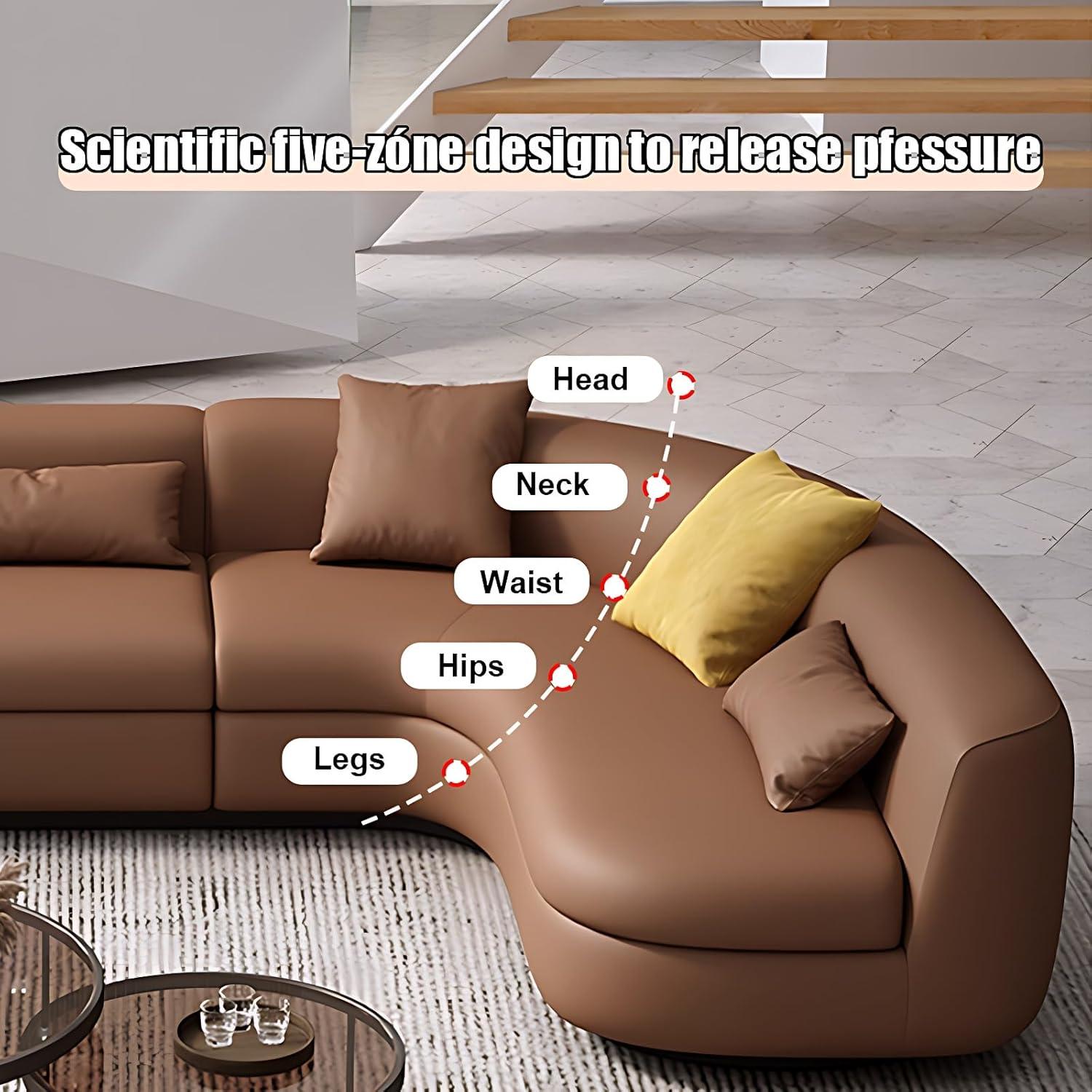
After weeks and months of living with the Curved Sectional Couches – Luxurious Sectional Sofa Set with Chair, Premium Leather, Solid Wood Frame Couch Sets with Coffee Table for Multiple Scenes (Brown-Chair*3,142IN), you notice how it settles into the room’s rhythms rather than how it looked on day one. In daily routines the cushions give a little more in the spots people choose, the coffee table gathers morning cups and stray mail, and the surfaces pick up the small scuffs and softening that come from regular use. as the room is used, the set stops asking for attention and becomes a quiet backdrop to breakfasts, evenings and the scattered ways a household moves through a day. It stays.
As an Amazon Associate I earn from qualifying purchases.