Marsail 80″ Loveseat Sofa: how it fits your space

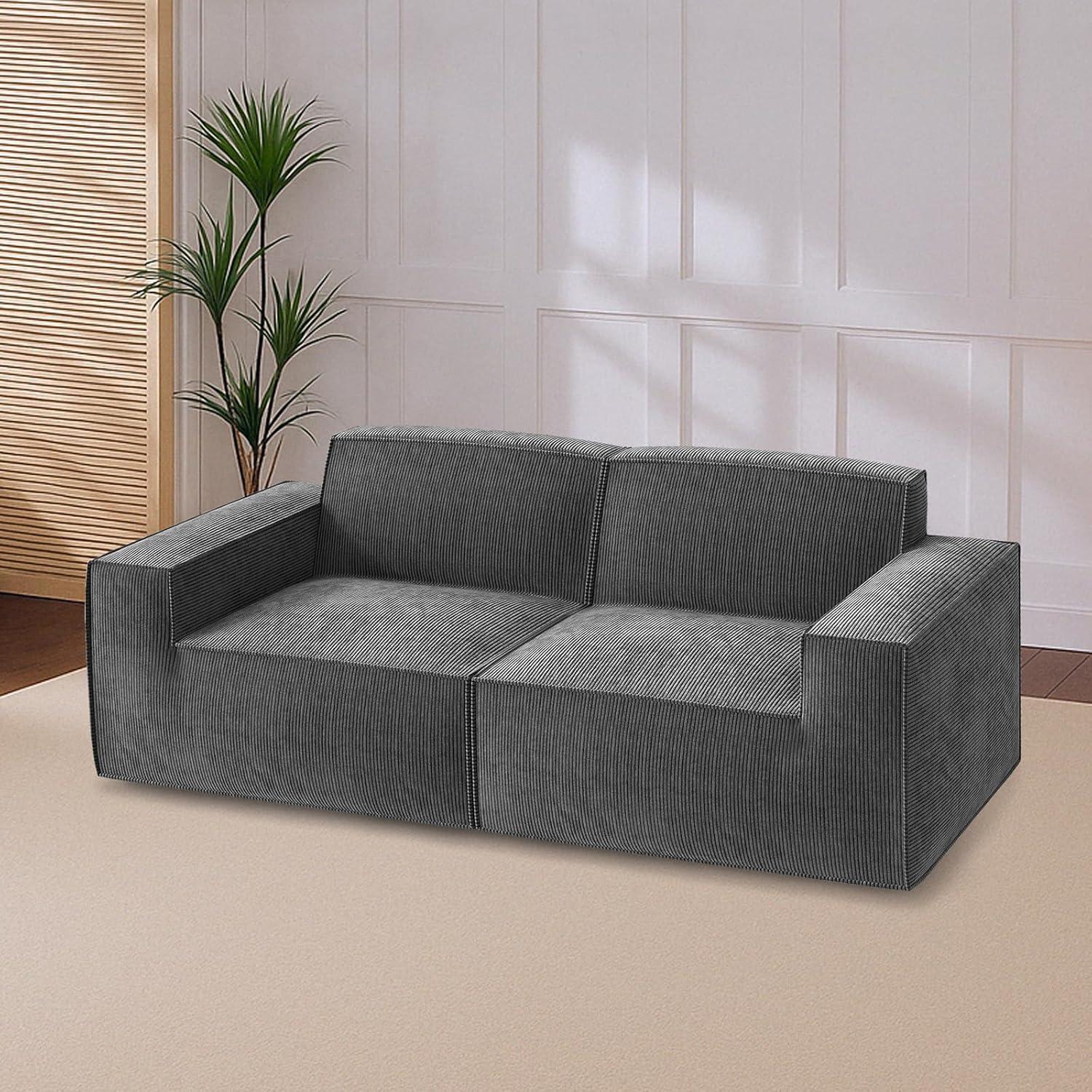
You notice the Marsail 80″ Loveseat sofa —the listing’s “cloud couch“—before you sit: light skimming the corduroy ribs makes the fabric read like soft topography. Up close, the deep seat catches your hand and the cushions give a slow, buoyant rebound; the taller back gives the piece a surprisingly upright silhouette for something called a loveseat. Its visual weight shifts the room’s balance, making the coffee table seem narrower and the cushions settle into broad, inviting folds. Settle into it for a moment and the contrast between plush corduroy under your palm and the sofa’s generous volume becomes the clearest first impression.
A first look at the Marsail loveseat cloud couch and what it brings to your living room

When the loveseat first lands in your living room it reads as a compact, relaxed presence rather than a rigid piece of furniture. The corduroy surface catches light in faint striations; running a hand across the back leaves soft lines that smooth out when you brush them with your palm. At close range the cushions look plump and inviting, and once you settle in the seat gives a gentle, immediate sink that settles into a lower, cocooned posture after a few seconds. Small habits appear quickly — you find yourself nudging a seam, fluffing a cushion corner, smoothing the fabric where it bunches — and those movements change how the piece sits in the room from one moment to the next.
The loveseat occupies space in a way that shifts the room’s feel: it creates a low, cushioned anchor rather than a towering focal point. The higher back frames your head and shoulders while the deeper seat lets you lean back or curl up; when you reposition, the base stays put and the modules line up with a slight, visible seam where they meet. Over time the surface shows light impressions where you usually sit and the cushions can redistribute as you move, which tends to make the sofa look lived-in rather than pristine. In most cases it arrives ready to use and, for a short while at least, subtly changes how you move through the space and where you choose to pause for a break.
The corduroy cover and frame up close textures, stitching, and materials you can feel
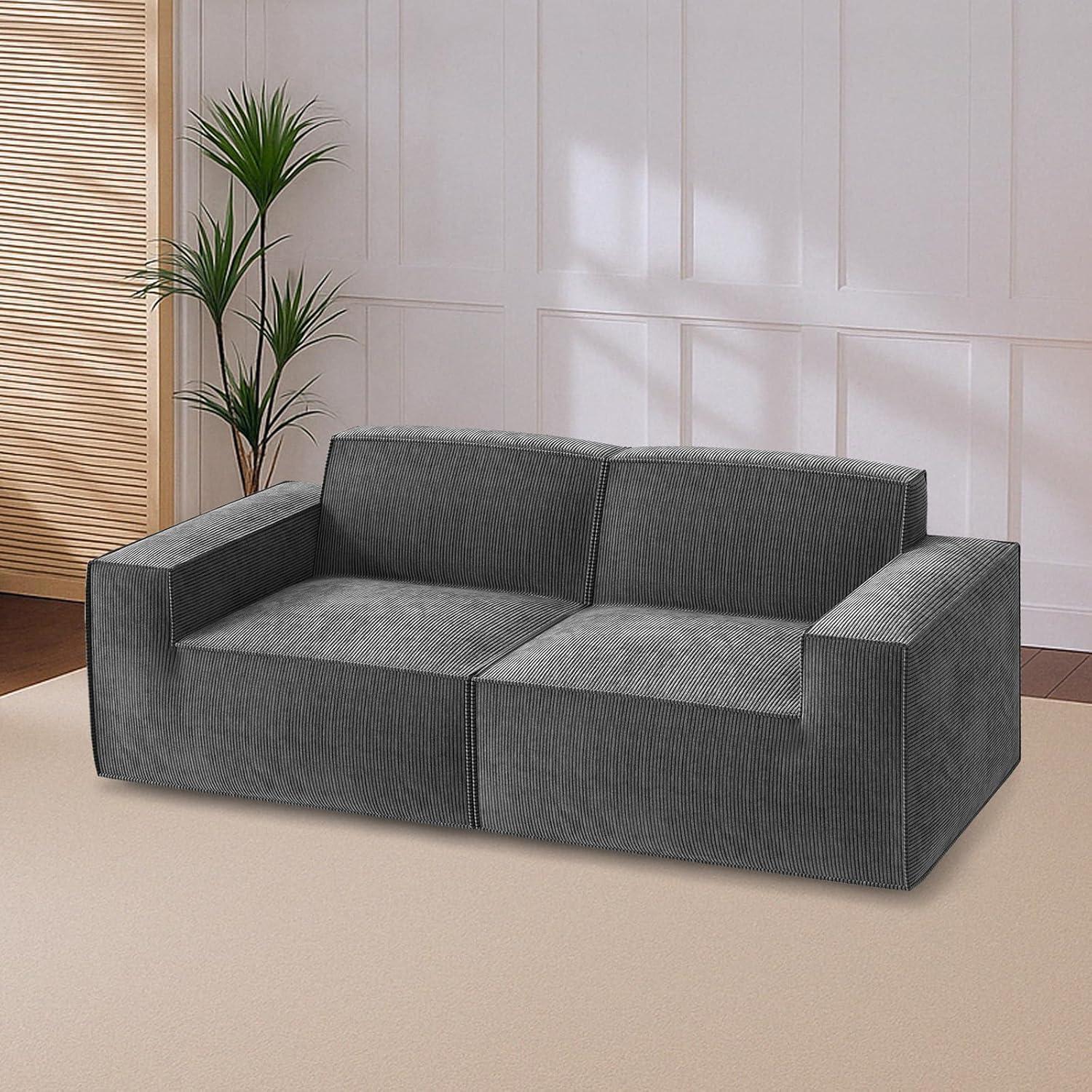
run your hand across the seat and the first thing you notice is the ribbed nap: narrow corduroy channels that catch and shift light as you move. the ribs have a gentle resistance under your palm — not slick, but not abrasive either — so your hand follows the lines more than it slides. When you brush the fabric the other way, it goes slightly darker and the ribs lay flatter; when you smooth a hand down again they puff back. That small give makes the surface feel warm and tactile; you might find yourself smoothing a cushion or tracing a seam without meaning to.
Edges and joins read differently to the touch. The seams along the arms and back sit as low ridges, with visible topstitching that you can feel more than see from a distance. Where panels meet the base the fabric pulls a little tighter, producing faint folding at corners that relaxes after a few sits.Press into the side or lean back and you encounter the underlying mass — a yielding, foam-like give that returns when you move. As you shift, the cover shifts with you, small wrinkles appearing and smoothing out when you adjust cushions or pat them into place.
| Area | What you feel |
|---|---|
| Seat surface | Distinct corduroy ribs, warm and slightly resistant under the hand; nap changes tone with brushing |
| Arm/back seams | Low ridges of stitching, fabric pulled taut at corners, faint creases that relax with use |
| When pressed or leaned on | Soft, compliant give from the interior fill; cover moves and settles, showing short-lived wrinkles |
What the deep seats and high back mean when you sit down

When you lower yourself into the seat,the first thing you notice is how far back your hips land. The depth pulls your pelvis toward the rear of the cushion, so your knees often sit a bit higher relative to the front edge than they would on a shallower seat.that shift changes how you plant your feet and how you hold your torso: you might instinctively scoot forward to sit upright for a laptop, or slide back and drape yourself when you want to lean into the backrest. The fabric creases and you find yourself smoothing the corduroy lane by lane as you settle; seams and cushion edges move slightly under your weight as you shift positions.
The high back is noticeable as soon as you lean back.It arrives at your shoulder blades and continues up behind your head, so reclining tends to feel like a controlled tilt rather than an instant flop. Your neck frequently enough finds support without an extra pillow, and you may rest your head against the top rail when you close your eyes. At the same time, the height changes how you use armrests and throws: reaching for a drink or turning to speak can feel like you’re pivoting from a deeper anchor point. Standing up from a fully seated position usually involves a small forward lean to counteract that rearward hip placement; after longer sits you might notice impressions in the upholstery where you settled most frequently enough.
| Typical position | How your body sits | Where you tend to adjust |
|---|---|---|
| Upright (working) | You sit more toward the front edge, knees slightly higher | Shift forward, smooth seat fabric, brace with feet |
| Reclined (watching) | You sink back so the backrest supports shoulders/head | Rest head against back, tuck legs or stretch out |
| Cross-legged / lounging | Your weight spreads across the cushion, pelvis more centered | Smooth larger fabric areas, settle into side seams |
How it occupies your space with modular pieces and a footprint you can plan around
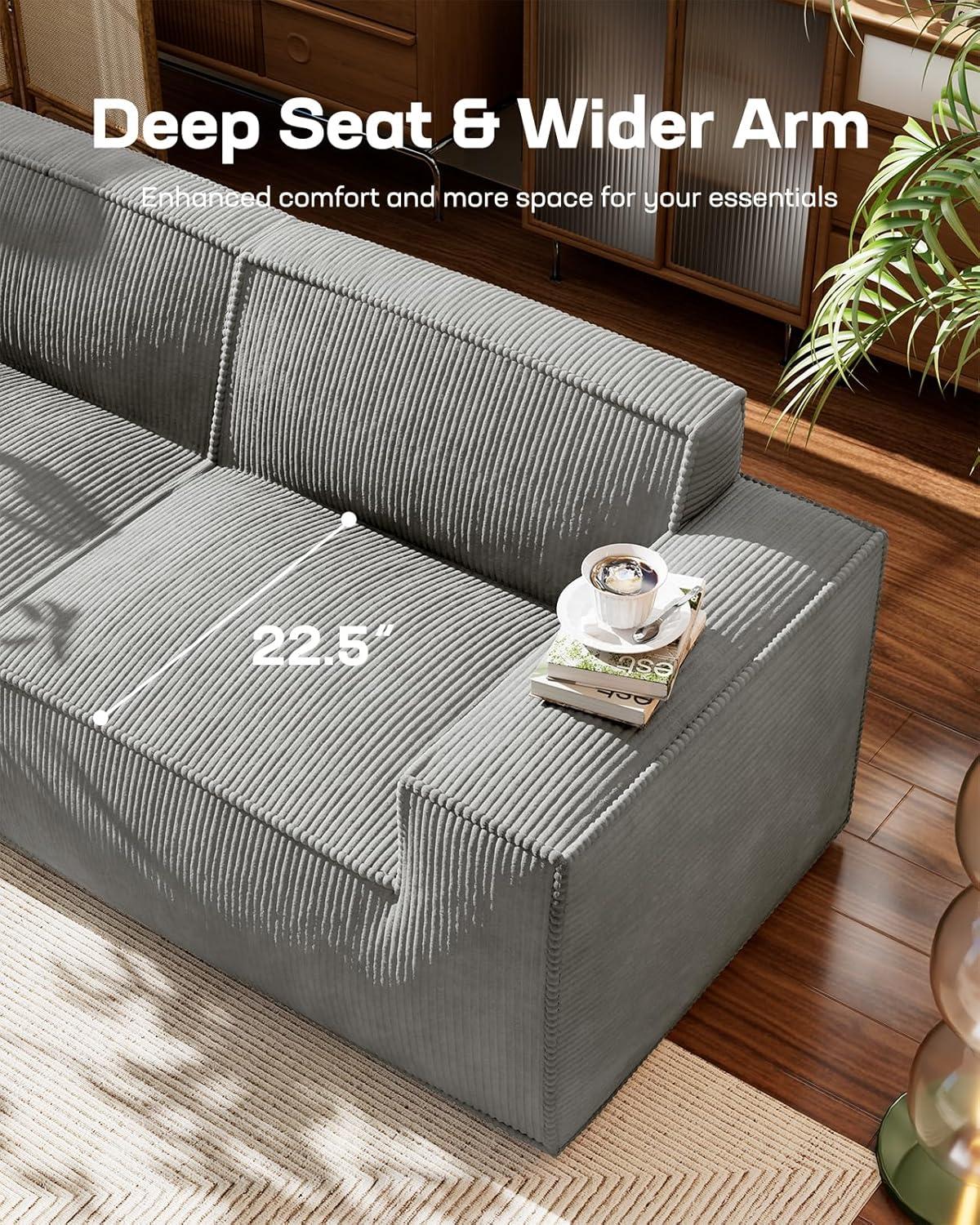
When you move the sections into place, they read as individual seating blocks that quickly stitch together into a single mass or sit apart as separate chairs, depending on how you push them up against one another. Pull a module away and you’ll notice a thin seam where the pieces meet; you tend to smooth that line with the heel of your hand, nudging cushions so the surface looks continuous. Placing the backs toward a wall gives the arrangement a grounded,room‑edge profile; rotating a piece so its back faces the center of the room turns it into a low partition that still keeps sightlines open. The base grips the floor enough to settle in, though you occasionally shift a unit slightly while reaching for a drink or straightening a throw.
How the set fills your floor changes with each configuration and alters traffic patterns in predictable ways. Expanding a section into a chaise slides the seating footprint out toward the room and can reduce the clear path between coffee table and doorway; separating modules into standalone seats opens up the floor but creates more visual clutter and small gaps to smooth. Over time the cushions compress into one another and you find yourself readjusting seams after guests move through — a minor habit that accompanies the versatility.
| Configuration | How it occupies space |
|---|---|
| Corner L‑shape | Extends seating along two axes,anchoring a corner and leaving a broad open area in front. |
| Chaise extension | Projects into the room from a main run of seating, shortening a circulation lane on that side. |
| Separated modules | Creates multiple small seating pockets and visual breaks, increasing usable floor but requiring more alignment. |
| Facing arrangement | Forms an island for conversation, defining a zone without relying on walls. |
These patterns tend to repeat as you live with the pieces: you move a section to make room for visitors, smooth seams afterward, or push a module back to expand walkways. The footprint you plan around is therefore as much about the shapes you build as the little adjustments you make each day.
How the Marsail loveseat measures up to your expectations and where it shows limitations

Out of the box, many users find the loveseat matches the mental image of a plush, enveloping seat: the cushions give way readily and the back feels substantial when settling into an upright position.In everyday use, however, the impression shifts a little. The fill compresses with repeated lounging, seams and corduroy ribs show faint impressions where weight concentrates, and occasional smoothing or nudging of the modules becomes part of the routine to keep lines even. Movements like shifting position or sliding a laptop across the lap make the sofa respond immediately — a soft sink first, then a slower rebound over the course of an evening.
Expectations around flexibility and neatness show similar patterns. Reconfiguring pieces works as advertised, yet modules can drift apart during heavier use and may need to be realigned after guests or cleaning. The taller backrest is noticeable when sitting upright and tends to cradle the shoulders; when reclining deeply, the support relocates lower on the spine as the fill settles. stains and pet hair behave predictably with textured fabric: they collect in the pile and in creases, and routine brushing or vacuuming gradually restores the surface rather than returning it to a like-new look instantly.
| Expectation | Observed behavior |
|---|---|
| Immediate plush comfort | Present at first use; cushioning softens further with extended sitting |
| Stable modular layout | Easy to arrange, but modules may separate under active use and require occasional adjustment |
| Upright back support | Noticeable when seated upright; support shifts as one reclines and the fill compresses |
| Surface appearance over time | Corduroy texture shows impressions and collects fibers; light maintenance restores appearance incrementally |
View full specifications and available size and color options
Everyday scenes with the cloud couch a look at use during lounging, snacks, and casual hosting
When you settle in for a quiet evening, the couch shapes the way you lounge: you curl up with knees tucked, stretch out diagonally, or lean back and prop your feet on the arm without much fuss.Small, automatic movements punctuate those moments — you smooth a seam, tuck a throw under your legs, nudge a cushion so your lower back sits differently. Drinks and a remote are often within arm’s reach on the wide surface beside you; crumbs slip into the creases and show up later when you run a hand along the seat. Over the course of watching a show or reading, the cushions soften where you favor them and you’ll notice yourself shifting position more than once to find the next agreeable spot.
In casual hosting scenes, the couch becomes a live landscape of cups, plates, and elbows: people tend to perch along the front edge, lean into conversation from opposite ends, or sprawl when the conversation slows. It can feel like a pleasant, informal center for a small group, with modules moved imperceptibly as guests rearrange themselves. Spills and snack debris commonly collect around seams and between cushions, and you’ll often reach for a napkin or a quick swipe of the upholstery after someone sets down a plate. In practice, it tends to encourage relaxed, spread-out sitting and easy, low-key gatherings rather than formal, structured seating
How the Set Settles Into the Room
After a few weeks of ordinary evenings and weekday mornings, you notice how the marsail 80 Loveseat Sofa settles into its corner without fanfare. It subtly nudges the room’s rhythms — a place to lean during coffee, to fold a blanket over, to pause with a book — and the deep seats take on different habits depending on who uses them. The corduroy keeps soft impressions where shoulders and knees return most frequently enough, the surface wearing into a quieter, familiar look as the room is used in regular household rhythms. You find it stays.
As an Amazon Associate I earn from qualifying purchases.