Natural LINE U Dining Table, fits your daily family meals

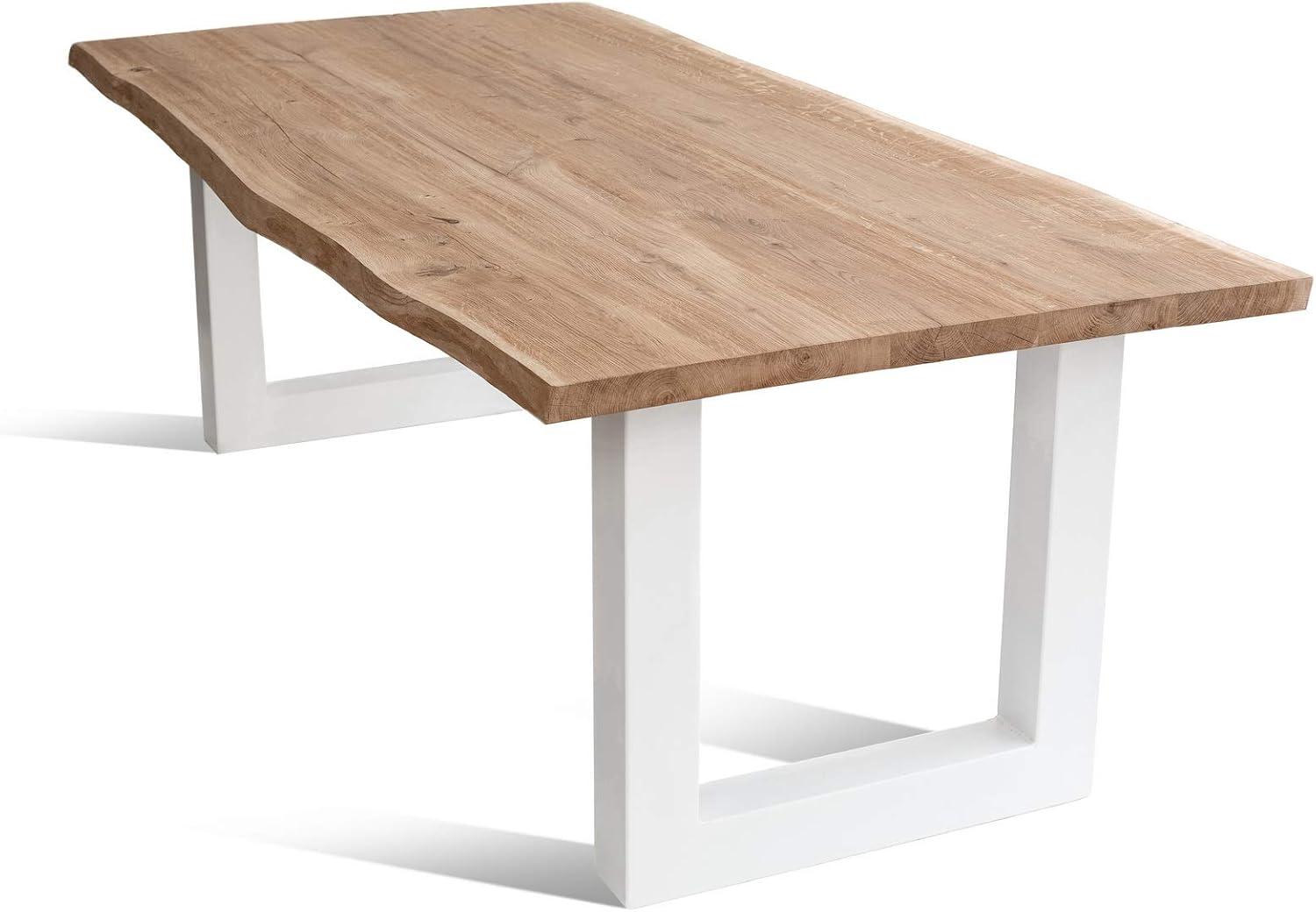
Sunlight pools along the plank top as you step into the room, catching knots and a grain that reads like a map. The Natural LINE U dining table — a wide, handmade oak slab perched on slim metal legs — feels collected rather than catalog-made; the rounded live edge and tiny fissures lend it a lived-in honesty. Run your hand across the German‑oil finish and you notice warmth and a faint texture; small spills bead instead of soaking into the wood.Its length and visual weight subtly rearrange how the seating settles around it,and under your palm the slab is reassuringly solid rather than delicate.The overall impression is quietly grounded: a practical, tactile presence that already looks like part of the room.
At first glance in your dining room what the Natural LINE U Dining Table brings
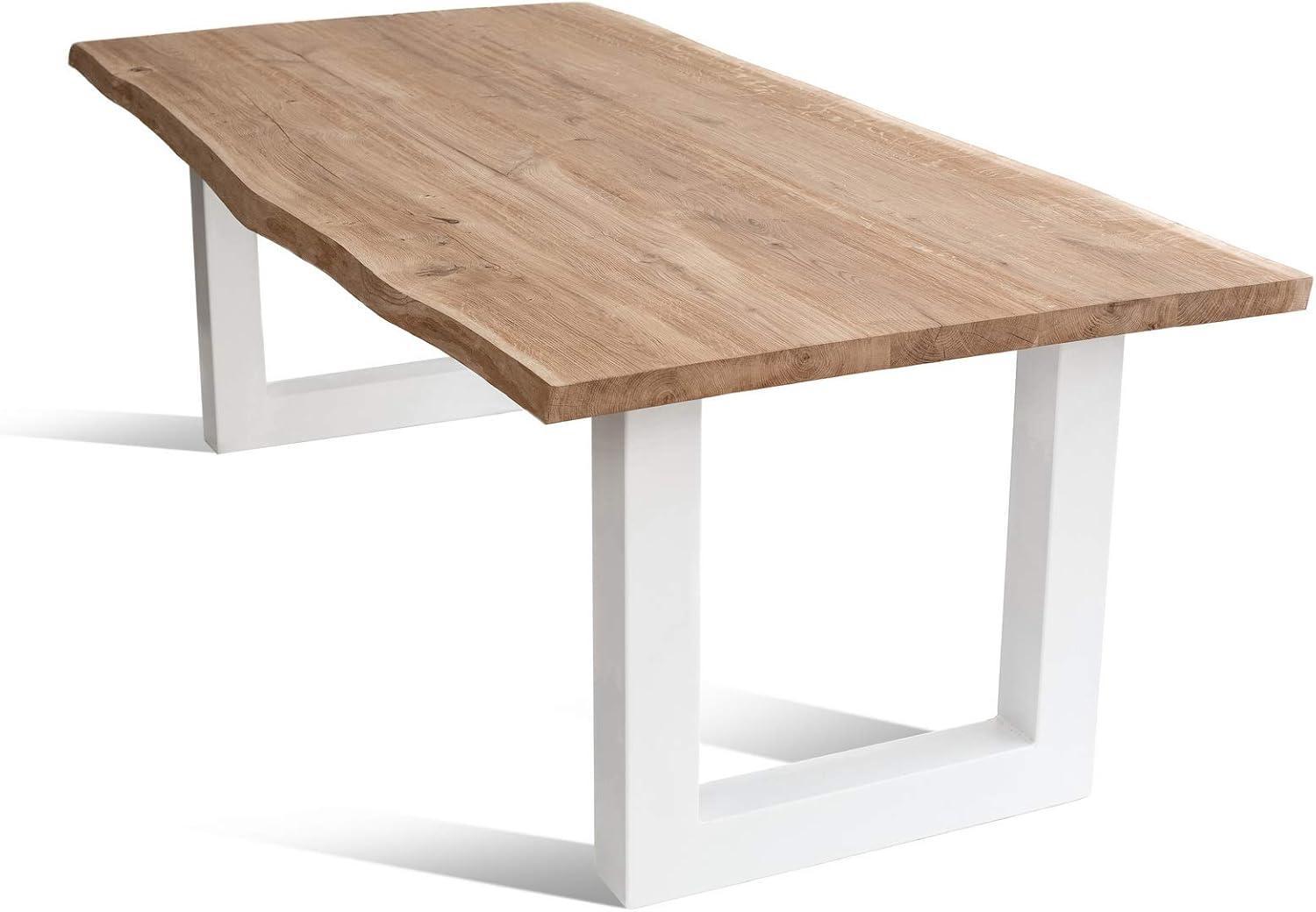
When you step into the dining room the table reads first as a long, grounding element that organizes the space. Light skims across the top and brings the grain forward in different places; close-up you notice knots and small fissures that interrupt the surface and give it a lived-in, organic look. The profile draws the eye along its length, while the contrast between the wooden top and the supporting structure creates a quiet cadence of lines and negative space. In passing you find yourself smoothing a napkin or brushing a stray crumb into a hollow—the surface invites those small,habitual adjustments.
From most vantage points it changes with moments: late-afternoon sun deepens the tones, overhead lighting emphasizes texture, and shadows from the supports map out sharper geometry beneath. The finish shows a soft sheen rather than a mirror gloss, so fingerprints and water rings appear as subtle interruptions rather than glaring marks. For some households this visual complexity reads as a focal anchor; for others it simply becomes part of the room’s daily choreography.
How its sculpted edges proportions and finish read in natural light
When natural light moves across the surface you notice the sculpted edges first: their irregular profile casts a thin, shifting shadow along the apron so the table’s silhouette seems to change as you walk around it. From a low angle in the morning those contours read more pronounced,emphasizing the depth between high and low points; midday sun compresses that relief,making the edge appear flatter at a glance. If you lean in to brush crumbs away or slide a placemat,the way the edges catch the light changes in a beat — small highlights jump from ridge to ridge and the visual weight of the tabletop shifts depending on your position in the room.
The finish responds similarly. In luminous, direct light the surface shows a soft sheen with fine striations of grain and the occasional knot becoming more visible; on overcast days the same area looks more even and the texture quiets. You’ll see tiny smudges and fingerprints more readily when sunlight hits at a grazing angle, and wiping or nudging items across the top alters the pattern of those marks for a while. In most cases the finish preserves subtle color depth rather than producing mirror-like glare, and it tends to mellow as the day warms toward late afternoon.
| Light | How it reads |
|---|---|
| Morning, low-angle | Scalloped edges throw longer shadows; grain and knots look pronounced |
| Midday, direct | Relief appears softened; sheen is stronger, small surface marks become visible |
| Late afternoon, warm | Colors deepen slightly; highlights warm, edges gain a gentle glow |
| Overcast | Overall look is more uniform; texture reads subtler and less contrasty |
What the wood grain joins and surface feel tell you about its construction

When you run your hand along the tabletop, the places where the grain changes tell a story about how the top was assembled. Some seams line up so the grain seems to continue across a joint, while others show a subtle color shift or a hairline glue mark; these cues point to a surface built from matched boards rather than one continuous slab. Small knots and the occasional filled imperfection sit flush with the surface; you can feel them more than you see them, as if a craftsman smoothed the transitions rather than hiding them under a thick coat.
The surface itself feels warm and a little “toothy” under the palm rather of slick and glassy. When you sweep a finger across it, there’s a faint drag where sanding stops meet, and fingerprints tend to blend into the finish instead of beading on top. The tabletop edge is uneven to the touch in places, the contour following the wood’s natural outline; that irregularity reads like minimal milling and a choice to keep the wood’s original profile. Around fastener areas and where the legs meet the top, the join lines sit close but you can notice slight compression or tightening marks if you press—small indicators of mechanical fastening and post-assembly settling that appear over use.
| What you notice | What it suggests about construction |
|---|---|
| Grain continuity across some seams, color shifts at others | Top is composed of joined boards with selective matching rather than a single slab |
| Warm, slightly textured surface; fingerprints blend | A penetrating, hand-rubbed finish rather than a thick surface film |
| Irregular, natural-feeling edge and small compression marks near joins | Minimal edge milling and mechanical fastening visible under light use |
How it sits with your chairs and accommodates everyday place settings

When chairs are pulled in around the table, they generally slide close to the apron with a small, visible gap rather than tucking flush under the top. Slim-profile dining chairs and benches sit neatly along the sides; wider, upholstered seats tend to sit a little farther out and prompt a habitual nudge of the chair back toward the table after everyone stands. The placement of the metal legs means some chairs end up offset from the absolute corner, so people ofen angle their seats by a few degrees without thinking about it.
Place settings lay out across the surface with a comfortable band of usable tabletop down each side and a clear corridor in the middle for serving dishes.Settings don’t feel cramped in typical everyday arrangements, though larger serving platters usually stay centered and are passed rather than placed in front of a single diner. Chairs with hard feet can scrape when guests shift forward; felt glides or a slight scoot back tends to quiet that movement. in most cases the combination of top profile and leg positions creates predictable rhythms — sliding, adjusting cushions, angling seats — that become part of routine use.
| Chair type | Observed fit behavior |
|---|---|
| Slim-backed dining chairs | Tuck close with a small gap; little adjustment needed |
| Armchairs / bulky upholstery | Sit slightly farther out; tend to be angled at corners |
View full specifications and size options
How it matches your expectations and where it may limit your plans
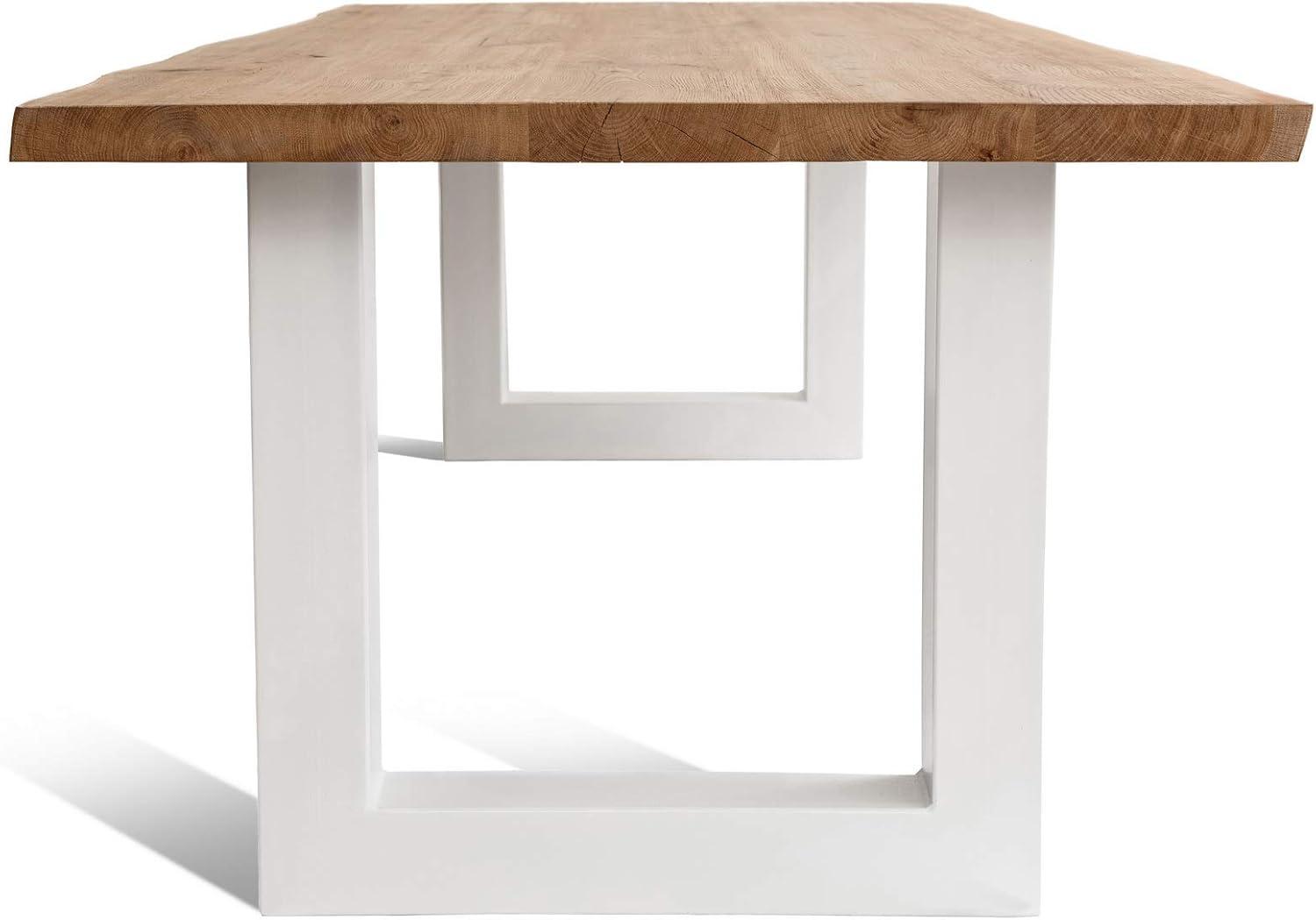
In everyday use, the wood’s irregular surface and live edges show up exactly as photographed: grain patterns and small knots become focal points when objects are set down and light hits the top. The oiled surface tends to present a low sheen that softens scuffs and helps routine wiping feel straightforward; spills usually lift with a cloth if attended to promptly. The metal supports keep the surface steady while people reach across it, and the overall mass of the piece feels deliberate when carrying plates or arranging a spread, so the table behaves like a solid, considerable surface rather than a lightweight occasional piece.
Those same characteristics also introduce practical limits in daily life. The live edge and any shallow depressions can catch crumbs and small debris, leading to occasional smoothing or brushing during cleanup; prolonged exposure to damp or colored liquids can linger if not wiped instantly, and finishes tend to develop a patina with regular use. Its weight and footprint make repositioning or moving through narrow doorways awkward without help, and the long span changes movement patterns around it — passing dishes, reaching across the top, or parking additional seating may require conscious adjustment. Metal legs can transmit floor imperfections to the top unless feet are adjusted, and their exposed finish can show marks over time in high-traffic settings.
View full specifications and options
Practical dimensions and placement notes for the rooms you live in
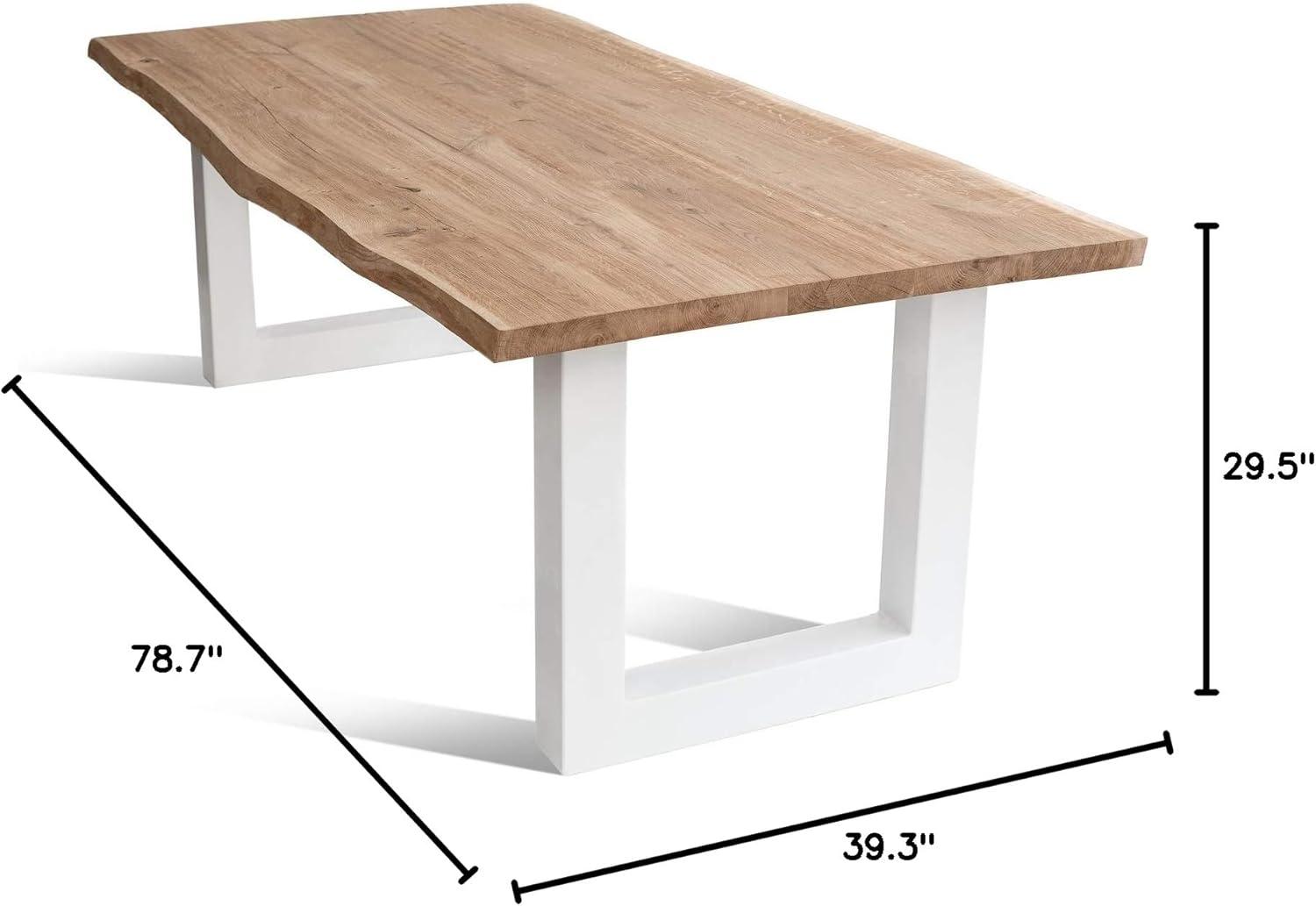
You’ll notice the table occupies a definite rectangular presence: the tabletop measures 78.7″ × 39.3″ with an overall height of 29.5″ and a thickness that reads about 1.57″ at the edge. In everyday use the length and width translate into a footprint that feels like a long dining island — chairs are routinely pulled back and slid along the sides, and the metal legs become a tactile reference when you move past the table after clearing plates.
| specification | Measurement (approx.) |
|---|---|
| Tabletop (L × W) | 78.7″ × 39.3″ |
| Overall height | 29.5″ |
| Top thickness | 1.57″ |
| Seating capacity | 10 people (staggered along length) |
| Typical cleared footprint (observed) | Roughly 11′ × 8′ when allowing circulation space around the perimeter |
In many dwellings, leaving about 36″ of clear space around the perimeter tends to allow chairs to be pulled out and people to pass behind seated guests without frequent awkward shuffles. The metal-leg placement can feel like a pinch point when chairs are tucked in closely; without measuring, people will frequently enough slide a chair an extra inch or two to avoid brushing a leg, and cushions get smoothed down after each use.
As the top shows its natural edge and grain, small objects habitually find the uneven line and get nudged toward the center over the course of a meal; cups and glasses are commonly shifted inwards as plates are passed. Moving the table occasionally — even a short shove to adjust alignment with a window or light — reveals that the weightiness of the oak keeps it from drifting easily, so repositioning tends to be a two-person action in most homes.
See full specifications and size options
How It Lives in the Space
You notice, over time, how the Natural LINE U Dining Table settles into the flow of the room: mornings spill coffee at one end, magazines collect at another, and it adapts to the small, repeated movements of daily routines. In regular household rhythms it softens the edges of how space is used—chairs pull out and push back with a weight that’s become expected, surfaces take tiny traces of use and carry them like ordinary marks. Comfort turns up in the way your shoulders untense at the table and in the familiar way the finish wears in under plates and palms. It moves from being new to simply being part of the room and quietly stays.
As an Amazon Associate I earn from qualifying purchases.