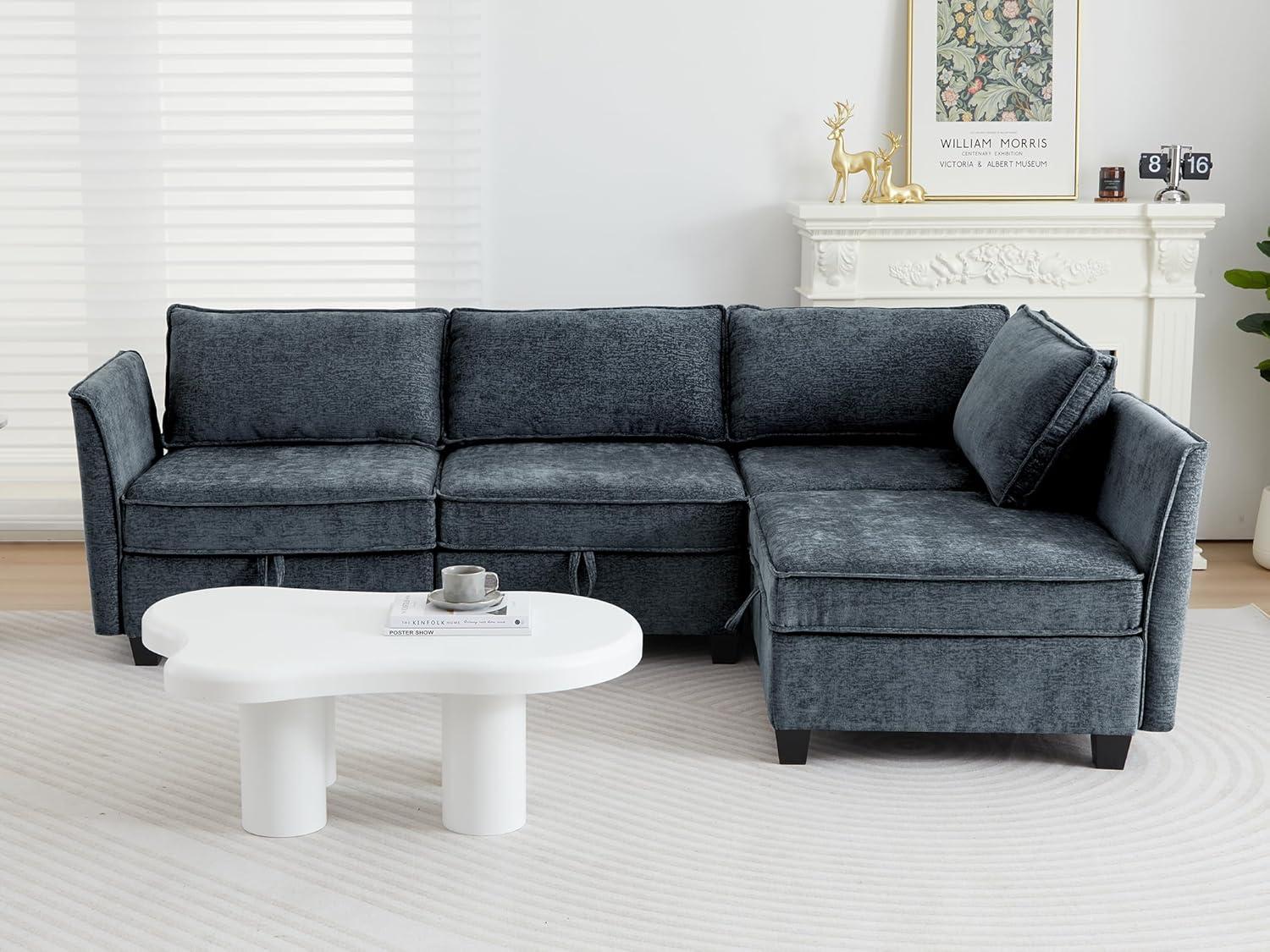
ORRD Corner Modular Sectional Sofa Set: in your space

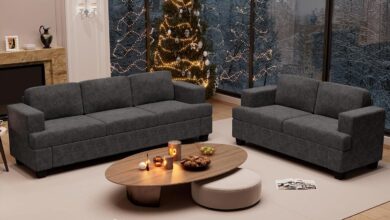
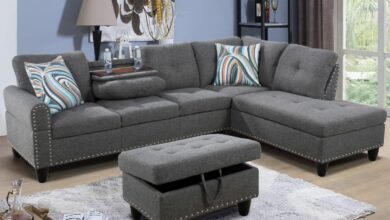
Afternoon light catches the tight weave of the blue‑gray fabric as you sweep a hand across the seat — slightly textured, pleasantly cool, not plush.This is the ORRD Corner Modular Sectional (Blue Grey), and set up as a four‑seater it occupies the room with broad, blocky seats and low backs that make it read bigger than a slim sofa but less bulky than a full sectional. You notice the storage when a cushion lifts: roomy hollows with a wooden base underneath, the kind of detail that changes how the pieces behave in everyday use. From a few feet away the lines feel restrained and modern; up close the cushion density and the way the back pillows sit flatter than the bases tell you more about its construction than any label could.
A first look at your ORRD corner modular sectional and what it brings into a room
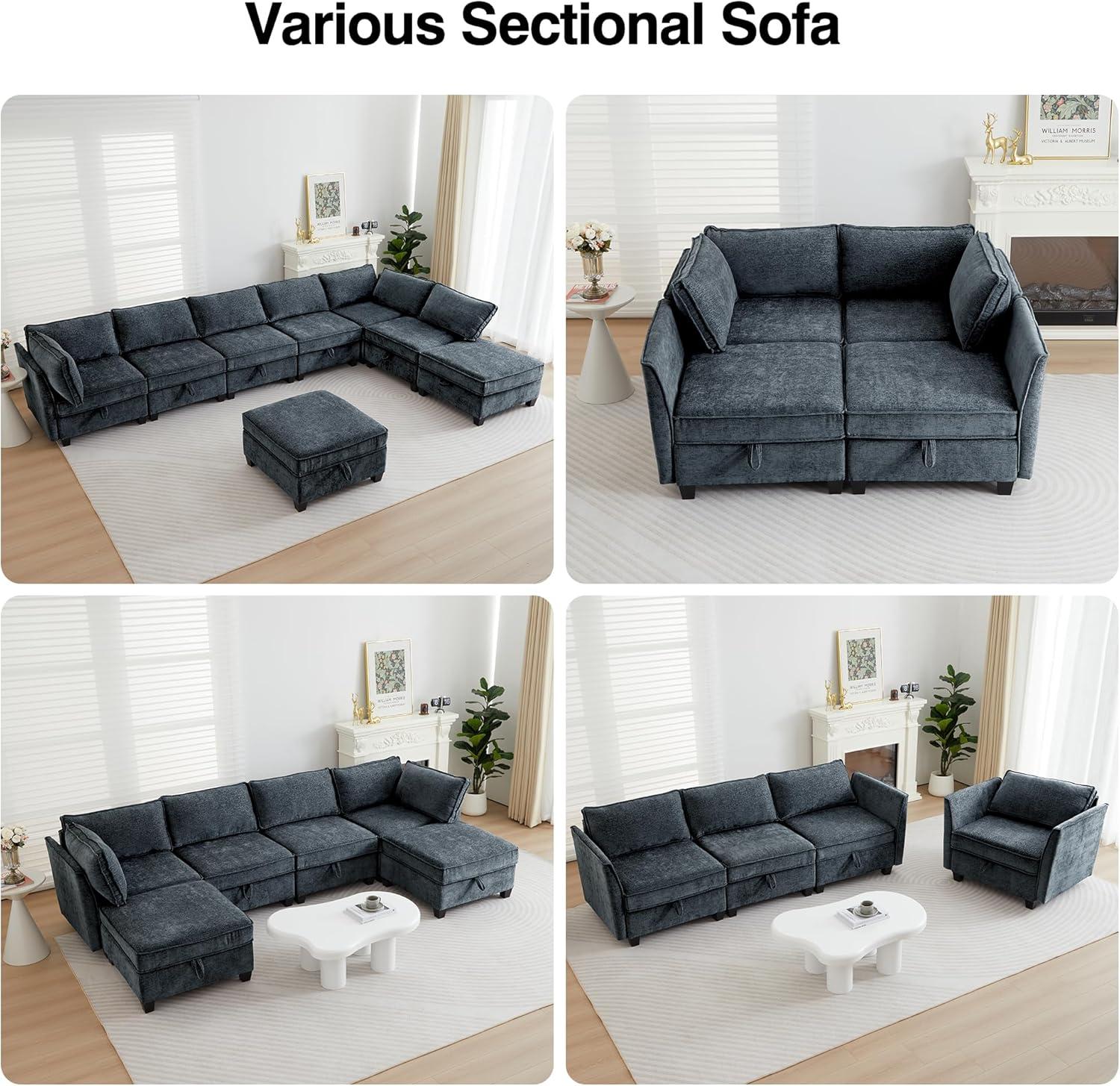
When the pieces are set in place, you first notice a low, linear presence that reads more like a block of usable furniture than a single chair.The modules line up flush along the floor and the stitched seams register as a repeating rhythm across the length; under different light the blue‑grey fabric can cool toward slate or warm slightly, and you’ll find yourself squinting at angles where the hue shifts. The feet are just visible beneath the base, so the whole assembly feels anchored without looking heavy.
Move closer and the details change: cushions settle where you touch them, the top of a back cushion compresses and then slowly regains shape, and you catch yourself smoothing the fabric or nudging a seam back into place. Lift a seat to check the storage and the compartment opens into a shallow, usable cavity that disappears once you lower the cushion again; connecting points between modules are discreet but sometimes need a small push to sit evenly, which can leave tiny gaps that close after a little adjustment. The backrests sit lower than taller armchairs, so when you sit back you notice how the shoulders rest first and the head remains free.
| Observed element | How it shows up in the room |
|---|---|
| Modular silhouette | Creates a horizontal anchor, defines seating zone without blocking sightlines |
| fabric and color | Reads differently with light; texture softens nearby reflections |
| Cushions and seams | Shift slightly with use; you’ll adjust them to keep lines tidy |
| Hidden storage | Stashes items out of sight but requires lifting cushions to access |
In short, your first encounters are tactile and iterative: you place, sit, smooth, and re‑align. Small habits—rotating sections, plumping cushions, tugging connectors—tend to emerge quickly as the pieces settle into daily use and as the room’s light and activity reveal how the sectional sits in the space.
Unboxing and assembly: how the panels arrive and come together in your space
When the shipment arrives you’ll likely be unpacking several medium boxes rather than one oversized crate. each box is wrapped in plastic and foam corners; as you cut away the packaging the panels emerge with protective film along exposed edges and the seat cushions in their own sacks. There’s a faint new-fabric smell that fades after a day, and small creases in the upholstery that smooth out once the cushions settle. You’ll notice the hardware — screws, short bolts, a handful of plastic caps and an Allen key — usually grouped in zip bags and taped to a frame piece or tucked into the manual.
| Typical box | What you’ll find inside |
|---|---|
| Box 1 | Base panels and feet (wrapped), labeled inserts |
| Box 2 | Back panels and arm piece(s), protective foam |
| Box 3 | Seat cushions, loose hardware bags, instruction booklet |
Putting the pieces together tends to unfold in short, practical moves: you lay the larger modules on their backs or sides to fasten legs, peel away the protective film, then bring parts upright and line up the metal plates or connector tabs. The connection feels mechanical — a slide or slight downward push — and once joined the seams sit flush most of the time; occasionally you’ll nudge a corner or give a cushion a tweak so the fabric lays evenly. The cushions settle into place with a soft tug and a little smoothing of seams, and the storage lids (if present) lift and close with the expected hinge movement, though you may shift cushions around to make the gaps less visible. Throughout assembly you’ll find yourself smoothing fabric, shifting cushions slightly, and testing a connector or two before everything sits how you imagined it in the room.
The blue grey silhouette up close — fabric, frame, and the hidden storage you can spot
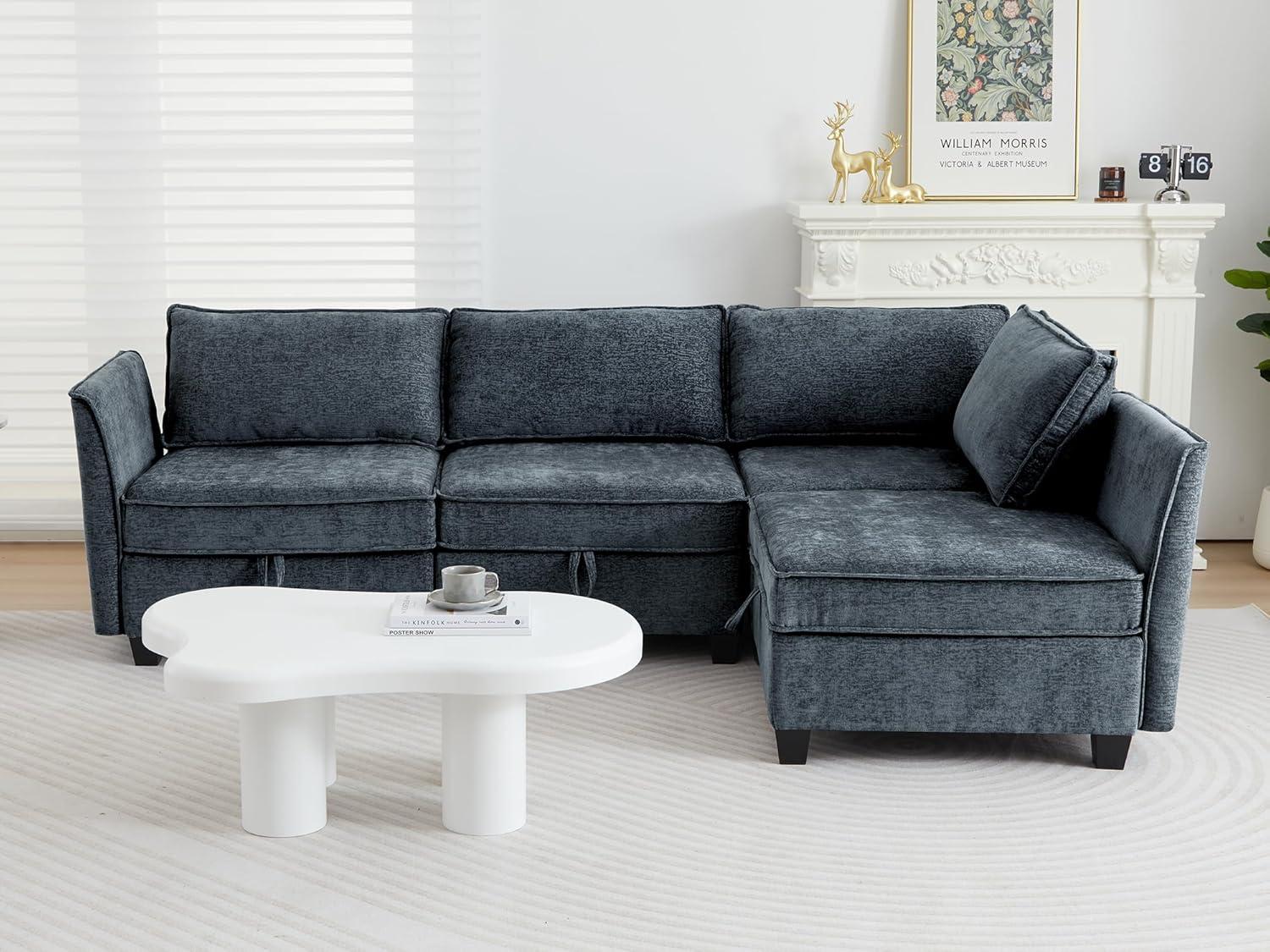
Up close the blue‑grey cover reads as a matte, slightly textured weave that shifts tone with movement — in bright light it leans bluer, in softer room light it softens toward grey.When you sit and stretch an arm along the back the fabric catches light differently across the grain; small directional nap and faint weave lines become noticeable where your hand passes. The seams are visible but not fussy: top‑stitching runs along the cushion edges and the joins where modules meet, and you’ll find yourself smoothing a seam or nudging a corner back into place after leaning against it.
The base and frame present themselves low to the ground,with the support legs tucked under so most of the structure is concealed until you crouch down. From the side the modules meet at clipped connectors and low metal brackets that hide under the frame; when you pull two pieces apart during rearranging those connectors are what you notice first. The cushions sit on a firm platform rather than suspending on springs, so when you press down the platform gives a uniform response and the upholstery moves with it — the fabric bunches slightly at the front edge and the backing can crease where it meets the frame.
Storage is the detail you can actually use without special tools: each seating unit lifts to reveal a storage well beneath. You access it by levering the seat cushion up from the front edge; there’s no prominent lid hinge on most sections, so the cushion lifts as a single piece and you tend to brace it with one hand while sliding items in with the other. The compartment shows as a deep cavity lined in the same or a similar fabric and framed by the sofa’s wooden base, and when multiple modules are connected the front lip of the storage can sit tight against the adjacent piece — that alignment sometimes means you adjust a cushion or shift a module before reaching the full depth.
| Feature you can spot | how it shows up in everyday use |
|---|---|
| Blue‑grey fabric | Tone shifts with light; hand movement reveals weave and nap; seams smooth out with a quick swipe |
| Frame & connectors | low‑profile legs keep the base hidden; metal clips and brackets are visible when moving modules apart |
| Hidden storage | Seat lifts from the front into a deep, fabric‑lined well; access can feel tighter when pieces are attached |
How the seating behaves during everyday use: your cushions, backrests, and lounging positions
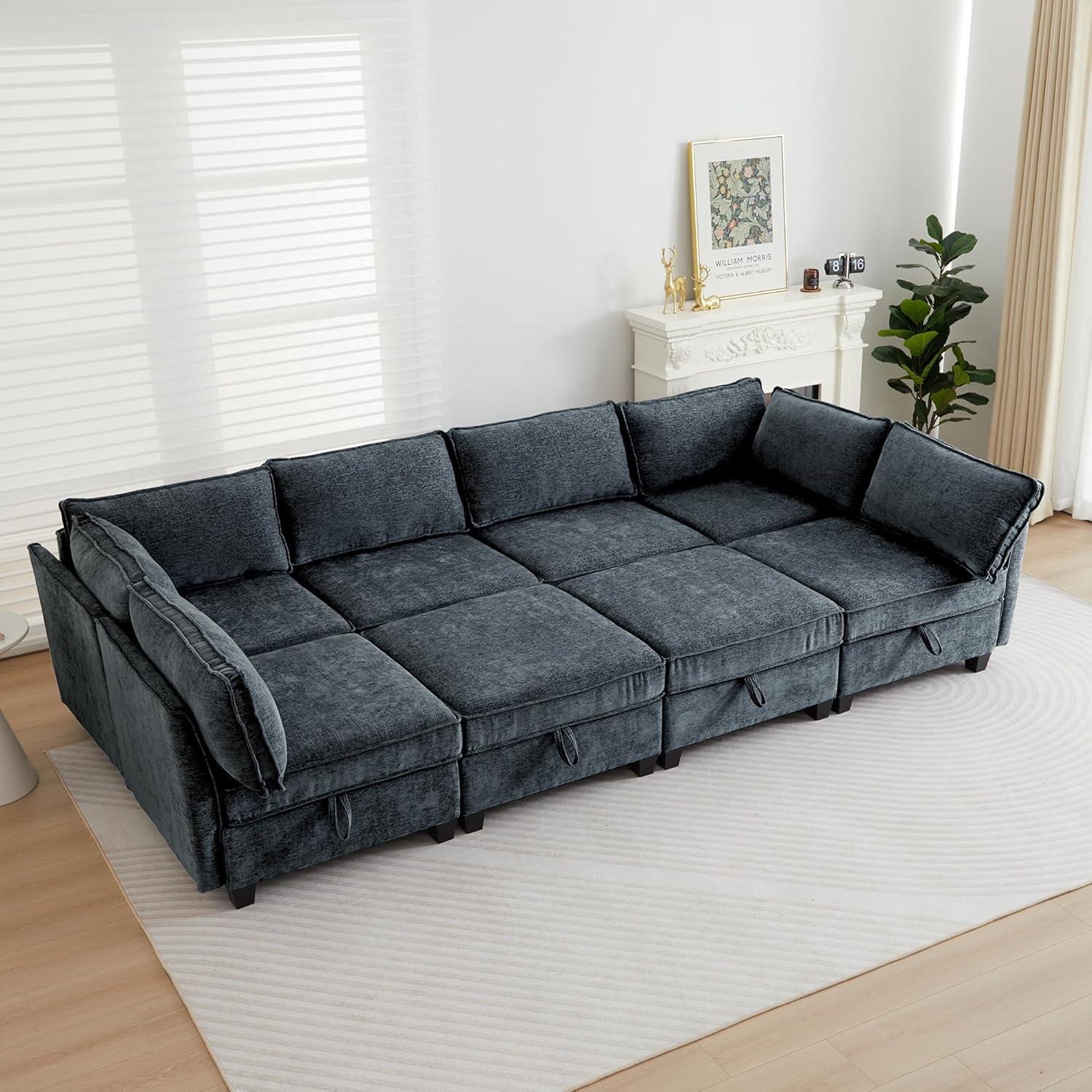
The seat pads present as broad, relatively firm platforms that give a little under weight rather than collapsing. In everyday use they tend to offer immediate support when people sit down, with a modest rebound as they shift position—so stroking the fabric or smoothing the seams becomes a small, repeated motion for many households. the bottom cushions show pressure patterns where feet rest or where people tuck themselves into a corner; over time those spots can feel slightly more compressed than the surrounding areas, which is why owners commonly rotate or swap modules now and then.
The back cushions behave differently: they sit flatter and lower, compressing more readily when someone leans back. In casual lounging this means shoulders settle onto the top edge of the backrest and heads frequently enough extend beyond it, so occupants instinctively shift or add a loose pillow to regain neck support. when modules are pushed together for a chaise or a makeshift sleeping surface, seams between pieces can open just enough to be felt when lying across them, and the cushions may slip or gap with repeated movement. Accessing the under-seat storage while the set is configured as a connected run can make the act of lifting and realigning cushions awkward in practice; people tend to lift one cushion at a time and straighten the fabric afterward.
| element | Observed behavior in use | Typical small adjustments |
|---|---|---|
| Seat cushions | Medium-firm feel, slow to rebound in high-use spots; surface impressions form where weight is frequent | Rotating modules, smoothing fabric, occasional plumping |
| Back cushions | Thinner profile, compresses under leaning; lower height can leave head unsupported | Fluffing, adding a loose cushion, shifting sitting posture |
| Joined configurations | Creates a large, continuous surface but small gaps or misalignments show where modules meet | Re-centering pieces, tucking seams, adjusting module positions after use |
Where this sectional matches your expectations and where it shows limits in real life
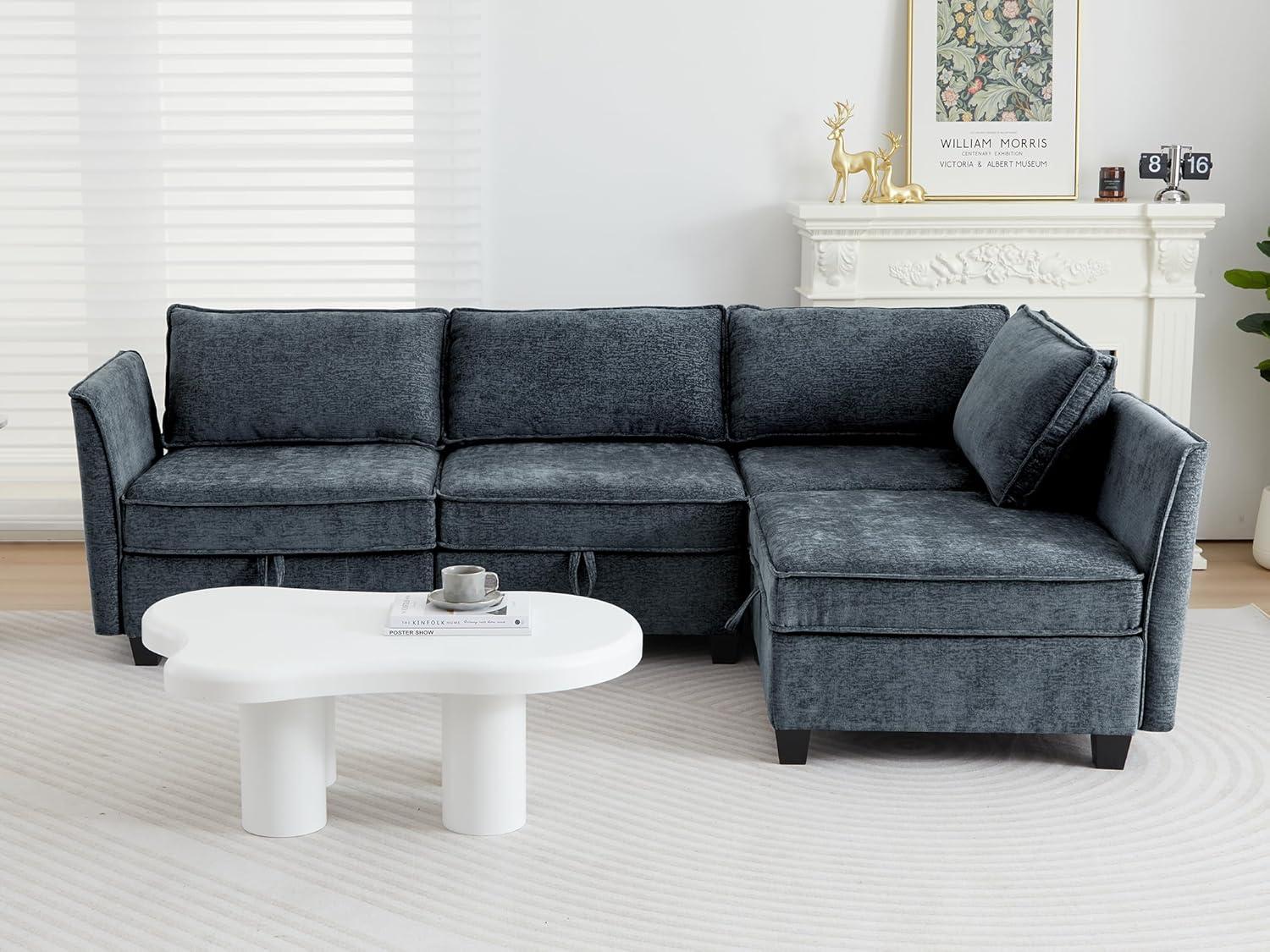
Many of the features people expect from a modular sectional appear in everyday use, though they show up as lived moments rather than as neat specifications. The modules do rearrange with relative ease, and the broad seats feel roomy when sitting or stretching out. Over time occupants tend to rotate and nudge pieces: cushions are smoothed, seams are coaxed back into line, and connectors are checked after heavy moves. Those small, unconscious maintenance habits become part of the routine and shape how the sofa performs day to day.
Other expectations meet modest limits when the sofa is put through ordinary life. The storage under the seats provides substantial depth, but accessing those compartments when multiple modules are linked can require two hands and some shifting of adjacent pieces; the lift feels less effortless than a hinged lid. Back cushions compress with repeated use in most households and frequently enough need rearranging to restore an even appearance; this is experienced more as a habit than a defect. When the sectional is used as a surface for lounging or impromptu sleeping, the low back and flatter uppers are noticeable in certain positions, and the lines between modules can open slightly during movement, prompting occasional re-alignment.
| Expectation | How it behaves in real life |
|---|---|
| easy reconfiguration | Modules swap and shift as intended, but pieces may need nudging to sit perfectly together after use |
| Hidden storage access | Compartments are deep and useful; lifting cushions without a hinge can feel awkward when sections are connected |
| Consistent cushion profile | Bottom cushions hold shape better than backs, which tend to flatten and require occasional plumping |
| Visual alignment over time | Seams and gaps can appear after regular use and are usually corrected by simple repositioning |
View full specifications, sizes and color options
Sizing and placement in a real apartment: how the modules pass through doors, around corners, and sit in your layout
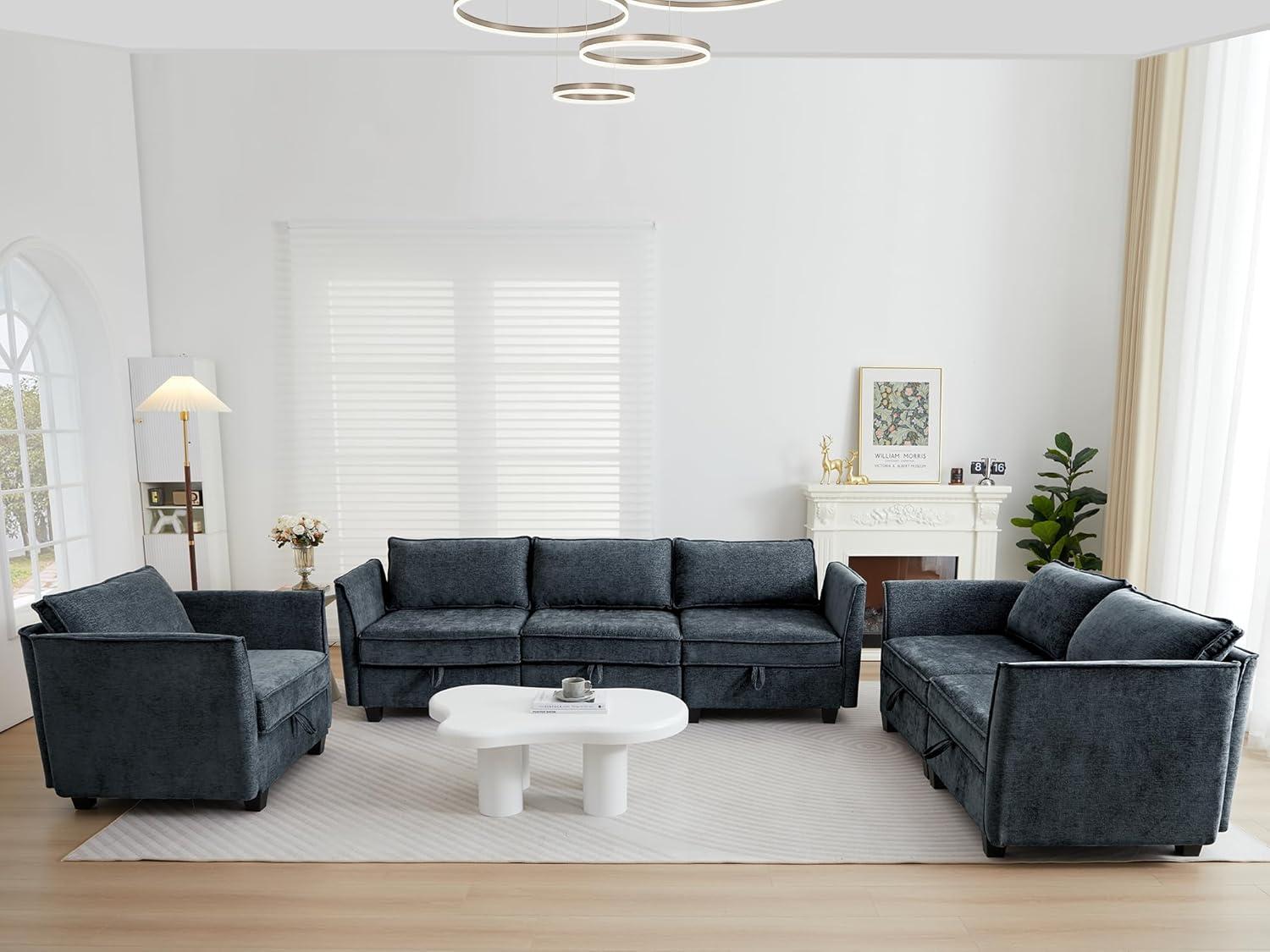
When the pieces arrive and you start to move them in, they behave less like a single, immovable sofa and more like a set of heavy, boxy tiles. You’ll find yourself angling a module, almost always nudging a cushion or two back into place as you slide it through a doorway; seams and fabric shifts happen unconsciously — a quick smoothing with the palm becomes part of the carry routine. In most cases one module can be tipped slightly on its side and guided through a standard apartment door without full disassembly, though very tight doorways or narrow stairwells change that dynamic and get you thinking about removing legs or taking a cushion off for a better grip.
Getting around corners often requires the same small adjustments you use with any bulky furniture: rotate the unit as you pivot it, let the front edge lead, and pause to shift the hinge point of the piece. It’s common to find that a two-person lift makes these maneuvers quicker and less fussy; in some tighter turns a short, temporary disconnection of a fastening or the removal of the feet is what actually lets the modules clear the angle. Once you’ve positioned the elements in their final layout, the connected run looks continuous, but you’ll notice repeatable, lived-in habits — pressing cushions back into alignment, nudging modules a fraction to close a gap, and occasionally opening storage lids while connected to check how access feels when everything is snug.
| obstacle | Typical maneuver observed | What reviewers tended to report |
|---|---|---|
| Standard doorway | Tilt and slide a single module through upright | Usually passes without full disassembly |
| narrow corridor or stairwell | Rotate, remove feet, or carry end-first | Sometimes requires two people or minor part removal |
| Sharp 90° corner | Pivot with the short axis leading; occasional temporary detachment | Manageable but more fiddly; modules can scrape if not angled |
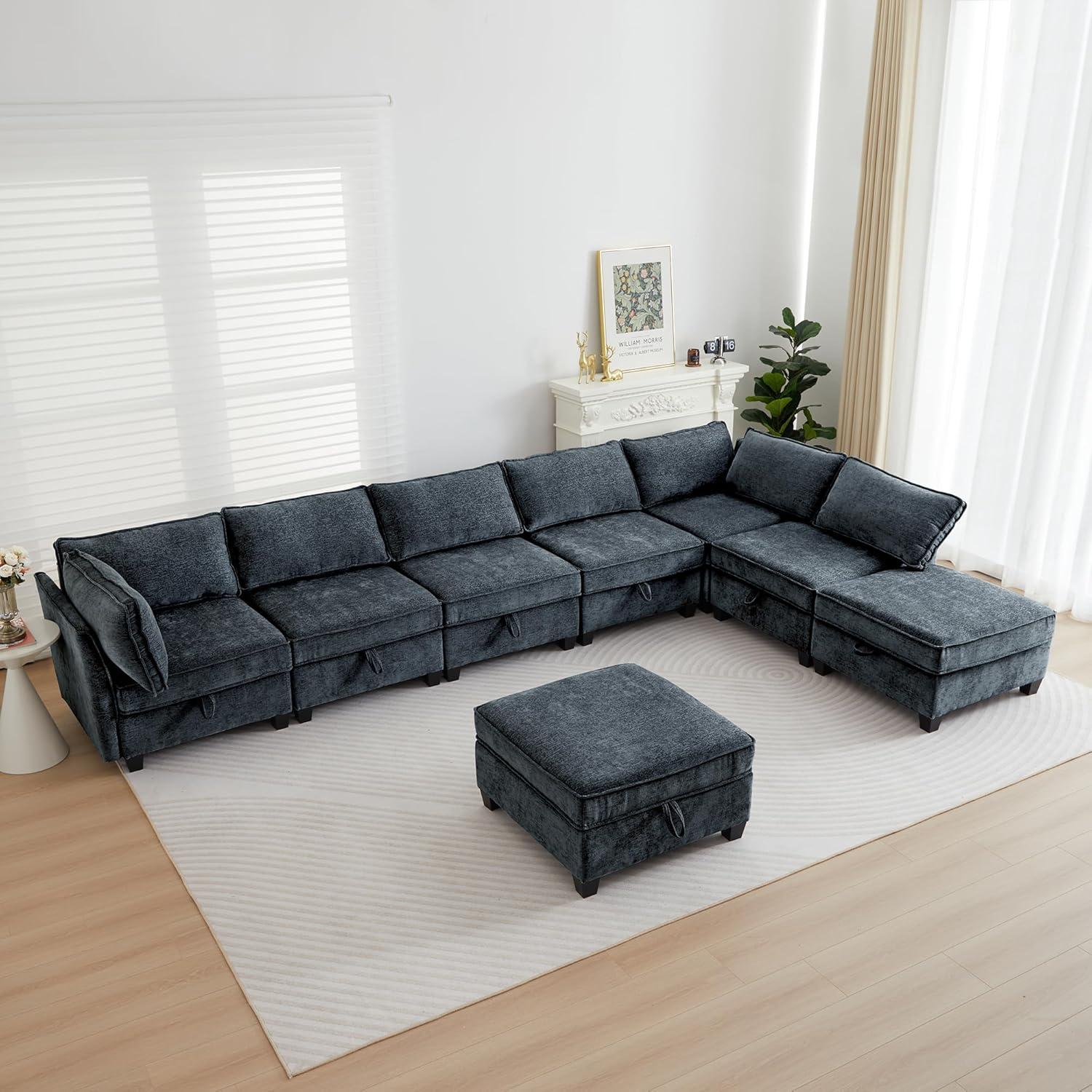
In the floor plan itself, the modules tend to sit as clearly defined blocks: when joined they read as a single surface but the joins remain visible under cushions and along seams.You’ll be rearranging small offsets the first few times — nudging a unit 1–2 inches to level a gap, rotating a cushion so the fabric lays flat — and those micro-adjustments are part of the normal placement process. Storage lids open more easily on standalone sections; when parts are tightly linked,accessing under-seat storage can feel more constrained and prompts an extra shuffle of pieces before you pry a compartment open.
How the Set Settles Into the Room
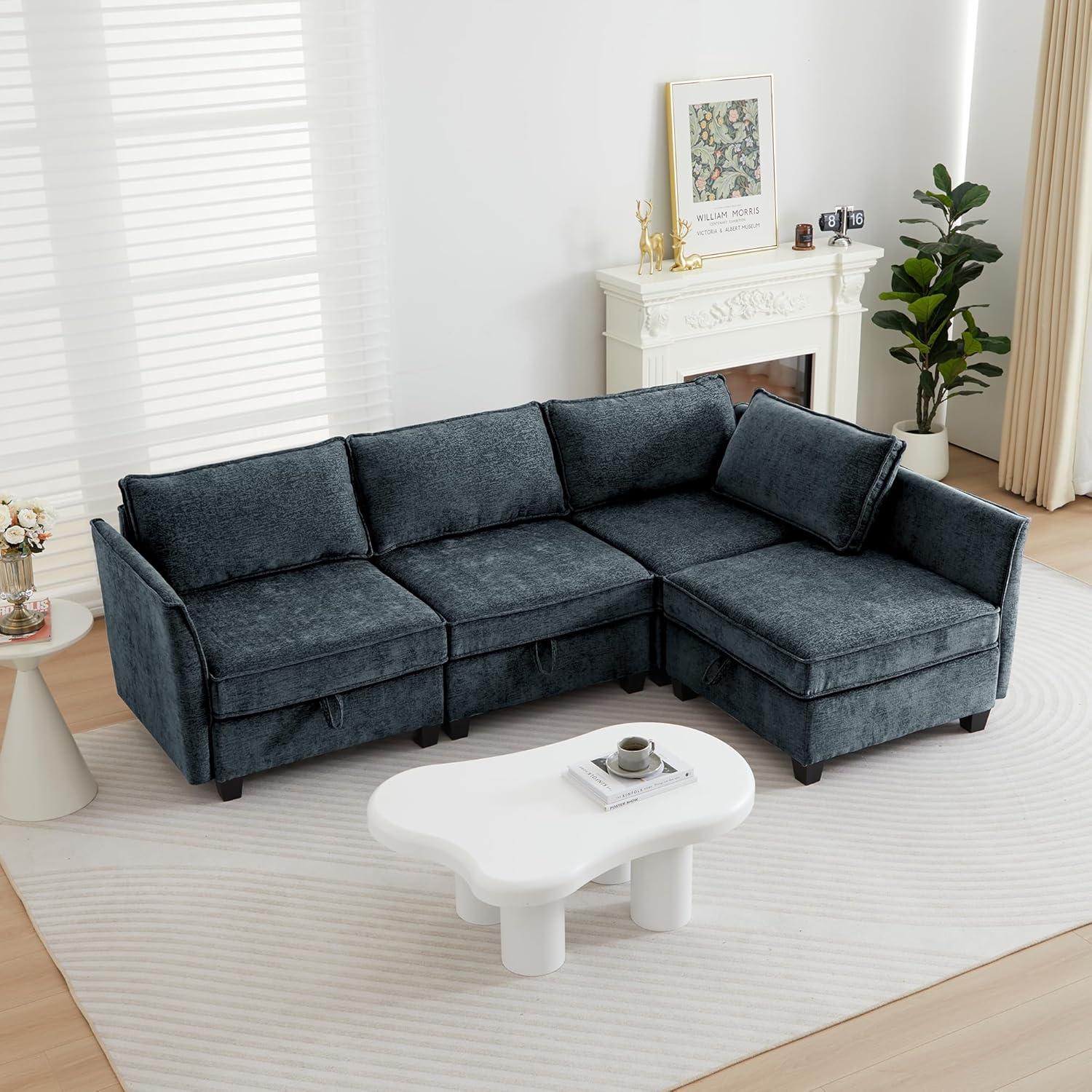
After living with it for a while, you notice how the ORRD Corner Modular Sectional Sofa Set, Convertible L Shaped Couch with Storage, 4 seater Sofa Modular for Living Room, Office (Blue Grey) slowly settles into the room’s rhythms. In daily routines its footprint shifts — cushions soften where you sit, the storage fills with the small, ordinary things that accumulate, and the floor around it shows the path people take.Comfort becomes less about a first impression and more about habit, the way you drift to a familiar spot as the room is used.Over time it simply stays.
As an Amazon Associate I earn from qualifying purchases.