TRIFEBLE Nightstand — how it fits your bedside tech

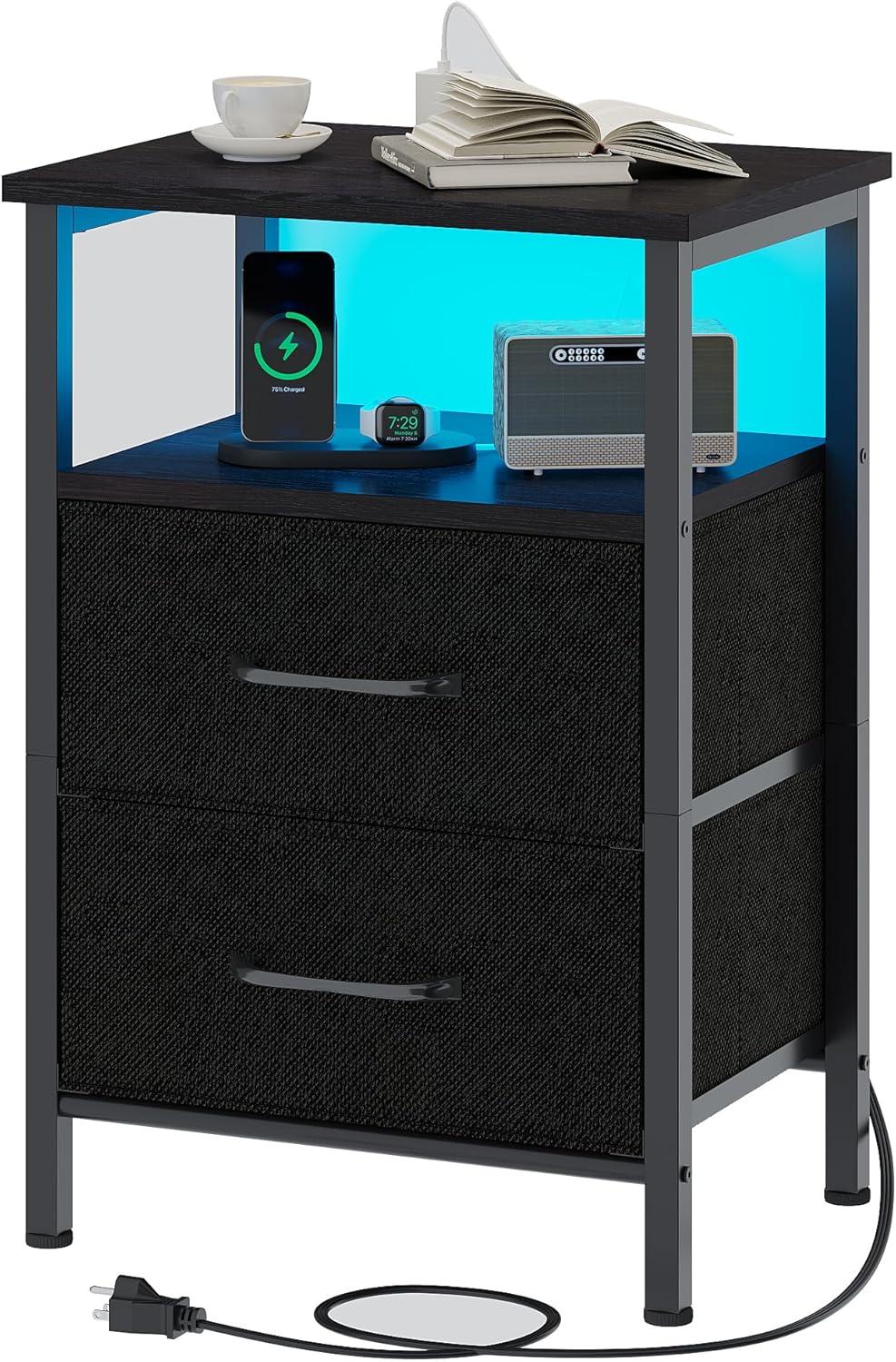
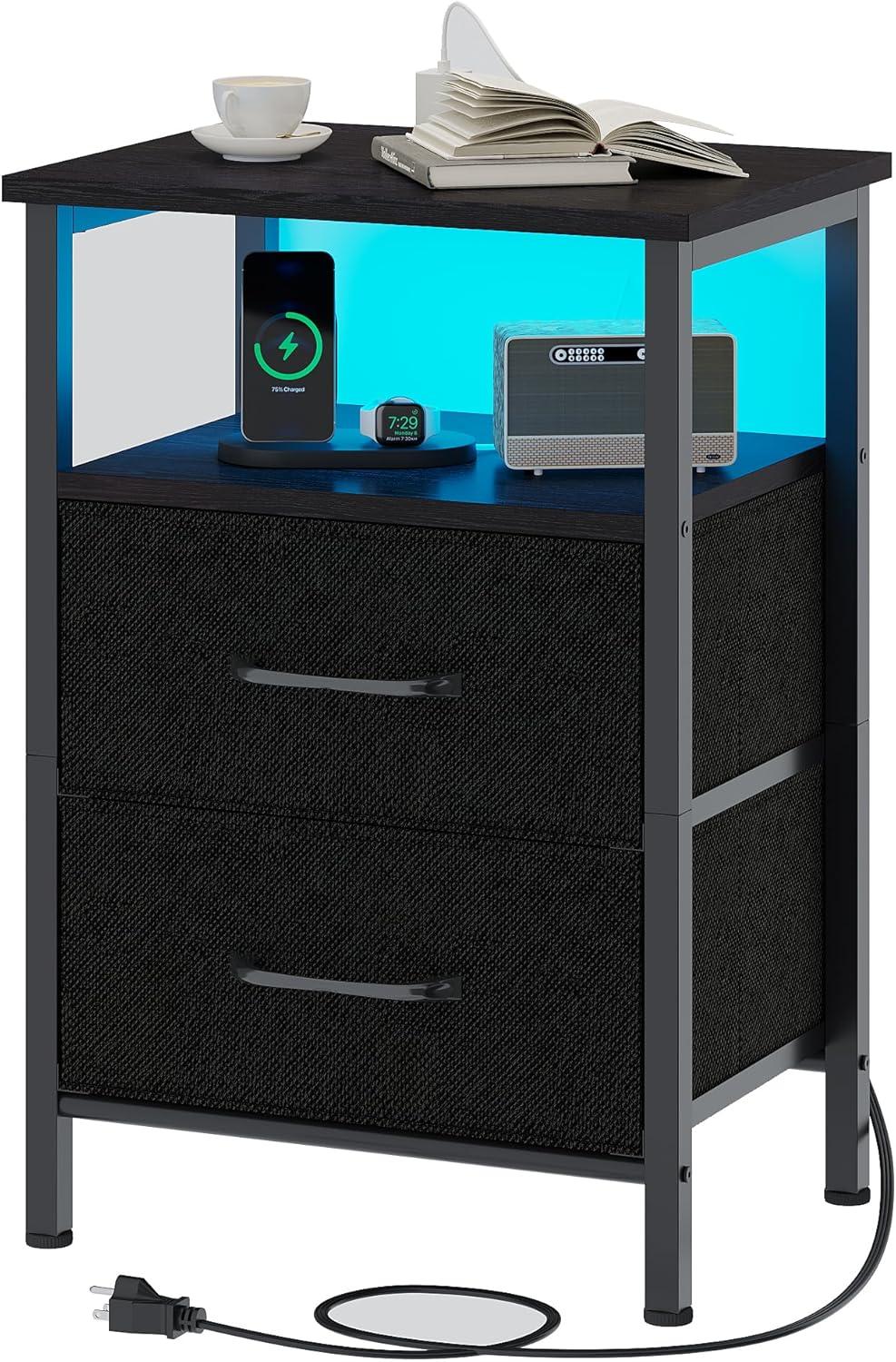
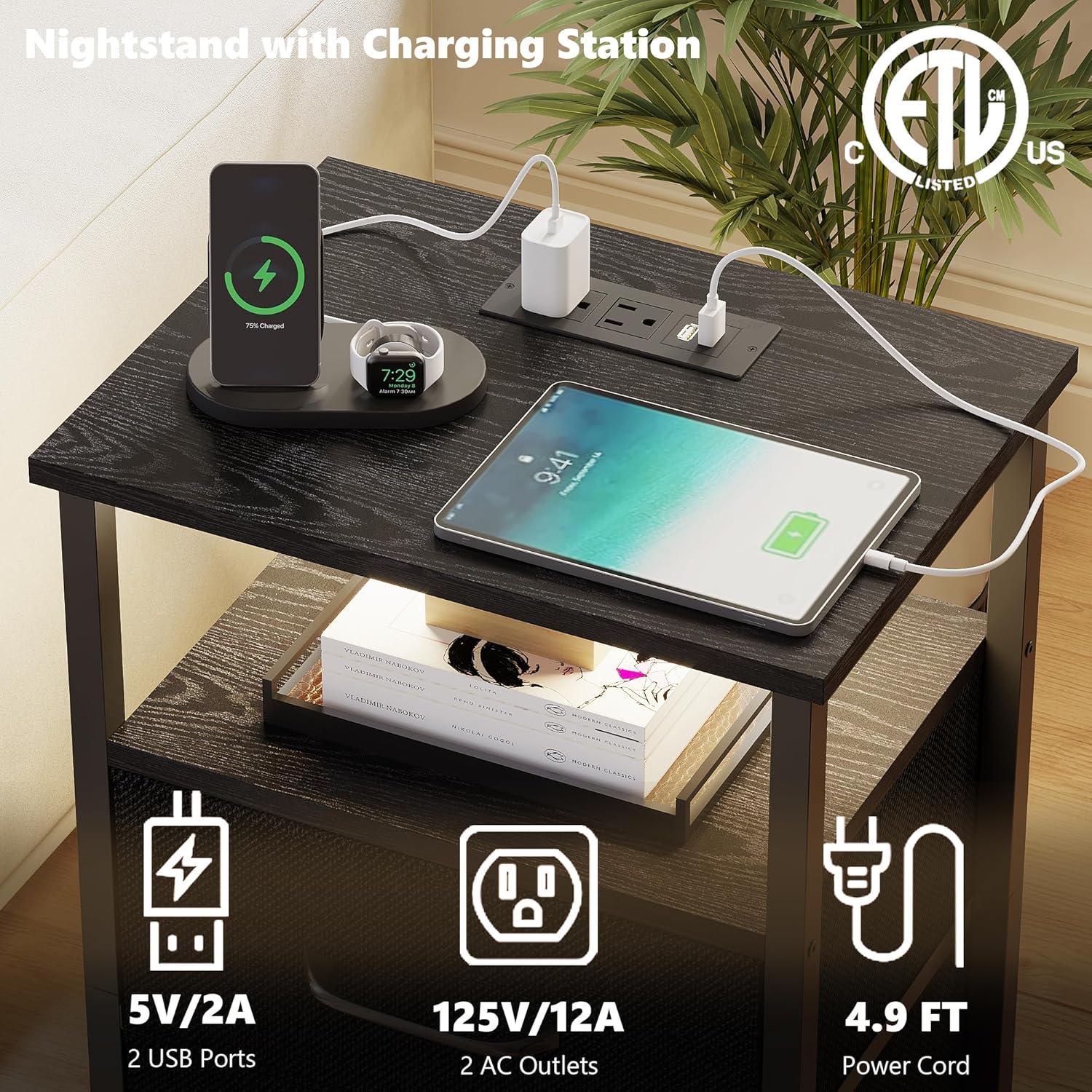
The first thing you’ll notice is the LED strip—a soft, multicolored glow that changes the bedside light in a way that feels intentional rather than showy. up close, the TRIFEBLE bedside table reveals a matte black particleboard top and a slim steel frame; the surface is smooth under your palm and the frame’s lines keep the piece looking light. Beside your bed the top panel easily holds a lamp and a cup without crowding, while an open shelf and two fabric drawers settle into the silhouette until you need them. The drawers’ woven faces catch your fingertips, and a tucked power strip with outlets and USB ports is reachable without groping in the dark. It reads as compact and low-profile in the room—visually light, but steady enough when you rest your hand on it.
Unpacking and the first sight of your black nightstand in the bedroom
You lift the flaps and the cardboard sighs as you pull the pieces toward you. Inside, panels are stacked flat with thin protective film clinging to the black surfaces; a small packet of screws and an instruction sheet sits on top. The fabric drawers arrive folded, edges creased from being compressed, and they give off that faint new-fabric smell you almost forget to notice.A coiled cord and the power module are tucked into a corner, not hidden but not promptly obvious until you shift a panel aside.
By the time you slide the assembled unit into place beside the bed, the black finish reads differently depending on the light — in daylight it looks charcoal with a soft sheen, and under the bedside lamp it deepens to a near-silhouette. The fabric drawer fronts need a rapid smoothing; you find yourself running a hand along the seams, easing creases into place. The top panel feels firm beneath your palm, and the little wobble from uneven flooring becomes apparent when you set a book down and it rocks slightly until you nudge the feet. Small details catch the eye: thin protective film edges that didn’t peel cleanly, a faint dust line where the packaging sat, the way the cord coils when you tuck it toward the outlet. These are the first, practical impressions you live with before the nightstand settles into regular use — minor adjustments and habitual smoothing included.
How the LED glow and silhouette shape your bedside atmosphere
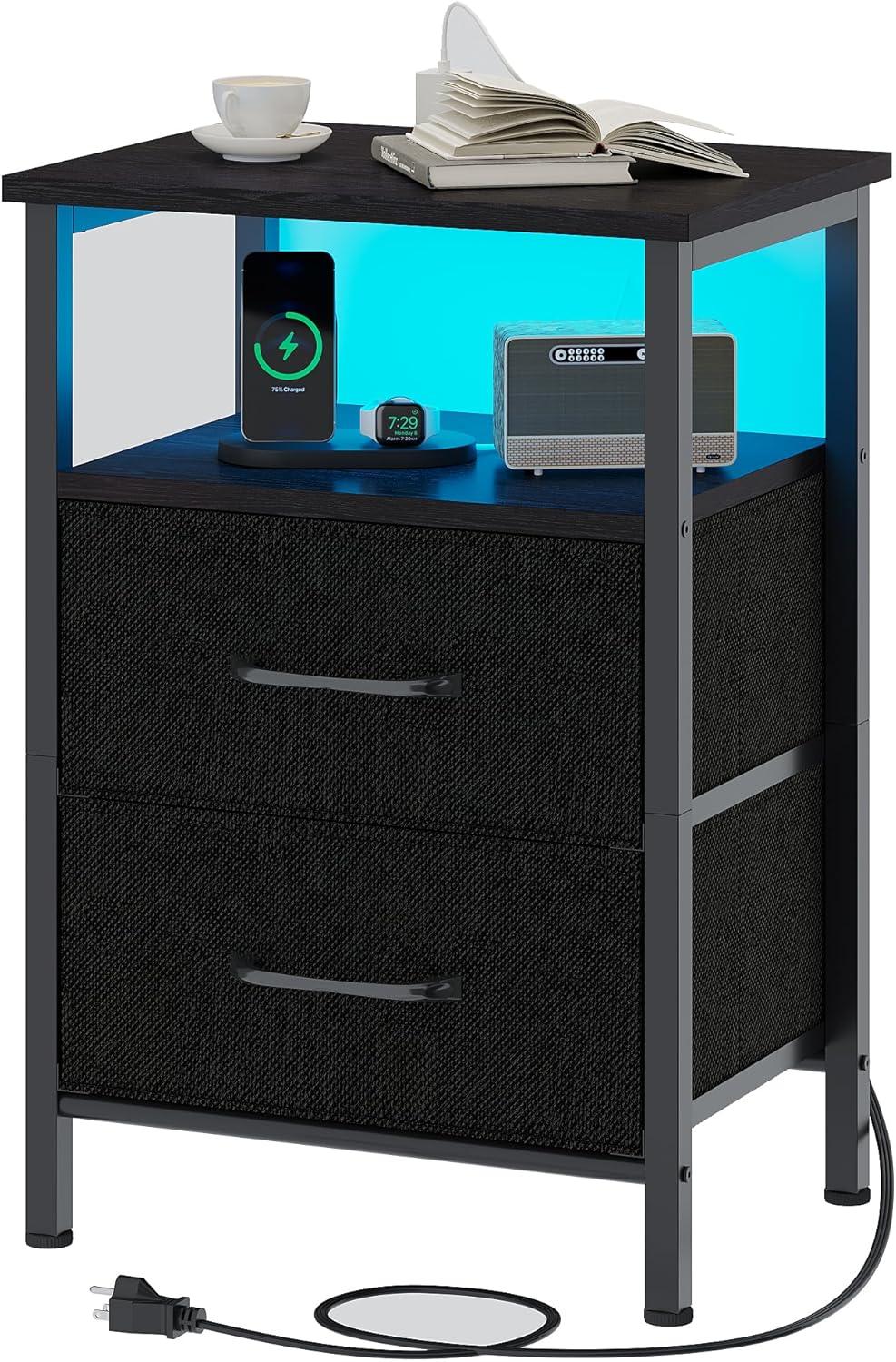
When you turn the LED on, the strip does more than add color; it traces the furniture’s outline and redefines the space around your bed. the light settles along the underside of the top panel and beneath the open shelf, so the table’s rectilinear silhouette reads as a glowing band rather than a dark block. That soft rim of light lifts the table off the floor visually, and at low brightness levels it creates a narrow pool that helps you find a phone or a glass without bathing the room in glare.
Your interactions shift the atmosphere in small, familiar ways. A quick tap or a nudge changes how shadows fall across the fabric drawer fronts, which diffuse the light and soften the edges; when you reach for something, the strip’s color and motion catch on the drawer seams and cast faint, moving reflections. In moments of quiet—late-night reading or returning from a hallway—the combination of color and shape can feel like a background presence that moves with you: the silhouette emphasizes straight lines and corners, while the glow softens them, producing an interplay of crisp shadow and washed color that tends to feel intimate rather than dramatic.
What the fabric drawers, tabletop and finish feel like to your touch
When you tug a fabric drawer open,your fingers meet a slightly textured weave rather than a slick surface. The drawer fronts have a clothy give — enough to feel the grain of the weave under your fingertips and to notice the seams and stitched edges as subtle ridges. Pressing the face inward reveals the structure behind the fabric: a firm backing that keeps the panel from collapsing, while the fabric itself can shift or wrinkle a little where you habitually grab it. You may find yourself smoothing those wrinkles or nudging a seam into place after sliding the drawer closed.
The tabletop greets you with a hard, cool plane. Running your hand across it, you feel a mostly smooth finish with a faint texture that follows the particleboard beneath the surface. The edges are not razor-sharp; they have a modest rounding that your palm tracks when you reach for something at the bedside. In everyday use the surface shows the trace of contact — the occasional fingerprint or a ring from a cup tends to settle in the same spots, and wiping it distributes warmth and oil differently than a bare wood top.
| Part | How it feels to your touch |
|---|---|
| Fabric drawer front | Textured, slightly pliable, seams and stitching perceptible under fingertips |
| Drawer backing/inside edge | Firm support felt through the fabric; edges can feel slightly rigid when pressed |
| Top surface and finish | Hard and cool with a faint surface texture; edges rounded, shows contact marks |
Hands encounter small, everyday nuances: the soft drag of fabric against skin, the brief click of a drawer lining up, the way the top’s temperature changes when you place a warm mug on it. Over time those tactile notes can shift a little — the weave may loosen where you habitually grab, and the finish may show more evidence of repeated contact — but in the moment you mostly notice texture, firmness, and the relationship between cloth and underlying structure.
Where it fits next to your bed and in typical small bedroom layouts
Placed beside a bed, the table usually reads as a compact, vertical surface: the top panel sits within easy reach of a bedside grasp in most setups and the open shelf and fabric drawers present themselves without much bending when pulled slightly forward. When a headboard is absent the multicolored LED strip casts a soft wash onto the wall or ceiling, which can make the unit look visually larger in dim light; with a tall headboard the glow tends to pool above or behind it and becomes less visible from the sleeping position. The built-in outlets and USB ports show their practical side at night — cords commonly run down the back and across the floor toward a nearby wall outlet, and the extension cord’s length frequently enough determines how far from the bed the table actually lands.
In narrow bedrooms the table fits into slender gaps and often functions as the room’s de facto docking station and small-shelf library. The drawers will still open when the unit is nudged tight to a frame, but in many arrangements they feel snug and may need a small forward shift to clear a mattress edge; adjustable feet make it possible to steady the piece on uneven floors so the drawer fronts sit flush, though those adjustments sometimes require a quick readjust after the bed is moved. When two units flank a larger bed, the pair creates a symmetrical profile and the lights combine into a softer, layered glow; in single-nightstand layouts the light and charging cluster become the primary bedside focal point rather than an accent.
| Typical bed setup | Observed placement behaviour |
|---|---|
| Low-profile/platform | top surface aligns closely with mattress; LED glow more visible across sleeping plane |
| Standard frame with headboard | Placed slightly forward of headboard; light reflects above headboard rather than directly into the bed |
| tight single/twin room | Often pushed against wall; drawers work but may require a small clearance for full access |
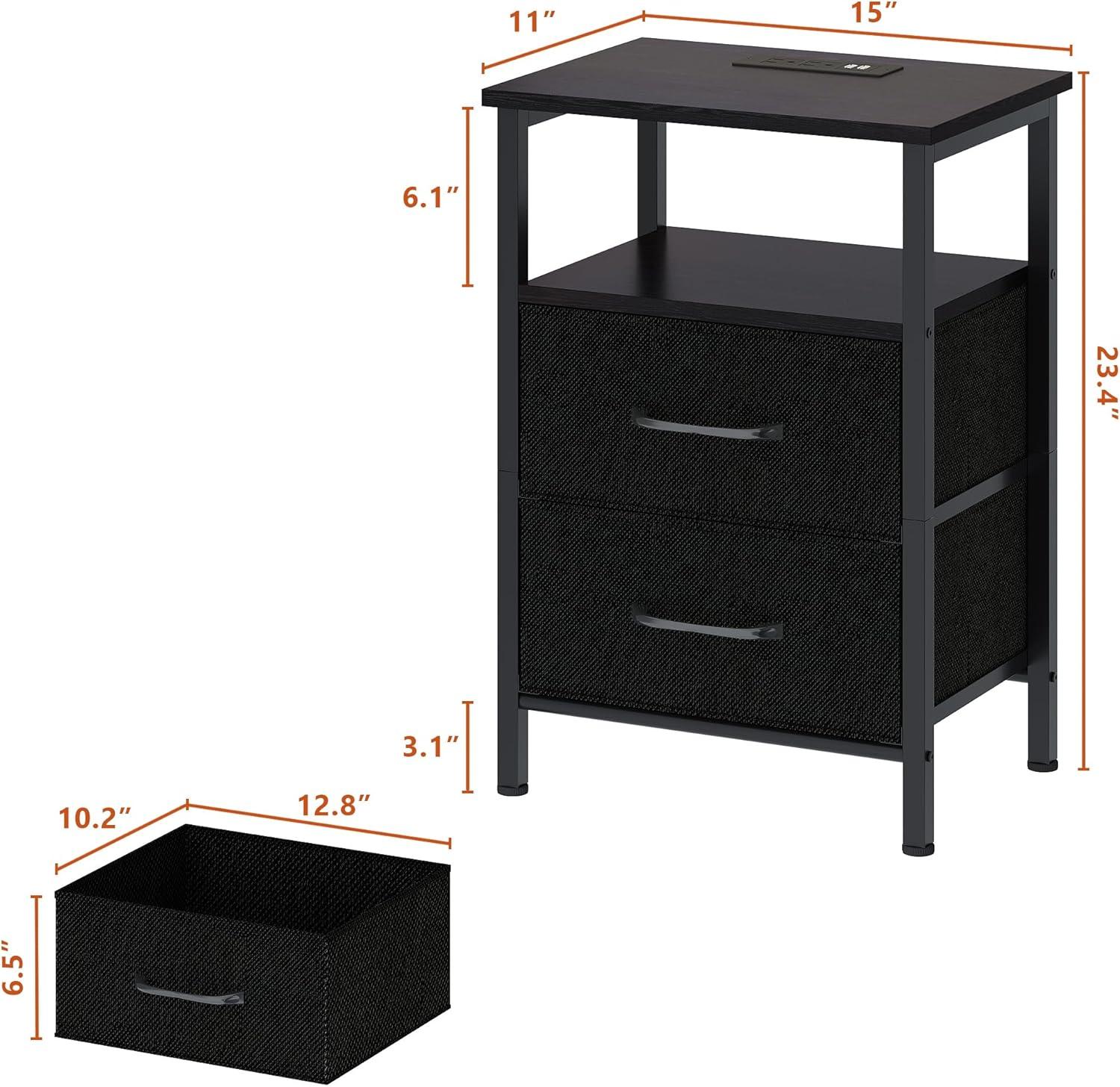
View full specifications and size options
How it compares to your expectations and what real life use reveals about limitations
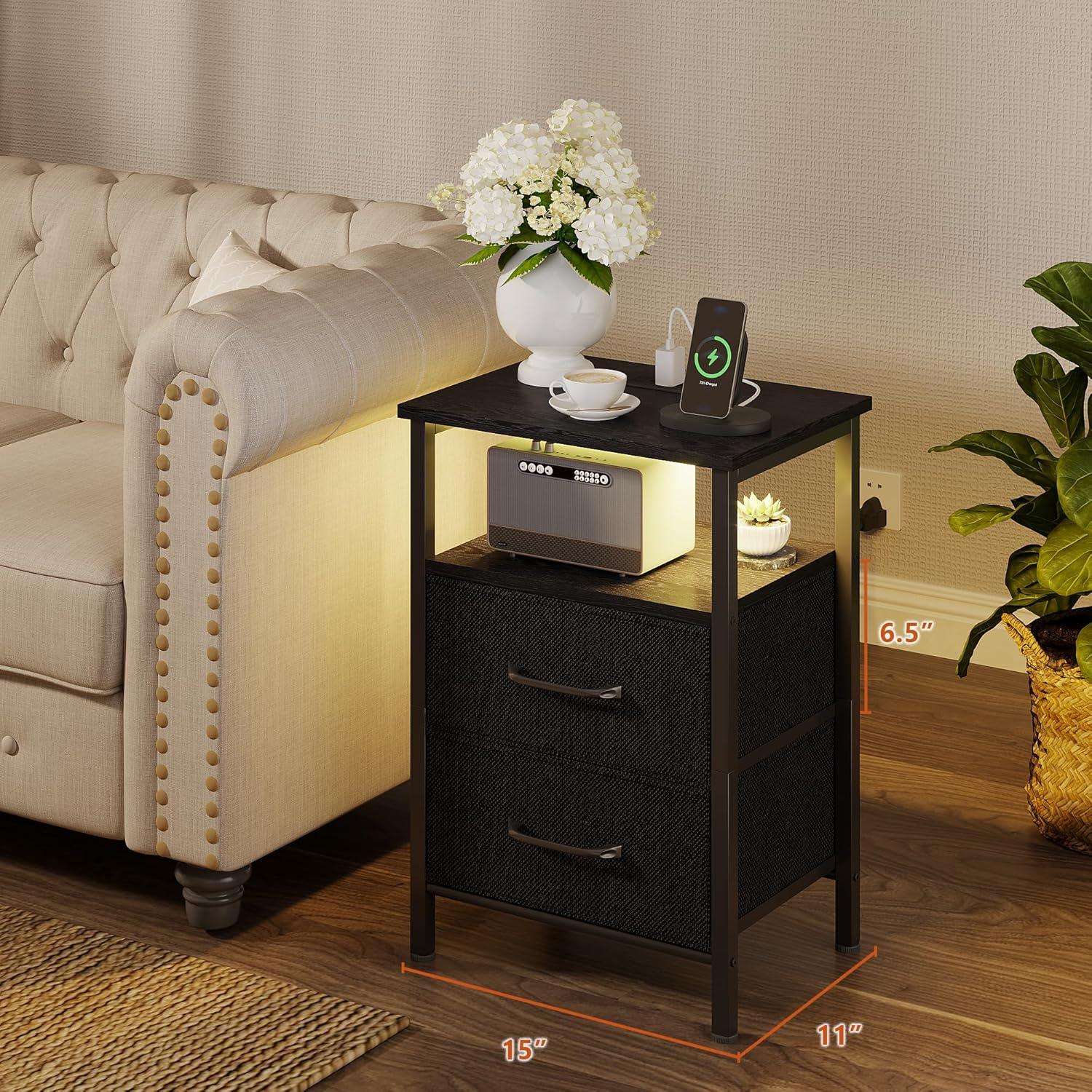
Initial expectations set by product photos and the description suggest vivid LED moods, tidy hidden storage, and a neat bedside harbor for chargers.In everyday use those impressions soften: the LED colors read a bit more muted under room lighting, and cycling through modes tends to reveal sharper transitions than anticipated. The strip’s glow is effective for atmosphere, but in low-light moments some modes can feel conspicuously bright rather than gently dimmable, and the app control occasionally takes a beat to respond.
| Feature | How real life compares |
|---|---|
| LED lighting | Colors are pleasant but less saturated than catalog images; dynamic modes look livelier in motion than when left on a single hue; brightness at the lowest setting can still be noticeable in very dark rooms. |
| Built‑in power & cord | The outlet cluster handles multiple devices, though plugging bulkier adapters can crowd space; the cord length allows flexibility but frequently enough requires rearranging the bedside layout to reach a wall outlet without visible cable runs. |
| Fabric drawers and shelves | Drawers look tidy at first but tend to soften and slump after a few uses; pulling items out can cause the fabric face to shift and smoothing is a small, recurring habit. The open shelf collects dust more quickly than a closed compartment. |
When the table gets nudged—by sitting on the edge of the bed or brushing past—the whole unit can shift slightly until the adjustable feet are readjusted, so minor re‑leveling becomes part of routine use. surface wear appears where objects are regularly dragged or placed, which is why small scuffs and edge whitening show up sooner than imagined. Adhesive elements like the LED strip can lift a little if the unit is moved and the strip is handled during setup; once settled they tend to stay put, though occasional smoothing is part of normal upkeep.
See full specifications and available options
Assembly, care, and what you notice after weeks of regular handling
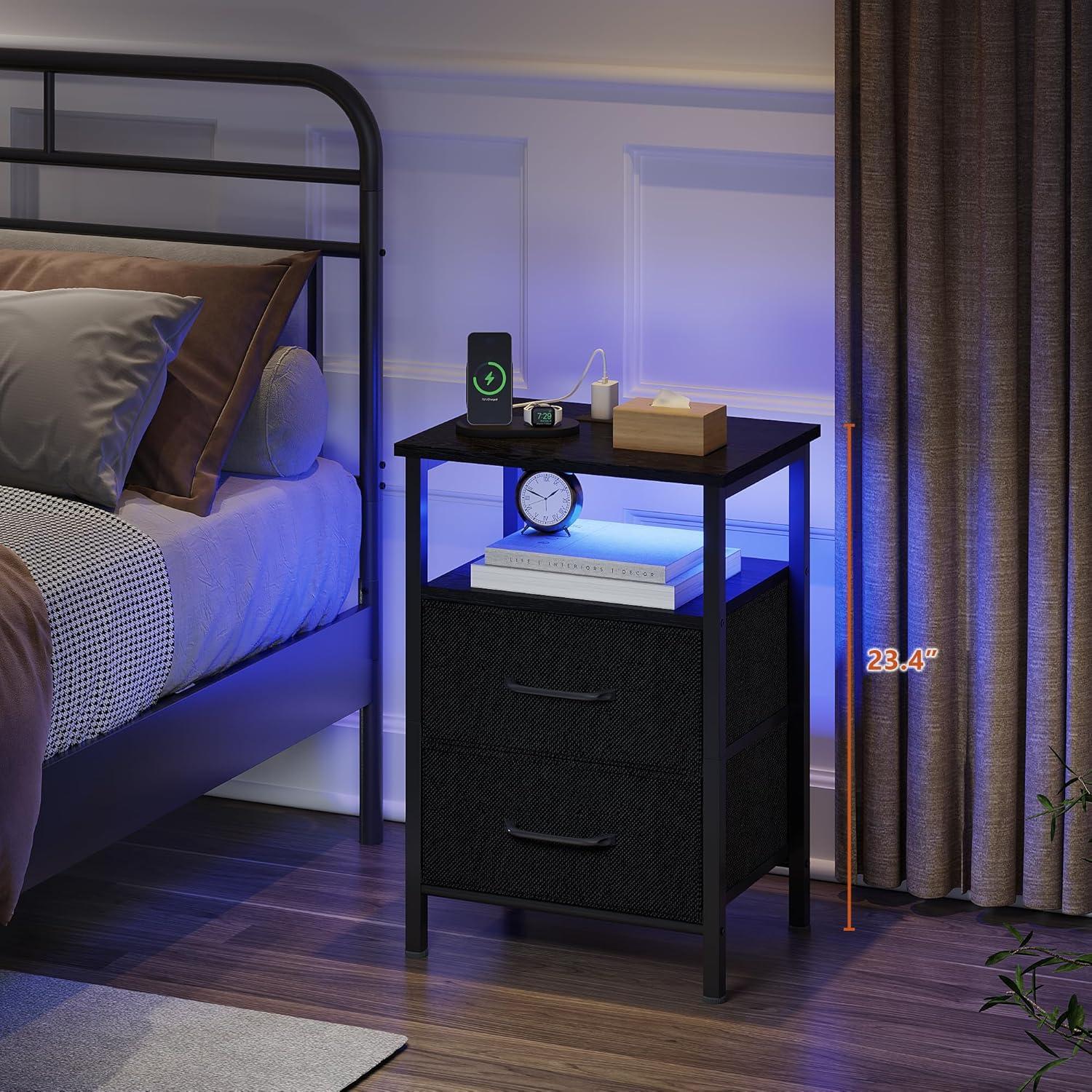
Always follow the assembly instructions carefully. Be cautious of pinch points when adjusting the feet. When you unpack the pieces and start building, the process tends to feel straightforward: panels line up with the pre-drilled holes, and the hardware bag is compact. You’ll find yourself nudging a panel into place while holding a cam lock or screw,and it’s common to tighten most fasteners and then go back through with a final pass to remove any small gaps. The adjustable feet require a little patience to set evenly; you may notice a subtle catch when turning them and an urge to test the balance by leaning a hand on the top once it’s standing.
Care routines settle into small habits.Wiping the top with a damp cloth after spills becomes automatic; you’ll reach for the vacuum or lint roller on the fabric drawers after a few days because they collect dust and pet hair in predictable patches. Pulling the drawers in and out develops into a rhythm — you smooth the front edge with your thumb, correct the sag that appears where fabric meets frame, and occasionally tuck or re-seat the inner liner so it doesn’t bunch. Screws that felt snug at first sometimes benefit from a quick check after the first week of use; tightening a single corner can remove a tiny wobble that only shows up when you put a book or lamp on the surface.
Over several weeks, small, situational changes become noticeable rather than surprising. The top can pick up faint circle marks where you set a drink without a coaster and shows micro-scratches in the areas you slide objects across most frequently enough. The fabric drawers tend to soften where you grip them; seams hold up,though the fabric may form a softer crease near the handle over time. The integrated power/lighting controls stay usable with normal handling, but fingerprints and smudges collect around buttons or touch areas, so you find yourself wiping those spots more often.In most cases the frame maintains its alignment, but re-leveling the feet is an occasional, quick adjustment after moving other furniture or changing floor rugs.
| Time | What you commonly notice |
|---|---|
| Week 1 | Final tightening of screws, setting feet, dust settling into fabric drawers |
| Weeks 2–4 | Minor softening of drawer fronts, finger smudges on controls, occasional top surface marks |
| After 6+ weeks | Subtle wear patterns where you use it most; quick re-levels and drawer smoothing become part of routine |
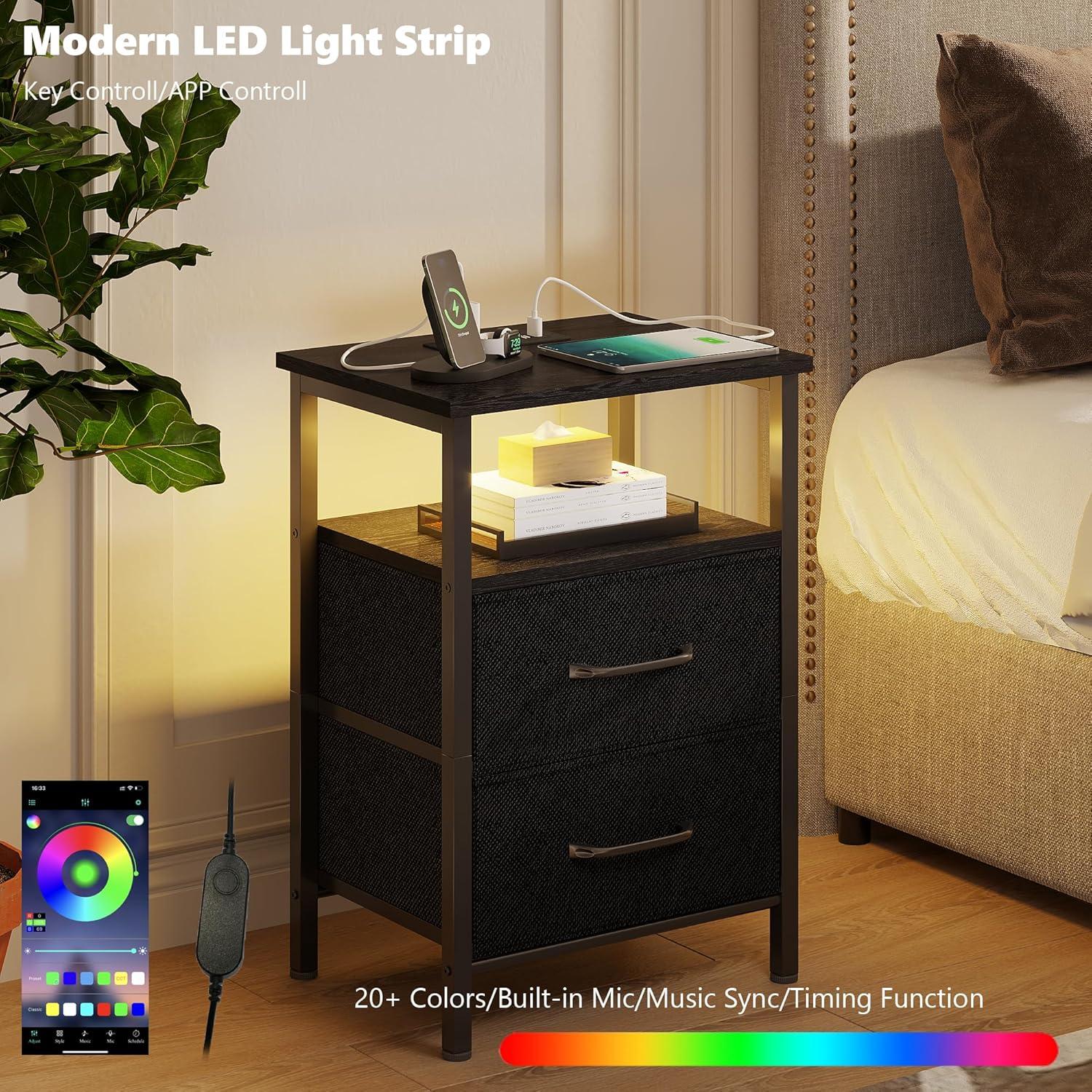
How the Set Settles Into the Room
After living with it for a while you notice how the Nightstands, Night Stand with Charging Station and Led Lights, Bedside Table with 2 Fabric Drawers for Bedroom, Small Side End Table with Open Shelf, Black eases into the room’s rhythms rather than arriving as something sharp or new. In daily routines it quietly shapes small habits—where you drop a book, how the lamp’s glow nudges you toward bed, the way the open shelf catches the loose things the drawers don’t hold. Surface scuffs and soft rounding at the edges appear over time, familiar marks that say the piece is used and present in regular household rhythms. It becomes part of the room and stays.
As an Amazon Associate I earn from qualifying purchases.