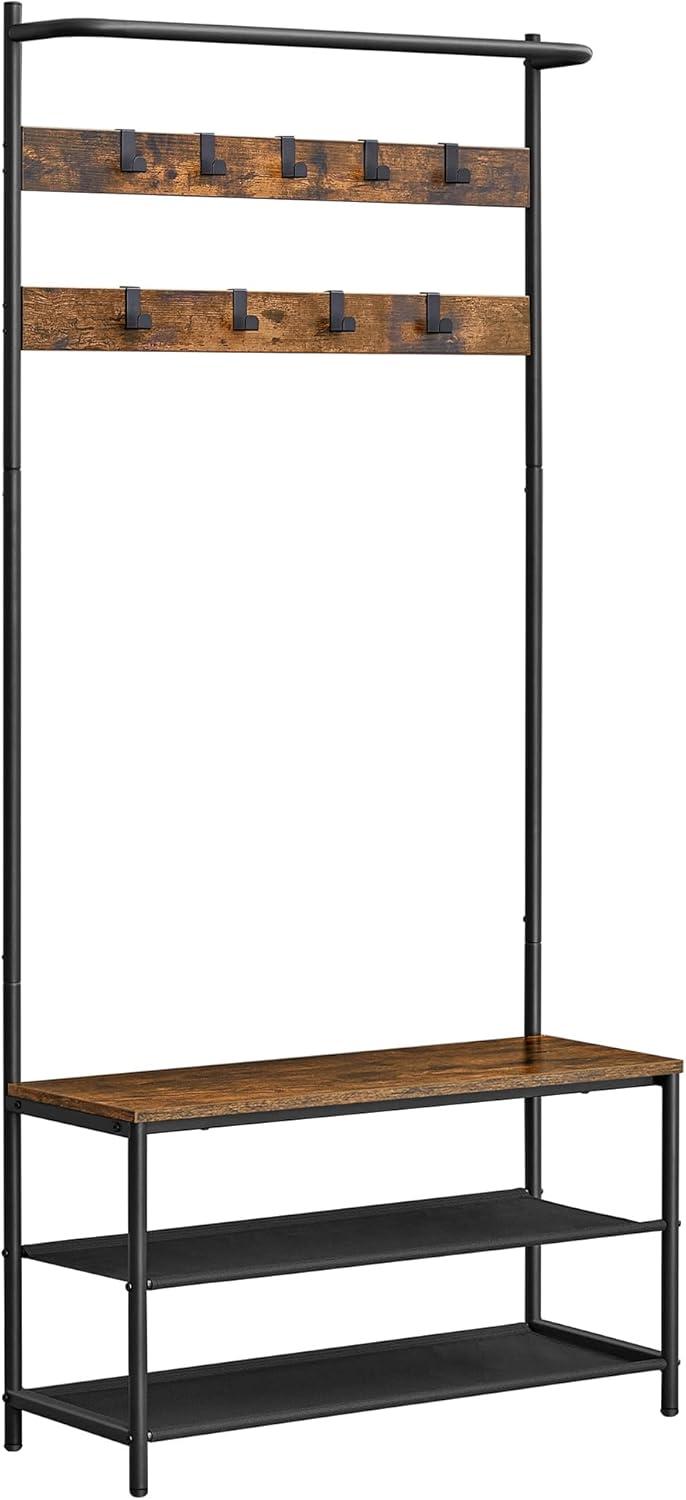
VASAGLE UHSR421B01 Hall Tree: how it fits your entryway

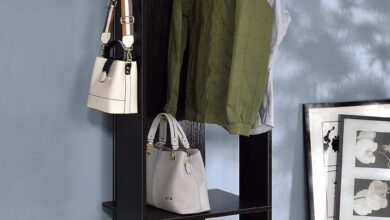
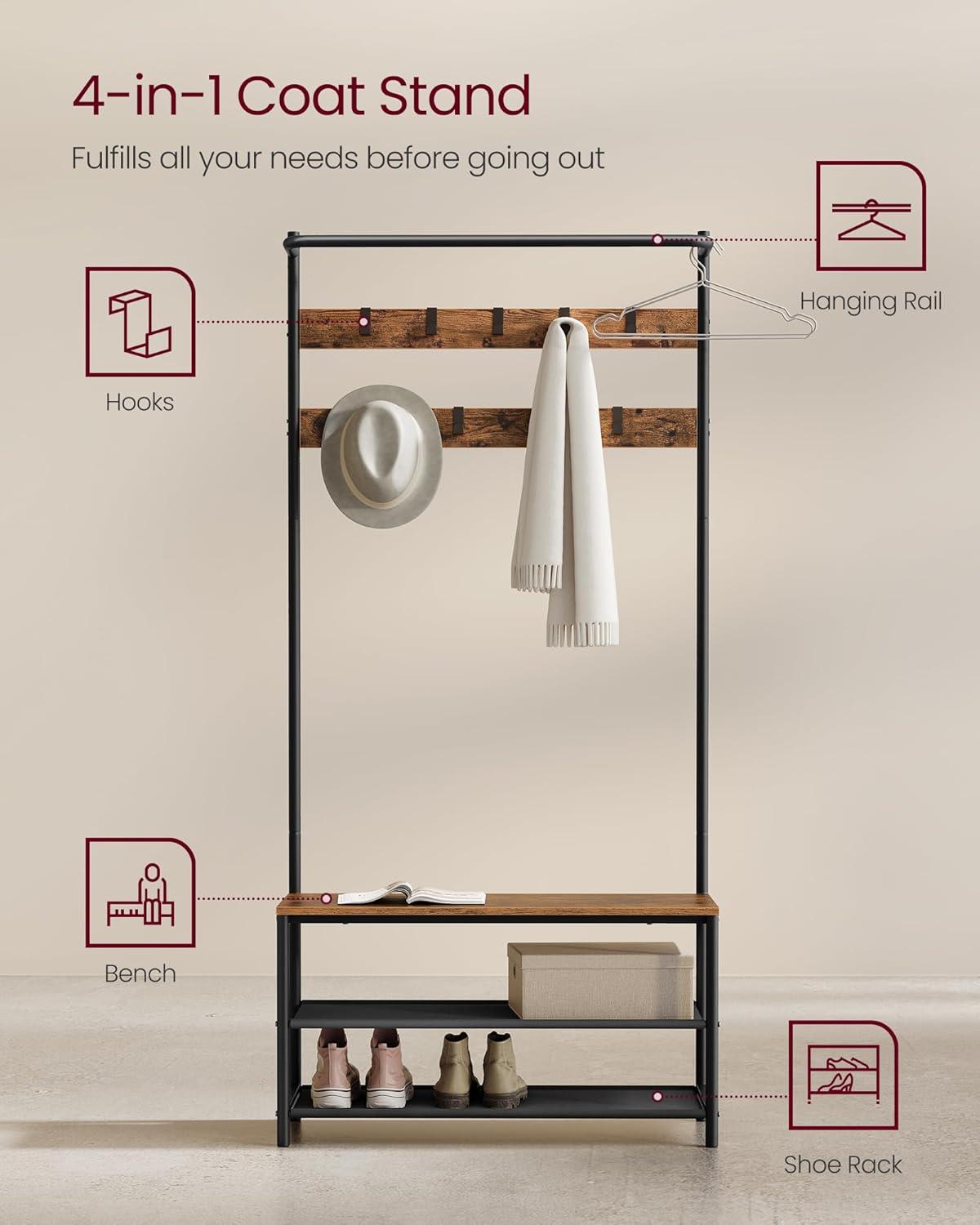
You sink onto teh bench and feel a compact, reassuring solidity—the faux-wood top warm under your palm, the fabric shelves giving a little under the weight of sneakers. The black metal frame climbs up behind it, the movable hooks catching stray scarves and a jacket in an easy, casual row. It’s the VASAGLE Hall Tree with Bench and Shoe Storage (UHSR421B01), though around here we just call it the hall tree. Up close the unit’s proportions read as tall and narrow: about chest-high for the coats and slimmer than a console, so it never dominates the entry. Daylight slants across the rustic brown finish and matte black, lending the piece a quiet visual heft that feels lived-in rather than showroom-new.
Your first impression in the foyer: what the VASAGLE hall tree brings to the room
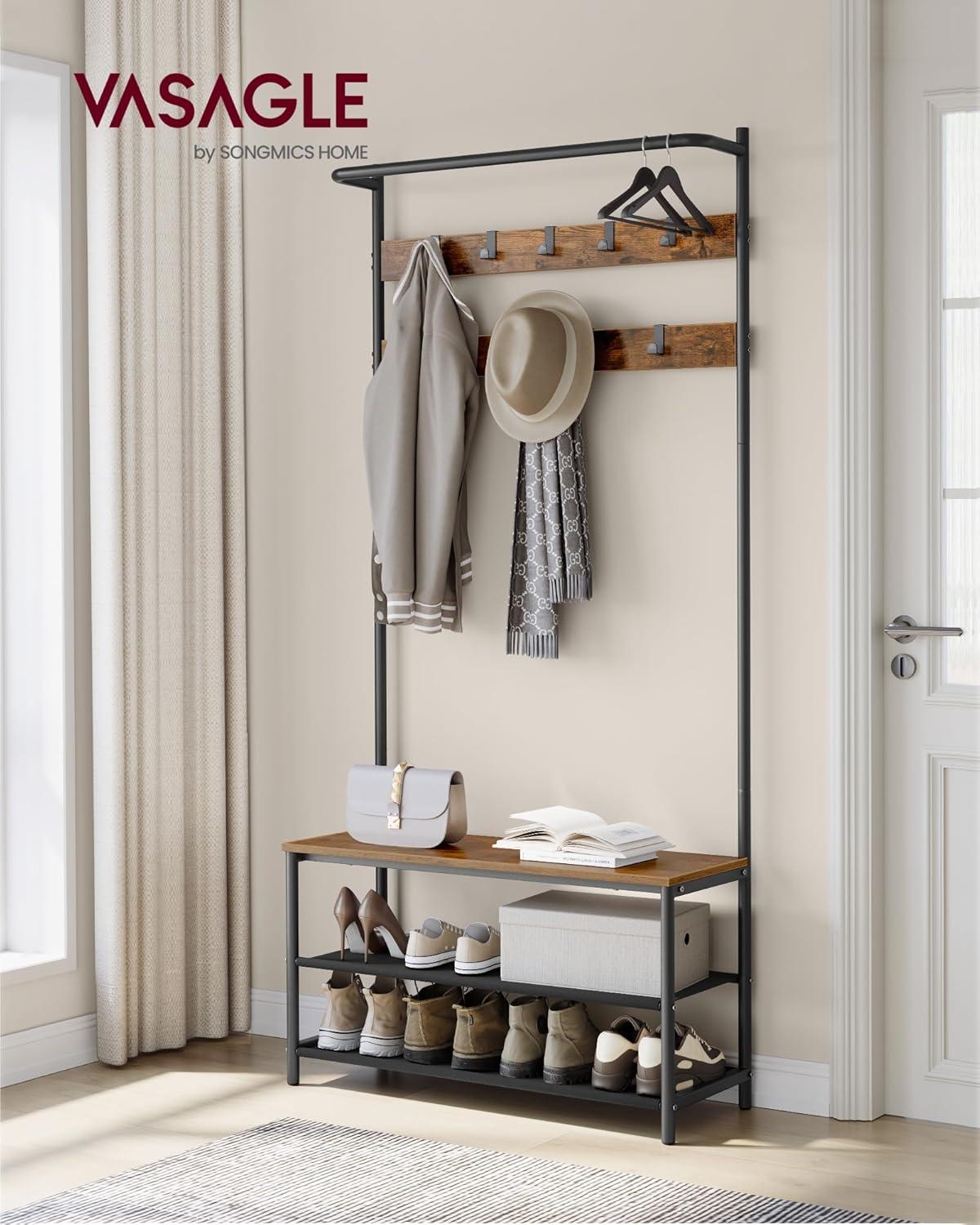
your first step inside often finds your eye drawn to a vertical silhouette against the wall — a compact, upright presence that immediately suggests purpose.You notice how the darker metal lines frame the warmer wood tones, guiding your gaze from the bench up to the top rail. Coats and backpacks hang at varying lengths, creating a lived-in cascade; hats perch on the hooks while shoes cluster on the lower shelves. The bench sits ready for you to plop down, the seat giving a little under you as you settle and reflexively smooth the surface or shift a seam before leaning to reach a pair of shoes.
In that first minute of use the hall tree changes how the foyer feels. The vertical layout makes a small entry look taller and less cluttered, and the grouped storage keeps everyday items within arm’s reach so you find yourself grabbing a coat and smoothing a scarf in one smooth motion. You may also notice practical quirks in that moment: lighter items can slide on the fabric shelves, hooks will rotate a touch when snagged, and very bulky boots tend to sit partially forward. Those behaviors show up naturally as you interact with it, and they shape the small routines — swinging a bag onto a hook, adjusting the bench cushion, angling shoes neatly — that make the space feel ready for the next arrival.
Up close with materials and finish: wood grain, black ironwork and fabric shelves
Up close, the bench top reads like a printed wood surface rather than a raw plank: when you run your fingers across it you notice a faint, consistent grain pattern and a slightly satiny feel. The surface gives the visual impression of aged timber more than a hand-hewn board—light catches the faux grain and brings out darker streaks where the color varies. If you sit and shift a few times you may find yourself smoothing the seat once or twice as seams at the edge settle against your clothing.
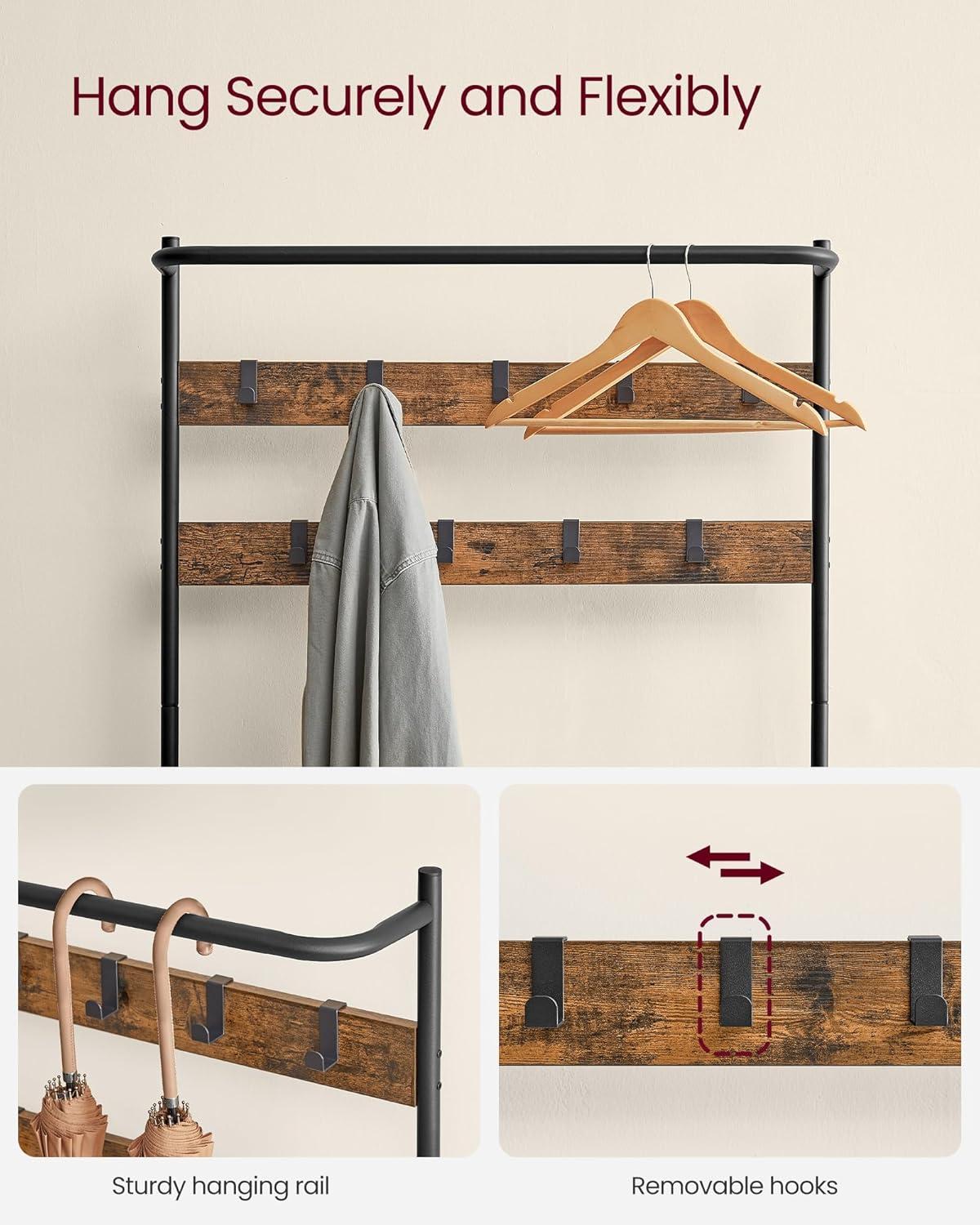
The black ironwork has a cool, slightly matte presence when you touch it. The poles and hooks are finished in a dark coating that tends to hide small fingerprints from a glance, though areas you handle often develop a soft sheen over time. When you hang a heavier coat and tug it into place you can feel the metal take the load; the joints and welds show as small changes in texture where paint pools or thins, and the hooks can rotate a bit if you nudge them while hanging items.
| material | Close-up notes |
|---|---|
| Wood-look top | Printed grain with a smooth, satiny touch; light surface texture and visible color variation rather than real wood pores |
| Black metal frame | Matte to low-sheen finish; cool to the touch, shows a subtle gloss where frequently handled |
| Fabric shelves | Dense woven material that flexes under shoes; you might press and reshuffle them, smoothing seams as pairs settle |
With everyday use you notice small habits: you brush lint off the fabric shelves after placing a pair of sneakers, and you often tap the bench edge to align it with the frame. The fabric shelves compress where shoes sit, creating shallow indentations that bounce back slowly, and the black metal sometimes shows faint scuffs along corners after items are moved against it. These are the kinds of surface-level changes that appear with normal handling and time, visible more than audible as you live with the piece.
How it fits your space: footprint, height and clearance to doorways
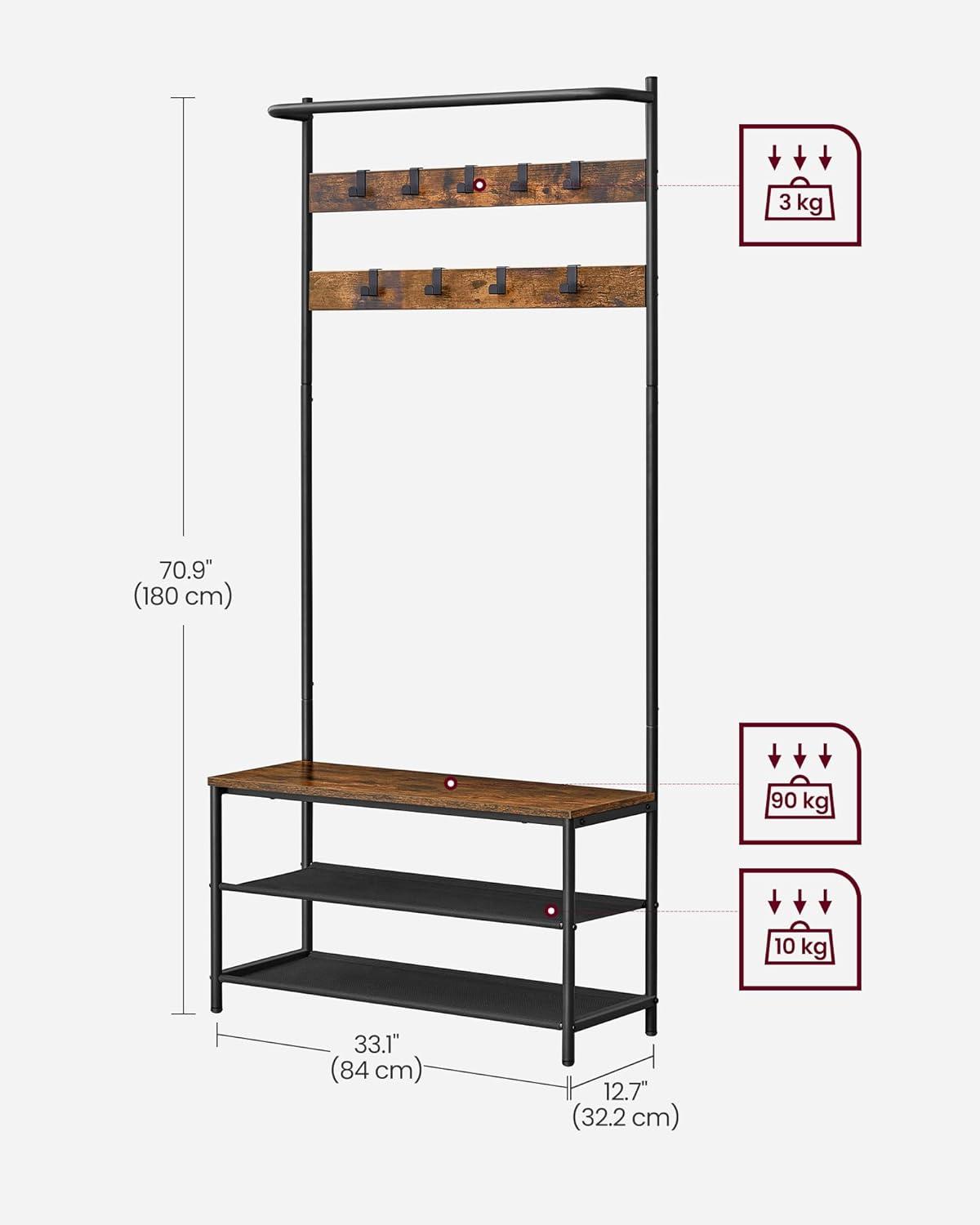
The hall tree occupies a relatively narrow strip of floor, so it usually reads as a vertical element rather than a bulky piece. When in use, coats and backpacks hang down the front and the bench projects only a short distance from the wall; people who leave shoes on the lower shelves tend to shuffle them slightly when sitting, and the fabric shelves compress a little under repeated loading. Reviewers commonly describe the unit as taking up little floor real estate while presenting a tall silhouette against the entry wall.
Height and passage through doorways show up in reports as a practical, everyday consideration. The frame’s overall height places the top rail well above eye level in many rooms, and several users noted that it comes close to low ceilings or odd low-ceiling corners. Moving the assembled unit through a narrow hall or into a tight entry usually involves a small tilt or slight angling; in most cases the piece will pass through standard 30–36″ doorways with that kind of maneuver. A number of owners also mention it being slim enough to sit behind a front door once in place, while others observed that tight corners or very short ceilings can make positioning feel fiddly.
| Observed footprint | Approximately 33″ wide × 13″ deep (reported as compact by multiple users) |
|---|---|
| Observed height | Roughly 70–71″ tall; often described as noticeably tall in smaller rooms |
| Doorway clearance notes | Typically fits through standard interior doors when angled; slim profile has been slid behind some doors |
View full specifications and size options
Putting it to use day to day: bench dimensions, shoe bays and hook reach
At eye level during everyday use, the seat reads as a compact perch rather than a full chair.The bench sits low enough that settling onto it involves a small bend of the knees and the habit of shifting slightly forward to make room for shoe removal. The surface is shallow compared with a dining chair, so jackets or bags placed beside someone tend to encroach on seating space; cushions are occasionally nudged or smoothed before sitting. weight from a seated person is supported without obvious flex,and the bench surface gives just enough room to sit and lean forward while tying laces.
The two fabric shelves present as shallow bays that arrange pairs in rows rather than stacked columns. In everyday layouts they typically hold three to four pairs apiece when the shoes are standard sneakers or flats; bulkier boots or winter footwear often end up occupying the bench area or the floor alongside it. It’s common to slide a shelf panel or leave one bay clear to accommodate taller boots, and the polyester fabric can show a slight bow under heavier loads over time.Hooks and the top rail are used in layers—lighter items on lower hooks, coats on the top rail—so reach and placement matter: the lower hooks align around mid-torso for many adults, while the top hanging bar sits up near head height, making heavier outerwear more likely to be shifted to a lower position before being set down.
| Measure | Typical observed range | Everyday note |
|---|---|---|
| Bench seat height (floor to top) | ~16–18 in | Low enough for rapid shoe changes; a small forward lean is normal |
| Bench seat depth | ~10–13 in | Shallow seat—personal items often encroach |
| Bench seat width | ~30–33 in | Single-person use feels natural; two people would be snug |
| Shelf/from-front depth | ~11–13 in | Fits heels and sneakers; tall boots may need alternate storage |
| Usable shoe capacity | ~6–8 pairs | depends on shoe bulk and the habit of lining pairs side-by-side |
| Lower hooks above seat | ~12–20 in | Accessible from a seated position in many cases |
Small adjustments—moving hooks a notch, nudging a shoe shelf, or shifting a cushion—are part of the routine with regular use and tend to affect how much gear ends up on the bench versus the shelves. In most households the layout evolves: a shelf may be removed, hook positions altered, or the bench cleared more often as seasonal items change.
View full specifications and size options
Real routines observed: shoes, coats and the quick drop zone in everyday use
When you come in the door the routine is small and automatic: coat swung up, bag dropped over a hook or the top bar, and one foot finds the bench while the other scrapes off shoes. The bench becomes a short-lived staging area — a place to perch, to tug laces, and to slide shoes toward the fabric shelves without thinking about alignment. You catch yourself smoothing the seat or nudging a crooked shoe into place; the fabric shelves give a little under the weight and the edges of boots sometimes lean forward as you stand back up.
The cluster of hooks and the top rail form a quick drop zone where scarves, keys, and a weekday tote accumulate in that first minute after arriving. In busier moments the space looks less like a tidy organizer and more like a countertop ultimately: mail and small packages land on the bench, a grocery bag sits briefly on the lower shelf, and backpacks are shrugged off and left where they fell. Kids tend to leave shoes half-on the bench or on the floor in front of the shelves; adults are more likely to tuck footwear into the fabric levels, which slightly compress where shoes are concentrated. Over time the movable hangers will be nudged out of alignment as items are shifted in haste.
| Moment | Typical action | where items end up |
|---|---|---|
| Arriving home | Coat hung, shoes removed, bag dropped | Hook or top rail; bench seat; fabric shelves |
| Rushed exit | Shoes kicked off quickly | Shoes left on floor in front of shelves or partially on bench |
| Evening unload | Mail and small items set down | Bench surface becomes temporary catch-all |
In everyday use, the setup tends to handle a steady flow of outerwear and footwear but will show the small trade-offs of a lived-in entry: hooks nudged by frequent use, fabric shelves that sag a touch where shoes concentrate, and a bench top that collects the things you mean to put away later. Observers note that these patterns — quick drops, brief sitting, and habitual smoothing or shifting — are common across households and shape how the unit functions day to day.
View full specifications and available color/size options
How it matches your expectations and the practical limits you may notice
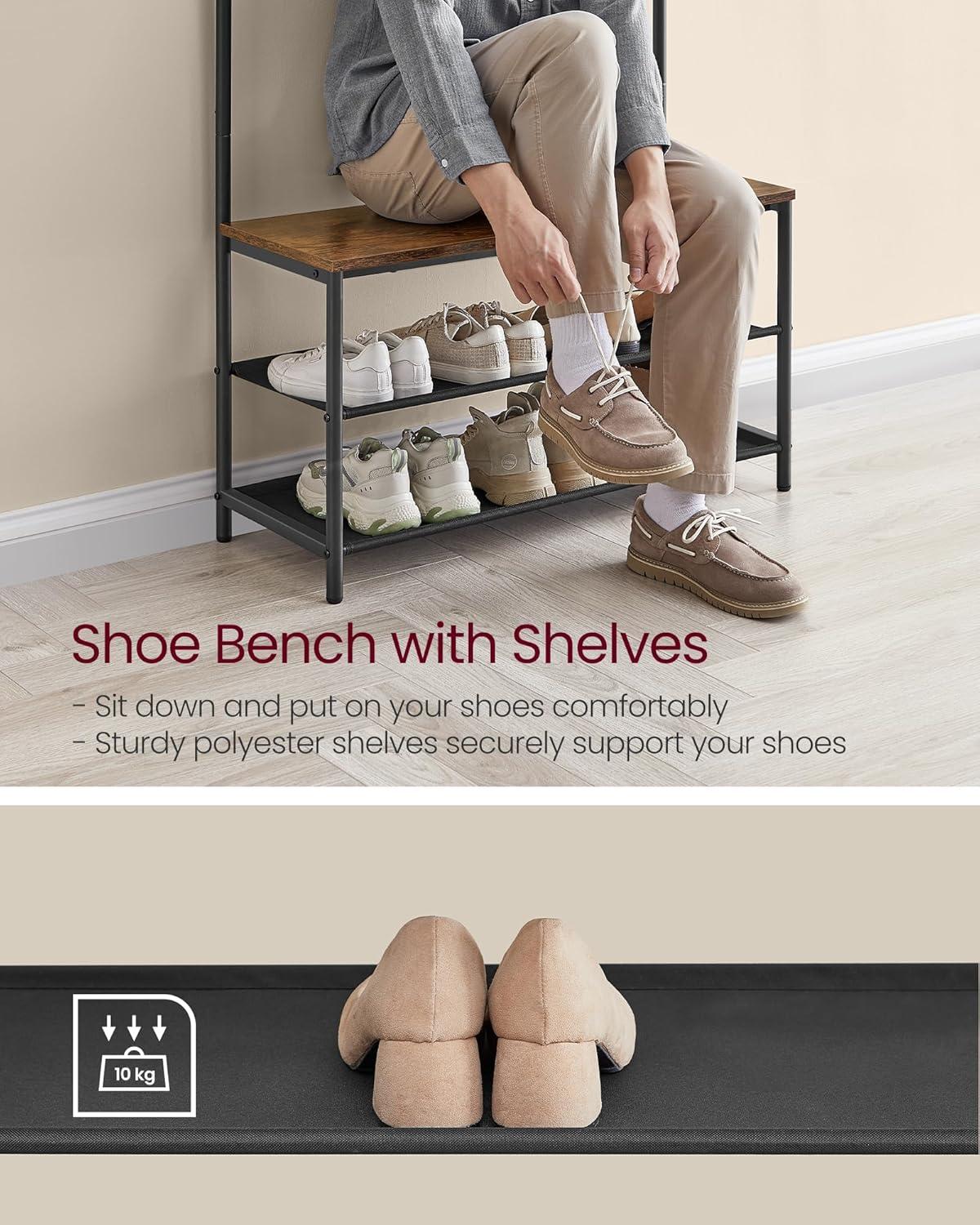
In everyday use the piece tends to live up to initial expectations: it goes together without prolonged fiddling, takes up little floor space, and presents the expected organized surface for outerwear and footwear.Once assembled it usually looks like the product images and functions as intended — the bench provides a place to sit while shoes are put on, the hangers hold jackets within easy reach, and the shelves corral several pairs of shoes without immediate visible wear.
Practical limits begin to show with routine handling and heavier loads. The bench top can shift slightly after repeated sitting,prompting a habitual smoothing or small nudge; movable hooks sometimes rotate or slide when heavier items are hung and may need occasional repositioning; and the fabric shelves,while supportive for most day-to-day shoes,can develop a bit of sag if continually packed with bulky footwear.The unit’s compact depth and overall profile make it well-suited to tight entryways, but those same proportions mean taller coats or chunky winter boots may sit awkwardly or protrude.On uneven floors, the adjustable feet require minor tweaking to keep the frame steady, and a few fasteners can feel fiddly during assembly or after months of use.
These behaviors feel like trade-offs typical for a space-saving entryway solution: convenience and a small footprint at the cost of some routine adjustments and mindful loading over time.
View full specifications and available sizes and colors on Amazon
How It Lives in the Space
Over time you find the VASAGLE hall Tree with Bench and Shoe Storage, Entryway Bench with Coat Rack Stand and Shoe rack, 9 Movable Hooks, Top Bar, Fabric Shelves, industrial, Rustic Brown and Black UHSR421B01 quietly settling into the entryway, its lines softened by daily use. In regular household rhythms it becomes the place where coats hang for a little while, shoes are shuffled on and off, and small comforts—cushions, an extra scarf—collect in their corners, bringing mild wear that reads like lived-in history. You notice how the bench’s feel changes with habit and the surfaces take on fingerprints and the occasional dust,not suddenly but as the room is used. It stays, part of the room and its steady pace.
As an Amazon Associate I earn from qualifying purchases.